Starting this week, I’ll be sharing tips and other guidance for writing and revising based on my 14 years of telling my own God stories and helping other writers tell theirs. The advice falls into basically two categories: 1.) a spiritual approach to storytelling and 2.) practical skills for editing. Follow along for the tips—or to join the conversation!
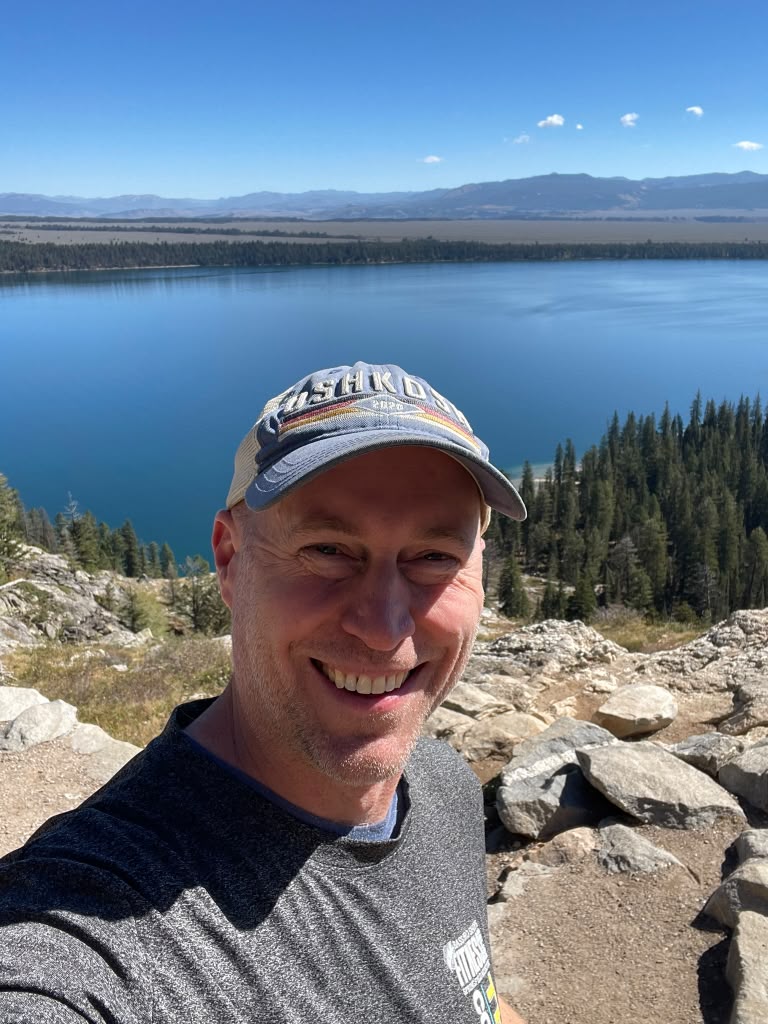
To be fair, I’m probably closer to the end than the beginning. And if the CDC’s stats are correct, being 45 years old places me well beyond the halfway point for the average American male (it’s 76.5 years). I don’t feel old, and my goal is not to be too macabre, but if you’ll allow it, I’d just like to share some reflections from this side of things.
Perhaps they’ll remind you, or help you, or clarify some things. In whatever case, and for whatever they’re worth, here are some musings from the middle…
1. You will need the Psalms more than you know.
2. Seasons of doubt will come and may keep coming – this is normal and need not be terrifying.
3. Education is never wasted.
4. Beauty matters a lot.
5. Work hard and build something wonderful, then be prepared to realize that that was only the 1st Mountain (Brooks), the 1st Half (Rohr). There is so much more.
6. Read widely, both chronologically and geographically.
7. Be where your feet are.
8. Remember the orienting reality of eternity.
9. Realize that much additional suffering results from our unwillingness to accept the regular pain and suffering of normal life.
10. Seasons are not the same thing as ages.
11. Look for the people you want to be like and then spend more time with them.
12. Grow with your children.
13. Say yes to lots of things when you are young, but know that the better you get at anything, the more you will need to say no. If you don’t learn the goodness of a no, all the wisdom and expertise you gained from saying yes will be diluted.
14. Not everyone who speaks with confidence knows what they’re talking about.
15. Accept book recommendations and music recommendations from your children.
16. Don’t ever stop playing.
17. Read Chesterton.
18. Adore God.
19. Love people.
20. Walk boldly. All will be well.
“Expect the end of the world. Laugh. Laughter is immeasurable. Be joyful though you have considered all the facts.” ~ Wendell Berry
I finally got started on Substack! I’m still in the process of figuring out how to share my writing both on this blog, which has been our online home for over fifteen years, and on Substack, but if you’re someone who prefers that platform, I’d love it if you would head over there and subscribe and follow!
As time goes on, I’ll be sharing my thoughts on motherhood and homeschooling, launching kids, creativity and AI, and the spiritual life. For now, I wanted to give you a feel for what kinds of thoughts I’ll be sharing over there, so I’m including my first Note down below.
//
I’m a late adopter of most new technologies (case in point: I only joined IG this year). But my daughters tell me Substack is the place where writers and readers gather, so until I can figure out what else I need to know to keep up with this platform, I thought I’d begin by sharing about books that have shaped me and are continuing to shape me. Books are friends, after all.
Today’s books are both from authors I was initially dubious of. Authors whose first books I encountered did not connect with me. But I gave them another chance anyway, and I’m so glad I did—because they are remaking me.
First up, Tish Harrison Warren’s What Grows in Weary Lands: On Christian Resilience. Years ago I tried Liturgy of the Ordinary and couldn’t finish it. It felt too surface level and just didn’t draw me in. But when a dear friend told me she was reading Harrison’s newest book and told me a bit about it, I was intrigued and thought it might be just what I needed.
It was. I was in tears in the first chapter and underlined most of it, so accurate was her description of life these last several years. Our 40s can be a desolate time. And Tish’s “cure” for what ails is now posted all over my house: “Stay in your cell.” You’ll have to read the book to find out what she means by that.
Next up, John Mark Comer’s Practicing the Way: Be with Jesus. Become like him. Do as he did. I didn’t like the first Comer book I read. The Ruthless Elimination of Hurry didn’t teach anything I disagreed with, but it was written in a style that pained my creative and editorial heart. I didn’t think I’d be reading any more Comer.
But then our church started going through his Practicing the Way course on Wednesday nights, and I thought I’d give it a try. I’m always looking for transformation, after all. That first video session was contemplative and careful, not pithy and punchy—enough of a shift to convince me to buy the book based on the course.
And oh how glad I am. The book digs much deeper into the course concepts, has shed the breathlessness of that 2017 book, and speaks my innate spiritual language—giving words to truths I somehow already knew in my heart yet just didn’t know how to apply.
Books, and their authors, are friends and guides. They form us and change us and can illuminate the path before us. And just as with real-life friends, first impressions are not always correct. Sometimes you have to give someone a second chance. And when you do, your life just might be changed for the better.
Just ask Elizabeth Bennett.
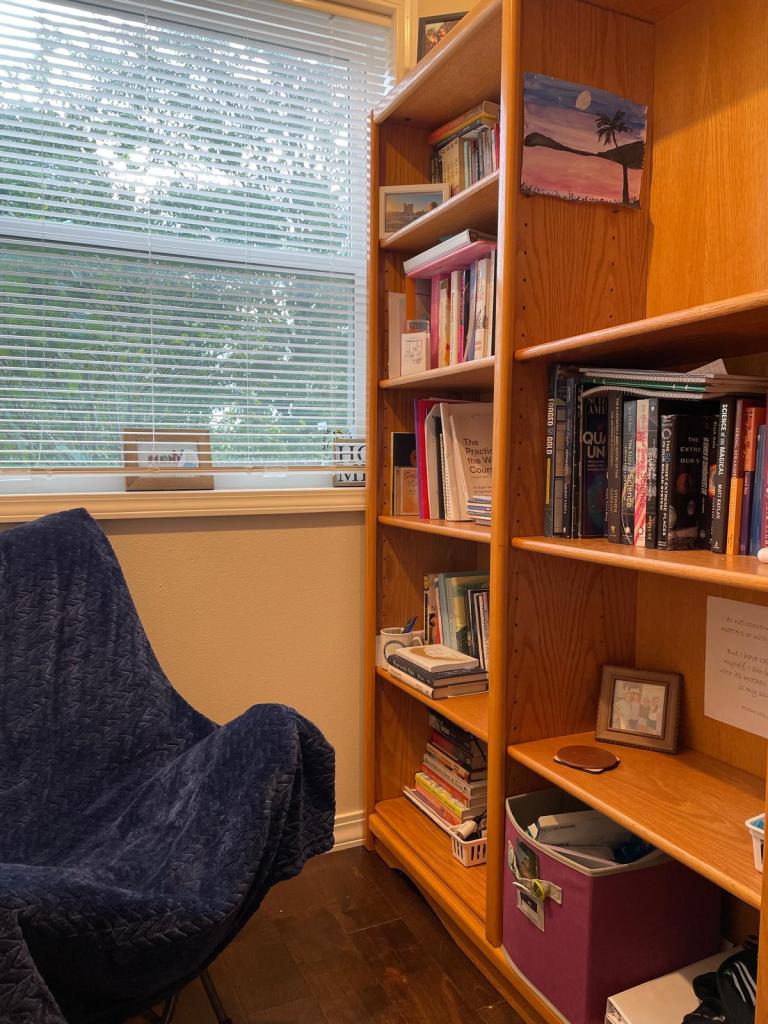
My morning time spot, one of the main spaces where transformation takes place in my life.
I was sick for a while before I knew I was sick. I’d been tired. So tired. I’m normally a lower-energy person who needs more rest than others, but this was extreme. I supposed it was more perimenopause.
I had aches and pains. By the end of the day, I felt like I had the flu. I couldn’t wait to relax in a warm shower for a few minutes and then lie flat in bed. I used to take a walk in the evening, but I didn’t even have the stamina for that anymore.
I assumed it was aging. I’ve heard you get a lot of aches and pains as you get older. I thought this was just my life now, a life where everything hurt all the time. I simply had to get used to it.
I was having a lot of what I believed to be hot flashes, even though I’m on HRT. My face would flush, and I would overheat, sweating profusely, sometimes while on a work call. It was just menopause, though. Right?
I was so tired, I could barely work. Even when I was awake, I struggled to focus on the task in front of me. I knew menopause came with brain fog, but this was next-level. Would I ever be able to concentrate again?
I was out of breath all the time, pulling back on exercise, and it seemed not even sleep could restore my strength. I remember one weekend in particular we were going to have a family night, and after my nap I could barely lift my hands. What was wrong with me?
I was discouraged because I had just finished this beautiful month of semi-sabbatical in May. I’d spent time restoring my relationships and renewing my creativity. I had ideas and energy for moving forward in life, then bam! Hard stop.
You know how moms take their kids to the doctor — or at least call the doctor — at the first sign something is wrong, but we don’t always take ourselves? Um, yeah, that was me. Until I could barely sleep, swallow, or move for the pain.
So one morning I finally dragged myself to the doctor. I feared an autoimmune disease. They happen more to women in their 40s and 50 — and more to women in general. And I know enough of the medical world to know that sometimes people contract viruses such as Ebstein-Barr (which causes mono and which I got tested for) and never recover. They remain ill, sometimes bedbound, permanently.
Thankfully it didn’t look like my tests were pointing to anything permanent or autoimmune, but to something else: thyroiditis. The pace of recovery would be slow. Sometimes there would be no improvement day to day, and I would only notice improvement from week to week. Sometimes I would get worse instead of better, as progress turned to regress. And truth be told, I’m not fully recovered yet.
I’ve been seriously ill before, but it’s been many years. Most of the time when I get sick, I’m down for a couple days, and then I recover. And although I had lots of people praying for me this time around, I have to admit I wasn’t always very patient in waiting for improvement or healing. Whenever I was conscious, that is.
//
Several months ago I asked God to expand my horizons. One Sunday during communion I went forward for the bread and the cup, and when I returned to my seat, a prayer from long ago popped into my mind, and I prayed it.
I hadn’t thought of the prayer of Jabez in a quarter of a century, and I certainly wasn’t praying it in a prosperity-gospel type of way. Still, although I’d intended the petition for one area of my life, God seemed to be answering it in other areas. He opened invitations and pathways I didn’t see coming. Stirred my heart to long for more depth, more fruit, more of Him in my life. I started seeking, pulling on the threads of my desires.
Until I got sick. I lay on the recliner for weeks. I had a little supply bag — books, phone, sudoku, water or rehydration mix, sugar-free mints. Still, most of what I did was sleep. Monitor temperature and heart rate. Manage pain and pills. I basically lost the month of June; my children can attest to this.
As I recovered, I knew I needed to rebuild my capacity. Slowly begin small amounts of work. Slowly start to move my body more. Keep resting a lot, trying not to overdo anything or push myself too soon.
But as I continued improving, I remembered all this deep work I’d done before my health declined. And I suddenly saw that the daily habits of my life weren’t sturdy enough to support the spiritual, creative, and vocational expansion I was longing for and starting to step into. I needed better scaffolding for my life, a better structure to hold all the plans and dreams that were being birthed inside me.
If I wanted to be more fruitful, I needed a healthier support system to cultivate that growth. I couldn’t just rebuild my former capacity. I needed to build more capacity than before.
And so I outlined ways to make that happen. I scrutinized my daily schedule, figuring out where I was losing time to news reels, task switching, internet scrolling. Ascertaining how to stack the daily routines of meal prep, personal care, household tasks. Learning how to bundle and batch, streamline and save.
Turns out, I was scattering my tasks simply because I could. Because I work from home and can do anything at any time. And also because my midlife brain is so distractible. But then again, this is how I lived for years as a homeschool mom, flitting from one need to the next, never knowing if I would finish a task before a child needed me for something else.
I hadn’t realized that I was fissioning away my days. I had to do nothing for a month to realize that I could do more than the somethings I was doing before.
But I also know I recoil from strict schedules. I do much better being able to finish a task before moving onto the next, even if the clock says it’s time. The perfectionist in me hates a schedule. I thought back to the early days of homeschooling and how I’d approached our days. I’d developed a routine for ourselves — a particular order to our tasks and a general time placement for them, whether before breakfast, before lunch, before dinner, or before bed.
Something too structured, and I collapse in fear of failure. Something too loose, and I don’t accomplish enough. The concept of scaffolding seemed spacious enough, sturdy enough, to balance these competing inclinations and still hold my dreams and desires.
Even before I got sick, I’d had a hunger to go deeper into the spiritual life, the creative life. I’d been working through books and chatting with friends about these things. I’d been a little bit wander-y, of course, but I’d been on the right track. I feared I’d lost the momentum with this illness.
But that doesn’t have to be true. I can build a better scaffolding to support the bigger, more expansive life I’m dreaming of. I’ve always had limited capacity, and even more so in midlife, but as I heal from physical sickness, I’m reaching for more capacity. I guess that’s what dreams, visions, invitations will do to you — prompt you to alter things that aren’t working so you can open your soul to something new.
Seen in this light, I suppose even sickness has its upsides.
It’s the last day of May, and I’m feeling creatively and relationally energized. That seems like a miraculous ending to a month of semi-sabbatical that did not go as I had planned. But aren’t most things in life like that?
After pushing really hard with work for about six months, I was weary. Then in April I sensed an invitation from God to pause and rest. To stop my busy rushing, focus on my relationships, and work on a few personal issues I’d been meaning to address but could never quite find the time or attention for. And of course, read and write more.
That was a bit of a tall order for four weeks of only partial break. (I was still homeschooling and working with our mission agency.)
I had so many lofty goals, it’s no wonder I didn’t accomplish them the way I had envisioned. First off, I didn’t finish my April manuscript in time, so it spilled over into May a tiny bit. That first week I was so tired I took a nap every afternoon. I didn’t go to a coffee shop to write. I just slept.
Then, between various medical appointments and graduating a daughter from high school, I didn’t end up accomplishing my goals the next couple weeks either.
But all was not lost – with God, nothing ever is. Most importantly this month, my husband and I carved out some time to reconnect. To reenvision what we want our life and our relationship to look like in the next (and current) season of our lives.
Because as it turns out, when you work too hard for too long, even if you love your job and it fills you with meaning and purpose, you can start to lose contact with yourself and with the people you care about most.
I had become like a stray helium balloon, just floating away from myself and the people I loved, leaving those on the ground to wonder where I’d gone. I needed the break to come back to myself — and to them.
I was dreading this week, though, since I knew my mini/modified sabbatical was coming to an end, and I felt neither fully rested nor resolved in the issues I’d been bringing before God. It didn’t matter though – I still needed to start looking ahead to next week’s return to freelance work.
And you know what? This week ended up being the best week of the whole month. I was more engaged with my husband and children than I had been in a long time. I finally started catching up on my reading and writing plans. I said yes to an in-person ministry opportunity that felt years in the making — a sweet gift.
I helped a fellow worker finish up his manuscript for publication (my first long-term agency project!), began outlining my new book on re-entry, and communicated with a couple future clients about their own projects. I felt energized in a way I hadn’t in a long time.
Reconnecting with my people, finding answers to some of the questions I’d been asking, and cultivating creativity are all precious gifts that came out of a month that, only a week ago, I had feared was a fiasco.
The experience reminds me of a chapter in our book Serving Well: “If Your Year Has Been a Flop.” Sometimes in life we set goals and expectations for ourselves but fail to meet them. When we look deeper below the surface, though, we can see that God has been orchestrating the formation and transformation we need, even if at first glance our exploits look like failure.
Isn’t that so often how it goes? The best made plans oft go awry. We’re only clay, after all. But when we trust God with the process, we find that He knows how to redeem us from our sometimes myopic plans — and bring about the fruit He wants.