Two Questions I Always Ask Homeschool Moms

by Elizabeth

The early days of homeschooling are intense. You’re afraid of messing up. You haven’t fully settled into your teaching style yet. You’re still getting to know your children’s learning preferences. You’re still uncovering their abilities and their challenges.

And often, you have little ones running underfoot while you attempt to educate your older ones.

Older moms offer advice, and it’s good, but you don’t know how to apply it to your situation. You read books, and they’re good, but sometimes the requirements feel overwhelming. How can anyone do all these things and do them well? 

And sometimes the advice conflicts, and you don’t know which to choose.

Now, after 20 years of motherhood and over 15 years of homeschooling, I’ve become that older mom who has advice to offer and guidance to give. And the first thing I want to say is: let’s all take a deep breath. We make better decisions when we’re calm.

Beyond that, there are all sorts of things I could tell you. Things like figuring out your educational approach and your teaching preferences and your family culture and your students’ learning preferences. And those things are all important, and I talk about them with moms.

But the two questions I always ask young moms are the two questions they sometimes forget to ask themselves. They are:

What are you doing to take care of yourself?

And, if you’re married, what are you doing to take care of your marriage?

These two areas are the bedrock upon which a healthy, happy homeschool is built. If you’re burnt out, you won’t bring your best self to the task of home education. You’ll be tired and worn down, you’ll run out of energy and enthusiasm, and you might let too many things slide that shouldn’t be sliding. (What needs to slide and what needs to stay is a conversation for a future post.)

If you don’t take care of yourself, you won’t have the love you need to pour out on your children. Your relationships with them won’t be as good as they can be because you aren’t as full as you could be. You’ll be snappier than you want to be, and you’ll regret those moments.

Answering these two questions can be really hard when you have young children. You’re almost always short on time, and you’re probably short on sleep, which means you could also be short on brain power. Hopefully you can take some time, either in the early morning before your children get up or in the evening after they go to bed, to get quiet and ask your soul these two questions.

Don’t be afraid to ask your husband for help with the children in order to discern these things. You might even need the help of a friend or coach to talk it out. But don’t discount the power of solitary journaling to help you figure these things out. Write out all your angst until the answers appear on the page. And then go live them.

**NEW BOOK COMING IN SUMMER 2025** 

The Hats We Wear: Reflections on Life as a Woman of Faith addresses six different aspects of being a woman of faith, with sections on spirituality, emotions, and embodied living, as well as marriage, motherhood, and homeschooling.

Book Sale: Digging in the Dirt is $2.99 through Wednesday!

Hey there! I am thrilled to let you know that “Digging in the Dirt: Musings on Missions, Emotions, and Life in the Mud” is ON SALE FOR $2.99 UNTIL WEDNESDAY NIGHT!

https://amzn.to/3SOtnqd (affiliate link)

I put so much of my heart and soul into this book, diving into topics like anger, grief, hope, sex, what to do when the power goes out, what to do when the thief steals, and so much more. Here is the invitation from the back cover:

Welcome to ground level, to the dirt and the mess.

We like the mountain tops and the sunshine. We like green grass under a clear blue sky. We like victory and breakthrough and answered prayers. But sometimes it rains, the shadows deepen, and life turns muddy. Sometimes God seems quiet. What then? What happens when depression descends, or anxiety hangs like a sword overhead? What happens when loneliness suffocates, the thief steals more than stuff, and you get blood on your shoes?

In Digging in the Dirt, Jonathan Trotter delves into the disasters, the darkness, and the deluge, and he offers comfort, presence, and a gentle invitation to hope.

With humor and prose, with poetry and Top Ten lists, Jonathan welcomes us to the dirt, to the places where we actually live. He invites us to boldly see life as it is, with eyes wide open, and reminds us that even when the digging is scary, we are never alone.

To the ones who are dealing with devastation and distress, welcome. To the ones who need to uproot, to pull out, to clear ground, welcome. To the ones who seek desperately to plant seeds of grace and hope in once barren soil, welcome. To the missionary abroad and the believer at home, welcome. Receive the invitation, and join with Jonathan here at ground level, together.

Come, dig in the dirt.

May be an image of 1 person and smiling

Sex, Missions, and Listening to God {book recommendations for you}

by Elizabeth

This spring I read three of the best books I’ve ever read. One in particular I couldn’t stop talking about for weeks – but it wasn’t the sex book! I had to start with that word, though, because I knew it would grab your attention. 

Up first, the best book on missions EVER: The 3D Gospel: Ministry in Guilt, Shame, and Fear Cultures by Jayson Georges.

When Christine Paterson of FieldPartner recommended the book and mentioned that it was only $3.99 on Kindle, I figured I’d give it a try. I intuitively knew that American culture held more than just a guilt/innocence worldview and that shame/honor and fear/power comes into our thinking as well, and I was eager to learn the specifics of each worldview.

What I didn’t expect was for the book to so thoroughly rewrite my understanding of culture. I underlined nearly the entire book. At only 80 pages in paperback, there’s no fluff here. Every word seems essential, and every sentence sheds light on world cultures and their differing assumptions and thinking processes. I began to understand shame/honor and fear/power cultures more fully, and I began to see how the Bible beautifully addresses all three cultural concerns (guilt, shame, and fear). 

Once my eyes were opened to this, I even began to see these three concerns addressed in most of our worship songs. In Western cultures we tend to tell the gospel story only through a guilt-innocence lens, and while that’s not wrong, it is incomplete. We look to God for help with our problems regarding fear and shame, but we don’t tend to bring these perspectives into our telling of the Gospel story, and this hinders our spiritual growth. 

Thankfully, we can offer people a more three-dimensional gospel, one that has the power to redeem their day-to-day struggles with fear and shame, whether in our passport culture or a host culture. God knows the human heart and has offered a solution for all our problems in Jesus Christ. 

This book made me fall in love with God all over again.

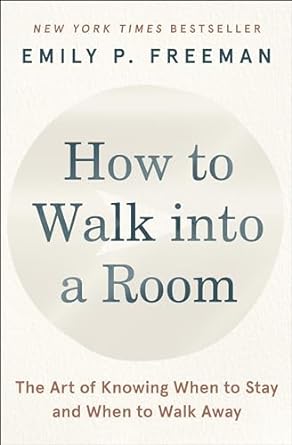
Next up, the best book I’ve read in a long time about listening to God: How to Walk into a Room: The Art of Knowing When to Stay and When to Walk Away by Emily P. Freeman

I remember resonating so deeply with Emily’s podcast episode, “How to Walk Out of a Room,” a couple years ago. The episode was mercifully devoid of details so that her principles could apply to all sorts of situations. When I heard she was writing a book based on that episode, I knew I would want to read it.

Emily is a spiritual director and has a master’s degree in spiritual formation, and she has a way of walking with people in discernment that is quiet and calm. She offers a “non-anxious presence,” as they say in spiritual direction circles. (Full disclosure: I’ve been meeting monthly with a spiritual director for about the past year, and it’s been a huge part of drawing my heart back into conversation with God after some dry, lonely years.)

I had a feeling this book would be important, and so I decided not to mark it up but to leave it empty and, in a way, sacred. Instead, I would rewrite meaningful sections in my journal. This helped slow me down and really savor Emily’s words. It helped me process the past, it helped me learn how to make better decisions, and it gave me peace in the decisions I was making. Then one day I looked around and realized I was making decisions much more easily than I had in the past, even small daily decisions, and I had to wonder if this book had something to do with it. 

The thing I love about this book – and that sets it apart from other books purporting to help people recover from restrictive religious environments and explore a more expansive relationship with Christ – is that Emily gives tangible steps people can take to process the past and discern their present and their future. To walk with Emily is to learn together how to listen to God.

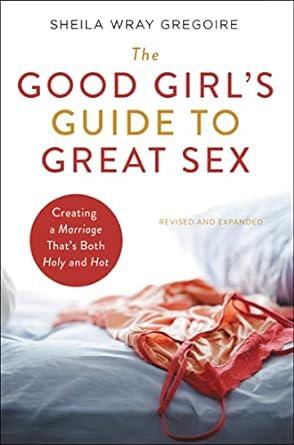
And lastly, one of the best books I’ve ever read about sex: The Good Girl’s Guide to Great Sex: Creating a Marriage That’s Both Holy and Hot by Sheila Wray Gregoire.

This is the book every woman needs to read before she gets married – or after, if things in the bedroom aren’t working, whether she got married a year ago or 30 years ago. Sheila co-wrote The Great Sex Rescue with two other authors, and it’s a great research-based book that helps people untangle their unhealthy and unbiblical beliefs about sex, but The Good Girl’s Guide really gets into practicalities. 

I heard it recommended by a Bible college professor who teaches classes about sexuality, and I wanted to check it out myself. There was an earlier version of the book, but just this year it was revised and expanded, so I read the revised version. This is the book I will give to my daughters when they are engaged or newly married. I still recommend Aanna Greer’s Darling: A Woman’s Guide to Godly Sexuality for those who are quite innocent or naive about sex and their bodies, but Sheila’s book is a necessary follow-up.

Sheila, along with her pediatrician husband, also wrote The Good Guy’s Guide to Great Sex: Because Good Guys Make the Best Lovers. I haven’t read that one, but I’m assuming it’s good because that same Bible college professor recommended it and because it’s from an author I trust.

I hope these books will help you or someone you love.

The Beloved of God

by Elizabeth

The old conversation about women and work has been circulating again. People are quick to take sides. They’re for women working. They’re for women staying home. (Never mind the fact that this is a false binary, and that women who stay at home work, regardless of whether they work for pay.)

To me this conversation seemed like a lot of wasted cortisol and adrenaline. Why would I torture my body with extra stress hormones just to justify my life choices to strangers? 

But it did make me think about the past 20 years of my mothering. For the first several years I stayed at home full-time and cared for our four children. I loved it. I always wanted to have a lot of kids. I didn’t always want to homeschool them, but I fell in love with that path too.

At the time I knew in my head how hard my husband was working to allow me to stay home and also pay the bills, but I don’t think I fully grasped his sacrifices. Only now, having learned what it’s like to earn income while trying to remain an engaged parent, can I more fully appreciate all that he did during those years. And I am impossibly grateful.

Because amid the exhaustion, I loved those years. I loved playing with my kids and reading aloud to them and being free to just traipse all over whichever city on whichever continent we lived for playdates and errands and homeschool activities. 

I felt a unique sense of purpose in those years, contributing to society by contributing to my family in (obviously) non-monetary ways. Along the way, we created our own family culture. Sometimes I didn’t realize what an incredible gift that really was.

Fast forward to today, when I still stay at home and homeschool my younger children, but I also work from home part-time. Now I understand more fully the financial pressures facing my husband these last 20 years.

Working from home also makes me appreciate the years I had with my kids as my main focus. As fulfilling as my freelance work is, it can be hard to live with a divided psyche, to have my heart in more than one place.

And yet I am impossibly grateful. Grateful that I’ve been given work that is meaningful to both me and the people I serve. Grateful that I’m able to bring in extra income and help pay the bills while still mostly staying home. The economy is different now than when we left America in 2012. It’s even harder to live on one income now than it was then.

And so families sacrifice. ALL families sacrifice. Whether we’re sacrificing one spouse’s income so they can stay at home with the kids, or whether we’re sacrificing one spouse’s time to either leave the house for work or to work from home – whether part-time or full time – everything is a sacrifice. Families are working hard to take care of their kids and their bills, and the last thing any of us needs is to feel judged or to judge others for our choices.

So when I first read about the recent gender roles controversy, I wrote it off. I thought some of the claims people made were silly, but as I said at the beginning, I didn’t have the time or the cortisol to waste on a conversation that is so nuanced and complex and personal and which so many people reduce to maxims and memes.

The longer I heard and saw people talking about it, however, the sadder I got. There are a lot of women walking around without knowing their worth. Without knowing their belovedness. Without understanding their deep value to God apart from what they do.

When we know our belovedness, no one’s opinion of what women should or shouldn’t be doing with their lives can push us off kilter. We know who we are, we know who God made us to be, we know who loves us, and we know the ones we love. We don’t have anything to prove to anyone, because we are secure in Christ’s love. 

I can say, “I am a child of God, and I know my Father loves me.” And I can say to you, “You are a child of God, and your Father loves you – whether you stay home with your children or whether you work from home or whether you work out of the home or do any of it for pay.”

This is what I wish we all knew, truly knew, deep in the viscera of our bodies and the basement of our souls:

The woman who stays at home? Loved.
The woman who works from home? Loved.
The woman who works nights so she can be with her kids during the day? Loved.
The woman who works days because it’s the only way to make ends meet? Loved. 
The woman who stays home when her kids are little and then goes back to work? Loved.
The woman who works because she genuinely enjoys her job? Loved.

You are the beloved of God, and no one can take that away from you. You are hidden in Christ with God, and your real self is found in Him, not in the approval or disapproval of other men and women. You are a child of God, and that is the most important thing about you. 

The God who adopted you as Daughter will lead you in ways that are personal and particular to you. Your life may look different from mine, but we are all the beloved of God. He is ours, and we are His. 

May we cherish each other in the same way the God of the universe cherishes us. May we honor each other’s choices, just as we honor the same God who leads us in different directions. And may we remember that our value comes from Him, not the particular ways we serve our families and communities. For we are the beloved of God, and no power on earth can convince us otherwise.


PSA for Perimenopausal Women (and any woman who suffers from PMS)

by Elizabeth

For the last several months I have had the worst PMS of my life. I was irritable, I was argumentative, and I didn’t want to be around anyone. I just wanted to be left alone – possibly for the rest of my life.

I tried reigning in my feelings of rage, but I was only ever partly successful, and then only in the first half of my cycle. Once I hit ovulation mid-cycle, I somehow couldn’t control my reactions. I would fly off the handle at the least little thing. My husband would offend me, and I would refuse to reconcile. I rejected all the normal things he might try to do to bring peace and resolution back to our relationship. 

At several points during this period of time, Jonathan mentioned that he would like to see a marriage counselor, maybe for an intensive, to try to bring some warmth back into our relationship. This should have been a warning sign for me, but for reasons I’ll discuss down below, I was too self-focused and couldn’t see the yellow light for what it was.

I know this isn’t the experience of every marriage, but our relationship has always been pretty easy going. We enjoy each other’s company, and we love to get away by ourselves, whether for just a walk or coffee date or something longer like a weekend away from the kids. Those things have been part of the rhythm of our marriage forever. So this was a huge shift in our relationship. Unseen tectonic plates slipped under the pressure, the ground quaked beneath us, and we had a hard time finding our footing.

But it wasn’t just my husband who was driving me crazy. My kids were driving me crazy too. I never wanted to be around them either. And just as I knew in my head that my husband was the best human I would ever find and that I wanted to stay married to him forever – even though most of the time I couldn’t stand being around him – I knew that my kids were legitimately good kids. They didn’t have major issues. They’ve always been easy to love, and I have enjoyed mothering them. But now their mere existence was driving me bonkers.

I had read about perimenopause; I thought my symptoms might be from erratic and/or dropping estrogen levels. I assumed I would just have to weather these symptoms for the next 10 years or so, until actual menopause arrived. I had spoken with enough women to understand that after the hormone levels drop at menopause, emotions are much easier to regulate, and mood swings finally settle down. I thought back to the years I nursed babies, remembering how calm, stable, and happy I was during lactational amenorrhea, and I looked forward to the final endpoint of menstruation.

But I couldn’t understand why God would make women so vulnerable and unstable during this time of life, a time of life that often coincides with raising teenagers and launching young adults, all of whom have big emotional and psychological needs.

My mother didn’t appear to have a difficult menopause, at least from my perspective. There was no strange personality change, no loss of affection. No yelling or flying off the handle. I myself had had an easy puberty, and in general I was happy during pregnancy, though I tended to be more anxious. I even did well postpartum, when many women struggle with the drastic hormone drop after birth.

So what was wrong with me? Why was I having such a difficult time with perimenopause? My mom did fine, why couldn’t I? I tried googling “wanting to be alone in menopause,” but all I could find were articles about how women were lonely and didn’t want to be alone.

And let me tell you, I was doing all the right things. I was exercising. I was eating right. I was journaling and being grateful. I was trying to connect with my husband. I was part of a vibrant church community, and I was praying and speaking with a spiritual director. I was working hard to listen to the voice to God, to center myself and remain calm. But all the things that had always brought me peace and tranquility in the past would work for maybe 10 minutes, then the happiness would evaporate and I would be just as unhappy as I had been before my intervention.

So finally, after about four or five months of extreme irritability and more fights with my husband than I’d ever had (although after most of them, I wouldn’t have been able to tell you what we’d been fighting about, the fights were that petty), I called the midwife. I couldn’t get in for a while, but I knew I needed help, and I felt relieved to know that help was coming.

As soon as the nurse checked me in, I unloaded on her. She empathized and assured me that my midwife would help. “She gets everyone balanced out eventually, it just takes a while sometimes.” That slice of hope was everything.

When the midwife walked in the room, I unloaded everything on her again, and she said, “It’s probably the progesterone pills.” She explained that what I had been experiencing qualified as PMDD (premenstrual dysphoric disorder). It’s not just your garden-variety PMS; the mood swings are extreme and super hard to control.

At first I was so confused that I didn’t know what to say. I’d been taking oral micronized progesterone (bioidentical progesterone) since last summer to control the heavy periods of perimenopause. And it had helped. I was so happy with the menstrual improvement that I probably didn’t notice my increased irritability the first several months.

But looking back, I think my husband did notice right away. He couldn’t get me to appreciate beauty on our walks. He felt an emotional disconnection that he couldn’t put into words and that I couldn’t comprehend. I had been working hard on my faith, which had been in tatters during the pandemic and re-entry, and I’d been working hard on my relationship with finances, which had never been great and which had been deeply triggered in early 2023 due to a complicated combination of events. I felt so satisfied with my growth in the areas of faith and finances that I was unable to see the losses in other areas of my life.

Neither of us had any idea I could be reacting to a prescribed medication.

It took a moment to absorb what the midwife was telling me and to begin to make new plans with her. As this is an unfolding story and I don’t yet know if our plans will work long term or whether we’ll need to try something else, I won’t be discussing that part of the story at this time.

I went home and told my husband that the midwife just turned my world upside down but that we had a plan. The more I thought about what she said, though, the more it made sense, and the more I realized that I had walked into that office as a blinking red light for progesterone sensitivity.

So let me back up and explain progesterone sensitivity (or progesterone intolerance). This concept can be hard to swallow, because in both the natural and conventional medical worlds, progesterone is touted as a cure-all for sleep, anxiety, and heavy periods. In the natural health world, everyone is afraid of “estrogen dominance” – which isn’t even a medical term – and promotes progesterone as the solution to all menstrual woes, including PMS.

And there is some truth to this. Progesterone can help with heavy periods. It helps you sleep. (I personally slept great while I was taking it.) Progesterone is protective against uterine cancer, and according to Dr. Mary Claire Haver, it appears to be somewhat protective against breast cancer as well. But although progesterone has a great safety profile, it has some serious side effects for some women, including PMDD. And that’s the dark side of progesterone that not everyone knows.

Initially I had no framework for what my midwife was saying, even though I had read a lot on perimenopause and menopause. And I can be somewhat skeptical, so I went home and, true to my Enneagram 5 nature, went digging for information. What I discovered was that doctors do know about progesterone intolerance, but it’s not advertised much in some circles and is downplayed in others. After all, it’s estimated that only 10% to 20% of women have progesterone intolerance. Most women are just fine. 

But one out of five women sounds like a lot of women to me, and it’s a whole lot if you are one of those women. And it makes total sense that progesterone could cause problems. Any woman would tell you that the week between her cycle and ovulation is her favorite week. She feels great and has lots of energy. 

At this time, you have some estrogen but no progesterone because progesterone is only released by the corpus luteum after ovulation. That lovely period of time is actually a time of true “estrogen dominance,” as your body is producing estrogen only. You’ve got no progesterone. It’s only after ovulation, when progesterone is released, that women have issues with PMS, whether that’s physical issues like bloating and cravings or emotional symptoms like anxiety and irritability.

I wasn’t ready for the heavy periods that were sure to come if I stopped taking the progesterone, but I did anyway. Some physical symptoms were alleviated right away. I hadn’t been paying much attention to my physical symptoms because the emotional symptoms had been so difficult to deal with, but I was struggling with constipation, which I’d only ever experienced in pregnancy and postpartum. I also had headaches, itchy ears, dizziness, a feeling of increased pressure in my body and in my head, and increasingly swollen ankles – the kind you only get in pregnancy. 

In fact, at one point I was convinced I might be pregnant – even though I knew that was impossible. I had painful gas and an acid stomach, which I only ever experienced in early pregnancy and which necessitated lying down after dinner most nights, but over the next week those digestive discomforts slowly went away.

It took a little longer to experience release from the emotional symptoms, but soon I was easy to live with once again. I didn’t yell at Jonathan for everything he did. I didn’t tell my children to leave me alone. I looked out at the yard and smiled. I went to get the mail and got stuck on the driveway staring at those strikingly strange clouds hanging in that lovely sunset. Beauty could once again lift my spirits.

Food even started to taste good again. It had never tasted bad, I just wasn’t receiving much enjoyment from it. I didn’t realize this until one night after supper when I was eating some dark chocolate, as is my custom. Apparently I started murmuring about how good it was, and my daughter told me I hadn’t done that in a long time. Then one morning soon after, I ate my normal breakfast and stated how delicious it was. Because it was delicious (cue the Little Brute Family). Food continues to be enjoyable, thank the Lord.

Unprompted, I started kissing my baby girls. Turns out, they needed some love. It had been missing from our home for a long time. My husband gets more hugs, and so do I. He can tell me something I did wrong, and I won’t turn and attack him over it. I enjoy spending time with him again, and he enjoys spending time with me. We don’t need to go to a marriage intensive – which is probably a good thing for a marriage counselor. I just needed to quit taking progesterone.

I couldn’t believe how good I felt, and my family couldn’t believe how different I was. My children had their old mother back, and my husband had his old wife back, and it was all just so mind-boggling. So I did another deep dive into hormones to make more sense of what I was experiencing, and I found some interesting tidbits.

According to Dr. Lisa Mosconi (a neurologist who uses brain scans to study the changes to the female brain during perimenopause and menopause), puberty, pregnancy, and perimenopause are vulnerable times in a woman’s life. A lot of brain remodeling is happening in each of those seasons. 

Mosconi explains that the best predictors of how you will handle perimenopause and menopause are the past: pregnancy and puberty. That’s part of why I was so frustrated with my intense mood swings – except for the increased anxiety I experienced during each pregnancy, puberty and pregnancy were relatively easy for me. 

But there was more to the story than that. I did have one difficult pregnancy. I had severe acid stomach, but what was worse than that was my mood. I hated everybody during this pregnancy, which made ministry rather difficult. As soon as I delivered, I literally leaned back in the bed and breathed out, “I think I can love people again.” 

I thought my extreme irritability was due to the hormonal interplay of carrying a girl instead of a boy, but the next time I was pregnant with a girl, my emotions were even-keeled. I was always mystified by this until I learned about the effects of high progesterone. Suddenly the lights went on: I’d had a hard time getting pregnant with my third child and had had to use progesterone to get pregnant. I was not a nice person to live with that year.

According to Dr. Mary Claire Haver, board-certified Ob-Gyn, we experience a mini perimenopause each month of our cycles as the ratio of estrogen to progesterone changes and we feel what equates to an estrogen dip due to the rise of progesterone. Our estrogen feels lower, relatively speaking, and therefore whatever symptoms we feel premenstrually are likely to be magnified during perimenopause. For me, that’s irritability, rage, and anxiety. 

Dr. Mosconi says the brain experiences changes early, before a woman’s periods change. And changes to the menstrual cycle can come as early as a woman’s late 30s (they did for me). This made me wonder if my troubles with yeast infections and OCD were related to the hormonal changes of perimenopause, but I can’t know for sure. I do know that the anxiety caused enough suffering on its own. And I have heard multiple menopause doctors explain that for many women, the first sign of perimenopause is an increase in anxiety – either the onset of new anxiety or the worsening of already existing anxiety.

All of this information is highly interesting, but it isn’t inconsequential. My family suffered deeply when my progesterone levels were high. My maternal love just disappeared, and my kids wondered what happened to their nice mommy. My husband thought I’d left him, emotionally speaking, possibly forever – which was a double whammy after wondering if I’d disappeared forever into OCD-brain in 2019

The good news is, the wicked witch of the west isn’t the real me. The bad news is, my family still had to live with that cranky woman for eight or nine months. Clearly not every woman does great on progesterone, and I’m one of those women. I just wish people talked about this more.

Because it matters deeply. Our hormones are integrally connected with our faith. This year on Easter, we sang “Because He lives, I can face tomorrow . . . and life is worth the living just because He lives.” But it’s hard to believe those Easter truths when your neurotransmitters are off. God wants to connect with us in our minds, but it’s hard to do that when your internal chemistry has deviated from the original created order.

I’m so thankful for my midwife. She gave me back my marriage and my family, and six Trotters will be forever grateful.

Sources:
Estrogen and Brain Health (interview with Dr. Lisa Mosconi) 
The Wisdom of the Menopause Brain (Dr. Aviva Romm interviews Dr. Lisa Mosconi) 
How to Lose Belly Fat, Sleep Better, and Stop Suffering Now (interview with Dr. Mary Claire Haver)
Mary Claire’s YouTube channel
Dr. Barbara Taylor’s YouTube channel