I finally got started on Substack! I’m still in the process of figuring out how to share my writing both on this blog, which has been our online home for over fifteen years, and on Substack, but if you’re someone who prefers that platform, I’d love it if you would head over there and subscribe and follow!
As time goes on, I’ll be sharing my thoughts on motherhood and homeschooling, launching kids, creativity and AI, and the spiritual life. For now, I wanted to give you a feel for what kinds of thoughts I’ll be sharing over there, so I’m including my first Note down below.
//
I’m a late adopter of most new technologies (case in point: I only joined IG this year). But my daughters tell me Substack is the place where writers and readers gather, so until I can figure out what else I need to know to keep up with this platform, I thought I’d begin by sharing about books that have shaped me and are continuing to shape me. Books are friends, after all.
Today’s books are both from authors I was initially dubious of. Authors whose first books I encountered did not connect with me. But I gave them another chance anyway, and I’m so glad I did—because they are remaking me.
First up, Tish Harrison Warren’s What Grows in Weary Lands: On Christian Resilience. Years ago I tried Liturgy of the Ordinary and couldn’t finish it. It felt too surface level and just didn’t draw me in. But when a dear friend told me she was reading Harrison’s newest book and told me a bit about it, I was intrigued and thought it might be just what I needed.
It was. I was in tears in the first chapter and underlined most of it, so accurate was her description of life these last several years. Our 40s can be a desolate time. And Tish’s “cure” for what ails is now posted all over my house: “Stay in your cell.” You’ll have to read the book to find out what she means by that.
Next up, John Mark Comer’s Practicing the Way: Be with Jesus. Become like him. Do as he did. I didn’t like the first Comer book I read. The Ruthless Elimination of Hurry didn’t teach anything I disagreed with, but it was written in a style that pained my creative and editorial heart. I didn’t think I’d be reading any more Comer.
But then our church started going through his Practicing the Way course on Wednesday nights, and I thought I’d give it a try. I’m always looking for transformation, after all. That first video session was contemplative and careful, not pithy and punchy—enough of a shift to convince me to buy the book based on the course.
And oh how glad I am. The book digs much deeper into the course concepts, has shed the breathlessness of that 2017 book, and speaks my innate spiritual language—giving words to truths I somehow already knew in my heart yet just didn’t know how to apply.
Books, and their authors, are friends and guides. They form us and change us and can illuminate the path before us. And just as with real-life friends, first impressions are not always correct. Sometimes you have to give someone a second chance. And when you do, your life just might be changed for the better.
Just ask Elizabeth Bennett.
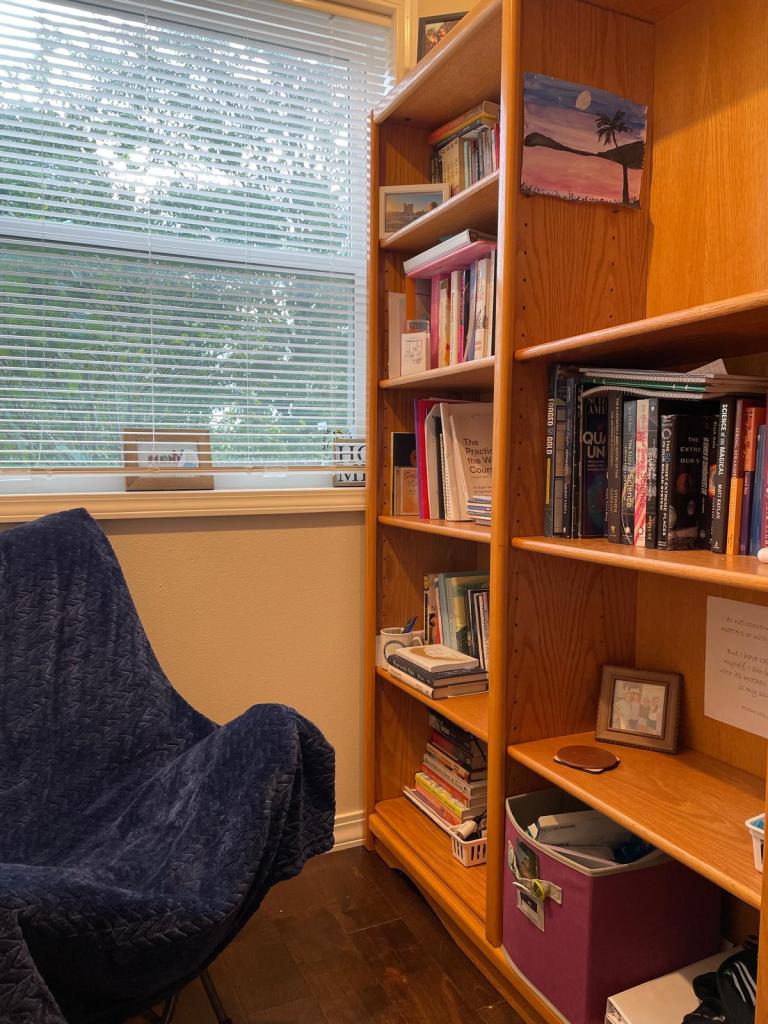
My morning time spot, one of the main spaces where transformation takes place in my life.
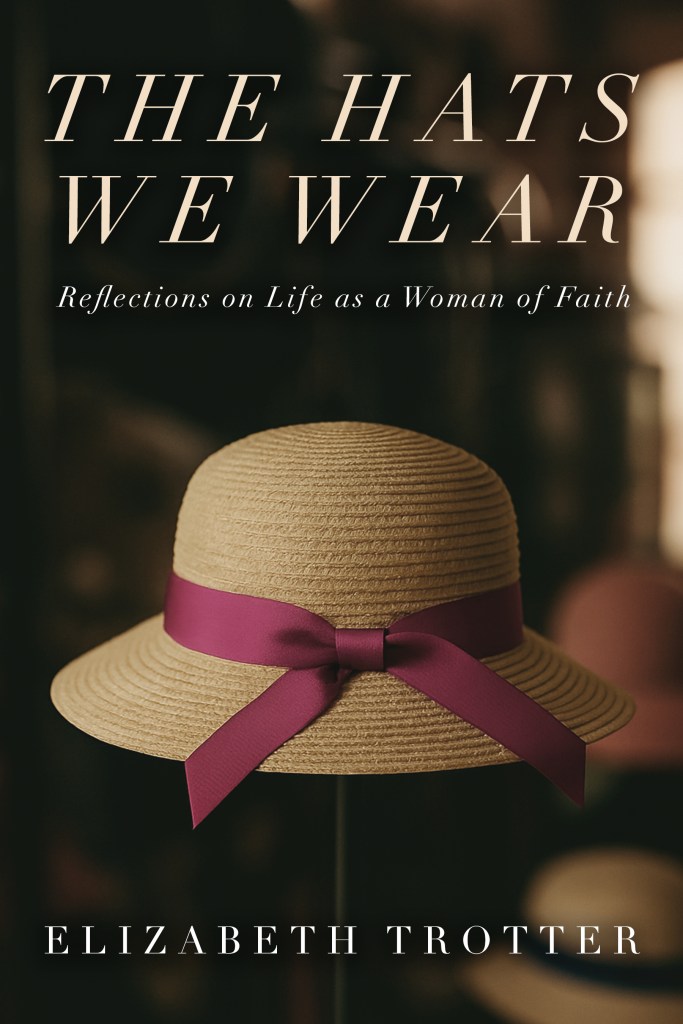
Now available in print, Kindle, and on Audible! Check it out on Amazon here.
What women are saying:
“Raw vulnerability and profound truth. I wish I had read this book years ago.” ~ Danielle Wheeler (founder of Velvet Ashes)
“Wise encouragement. A fresh and honest voice.” ~ Michèle Phoenix (Christianity Today book award winner, TCK expert, and author of Pieces of Purple and Of Stillness and Storm)
“Thoughtful and courageous.” ~ Rachel Pieh Jones (author of Stronger than Death and Pillars)
“A readable and beautiful theological treatise on womanhood.” ~ Marilyn Gardner (author of Between Worlds and Worlds Apart)
“Left me feeling hope-filled and encouraged as I juggle all of my own hats.” ~ Lauren Wells (founder of TCK Training and author of The Grief Tower and What Made That Feel So Hard?)
I’m so excited about this book. For the last few years, I’ve been dreaming of publishing an updated version of my original Hats: Reflections on Life as a Wife, Homeschool Teacher, Missionary, and More, and it’s finally happening!
There’s tons of new material in this book. It’s nearly twice as long as Hats, but I also took out about half the original material, as it was reprinted in Serving Well. I reorganized the sections and fully edited each chapter, so this is very much a brand-new book.
Matthew Stock designed this beautiful cover, coordinating it to Jonathan’s Digging in the Dirt while also reflecting the original Hats cover that Jonathan created for me.
So that you can get a better idea for what this book is all about, I’m going to share the back cover material for The Hats We Wear, along with the new preface and the original preface from 2018. Enjoy!
Back Cover
Little girls don’t know they’re going to grow up to be women who wear so many hats. Daughter, sister, friend. Professional, mother, wife. Our hats can weigh us down, and our vocations can exhaust us. The roles we inhabit stretch us in so many directions that we sometimes fear we will break.
Sometimes we even forget who we are.
In The Hats We Wear, Elizabeth Trotter takes us back to the beginning, to the foundation of our faith and who we are as children of God and daughters of the King. She explores our intense emotional worlds and the work of embodied living, then leans into the three specific hats of marriage, motherhood, and homeschooling.
Join Elizabeth on this journey of reflection. Walk with her as she seeks God amidst the hats of female life. Sit with her in the mundane and the sacred. Wrestle with the practical and philosophical implications of living life as a woman of faith.
As you read, you’ll meet someone who frequently does things the hard way first, flailing around worrying and wasting time on unnecessary details. But in seeking the Lord and listening to the wise people in her life, she eventually finds a path forward.
She invites you to do the same.
Preface to The Hats We Wear (2025)
In the spring of 2018, my husband Jonathan decided to surprise me with a sweet Mother’s Day gift: a book of my writings about womanhood. He gathered articles I’d written on theology, marriage, motherhood, and homeschooling and published the collection on Amazon. He called it Hats: Reflections on Life as a Wife, Mother, Homeschool Teacher, Missionary, and More. I loved the cover he designed and was grateful to have a lot of my writing in one place.
The next year, however, Jonathan and I published Serving Well: Help for the Wannabe, Newbie, or Weary Cross-cultural Christian Worker, and much of the material in Hats was republished there. Over the years, I kept writing, and eventually I realized I wanted to update Hats, adding some newer content and removing duplicate material, much of which related more to my life as a missionary in Southeast Asia than to the broader conversation of Christian womanhood.
So for this version of the book, I removed a dozen chapters and added over twenty-five more, keeping only sixteen from the original twenty-nine. I wanted to distinguish this book from Serving Well, which focuses on ministry life, though I did keep a few chapters which are too foundational to my life and faith to remove. I’ve thoroughly edited and rewritten each chapter, so this is basically a new book.
The first three sections are hats that all women wear, regardless of whether they are married or have children: the practical theologian, emotional human, and embodied woman hats. Then in the second section I dig into the more specific hats of wife, mom, and homeschool teacher. I hope that the words contained in these pages will resonate with your lived experience and that we will forge a bond across space and time.
In preparing this book for publication, I was struck by how similar my struggles have been throughout my life. How wise my past self seemed, fresh from the fires of learning a lesson I find myself re-learning in the present. We are forgetful creatures, and so the Lord must teach us again and again. Is it any wonder He tells us so often to remember?
And so I offer these stories to you, trusting that they will speak to your heart and mind through the goodness of the God who calls us to Himself. May we seek Him first, above all others.
Preface to Hats (2018)
No matter your background or experiences, being a woman is hard. That’s partly because being a human is hard. It’s also due to the many roles we women tend to carry in life. Daughter, sister, friend. Professional, mother, wife. Marriage and motherhood are indeed holy vocations, and they require much of a woman. Whether we work outside the home or from within it, our vocations sometimes stretch us so much that we fear we will break.
The truth is, there’s not a lot of preparation for marriage or motherhood. Certainly, we can read books. We can read books on how to have a great sex life or how to build a godly marriage or how to live out biblical submission, but when it really comes down to it, we marry a human person, not a book, and our husbands also marry a human person—us. A lot of marriage is simply trying new ways of doing things and seeing if they work (including, at times, seeking professional or pastoral help).
It’s the same with motherhood. We can read books on natural childbirth, healthy homemade baby food, and the most godly parenting—or the most logical. But nothing can really prepare us for meeting our child, some mysterious arrangement of our own DNA, or someone else’s. No one can prepare us for their likes or their dislikes, their strengths or their weaknesses. We have to discover these things for ourselves, over time.
What follows in this book is precisely that: the things I’ve discovered over time. There are articles and essays on marriage, motherhood, homeschooling, and the Christian life. In case you don’t know me, here’s a bit of background: As of this writing I’ve been married for nearly eighteen years, having gotten married at the age of eighteen. I’ve been a ministry wife almost that entire time and have been living overseas as a missionary wife for the past six years. I’ve been a mom for fourteen years and have been homeschooling for nine. This book is my lived experience wearing all those hats.
Find The Hats We Wear on Amazon in ebook, paperback, and audio book versions.
This spring I read three of the best books I’ve ever read. One in particular I couldn’t stop talking about for weeks – but it wasn’t the sex book! I had to start with that word, though, because I knew it would grab your attention.
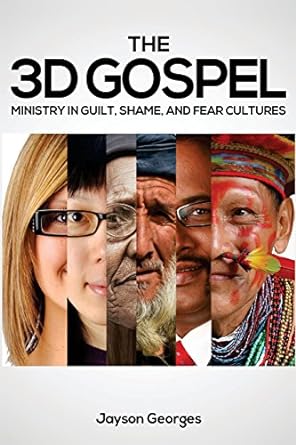
When Christine Paterson of FieldPartner recommended the book and mentioned that it was only $3.99 on Kindle, I figured I’d give it a try. I intuitively knew that American culture held more than just a guilt/innocence worldview and that shame/honor and fear/power comes into our thinking as well, and I was eager to learn the specifics of each worldview.
What I didn’t expect was for the book to so thoroughly rewrite my understanding of culture. I underlined nearly the entire book. At only 80 pages in paperback, there’s no fluff here. Every word seems essential, and every sentence sheds light on world cultures and their differing assumptions and thinking processes. I began to understand shame/honor and fear/power cultures more fully, and I began to see how the Bible beautifully addresses all three cultural concerns (guilt, shame, and fear).
Once my eyes were opened to this, I even began to see these three concerns addressed in most of our worship songs. In Western cultures we tend to tell the gospel story only through a guilt-innocence lens, and while that’s not wrong, it is incomplete. We look to God for help with our problems regarding fear and shame, but we don’t tend to bring these perspectives into our telling of the Gospel story, and this hinders our spiritual growth.
Thankfully, we can offer people a more three-dimensional gospel, one that has the power to redeem their day-to-day struggles with fear and shame, whether in our passport culture or a host culture. God knows the human heart and has offered a solution for all our problems in Jesus Christ.
This book made me fall in love with God all over again.
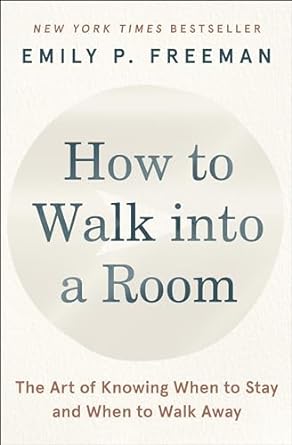
I remember resonating so deeply with Emily’s podcast episode, “How to Walk Out of a Room,” a couple years ago. The episode was mercifully devoid of details so that her principles could apply to all sorts of situations. When I heard she was writing a book based on that episode, I knew I would want to read it.
Emily is a spiritual director and has a master’s degree in spiritual formation, and she has a way of walking with people in discernment that is quiet and calm. She offers a “non-anxious presence,” as they say in spiritual direction circles. (Full disclosure: I’ve been meeting monthly with a spiritual director for about the past year, and it’s been a huge part of drawing my heart back into conversation with God after some dry, lonely years.)
I had a feeling this book would be important, and so I decided not to mark it up but to leave it empty and, in a way, sacred. Instead, I would rewrite meaningful sections in my journal. This helped slow me down and really savor Emily’s words. It helped me process the past, it helped me learn how to make better decisions, and it gave me peace in the decisions I was making. Then one day I looked around and realized I was making decisions much more easily than I had in the past, even small daily decisions, and I had to wonder if this book had something to do with it.
The thing I love about this book – and that sets it apart from other books purporting to help people recover from restrictive religious environments and explore a more expansive relationship with Christ – is that Emily gives tangible steps people can take to process the past and discern their present and their future. To walk with Emily is to learn together how to listen to God.
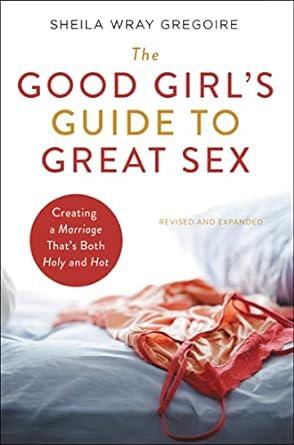
This is the book every woman needs to read before she gets married – or after, if things in the bedroom aren’t working, whether she got married a year ago or 30 years ago. Sheila co-wrote The Great Sex Rescue with two other authors, and it’s a great research-based book that helps people untangle their unhealthy and unbiblical beliefs about sex, but The Good Girl’s Guide really gets into practicalities.
I heard it recommended by a Bible college professor who teaches classes about sexuality, and I wanted to check it out myself. There was an earlier version of the book, but just this year it was revised and expanded, so I read the revised version. This is the book I will give to my daughters when they are engaged or newly married. I still recommend Aanna Greer’s Darling: A Woman’s Guide to Godly Sexuality for those who are quite innocent or naive about sex and their bodies, but Sheila’s book is a necessary follow-up.
Sheila, along with her pediatrician husband, also wrote The Good Guy’s Guide to Great Sex: Because Good Guys Make the Best Lovers. I haven’t read that one, but I’m assuming it’s good because that same Bible college professor recommended it and because it’s from an author I trust.
I hope these books will help you or someone you love.
I like books. I also like giving my pastoral counseling clients the option of accessing resources outside of the counseling room. Here’s a list of the books I recommend the most…
These aren’t mission-y books. They’re not even about cross-cultural life or transition. Nevertheless, these books have been fundamental to my life (and sanity) abroad. In no particular order…
Walking with God Through Pain and Suffering, by Timothy Keller
Because if you didn’t have a good grasp on these concepts before moving, you’ll need to get one pretty quick after moving. I very much appreciate Keller’s deeply theological and yet tender writing in this book. Those two things do not often coexist, unfortunately.
Prodigal God, by Timothy Keller
This one makes the list because the basic story is known but the deeper message is typically missed. This book and the truths in it have the power to reshape our understanding of God’s character and of his view of us. In the world of cross-cultural ministry, God’s character and how he views us are pretty big deals. I recommend this one all.the.time.
The Psalms
I had to not-so-subtly sneak this in. Of course, this one is not co-equal to the others, but it’s often overlooked. I’ve written here and here about the importance of the Psalms in the lives of missionaries and cross-cultural workers.
Emotionally Healthy Spirituality, by Peter Scazzero
There’s nothing wrong with being a pastor at a suburban, wealthy, primarily white church. But this guy isn’t one. So, although he writes from an American context, he also writes from a cross-cultural, multi-ethnic, church-centered context. I also love how he assumes that the majority of people are going to be truly transformed and discipled, not through professional counselling, but through consistent and loving relationships.
A Year with G.K. Chesterton: 365 Days of Wisdom, Wit, and Wonder, by Kevin Belmonte
Life is serious, the world is a mess, and we need the aged brilliance of Chesterton. His humor, his levity in the face of a world that was no-less troubled, his talk of fairies and mysteries and paradox, it’s all for our time. Get to know the author who pretty much gave the world C.S. Lewis. You’re welcome.
Welp, that’s it. Have a great day! Oh, and if you have a book that you’d add to this list, link to it in the comments section below. Thanks for dropping by!