Sometimes I Hoard God’s Love

by Elizabeth

bitter-chocolate-230307_640

I’m always ready to receive good gifts from the Father. Then again, who isn’t??

And in using the word gifts, I don’t mean material possessions, but rather the little (and big) evidences of God’s Love in my life.

I know God loves me. I know He made me and that He wants to give me good gifts.

Then, in a total disconnect, I look at people who’ve hurt me, and I don’t want them to receive good gifts. That’s not fair. They don’t deserve that, you see. They’ve hurt me.

I know this way of thinking is wrong, yet I cling to it anyway — until one day I was driving along the scant Kansas countryside and the words of Jesus came to me. HARD.

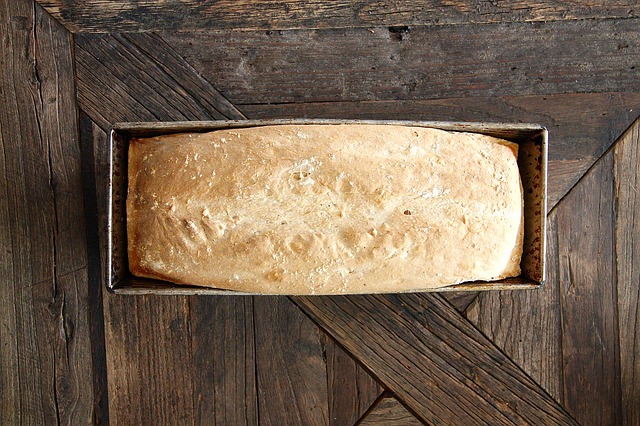
“You parents—if your children ask for a loaf of bread, do you give them a stone instead? Or if they ask for a fish, do you give them a snake? Of course not! So if you sinful people know how to give good gifts to your children, how much more will your heavenly Father give good gifts to those who ask Him.” — Matthew 7:9-11

I’ve hurt other people, yet He still bestows loving gifts upon me. Then I turn and I don’t want Him to lavish His love on other people.

But I realized: I don’t deserve those good gifts from my Father either. And doesn’t He love other people as much as He loves me?? Doesn’t He want to give good gifts to them as much as to me??

God loves everybody equally; I universally believe this. 

In my head. 

But my head needed shaking and my heart needed stirring.

Because He wants to give good gifts to people who have hurt me, in the same way I want to give good gifts to all my children equally, no matter what they’ve done and regardless of how they treat one another.

I can have a pretty rotten heart sometimes, yet not only does God want to give me good gifts, He follows through on it: He actually gives me those gifts. Gifts I receive with an open heart and an open hand.

But I clench my hands back up again when I think about Him giving good gifts to other people.

So right then and there on a sunny day on the open highway, I opened up my hands again and said, “I’m glad you are a good Father to me. And I know You want to give good gifts to people who’ve hurt me. I think I want to be glad about that now, too.”

Because if I’m not glad about that, about a loving Father who takes good care of an imperfect child, then I can’t possibly expect to receive good gifts for myself, a fellow imperfect child.

These logical-sounding words describe what was actually a very palpable shift in my heart. A shift of love towards those who have trespassed against me. A new understanding of God’s parental love. And another release of bitterness from my soul.

So I thank Him. I thank Him for the good gifts He’s given me. I thank Him for the good gifts He’s given others.

I choose not to hoard God’s love for myself. 

For He is a good Father to all. And I am glad.

Confessions of a Lost Sheep

by Elizabeth

urban-998216_640

Sometimes I feel a bit lost. Not in an eternally-lost-and-I-don’t-have-a-Savior kind of way, but an I-don’t-know-where-I-am-and-I-don’t-think-anyone-else-does-either kind of way.

Because life keeps on going, unchecked and unthrottled. I feel confused, out of touch with myself. So much is happening, what do I even think or feel about any of it? I’m here, but I’m not really here. And I don’t quite know where the real me is.

I don’t know where I am. I’ve lost my way. Who is going to find me? Can anyone find me?

So I cried out, “God, I feel so lost! So lost, so lost, so lost. Jesus, find me. Will you find me? Will you please find me?”

And Jesus, sweet Jesus, He directed my mind to the parables of the lost sheep and the lost coin.

I figure that as long as He’s talking to me, I should probably listen.

So off I went to Luke 15, where Jesus says, “If a man has a hundred sheep and one of them gets lost, what will he do? Won’t he leave the ninety-nine others in the wilderness and go to search for the one that is lost until he finds it? And when he has found it, he will joyfully carry it home on his shoulders.

When. Not if. But when he has found it.

A few moments later Jesus tells us, “Suppose a woman has ten silver coins and loses one. Won’t she light a lamp and sweep the entire house and search carefully until she finds it? And when she finds it, she will call in her friends and neighbors and say, ‘Rejoice with me.’”

Again, not if, but when. When she finds it.

All this searching and sweeping, all this tracking and seeking and lighting of the lamps. All these details and all this grunt work, just to find one who’s been lost.

And I remembered, all over again. I remembered I have a Shepherd. A Shepherd who is good. A Shepherd who knows His sheep.

I may not know where I am, but I have a Good Shepherd who knows where I am. Better yet, He knows me, and He wants to find me.

Even when I feel lost, He knows where I am. When I can’t find my way out, when I can’t find my way back home, He can find me.

It’s time to trust that He’s going to.

A Few of My Favorite Things {September 2015}

Here are some of my Favorites from this last month. ~Elizabeth

som2

Pen-and-Paper journaling and analog Bible reading. As much as I loved reading the Kindle versions of Grace for the Good Girl and From Good to Grace for my devotional times over the summer, my soul felt so happy to return to good old pen-and-paper journaling and analog Bible reading this month. Apparently I need the turning of pages and the moving of my hands on paper. My soul is different on the inside, more still and at peace.

Prayer time with the prayer team.  Being in ministry and continuously pouring myself out for others, I often forget to let others pour into me. I (usually) remember to let God fill me up, and I most certainly draw strength from my marriage, but I generally forget to let other people pour into me. Which is why meeting with the prayer team at our international church felt so good. I didn’t owe anyone anything; my only job was to receive prayer. I didn’t even have to come up with words and verses for them to pray over me; that was their job. I cannot tell you how good that felt and how many burdens were lifted from my heart after that prayer session.

A farewell night with my team. I’m so thankful for the families on our Team Expansion team. They are dear, safe confidants, and their children are like my children’s cousins on the field. In an ex-pat world of moving people, there is something so comforting about having people who get you (because you live the same lifestyle), and who are also committed to you on a longer-term basis (because of the organizational link). The difference in relational security is staggering. And also, my people are funny. They make me laugh. I can be so focused and serious sometimes (most times?) that I need real, live people to pull me out of my Seriousness and have fun with me.

Worship music from Hillsong, International House of Prayer (IHOP), Bethel, Matt Redman, Chris Tomlin, etc. While I dozed over the Pacific, I listened to my (10-year old) iPod shuffle, which has all my favorite worship music on it. I love IHOP music. Can’t get enough of it. In the time of flux we like to call “furlough,” this music served to re-center me and focus my affections on God. Bonus: it lulled me to sleep during a bad hour of turbulence. I get airsick pretty easily, and Jonathan told me later that he kept looking over at me during this hour, fearing I would be sick. Instead I was fast asleep. Thankful for that!

My parents’ house. As expected, I did feel right at home walking into their house. My parents have lived here 15 years, the longest they’ve ever lived anywhere (with the next longest time being 4 ½ years), and it truly feels like home to me. For years Jonathan and I lived only 20 minutes away, and I brought my kids here at least once a week. I have all these memories of my mom babysitting so I could go to pre-natal appointments and then staying for the rest of the day, of using her laundry when we didn’t have a washing machine of our own, and of just plain sitting nursing my babies while I sat and talked with her.

And my kids remember this place too, both before we moved to Cambodia and on our last stateside service, when we stayed here a couple months. This house is for them, I hope, what my grandparents’ house was for me: a rock, and a stable place to return to. Plus, Mom makes yummy food, and her house has soft sheets, a dryer, and comfortable carpet. What other creature comforts could I ask for?? It truly is a safe place in a time of transition and culture shock.

Free parks in cool September weather. It’s not cold yet! The weather is pleasant and beautiful. Friends lent us bicycles, and my kids are enjoying those, along with all the free, non-rusting, non-blisteringly-hot playgrounds. Windows are wide open all the time, and I’m enjoying the very fresh, non-garbage-y air. I can walk the neighborhoods — whose sidewalks are both clean and flat — without a bunch of mangy dogs barking and nipping at me. Also I’m loving the back porch as a place to read and write.

A total lunar eclipse. I hadn’t seen one since I was a girl, and it was neat to both see it and revisit some of the science behind eclipses. I was still jet-lagged but nothing can erase the splendor of a blood-red moon.

Free books from the library. Need I say more? My mom lets me max out her library card while I’m here. If I come across any treasures, I’ll be sure to review them here next month.

And now for some Link Love . . .


BOOKS

When God Became King by N.T. Wright. This is my first N.T. Wright (I know, I’m late to the game), and like all Wright, it’s dense and will take me a while to get through. So far I’m intrigued. I love the Creeds (Apostles’ and Nicene) and the way they encapsulate the gospel story. But Wright says they’re incomplete. They’re missing Jesus’ LIFE. So I’m on a journey to find out more. . .


BLOG POSTS

An Open Letter from My 42 Year Old self to My 28 Year Old Self Who is About to Begin Homeschooling by Laura Hamm Coppinger. New homeschool moms take note of this advice! I had the privilege of being counseled by Laura at Bible camp for several years in a row back in the 1990’s, and I relate to her on so many levels, not least of which is being guilty of taking homeschooling waaaaay too seriously in the early days. As she says, “Hello, he’s five.” Also she cracks me up with: “Someone always has to poop.” Yep. Ask any mom of boys and they’ll tell you the same. For another hilarious parenting one from her, check out The Story of My Sleeves.

My Daughter was Born on the Anniversary of 9/11 by Rachel Pieh Jones. If there’s one thing Rachel knows how to do, it’s write tear-jerkers! It’s been a few weeks since we commemorated the anniversary of 9/11, but this post is worth going back to. May you be encouraged by both the hope and the shalom present in this story.

Stupid Phrases for People in Crisis by Marilyn Gardner. Need I say more? The title tells all. Marilyn is always wise — and in this case, she’s funny too.

How to Respond (without violence) When Someone Says “Everything-Happens-For-A-Reason” by Christine Suhan. More on the subject of responding to people in crisis. This post reminded me of the scene in Call the Midwife when Jenny is in despair after her boyfriend unexpectedly dies. Sister Julienne tells her, “God isn’t in the event, Jenny. He’s in the response to the event.” I’ve always had trouble accepting theology that says God is sovereign; therefore He intended for [rape/violence/trafficking/cancer] to happen. Sentiments like Sister Julienne’s comfort me in my faith in a loving God, and I often find myself remembering her statement in the midst of tragedy.

Grace and Anger by Chris Lautsbaugh. Sometimes I’ve found, as Chris explains in this post, that what’s underneath my anger is a deep sadness and grief that I’d rather not address. Perhaps you’ve experienced this too.

Christ, Our Righteous Garment by Missy Filler. Another post on grace and works. I think so many of us have felt this way before and struggled to untangle our thinking.

An Unexpected Friend by Melanie Singleton. So many reasons to love this post about insecurity, gratitude, and finding deep, healing friendships with other women.

Faith in the Valley: Hagar in the Desert by Katrina Ryder. I’ve gotten to know Katrina through fellow A Life Overseas writers Andy and Kay Bruner. When I shared with her my recent post about Hagar, she in turn shared her thoughts on Hagar. I was blown away. Blown away. I love the stories in Genesis. I think and read about them a lot (I take after my mummy in that regard). But here Katrina offers thoughts that you’ve never thunk before. Read it and engage with her in her own comment section, and then let me know so I can read your thoughts, too.


VIDEOS AND PODCASTS

Kari Jobe teaching on worship.  You all know I love to worship. And I love this teaching on worship from Kari Jobe.

Addicted to Anxiety 2 seminar. Over the years I’ve dealt with some pretty significant anxiety, both in social situations and over health and safety fears. I don’t generally live with overpowering anxiety anymore, but in times of stress, I can really start to feel anxious again. What I love about this seminar is finding out that teachers and writers whom I love and respect have dealt with heavy anxiety too; I’m not alone. Maybe you also need to know you’re not alone in your anxiety. In particular I loved hearing from Angie Smith (whom I know from IF:Gathering) at 19:00, Beth Moore at 34:40, and Holley Gerth (founder of incourage.me) at 2:01:55.

Emily P. Freeman on the Feathers podcast. I’ve talked about Emily, author of Grace for the Good Girl, before. I loved this interview with her.

Flourishing in Grace by Katrina Ryder. As I mentioned before, I met Katrina through some mutual friends. She’s the editor at the website To Save a Life, where some of Jonathan’s and my work has been reprinted. I love her video sessions! This one is based out of her personal interaction with the ideas in Emily P. Freeman’s Grace for the Good Girl. Scroll to the bottom to watch the video.

Finding the Rest of My Faith by Katrina Ryder. Another one from Katrina, on spiritual rest, and I like it even better than her first one. She made me laugh a bunch in this one.

Erasing the Stigma of Mental Illness in the Church — an interview with Kay Warren. Wow. You will cry during this interview. Kay and her husband Rick lost their son to suicide several years ago. Kay is wise and compassionate and offers advice for churches wanting to help those suffering with mental illness, including some beginning book recommendations. What I love about Kay is that she thinks the Church has something to offer those suffering from mental illness that no one else can offer. It’s a really hopeful view of both the Church and mental illness.

To Scale: The Solar System. You might have seen this already. I love it. When I was a child, I dreamed I walked the solar system. I passed by the gas planets, walked all the way to Pluto (which was still considered a planet), and ended in a beautiful valley. It was paradise, the most beautiful thing I’d ever seen. I often think of that dream and the way God placed a love for the heavens in me from a very early age. Of course the science and scale of my dream was waaaaay off, for me to be walking past the gas planets. But the awe and wonder present in that dream are still present in my waking hours today.

Biblical Imagination and the Gospels — interview with Michael Card. Jonathan and I have a long-standing love for Michael Card’s theologically-rich lyrics, including songs like El Shaddai, Things We Leave Behind, Why, and God’s Own Fool (which I’ve actually blogged about before). I loved listening to Michael’s explanation of the Biblical imagination and how to connect the head and the heart, and his four new Gospel commentaries are now on my To Read (Eventually) list. Here’s a quicker explanation for the Biblical imagination from Michael. He’s also done some teaching on lamenting as worship, which I really appreciated.

Never Once by Matt Redman. I listened to this song on the plane. It was the theme song during our last trip to the U.S. and truly represented how we felt about our first term in Cambodia. Now that I’ve finished a second term, I can again say with gratitude that never once did I ever walk alone. He has been with me, beside me, and in me this entire time, and I see how His love has burned ever deeper into my heart the past two years.

The God Who Wants to Hear Your Story {Velvet Ashes}

Elizabeth is over at Velvet Ashes today. Here’s a preview. . .

genesis-16-8.2-726x484

I’ve always loved the story of Hagar. I simply thrill at her proclamation of “the God who sees me.” I scoop that name up and tuck it into my heart, and I pull it out when I feel alone, lonely, and unseen: El Roi.

I’m sure you all know the story. Sarai’s inability to conceive had prompted her to give her servant girl Hagar to her husband Abram, hoping to have children that way. When Hagar became pregnant, her prideful attitude embittered her mistress Sarai, who in turn treated Hagar so harshly that she ran away. When we meet Hagar in Genesis 16, she was probably heading back to her native Egypt.

Until recently, my main take-away from this story had always been Hagar’s name for God. But there’s something else going on in this passage too, something I’d never noticed before. In verse 8 the Angel of the Lord asks Hagar, “Where have you come from, and where are you going?” God is basically asking her, “What’s your story?”

Read the rest of the post here.

Our Journey to Finding Joy in Marriage (and the things we lost along the way)

by Elizabeth

photo-1438707207584-d9fcda4a60e7b

We were in a diner eating pizza. The young couple sitting across the table from us had just asked us how we’ve sustained the joy of our relationship over the years. I wasn’t exactly expecting that question, so my first answer was pretty simple: we spend a lot of time together. Talking, dreaming, laughing, debriefing. Companionship and intimacy require time, and lots of it.

When we were first married, we retreated together to cheap lawn chairs overlooking bushes that barely shielded us from the highway on the other side. We walked all over that university town, in all kinds of weather, for our date nights. We might walk to the library for a free movie and share an order of breadsticks from Papa John’s, where even with the sauces, our meal totaled a mere $3.69.

Later we added children, and enough disposable income for Jonathan to buy me a porch swing. We’d sit in that thing and talk while our children played. At night, we’d tuck them into bed and sneak back out to talk some more, with hot chocolate or bug spray as our companions, depending on the weather.

Even after losing both the yard and the porch swing in our move to Cambodia, we found a way to escape together. We’d head up to our roof and sit in bamboo chairs (with bug spray as our definite companion), watch the city skyline, and share soul secrets. These days you’d be more likely to find us sipping coffee at our kitchen table, the kitchen door conveniently locked behind us.

But the more I pondered this young couple’s question about joy in marriage, and the more I traced our marital history over the years, the more I realized that finding joy was about losing things too. On the journey to find joy in marriage, we’ve shed some surprising baggage.

Who’s in charge here??

I went into marriage spouting ideals of male headship. My husband Jonathan would be in charge and make the final decisions, and I, as the wife, would submit. In any disagreement, his opinion would count for more. We thought we believed that premise, and because we didn’t have a lot of conflict, we thought we were pretty good at following it.

In real life, however, I don’t think we ever actually practiced male headship (or what is sometimes called complementarianism, a term I didn’t know at the time). We thought we did, because we loved God and wanted to obey His Word. And male headship is what the Bible instructs, right??

But Jonathan never pulled the “I’m in charge” card on me. Never. Not even once. Not even when he felt led overseas and I didn’t. I put pressure on myself to submit to his call, but it never came from him.

A little premarital advice from my mom

Growing up, I watched my mom honoring her husband, and she taught me to do the same. When it came to practical advice, though, she focused on “talking things out.” She told me that in her marriage to my dad, if one of them cared about something more — whoever it was — they went with that. The next time it might be different, and that was ok, because nobody was keeping track. She said if they didn’t agree, they just kept talking until they did agree. Practically speaking, my mom and dad were on equal terms in their marriage.

One day my mom told me about a conversation with some other Army wives. One of the women turned to my mom and told her that she must really love her husband. Mom was a bit confused; she hadn’t been raving about how wonderful Dad was or how much she loved him. But something in the way she talked about him (or not talked about him, as the case may have been) spoke her love loud and clear to those fellow Army wives.

Now I know that the type of marriage my mom was describing follows the mutual submission outlined in Ephesians 5:21: Submit to one another out of reverence for Christ. Now I know that people call this type of relationship “egalitarian.” But it’s almost as if back then, we had no vocabulary for the Biblical marriage conversation.

The priesthood of all believers

Even in the early days of our marriage, whenever we needed to make a big decision, Jonathan and I would always pray together. We assumed that God would impress the same thing on our hearts, and that we would be united in both seeking God and obeying Him.

Looking back now, I can see that the path to egalitarianism begins with the priesthood of all believers. We went into marriage saying we believed in male headship, yet in decision-making, we fully expected God to speak to both of us. We believed we could, and would, both hear from God, and that God would say the same thing to both of us. Blame it on the Experiencing God craze of the 1990’s if you want, but this is how we approached God from the very beginning of our marriage.

photo-1439396874305-9a6ba25de6c6c

Love and Respect??

Several years into our marriage I heard about the idea of “Love and Respect,” which claims that a woman’s biggest need is to be loved by her husband and that a man’s biggest need is to be respected by his wife. That seemed like good, solid, Biblical advice. In our marriage I felt loved, my husband felt respected, and we were happy. “Hmm,” I thought, “love and respect must be the key to marital happiness.”

Then I read the book (which is a long one for being built on the foundation of only one verse). About halfway through, I had to put it down. It was so tedious I couldn’t finish it. How many more stories and examples could there be?? The book seemed to be repeating itself.

Besides, I felt like something was missing. I need my thoughts, ideas, and intellect valued: I need respect. Almost as much as love. And my husband needs love, perhaps more than respect. He can’t survive without my compassion, empathy, and listening ears.

(In all fairness to the author of these ideas, he has elsewhere stated that men and women need both love and respect, though in differing amounts. It’s just that I didn’t get that impression from reading his book or from watching his videos.)

Lest you get the wrong idea here, let me make one thing clear: I deeply respect my husband. I value his opinions and consult him on everything. I turn to him for counsel, guidance, and perspective. I trust his advice and regularly defer to him in decision-making. He most certainly has my respect.

But for him, although my respect is nice, if I did not also care about his feelings, his dreams, and his deepest longings, and if I did not tenderly take care of him, he would shrivel up and die (his words, not mine). He needs my open-hearted love. And if he loved and cared for my deepest hurts and feelings, but did not also value my gifts and abilities, I’d be crushed. In fact, if I didn’t have his respect, I wouldn’t actually feel loved by him.

Receiving only love or only respect isn’t good enough for Jonathan and me. We need both love and respect. The teaching of “Love and Respect” was a nice start, but for us, it didn’t go far enough. As a wife, yes, I respect my husband, and as a husband, yes, Jonathan loves his wife. It’s in the Bible; it’s good. But God isn’t going to be offended if wives also love their husbands, and husbands also respect their wives.

In the book of Ephesians, Paul was improving upon the pagan hierarchies of the day. Neither Paul nor Jesus – who demonstrated both love and respect for women repeatedly in the Gospels – is going to be upset if we take these instructions that much further, if we add more love and respect, and more imago dei, to our relationships. On the contrary, I think it pleases Him.

jb2

“A marriage where either partner cannot love or respect the other can hardly be agreeable, to either party.” — Jane Bennett in Pride and Prejudice (Sorry, just had to get my Austen on for a minute.)

Encountering Jesus as healer

The more I considered this young couple’s question, the more I kept coming back to the same answer: emotional healing. Emotional healing is what happens when Jesus walks into our pain and binds up the wounds of our hearts. Emotional healing is what draws us closer to each other than ever before.

It’s what enables us to answer Karen Carpenter’s velvet-voiced, pain-tinged question: “Why do we go on hurting each other, making each other cry, hurting each other, without ever knowing why?” Emotional healing shows us both why we hurt each other and also, how to stop hurting each other.

Pursuing emotional wholeness is a journey Jonathan and I have been on for four years now. And though we walk together, our paths look different. The healing Jonathan needed came in the form of expressing long-hidden grief. For me, it meant beginning to feel long-hidden feelings.

For both of us, the path to healing has trodden straight through pain, but it’s been worth it, for the healing we’ve found has deepened our intimacy and intensified our joy.  

IMG_2393

Celebrating 15 years of marriage

Perhaps the honeymoon should have worn off by now, but it hasn’t. We have more joy and intimacy after 15 years of the “daily grind” than we ever dreamed possible.

Along the way, we’ve shed strict interpretations of gender roles and lost deep emotional wounds. In their place, we’ve welcomed emotional healing and embraced mutual love and respect.

We are co-heirs with Christ and co-leaders in our home. We lead each other closer to Jesus, closer to love, closer to wholeness. We give each other space to grow, and we say the hard truth to each other, too.

This is what our Joy looks like.

Related:
A Prayer for Marriage
The Purpose of Marriage is Not to Make You Holy
Marriage as confinement or freedom: notes from a wedding