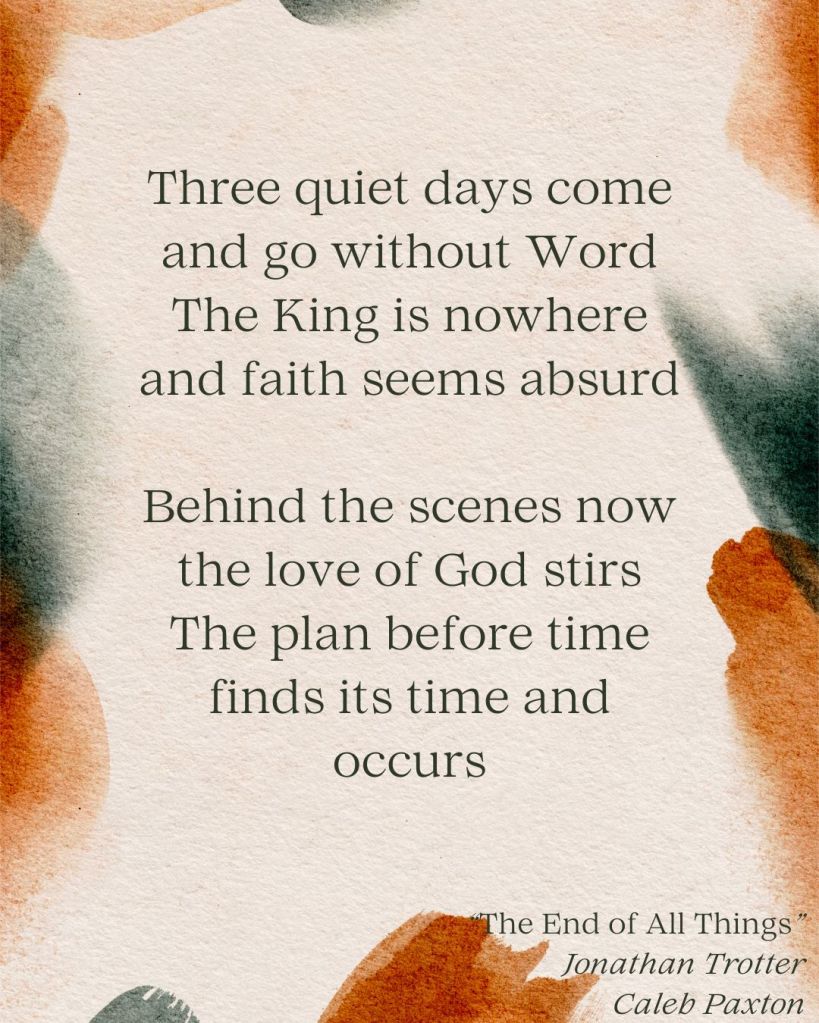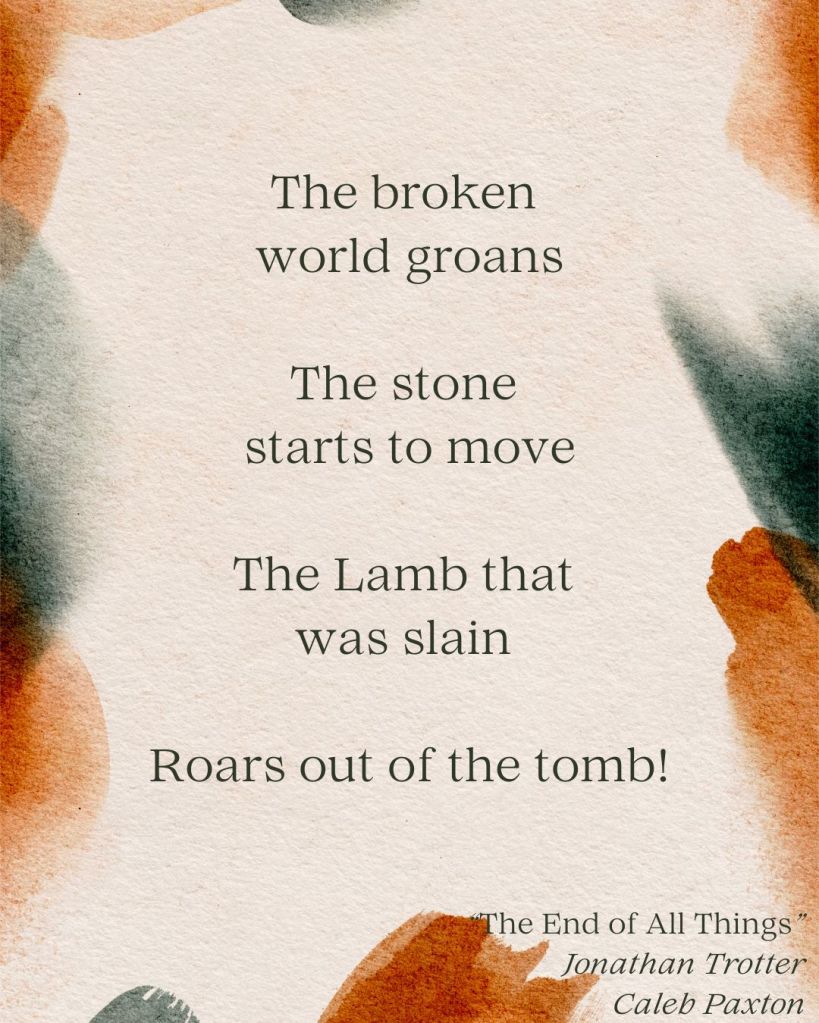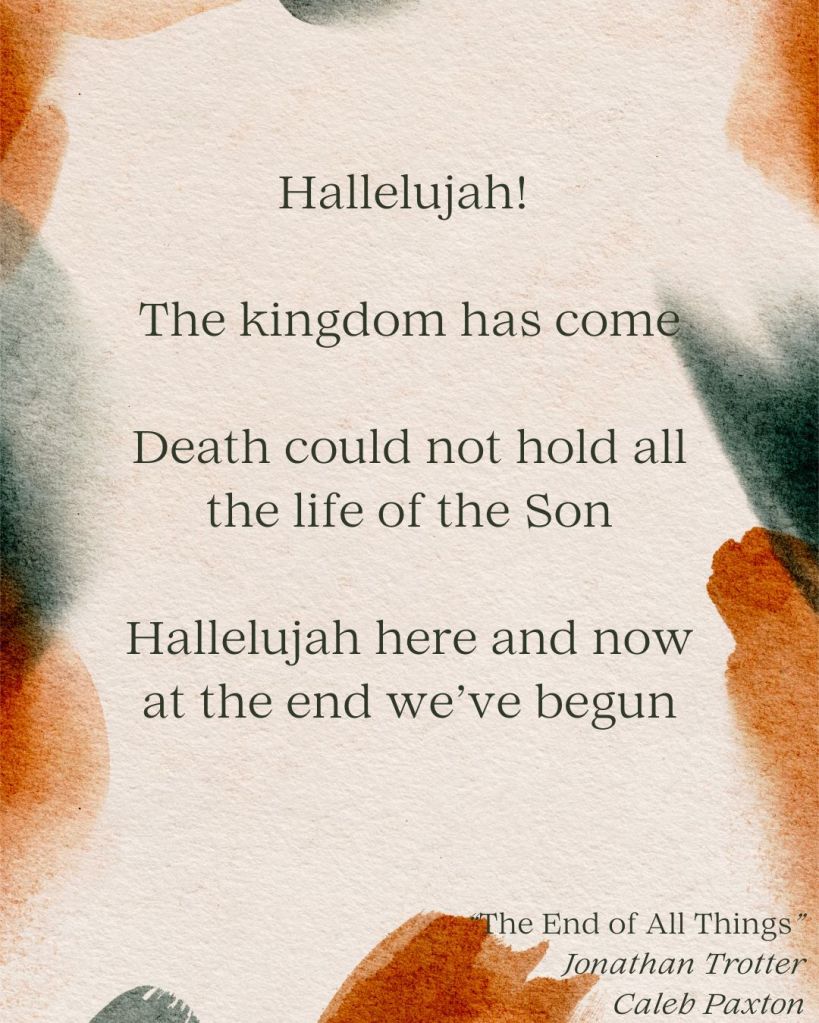
I am so excited to share this new Easter song with you all. It’s based on a poem that originally appeared at A Life Overseas about five years ago. It is my hope that it might be a deep encouragement to you, wherever you are, on this Holy Saturday.
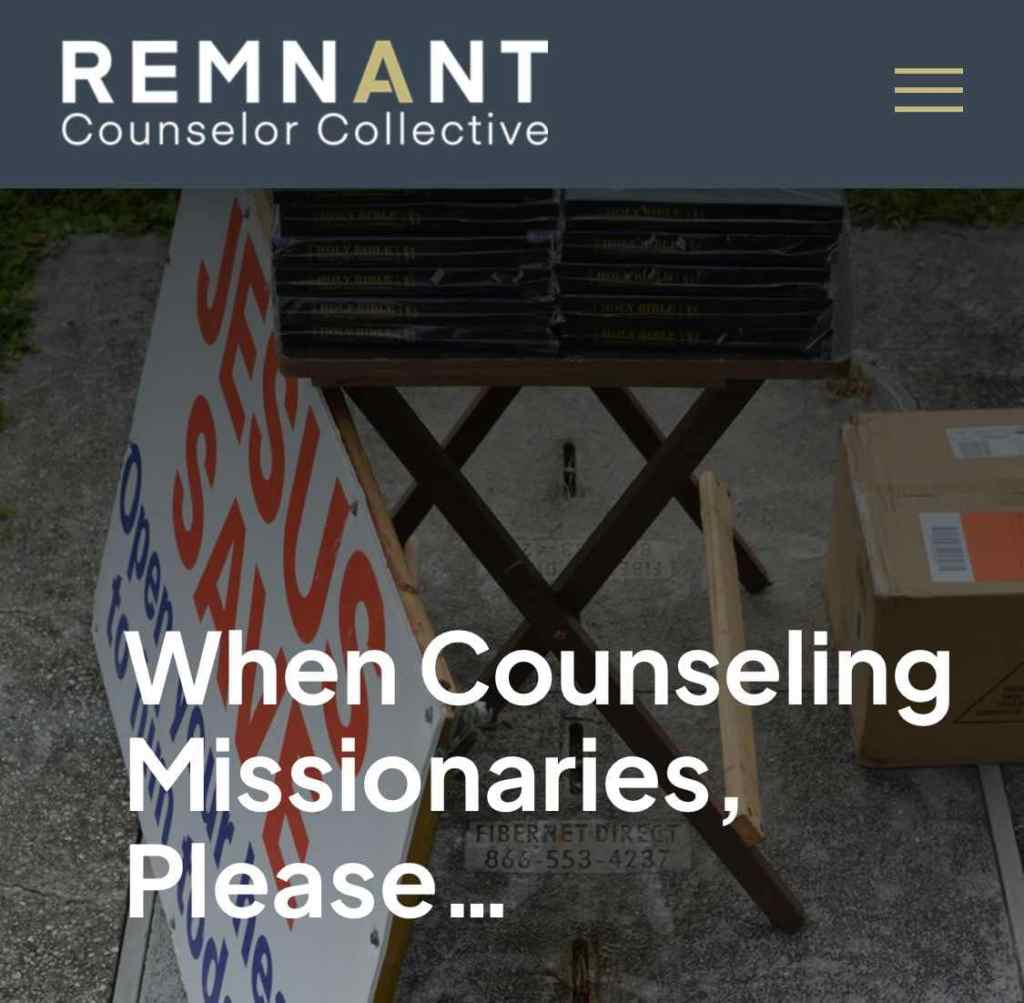
I’m so excited that Remnant Counselor Collective launches today and includes an article of mine aimed at helping counselors care for missionaries. It’s about the six things a counselor should remember when counseling missionaries:
1. Don’t try to keep them on the field or get them off the field
2. Remember, they’re people too
3. Get comfortable with grief, because there’s probably a lot of it
The early days of homeschooling are intense. You’re afraid of messing up. You haven’t fully settled into your teaching style yet. You’re still getting to know your children’s learning preferences. You’re still uncovering their abilities and their challenges.
And often, you have little ones running underfoot while you attempt to educate your older ones.
Older moms offer advice, and it’s good, but you don’t know how to apply it to your situation. You read books, and they’re good, but sometimes the requirements feel overwhelming. How can anyone do all these things and do them well?
And sometimes the advice conflicts, and you don’t know which to choose.
Now, after 20 years of motherhood and over 15 years of homeschooling, I’ve become that older mom who has advice to offer and guidance to give. And the first thing I want to say is: let’s all take a deep breath. We make better decisions when we’re calm.
Beyond that, there are all sorts of things I could tell you. Things like figuring out your educational approach and your teaching preferences and your family culture and your students’ learning preferences. And those things are all important, and I talk about them with moms.
But the two questions I always ask young moms are the two questions they sometimes forget to ask themselves. They are:
What are you doing to take care of yourself?
And, if you’re married, what are you doing to take care of your marriage?
These two areas are the bedrock upon which a healthy, happy homeschool is built. If you’re burnt out, you won’t bring your best self to the task of home education. You’ll be tired and worn down, you’ll run out of energy and enthusiasm, and you might let too many things slide that shouldn’t be sliding. (What needs to slide and what needs to stay is a conversation for a future post.)
If you don’t take care of yourself, you won’t have the love you need to pour out on your children. Your relationships with them won’t be as good as they can be because you aren’t as full as you could be. You’ll be snappier than you want to be, and you’ll regret those moments.
Answering these two questions can be really hard when you have young children. You’re almost always short on time, and you’re probably short on sleep, which means you could also be short on brain power. Hopefully you can take some time, either in the early morning before your children get up or in the evening after they go to bed, to get quiet and ask your soul these two questions.
Don’t be afraid to ask your husband for help with the children in order to discern these things. You might even need the help of a friend or coach to talk it out. But don’t discount the power of solitary journaling to help you figure these things out. Write out all your angst until the answers appear on the page. And then go live them.
**NEW BOOK COMING IN SUMMER 2025**
The Hats We Wear: Reflections on Life as a Woman of Faith addresses six different aspects of being a woman of faith, with sections on spirituality, emotions, and embodied living, as well as marriage, motherhood, and homeschooling.
Hey there! I am thrilled to let you know that “Digging in the Dirt: Musings on Missions, Emotions, and Life in the Mud” is ON SALE FOR $2.99 UNTIL WEDNESDAY NIGHT!
I put so much of my heart and soul into this book, diving into topics like anger, grief, hope, sex, what to do when the power goes out, what to do when the thief steals, and so much more. Here is the invitation from the back cover:
Welcome to ground level, to the dirt and the mess.
We like the mountain tops and the sunshine. We like green grass under a clear blue sky. We like victory and breakthrough and answered prayers. But sometimes it rains, the shadows deepen, and life turns muddy. Sometimes God seems quiet. What then? What happens when depression descends, or anxiety hangs like a sword overhead? What happens when loneliness suffocates, the thief steals more than stuff, and you get blood on your shoes?
In Digging in the Dirt, Jonathan Trotter delves into the disasters, the darkness, and the deluge, and he offers comfort, presence, and a gentle invitation to hope.
With humor and prose, with poetry and Top Ten lists, Jonathan welcomes us to the dirt, to the places where we actually live. He invites us to boldly see life as it is, with eyes wide open, and reminds us that even when the digging is scary, we are never alone.
To the ones who are dealing with devastation and distress, welcome. To the ones who need to uproot, to pull out, to clear ground, welcome. To the ones who seek desperately to plant seeds of grace and hope in once barren soil, welcome. To the missionary abroad and the believer at home, welcome. Receive the invitation, and join with Jonathan here at ground level, together.
This spring I read three of the best books I’ve ever read. One in particular I couldn’t stop talking about for weeks – but it wasn’t the sex book! I had to start with that word, though, because I knew it would grab your attention.
When Christine Paterson of FieldPartner recommended the book and mentioned that it was only $3.99 on Kindle, I figured I’d give it a try. I intuitively knew that American culture held more than just a guilt/innocence worldview and that shame/honor and fear/power comes into our thinking as well, and I was eager to learn the specifics of each worldview.
What I didn’t expect was for the book to so thoroughly rewrite my understanding of culture. I underlined nearly the entire book. At only 80 pages in paperback, there’s no fluff here. Every word seems essential, and every sentence sheds light on world cultures and their differing assumptions and thinking processes. I began to understand shame/honor and fear/power cultures more fully, and I began to see how the Bible beautifully addresses all three cultural concerns (guilt, shame, and fear).
Once my eyes were opened to this, I even began to see these three concerns addressed in most of our worship songs. In Western cultures we tend to tell the gospel story only through a guilt-innocence lens, and while that’s not wrong, it is incomplete. We look to God for help with our problems regarding fear and shame, but we don’t tend to bring these perspectives into our telling of the Gospel story, and this hinders our spiritual growth.
Thankfully, we can offer people a more three-dimensional gospel, one that has the power to redeem their day-to-day struggles with fear and shame, whether in our passport culture or a host culture. God knows the human heart and has offered a solution for all our problems in Jesus Christ.
This book made me fall in love with God all over again.
I remember resonating so deeply with Emily’s podcast episode, “How to Walk Out of a Room,” a couple years ago. The episode was mercifully devoid of details so that her principles could apply to all sorts of situations. When I heard she was writing a book based on that episode, I knew I would want to read it.
Emily is a spiritual director and has a master’s degree in spiritual formation, and she has a way of walking with people in discernment that is quiet and calm. She offers a “non-anxious presence,” as they say in spiritual direction circles. (Full disclosure: I’ve been meeting monthly with a spiritual director for about the past year, and it’s been a huge part of drawing my heart back into conversation with God after some dry, lonely years.)
I had a feeling this book would be important, and so I decided not to mark it up but to leave it empty and, in a way, sacred. Instead, I would rewrite meaningful sections in my journal. This helped slow me down and really savor Emily’s words. It helped me process the past, it helped me learn how to make better decisions, and it gave me peace in the decisions I was making. Then one day I looked around and realized I was making decisions much more easily than I had in the past, even small daily decisions, and I had to wonder if this book had something to do with it.
The thing I love about this book – and that sets it apart from other books purporting to help people recover from restrictive religious environments and explore a more expansive relationship with Christ – is that Emily gives tangible steps people can take to process the past and discern their present and their future. To walk with Emily is to learn together how to listen to God.
This is the book every woman needs to read before she gets married – or after, if things in the bedroom aren’t working, whether she got married a year ago or 30 years ago. Sheila co-wrote The Great Sex Rescue with two other authors, and it’s a great research-based book that helps people untangle their unhealthy and unbiblical beliefs about sex, but The Good Girl’s Guide really gets into practicalities.
I heard it recommended by a Bible college professor who teaches classes about sexuality, and I wanted to check it out myself. There was an earlier version of the book, but just this year it was revised and expanded, so I read the revised version. This is the book I will give to my daughters when they are engaged or newly married. I still recommend Aanna Greer’s Darling: A Woman’s Guide to Godly Sexuality for those who are quite innocent or naive about sex and their bodies, but Sheila’s book is a necessary follow-up.
Sheila, along with her pediatrician husband, also wrote The Good Guy’s Guide to Great Sex: Because Good Guys Make the Best Lovers. I haven’t read that one, but I’m assuming it’s good because that same Bible college professor recommended it and because it’s from an author I trust.
I hope these books will help you or someone you love.