How Do You Write Your Name in the Land? {A Life Overseas}

Here’s an excerpt from Elizabeth’s recent post on A Life Overseas:

Sarah, Plain and Tall tells the story of a woman from Maine who moves to Kansas as a mail-order bride for Jacob, a widower with two children. Jacob and Sarah fall in love, and by the beginning of the movie Skylark, they’ve been married for a couple years.

The people of Kansas are now facing a drought. The prairie dries up a little more each day, and it has truly become a “dry and thirsty land.” But Sarah comes from a place by the sea — a cool, wet place, where drought is unknown — and she’s never experienced a season like this before.

When the wells run dry, the people of the community travel to the river, hoping to find water there, but the river is nearly dry. In desperation, Sarah’s closest friend Maggie, and her husband Matthew, tell Jacob and Sarah that they are considering leaving the prairie and settling somewhere else. Sarah is so frustrated by this possibility that she blurts out:

I hate this land. No, I mean it. I don’t have to love it like Jacob, like Matthew. They give it everything, everything, and it betrays them. It gives them nothing back. You know, Jacob once told me his name is written in this land. Well, mine isn’t. It isn’t.

Maggie replies in a thick Scandinavian accent:

“You don’t have to love this land. But if you don’t, you won’t survive. Jacob is right. You have to write your name in it to live here.


To read more, visit A Life Overseas here.

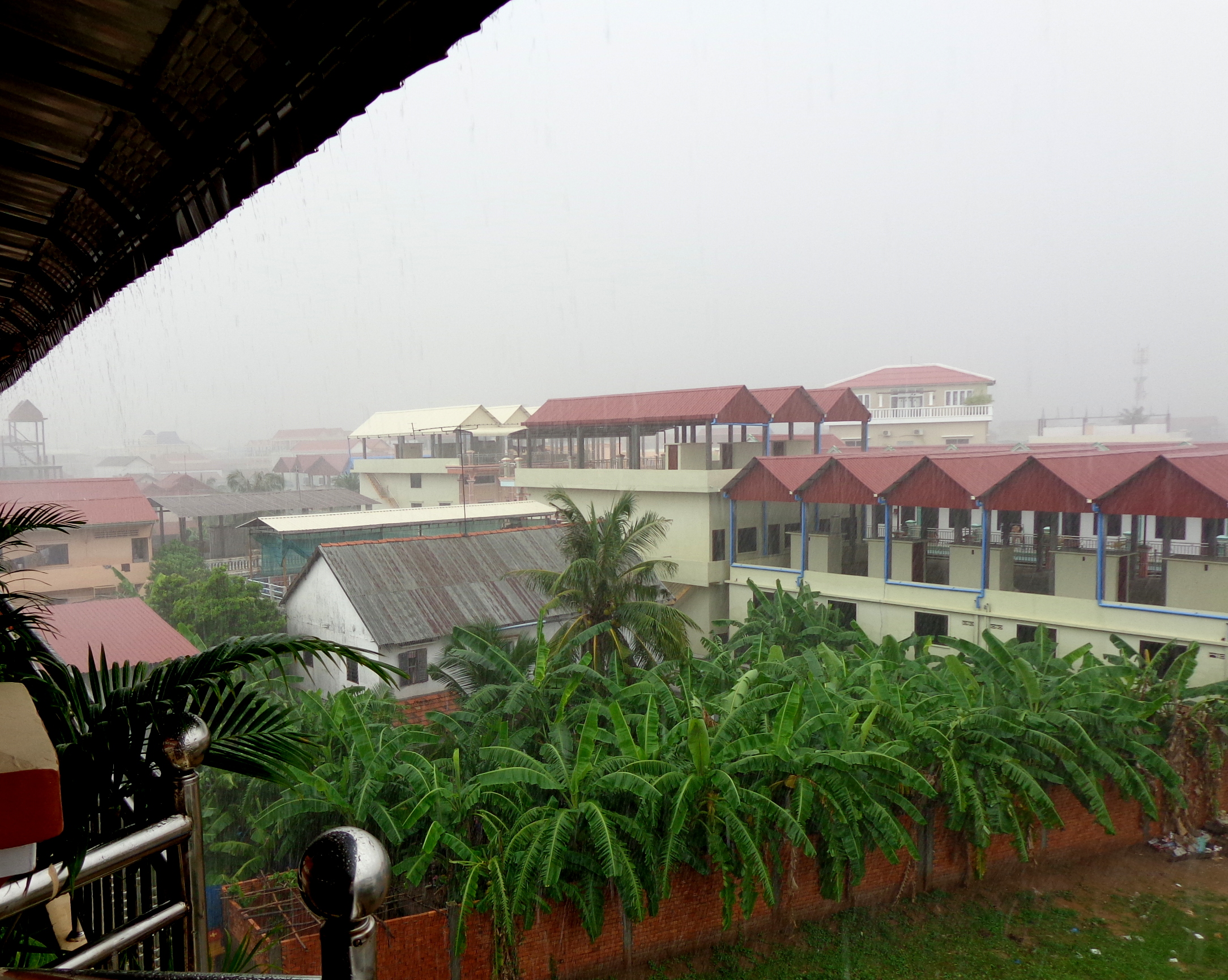
DSC00169a

MORE Reasons You Should Be a Missionary

Your coffee shop will sell fresh meat AND fresh coconut milk. And coffee.

Your coffee shop will sell fresh meat AND fresh coconut milk. And coffee.

by Jonathan

At the end of my post on A Life Overseas called 10 Reasons You Should Be a Missionary, I asked the readers this question: If a “Top 10 List” could have 15, what would you add? Folks replied with some great stuff, which I’ve compiled and edited below.

So, just in case my Top 10 List didn’t convince you, here are some more reasons being an overseas missionary is awesome. To see all of the responses, view the original post.

– You’ll get to go off-roading in a 4×4 just to get to your village.

– All the chicken is “free range.” However, “free range” is interpreted loosely, and may in fact mean “they live and eat in the gutters and trash piles, freely.”

Continue reading

I Married a Teenager

by Jonathan

She was eighteen. A math and chemistry nerd, more fond of books and calculators than looks and popularity. She was more prone to quote a hymn or a textbook than a pop song or movie. She hated hot dogs. And donuts.

She stole my heart without even trying.

That teenaged college sophomore became my bride. My best friend became my wife.

And then she changed. Fourteen years later, the college kid I married is now a woman.

Continue reading

The Two Most Romantic Things My Husband Ever Did

by Elizabeth

I first saw you on a Sunday morning, in Bible class. The teacher asked a question, and I was so impressed by your answer. My heart sighed a happy sigh at the wisdom of your words. Oh how I loved going to church so I could talk with you afterwards about our favorite books and songs.

And you were so handsome, I was constantly trying not to look at you. I had such a crush on you. I don’t think I ever stopped having a crush on you, all through high school. It must have been so obvious to everyone.

Continue reading

Part 2: Is This Orphanage Really an Orphanage?

by Elizabeth

If you haven’t read Part 1, in which I describe the conditions of an average Cambodian orphanage, please do so now. The rest of this series might not make much sense without that background.

This post, Part 2, will explain more about the orphanage crisis in Cambodia, for those of you who want facts and stats.

If you aren’t interested in the data, or don’t have the time to read all of it, stay tuned for Part 3, which will detail the encouraging work of Children in Families

~~~~~~~~~~~~~~~~~~~~~~~~~~~~~~~~

As I’ve mentioned before, deciding to talk about the orphanage problem in Cambodia has been very difficult for me, and felt like a huge risk on my part. I have friends all over the world running orphanages, and I don’t want to alienate people – especially friends.

But the truth is that I’m not talking about orphanages all over the world; I’m talking about an orphanage problem specific to my location in Cambodia. I’m only speaking from my own observations in this country, and I don’t know what orphan care looks like in other countries. But I do know one thing: the longer I’ve lived here, in this corrupt system, the more it has burned on my heart to tell this story. So now I am telling it.

Another thing to remember here is that I am painting with broad brushstrokes. Not every single orphanage matches these descriptions, but far too many do. I am not criticizing specific orphanages; I am drawing attention to the disturbing trends among most Cambodian orphanages. It is easy to find exceptions to these trends and then dismiss the issue altogether. But my point is that the issue exists — there are many bad orphanages in Cambodia, and something must be done about it.

Continue reading