
Our Journey to Finding Joy in Marriage (and the things we lost along the way)

by Elizabeth

photo-1438707207584-d9fcda4a60e7b

We were in a diner eating pizza. The young couple sitting across the table from us had just asked us how we’ve sustained the joy of our relationship over the years. I wasn’t exactly expecting that question, so my first answer was pretty simple: we spend a lot of time together. Talking, dreaming, laughing, debriefing. Companionship and intimacy require time, and lots of it.

When we were first married, we retreated together to cheap lawn chairs overlooking bushes that barely shielded us from the highway on the other side. We walked all over that university town, in all kinds of weather, for our date nights. We might walk to the library for a free movie and share an order of breadsticks from Papa John’s, where even with the sauces, our meal totaled a mere $3.69.

Later we added children, and enough disposable income for Jonathan to buy me a porch swing. We’d sit in that thing and talk while our children played. At night, we’d tuck them into bed and sneak back out to talk some more, with hot chocolate or bug spray as our companions, depending on the weather.

Even after losing both the yard and the porch swing in our move to Cambodia, we found a way to escape together. We’d head up to our roof and sit in bamboo chairs (with bug spray as our definite companion), watch the city skyline, and share soul secrets. These days you’d be more likely to find us sipping coffee at our kitchen table, the kitchen door conveniently locked behind us.

But the more I pondered this young couple’s question about joy in marriage, and the more I traced our marital history over the years, the more I realized that finding joy was about losing things too. On the journey to find joy in marriage, we’ve shed some surprising baggage.

Who’s in charge here??

I went into marriage spouting ideals of male headship. My husband Jonathan would be in charge and make the final decisions, and I, as the wife, would submit. In any disagreement, his opinion would count for more. We thought we believed that premise, and because we didn’t have a lot of conflict, we thought we were pretty good at following it.

In real life, however, I don’t think we ever actually practiced male headship (or what is sometimes called complementarianism, a term I didn’t know at the time). We thought we did, because we loved God and wanted to obey His Word. And male headship is what the Bible instructs, right??

But Jonathan never pulled the “I’m in charge” card on me. Never. Not even once. Not even when he felt led overseas and I didn’t. I put pressure on myself to submit to his call, but it never came from him.

A little premarital advice from my mom

Growing up, I watched my mom honoring her husband, and she taught me to do the same. When it came to practical advice, though, she focused on “talking things out.” She told me that in her marriage to my dad, if one of them cared about something more — whoever it was — they went with that. The next time it might be different, and that was ok, because nobody was keeping track. She said if they didn’t agree, they just kept talking until they did agree. Practically speaking, my mom and dad were on equal terms in their marriage.

One day my mom told me about a conversation with some other Army wives. One of the women turned to my mom and told her that she must really love her husband. Mom was a bit confused; she hadn’t been raving about how wonderful Dad was or how much she loved him. But something in the way she talked about him (or not talked about him, as the case may have been) spoke her love loud and clear to those fellow Army wives.

Now I know that the type of marriage my mom was describing follows the mutual submission outlined in Ephesians 5:21: Submit to one another out of reverence for Christ. Now I know that people call this type of relationship “egalitarian.” But it’s almost as if back then, we had no vocabulary for the Biblical marriage conversation.

The priesthood of all believers

Even in the early days of our marriage, whenever we needed to make a big decision, Jonathan and I would always pray together. We assumed that God would impress the same thing on our hearts, and that we would be united in both seeking God and obeying Him.

Looking back now, I can see that the path to egalitarianism begins with the priesthood of all believers. We went into marriage saying we believed in male headship, yet in decision-making, we fully expected God to speak to both of us. We believed we could, and would, both hear from God, and that God would say the same thing to both of us. Blame it on the Experiencing God craze of the 1990’s if you want, but this is how we approached God from the very beginning of our marriage.
photo-1439396874305-9a6ba25de6c6c

Love and Respect??

Several years into our marriage I heard about the idea of “Love and Respect,” which claims that a woman’s biggest need is to be loved by her husband and that a man’s biggest need is to be respected by his wife. That seemed like good, solid, Biblical advice. In our marriage I felt loved, my husband felt respected, and we were happy. “Hmm,” I thought, “love and respect must be the key to marital happiness.”

Then I read the book (which is a long one for being built on the foundation of only one verse). About halfway through, I had to put it down. It was so tedious I couldn’t finish it. How many more stories and examples could there be?? The book seemed to be repeating itself.

Besides, I felt like something was missing. I need my thoughts, ideas, and intellect valued: I need respect. Almost as much as love. And my husband needs love, perhaps more than respect. He can’t survive without my compassion, empathy, and listening ears.

(In all fairness to the author of these ideas, he has elsewhere stated that men and women need both love and respect, though in differing amounts. It’s just that I didn’t get that impression from reading his book or from watching his videos.)

Lest you get the wrong idea here, let me make one thing clear: I deeply respect my husband. I value his opinions and consult him on everything. I turn to him for counsel, guidance, and perspective. I trust his advice and regularly defer to him in decision-making. He most certainly has my respect.

But for him, although my respect is nice, if I did not also care about his feelings, his dreams, and his deepest longings, and if I did not tenderly take care of him, he would shrivel up and die (his words, not mine). He needs my open-hearted love. And if he loved and cared for my deepest hurts and feelings, but did not also value my gifts and abilities, I’d be crushed. In fact, if I didn’t have his respect, I wouldn’t actually feel loved by him.

Receiving only love or only respect isn’t good enough for Jonathan and me. We need both love and respect. The teaching of “Love and Respect” was a nice start, but for us, it didn’t go far enough. As a wife, yes, I respect my husband, and as a husband, yes, Jonathan loves his wife. It’s in the Bible; it’s good. But God isn’t going to be offended if wives also love their husbands, and husbands also respect their wives.

In the book of Ephesians, Paul was improving upon the pagan hierarchies of the day. Neither Paul nor Jesus – who demonstrated both love and respect for women repeatedly in the Gospels – is going to be upset if we take these instructions that much further, if we add more love and respect, and more imago dei, to our relationships. On the contrary, I think it pleases Him.

jb2

“A marriage where either partner cannot love or respect the other can hardly be agreeable, to either party.” — Jane Bennett in Pride and Prejudice (Sorry, just had to get my Austen on for a minute.)

Encountering Jesus as healer

The more I considered this young couple’s question, the more I kept coming back to the same answer: emotional healing. Emotional healing is what happens when Jesus walks into our pain and binds up the wounds of our hearts. Emotional healing is what draws us closer to each other than ever before.

It’s what enables us to answer Karen Carpenter’s velvet-voiced, pain-tinged question: “Why do we go on hurting each other, making each other cry, hurting each other, without ever knowing why?” Emotional healing shows us both why we hurt each other and also, how to stop hurting each other.

Pursuing emotional wholeness is a journey Jonathan and I have been on for four years now. And though we walk together, our paths look different. The healing Jonathan needed came in the form of expressing long-hidden grief. For me, it meant beginning to feel long-hidden feelings.

For both of us, the path to healing has trodden straight through pain, but it’s been worth it, for the healing we’ve found has deepened our intimacy and intensified our joy.  
IMG_2393

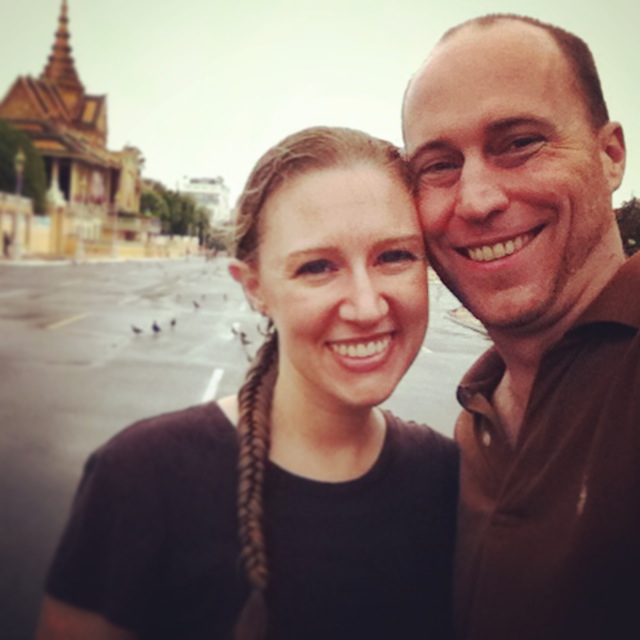
Celebrating 15 years of marriage

Perhaps the honeymoon should have worn off by now, but it hasn’t. We have more joy and intimacy after 15 years of the “daily grind” than we ever dreamed possible.

Along the way, we’ve shed strict interpretations of gender roles and lost deep emotional wounds. In their place, we’ve welcomed emotional healing and embraced mutual love and respect.

We are co-heirs with Christ and co-leaders in our home. We lead each other closer to Jesus, closer to love, closer to wholeness. We give each other space to grow, and we say the hard truth to each other, too.

This is what our Joy looks like.

Related:
A Prayer for Marriage
The Purpose of Marriage is Not to Make You Holy
Marriage as confinement or freedom: notes from a wedding


How to Communicate So People Will Care {A Life Overseas}

Jonathan is over at A Life Overseas today, sharing his perspective on what creates effective communication back to senders and supporters.

hse

Newsletters. Prayer updates. Itinerations. Reports. Furloughs. Presentations.

Are you stressed out yet?

For most of us, living and serving abroad means communicating back to senders. A lot. But this isn’t what we went to school for, and besides that, communicating in person or in print is scary. It’s exposing. It’s like learning a new culture and language; sometimes when we mess up it’s funny, sometimes not so much.

We’re all too familiar with the dangers:

Communicate too much and we’ll annoy people or people will say we’re not protecting the privacy of the nationals.

Don’t communicate enough and we’ll get dropped; people or churches will stop supporting us, because “out of sight, out of mind.”

Talk about the right stuff in the right way. One missionary recently told me that you have to appear miserable enough that people will still support you while not appearing so miserable they want you to come home.

To be sure, communicating with senders (via newsletter or a live missions report) is a unique form of communication, blending a bit of travelogue with a side of sales pitch, and then adding a large spoonful of sermon. It’s like a Christmas Letter got married to a Church Bulletin and had an Amway.

Finish reading the post here.

margin: the wasted space we desperately need {A Life Overseas}

Jonathan is over at A Life Overseas today, talking about margin. . .

margin1

“Staying alive is not about how fast or how slow you go; it’s about how much margin you have.”

That’s what a friend of mine here in Cambodia says when asked about how to not die while riding motorcycles in our little corner of Asia. And since he’s been riding and racing motorcycles since before I was born, I listen.

Going slow with no margin can be more dangerous than going fast with tons of margin. It’s true with motorcycles and it’s true with missions.

Your speed is not necessarily what determines your safety; your margin does. Margin takes into account all sorts of variables: How far can you see? How much space is between you and the next vehicle (or cow)? What are the road conditions? Is this even a road? How likely is it that the large pig strapped to the back of that bus in front of you will stay strapped to the back of that bus in front of you?

Read the entire post here.

10 Ways to Survive Your First Year Overseas

by Elizabeth

7a

I worked at a lot of summer camps before moving overseas. Camp work is hot, sweaty, and tiring, and I always loved that last shower before “lights out.” So before moving overseas, I told my husband that I’d be able to handle anything during the day in Cambodia as long as I had a clean shower and clean bed at night (with a fan!).

And for the most part, that’s been true. Besides the nightly shower, however, I’ve picked up a few other survival skills from my first year overseas. My best advice still lies in the Preparation Phase, but today I want to share tips you can use once you get to the field. Here they are:

1. Figure out your Absolute Necessities, and do whatever you can to install them in your home or in your life. For myself, I needed curtains in my bedroom and gates on my stairs. I had to be able to dress and undress in private, as well as spend time with my husband in private. I needed curtains pronto! Thankfully a friend supplied me some hand-me-down curtains three weeks in to our Cambodia adventure. They may or may not have matched my sheets, but they gave me the privacy I needed.

A close second for me was the safety gates on our treacherously steep concrete Asian stairs (for my then one-year-old), obtained five weeks in to Cambodia life. Those were my Absolute Necessities. You may need something different. Certain kitchen equipment, perhaps. The point is, figure out your two or three Absolute Necessities, and obtain them if at all possible.

2. Funny YouTube clips are your best friend. Some weeks it was all I could do to get to Friday, when my husband and I would watch Fail Blogs on YouTube. Another favorite was Mitch Hedberg (FYI his language is sometimes questionable).

We’re big fans of Brian Regan’s “I Walked on the Moon” (mostly clean, with occasional bad words). And of course who can’t help loving Jim Gaffigan (also mostly clean, with even fewer bad words)? We loved NFL Bad Lip Reading, but buyer beware: a lot of Bad Lip Reading videos are not kid-friendly.

3. Find spiritual nourishment. I can’t tell you enough how much I love our international church and the spiritual food I receive there. But I know not everyone lives in a city that offers English-speaking church services like I do. Nowadays, though, overseas workers have access to sermons and podcasts on the internet. My husband, for example, likes listening to Andy Stanley sermons. Figure out which teachers feed you, and set aside some time to listen.

We all need to worship God in song, so if you don’t have access to worship services in your heart language, remember you can purchase worship music on iTunes (artists like Bethel, Hillsong, and Matt Redman are some of my favorites). I know some of this depends on your internet quality and won’t work for absolutely everyone at all times; still, it’s an improvement in resource availability over times past.

And don’t forget your own personal morning quiet time – it’s worked wonders in my life. So no matter what your options are, I do believe you can find the spiritual nourishment that you crave and that you need. You just might have to be creative about it.

4. Closely related to spiritual nourishment is finding community. You might be able to find that at an international church or on your team, as I’ve been thrilled to find. (Although I personally have had to guard against being oversocialized.) Finding community might be trickier for you if you live in a really remote place, with few other workers.

One of the best things you can do is pray for God to bring you a kindred spirit or two. Yes, the goodbyes hurt, and sometimes God brings people into our lives only for a season, but I do believe God answers our prayers for friends. Sometimes we have to get creative in our search for community as well, and another option is online community. Velvet Ashes and A Life Overseas are two options for Christian expats.

If you’re married, it’s far too easy to forget that you and your spouse can provide built-in community for each other — but that only happens when you spend time together. Maybe there’s no money to go out anywhere, or nowhere to go out, or maybe you don’t yet have babysitters you trust. You can still have coffee at home. You can still put the kids to bed early. You can still find fellowship with each other; in fact friendship is a vital part of a thriving marriage. Our first year we went up to our roof after our kids’ bedtime a couple times a week, looking out over our city and just talking to each other. It was peaceful and bonding, and I cherish those memories.

5. Your old coping mechanisms might not work at first. Don’t sweat it too much. I love to read, but my mind was too tired from language learning and culture acquisition to read much that first year. I’ve had other friends whose beloved piano playing went by the wayside their first year. Don’t lose heart – these things will come back later, when your brain isn’t so tired from the onslaught of culture and language.

6. Your body and mind may feel weaker than ever. Take care of them. You’ll probably get sick with strange illnesses. (The first two years are the worst for that, until your body adjusts.) But I’m not just talking about illnesses here. Before I moved overseas, I’d never struggled with mood swings, due to either hormonal shifts or low blood sugar. Now I deal with both, and not only do I need to be aware of them, but I have to be diligent in alleviating my symptoms.

Living cross-culturally (especially in a developing country or a very hot country) drains your body of its resources. So you’ll have to feed and water it regularly. You’ll need to de-worm regularly, take your vitamins, go to bed at a good time, and exercise. Exercise is not a coping mechanism you can afford to relinquish. You may have to get creative for this one too. A lot of people don’t like using videos for exercise (you can access a lot online if you don’t already own some), but if you don’t have access to a gym or decent running paths, you may be forced to exercise in your home.

7. Fall in love with something in your host country. In the beginning it’s too easy to love everything or to hate everything. But as with everything in life, the truth about your country is probably somewhere in between, a mixture of both good and bad. I can’t tell you how many times I’ve encountered God in a sunset or a palm tree, in a rice field or a painted sky. When I need a reason for why I stay in a dirty, stinky, crowded city, I simply go to my roof and meet God in the clouds and banana leaves. You won’t be able to love everything where you live, but if you want to stay, you can’t afford to hate everything, either.

8. Some days you’ll only be able to accomplish one thing. You might feel like a failure for that, but you need to celebrate that one thing. You might not be able to shop for furniture and groceries in the same day, and that’s OK. You can always try again tomorrow with something else. You’ll get more efficient at this life, and eventually daily living won’t wear you out so much. You need to give yourself this grace. And you’ll need to continue giving yourself that grace, because to a certain degree, living cross-culturally will always wear you out more than living in your passport country.

9. If you home school your children, don’t be afraid to drop it for 3-6 months. Your kids will be ok, I promise. I didn’t believe that at first, either, even when my missions coach assured me of it. But she was right; it turned out ok. Not only does it save you sanity (it’s hard to home school kids and study language at the same time) but your kids really do catch up later. Plus, they need to adjust to overseas life, too. We don’t want to overload our kids with too many expectations.

10. And returning to my first point, if all else fails, don’t be afraid to put yourself in time out in the shower. Go to bed early. You can try again tomorrow! Grace grace grace. You’re gonna need to give yourself a lot of it this year, so just starting doling it out now.

Worthless {A Life Overseas}

Jonathan is over at A Life Overseas today, talking about his feelings of worthlessness and the hope that carries him through.

worthless.b-700x500

I feel worthless.

The feeling rises and crests like an impending wave barreling towards the surface of my heart. And with each wave of worthlessness comes an intense weariness of soul, a near drowning.

The breakers seem to rise from nowhere. I can’t predict them, and that makes me mad. They’re not tied to whether my work or ministry is going well or faltering. They don’t seem to be related to whether or not folks approve of (or agree with) me. They just come. And break.

I wonder if I’m alone. Am I?

Finish reading here.