A Trotter Christmas: articles from years past plus favorite books and songs for Advent and beyond

We celebrated Thanksgiving as a family, our tree is up, and the new church year (Advent) starts tomorrow. I am in a merry mood and want to share our very best Christmas articles from the archives plus my very favorite Advent and Christmas songs, both relatively unknown ones and timeless, cherished ones. I hope you enjoy my “grown-up Christmas list.” ~Elizabeth


BLOG POSTS

When Singing “Joy to the World” Feels Too Hard by Elizabeth. If you’re mourning or grieving this Christmas, that’s OK. Skip the other posts and read this one instead.

A Christmas letter to parents, from a kid who doesn’t have any by Jonathan. More for the hurting among us, and a reminder of what Christmas is really all about.

The Tree That Tells Our Story by Elizabeth. Does your Christmas tree tell the story of your family. A post especially for Third Culture Kids and global nomads.

I Need a Silent Night by Elizabeth. Do you need some soul rest or some unrushing this Christmas season? If so, this one’s for you.

When God Paid for Christmas by Elizabeth. Still one of my very favorite Christmas stories. It was the year money was tight and God gave us Christmas anyway.

In Search of Christmas Spirit (or, an ode to Christmases past and present) by Elizabeth. About our first Christmas overseas. Also for Third Culture Kids and Global Nomads.

A Christmas Prayer by Jonathan. A beautiful prayer for the universal church of Jesus Christ.

He Unbreaks It by Elizabeth. This one looks back on Christmas from the perspective of Epiphany (Three Kings Day or the Twelfth Day of Christmas).


ADVENT SONGS

When I talk about “Advent,” I’m referring to the period of four weeks in which we prepare for Christmas. It memorializes the long wait for the Christ Child thousands of years ago and is reminiscent of our current wait for the return of our King. A lot of Advent songs have a minor sound, as there is longing and ache in the wait (and you know I love that minor sound).

Ready My Heart by Lois Shuford, performed by Steve Bell. I learned this song two years ago from a missionary friend who led it during a Christmas service. Short, but I think you will find the message and melody sticks around in your head and on your voice. Here are the lyrics.

Oh Come Oh Come Emmanuel, translated from the Latin by John Mason Neale. This is an absolute favorite of mine. Don’t cheat yourself of the theology in this song — you really must sing all the verses (you can find them here). Musically speaking, our family favorite is Aaron Shust’s version.

Come Thou Long Expected Jesus, by Charles Wesley and Rowland Prichard and performed by Chris Tomlin. Another favorite pre-Christmas song of mine.


CHRISTMAS SONGS

Little Drummer Boy by Katherine Kennicott Davis and performed by Pentatonix. Every time I hear this song I am a puddle of tears. Every time, people. At least, every time since we were in the States three years ago and the preacher at our sending church mentioned it in a sermon and shed a new light on it for — specifically the “I have no gift to bring.” I’d always liked the song, but now I love the song. Now my children look at me a little cross-eyed whenever this song plays, and I can’t for the life of me explain in understandable terms why I cry so hard. I think it is just that at this stage of my life, I feel and know deeply that I have nothing to give the Savior — nothing in myself — but I will give what little I can. And the promise of the song is that God is pleased with us when we give what little we can. OK, no more philosophizing, just go experience the song. Again and again.

In the Bleak Midwinter by Gloucester Cathedral Choir.  A friend sent this to me last year. It may not be completely historically accurate (it wasn’t that cold in Bethlehem), but it’s metaphorically accurate and oh, isn’t it beautiful?

Who Would have Thought by Julie Meyer. A beautiful worship song, and I love it. There’s no listing of the lyrics anywhere, but here’s the back story to this song.

Do You Hear What I Hear by  Noël Regney and Gloria Shayne Baker. I’ve loved this song vaguely since childhood, as my mom played a version of it. But it’s only been in the last couple years have I truly understood the message of the last verse.

Vicit Agnus Noster by Michael Card. Beautiful and — as is par for the course with a Card song — deeply theological.

Mary Did You Know by Mark Lowry, performed here by Kenny Rogers and Wynona Judd. A favorite from childhood.

Welcome to our World Chris Rice. A little off the beaten path, but good.

Canon by Trans-Siberian Orchestra.  A family favorite.

Carol of the Bells by Trans-Siberian Orchestra. Another family favorite.

Emmanuel God With Us by Amy Grant. The album this song comes from is a family favorite. Ethereal and prophetic.

For Unto Us a Child is Born, from Handel’s Messiah and sung by Amy Grant.

Which brings me to my last linked song, Hallelujah Chorus. You really need to listen to Handel’s Messiah in its fullness, but for many this chorus is synonymous with Christmas and with the entire work. Something to remember about this chorus, though, is that you have to sit two-thirds of the way through the program to get to this triumphant song. Victory always involves waiting. For me this song represents the “now and not yet” reality of the kingdom, and though I cry over the beautiful partial fulfillment of these words, I still cry in longing of the full and final redemption of this world.

Other favorite carols of mine (though I’ve hardly ever met a carol I didn’t like):

  • What Child is This? (oh look, another minor song, for which you really must sing all the verses)
  • God Rest Ye Merry Gentlemen (yes, more minor, and more gospel reminders)
  • It Came Upon a Midnight Clear (for a full effect, all the verses are necessary)
  • Oh Holy Night (in which I break my minor streak, and in which you must also sing all the verses)
  • Hark the Herald Angels Sing (again, all the verses)
  • Of course I also love Silent Night and The First Noel — but you have to sing all the verses to those too.
  • And finally, people, I love Joy to the World, but for goodness sakes, WAIT to sing it till Christmas morning. You must absolutely must wait for the joy. Otherwise it’s silliness. And when you sing it on Christmas morning, you gotta sing all 4 verses, people, all four verses.

Share your favorite songs in the comments.


BOOKS FOR CHRISTMAS AND THE CHURCH YEAR

The Best Christmas Pageant Ever by Barbara Robinson. I grew up on this story, and this year I decided to read it aloud to our kids. Plus, we are going to see an international high school production of the play next week!

The Circle of Seasons by Kimberlee Conway Ireton. I am relatively new to the church year, and this book walked me through it this past year. Kimberlee’s prose is friendly, fresh, and rooted. I continue to rave about several sections, including Easter and the Transfiguration. You really do need the paperback version, though, as it’s an all year by-my-side type of book. Kindle won’t cut it here.

Sounding the Seasons by Malcolm Guite. Walking through the church year with Kimberlee was so good that I knew I wanted to walk through it with someone else (but I’ve got Kimberlee’s book near so I can grab it when I want to). I’d been exposed to Guite’s poems (sonnets, really) and read enough of them on his website that I knew Guite was just the teacher I needed to walk me through the church year this year. The book is a cycle of 70 sonnets for the church year. I was going to wait until the first day of Advent (first day of the church year) to crack open the poems, but I cheated and read the prologue out loud (the only way poetry is supposed to be read of course) last week and then immediately burst into tears. I thought, this is going to be a good year.

The Irrational Season by Madeleine L’Engle. I enjoy Madeleine’s (rambling) prose and plan to read this book alongside Malcolm’s. It’s arranged by section of the church year, just like Kimberlee’s.

Share your favorite church year resources in the comments.


FAVORITE FAMILY CHRISTMAS MOVIES

The Muppet Christmas Carol. A classic, and a family favorite. This story always gets me in the Christmas mood. This year I’m going to go further than the movie and read the actual book. Probably out loud and in a British accent.

The Nativity Story. I don’t care if you think this version is not historically accurate enough, it is emotive and beautiful and true to the spirit of the story.

It’s a Wonderful Life. This is an absolute Hunzinger family favorite. We watched it every Christmas Eve growing up, and waited till our Christmas Eve showing to crack open the big flavored popcorn tin under the tree. But you must watch it in black and white. It’s silly to watch it in color.

My kids and I also enjoy Elf and White Christmas (a family favorite on Jonathan’s side).

Share your favorite Christmas movies in the comments.

How Buddhism Taught Me to Love My Neighbors Better {A Life Overseas}

Elizabeth is over at A Life Overseas today. . . .

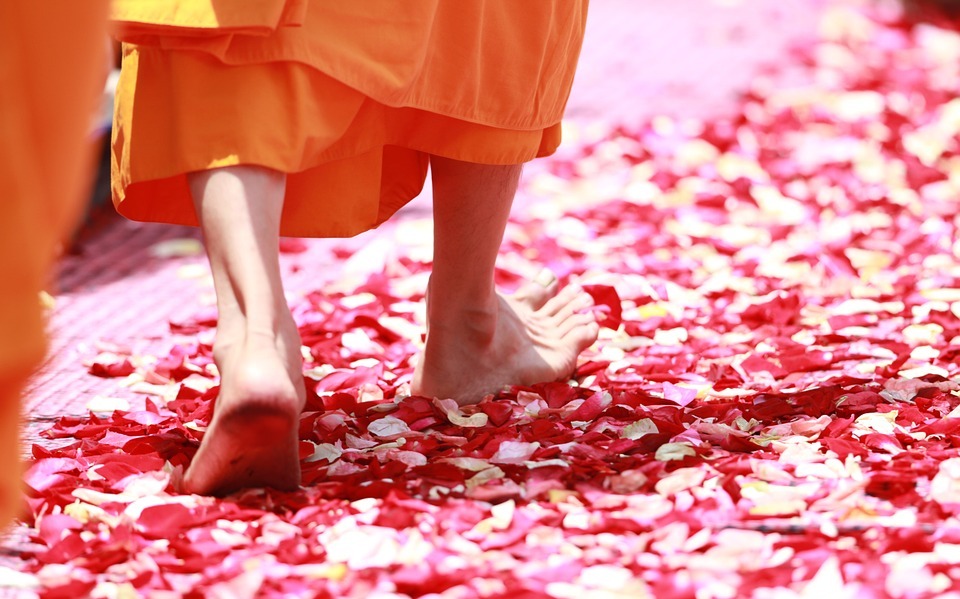
monk-458491_960_720a

This month I didn’t like my neighbors very much. We have new neighbors, and they play their music loud, blasting it out of their apartment with the door open. Sometimes for hours at a time.

This causes problems for me. I teach my children at home, and we need an environment conducive to learning. But sometimes this month the music was so loud it prevented their little brains (and mine!) from functioning.

Now, we are no strangers to noise during the school day. There’s loud traffic. Always. And we’ve endured months on end of the pounding of homemade pile drivers while new buildings are being constructed. Once it was next door, and the other time it was across the street.

The metal shop two houses down from us sometimes starts screeching by 6 am. And then there’s the demolition of old tile and brick in the walls, floors, and bathrooms that accompanies new neighbors. They want to (understandably) clear out the old (possibly moldy) tile and personalize their new homes.

Once the drilling got loud enough that we had to leave the house and go to a coffee shop to study – a decision which was rather cumbersome with four children and their books. But my kids were sitting right next to me, and I was shouting at them, and they still could not hear what I was trying to teach them.

Music or karaoke, however, is different from these things. It’s not about people settling in to a new house or building a new house or even, as in the case of the metal shop, providing employment and incomes for people. It’s just some guy listening to his music way too loud.

You can finish reading the post here.

A Few of My Favorite Things {October 2016}

Here ya go, my monthly “what’s up with me” and “what I’ve read” update. ~Elizabeth

som2

Our whole family participated in a youth retreat for international teens. We traveled down to Kep, Cambodia, a place we all love. (I described how much I love Kep here on Facebook.) It was refreshing to be in nature and to be with young people earnestly seeking God. I still love teenagers! Jonathan led the teaching times, and I was a small group leader. I also presented a session on eating disorders, which opened up a lot of deep and important conversations. The weekend in Kep rekindled my relationships with some of the youth and began relationships with others, as well as reminding me that in-real-life ministry is the thing for me, better and more life-giving than online ministry.

I attended lectures on the dangers of technology that were presented by Brad Huddleston, the author of Digital Cocaine. These lectures were, for me, the capstone of several months of searching and seeking God in my technology use. I knew something was wrong; I didn’t quite know what it was. I also didn’t know what to do about it.

Brad’s lectures were full of grace and truth and provided both the scientific and spiritual impetus to take a modified tech break. Did you know the brain responds the exact same way to digital input that it responds to addictive drugs? Addiction is addiction is addiction, and the brain doesn’t differentiate. I took tons of notes on his three main addiction emphases: pornography, video games, and social media, but my favorite line from the whole lecture set was this: “We have to fall in love with parenting again.” Intrigued? Drop me a comment or a private email and we can keep talking. Or head over to Brad’s website and see some of his material for yourself.

I took most of the month off from blogging. I thoroughly enjoyed having the extra time to read more books (you’ll see the results of that free time below), and the decision really broke the pressure of feeling like I need to produce, produce, produce.

But I also learned an important lesson: I am not worn out by the tension in my roles as much as I had assumed. I had assumed that the reason I felt so stretched was because I was trying to balance my roles as mom, wife, home school teacher, and writer, and that the roles competed with one another. Now, some of those roles may very well compete with each other, but I am still just as exhausted at the end of a home school day whether I write in the evening or not. It is the day-long act of teaching my children that wears me out, and that’s probably important to remember. There’s just no way around the fact that home schooling is a time-consuming and energy-consuming job (or as I like to call it, “vocation”). That said, I am going to continue being picky about the number of writing projects I take on, in order to simplify my life and reduce my deadline stress.

A special drama teacher who is teaching and inspiring me. You may remember we joined a home school coop, and we are loving it. We love getting to see our friends once a week. My boys and I are loving the Robotics/coding class we’re taking together (it’s reminding me of all the things I learned in college and have since forgotten). My girls love their classes too, especially when their last class is done early and they can visit the school library (yes they are girls after my own heart). And it will give me a chance in the last half of the semester to teach some hands-on math classes, reviving my old self in a way.

Every student also participates in drama class. Now, I’ve never been interested in drama and don’t consider myself dramatic, though both my mom and youngest sister are and were. But this drama teacher (she’s also a friend), she is somehow speaking the language of my soul. She talks about the kids going through a character’s emotional journey. She talks about the play never being about just one person but about the entire community coming together. She talks about telling a story, not just with voices, but with bodies too. When she talks, I feel like she’s saying everything I’ve learned and am learning on other planes, but on the dramatic plane.

I got to teach a hands-on math class at coop this month and loved it. It had been so long since I’d taught in any capacity like that, and I was nervous. But I had so much fun cutting Möbius strips along with middle and high school students. I was swept up in the excitement of it all and had a difficult time coming back down to earth to help out with the younger kids’ class the next hour! I’ll get to teach more “math lab” classes in November and December and am looking forward to that too. Teaching math and science classes to upper level students really is where I belong. And really, if you think about it, it’s just another form of youth ministry — because the mention of God is almost always going to make its way into my classes.

But best of all? Tomorrow by this time, we will be greeting my Mom at the airport! We are all beside ourselves with excitement.


BOOKS

The Monster in the Hollows by Andrew Peterson. As I mentioned last month, I found a convenient stopping point in Peterson’s third book in his Wingfeather Saga. I took a few weeks off from reading Peterson while I read the first three books in this list, and then I returned to it. Well, turns out I stopped in one of the only lulls in the entire series, and was again and immediately swept back up into the story, staying up too late many nights to do it.

The Warden and the Wolf King by Andrew Peterson. This is the last book in the series, and it wrecked me. Still does when I think about it. I talked about it on my Facebook page which you can read here, but be forewarned that even though I tried to keep my comments as vague as possible, there may be partial spoilers in the comments.

Breaking Busy by Alli Worthington. One of the great things about taking a month off from writing is that you clear some head space to read other people’s writing, and this book was the first one I read. It was mostly memoir, so not exactly what I was looking for (I was looking for more instruction), but I gleaned this very important nugget from the book (and now you can have it too):

Self-care is not the same as self-medicating.

A lot of times we (including me) like to talk about self-care, but what we are doing is not actually caring for ourselves; it’s medicating ourselves. For example, eating too much or eating really unhealthy food as a coping mechanism is not self-care. Taking the time to exercise or prepare some nourishing food, that’s self-care. (A cup of coffee by oneself, or moderate amounts of chocolate still count as self-care!) Self-care is taking some quiet time to read a book, not binge-watching shows on Netflix. It’s using technology to catch up with friends far and near, not mindlessly scrolling our Facebook feeds. Sometimes we defend our self-medicating efforts as doing good self-care, but we are lying to ourselves. Anyway that was a real light-bulb moment for me, and I hope it helps you as well.

Crazy Busy: A (Mercifully) Short Book About a (Really) Big Problem by Kevin DeYoung. After finishing Breaking Busy, I was still craving something more, so I tried Crazy Busy. What Alli’s book skimmed over in the theory department, DeYoung made up for in his book. DeYoung does an excellent job of describing the ways we (sometimes unintentionally) contribute to our crazy busy-ness. The message of both these busy-ness books lined right up with Brad’s lectures and my writing break. Most relatable concept: the definition of the old-fashioned word “acedia.” According to Kevin,

Acedia is an old word roughly equivalent to ‘sloth’ or ‘listlessness.’ It is not a synonym for leisure, or even laziness. Acedia suggests indifference and spiritual forgetfulness. . . . As Richard John Neuhaus explains, ‘Acedia is evenings without number obliterated by television, evenings neither of entertainment nor of education but of narcoticized defense against time and duty.'”

He goes on to explain acedia even more. I never knew what it meant before, but I know I am too often guilty of it, and I was glad to have someone put these things into words.

The Blue Parakeet: Rethinking How You Read the Bible by Scot McKnight. After Crazy Busy I cracked open McKnight’s book, in part because I linked to an article of his last month and I thought I should give his book a try. I had gotten the impression from some that The Blue Parakeet was similar to another Bible-deconstruction book that did absolutely nothing for my faith, however much others had assured me it would. So I’d avoided it until now. But the two books couldn’t be more different. Where the other book removed the breath-of-God quality of Scripture, McKnight’s restores it. The Blue Parakeet gives a framework for understanding the meta-story of Scripture, the individual stories in Scripture, and the stories of our own lives. And what’s even better, it paints a beautiful picture of God’s desires for us for experience and enjoy oneness with others and with God, in the same way the Trinity has eternally enjoyed oneness. Then the last section is a guide to re-thinking women’s roles.

(As I’ve mentioned before, John Stackhouse’s Finally Feminist is an excellent, balanced, and short starting place for thinking through these issues biblically, and I highly recommend it as well. And if you want to read how I have personally wrestled through the various Bible passages, you can read Paul, the Misogynist? and Weaker But Equal: how I finally made peace with Peter.)

Mark: The Gospel of Passion by Michael Card. Yes, I’m still reading through this (slowly, apparently). This month I hit the Transfiguration story – you already know I’m captivated by that story, right? – and for days I couldn’t stop thinking about Card’s interpretation of it. He harks back to the desert wandering of the Israelites. Why did Peter want to build three tents? Maybe it wasn’t to bestow honor on Moses, Elijah, and Jesus like I’ve always thought, but to hide their overpowering glory, in the same way that Moses’ face had to be veiled after meeting with God. But instead of the apostles building tents (tabernacles?) to hide the glory, God provided a cloud to descend on the three and to hide the glory, in the same way His glory was hidden in the cloud in the wilderness. It was a fresh take on the Transfiguration (for me, at least).

Straw into Gold by Gary D. Schmidt.  This retelling of the classic Rumpelstiltskin fairy tale was recommended on the Bibliophiles podcast. It’s a what-if story – what if the prince were actually taken from the queen? – with threads of grace and forgiveness running through it. It’s a short literary treat that offers delectable imagery, like “fingers of sunlight” that reach over the edge of the world.

Life of the Beloved: Spiritual Living in a Secular World by Henri Nouwen. I’ve had this book for a while but had been avoiding it because sometimes Nouwen can be quite dense. This little book, however, is not dense. It’s deep, but it’s an easy read. It’s written as a letter to one of his friends, and each of the few sections can be read in one sitting. Confession time: I was having particular trouble loving my neighbors this month due to their extended playing of loud Khmer music during school hours and even early in the morning during my “quiet time” hours. But as I read about how my own belovedness can teach me the belovedness of others, I remembered how very much God loves the loud neighbor next door, how very much God loves the man (okay, men) peeing all over the street, how very much God loves the brothel owners, yes, how very much God loves all of us, including me. And as is wont to happen when I meet with the God of the universe, I cried. It was a good thing.

Other in-progress works:

I’m still reading Consider the Birds along with the Velvet Ashes book club.

I’ve cracked open Christopher West’s Theology of the Body for Beginners, upon recommendation from my Anglican friends and in search of even deeper healing from disordered eating (but boy is it DENSE, and it’s only the beginners’ version!). Most important point so far: In spite of all the grandeur of the Cosmos and the wonder it inspires in us, what God says about humans (including our bodies) is that we are better than the rest of creation. It says it right there in Genesis 1, but I’d never thought of it that way before. Our bodies are good, and our bodies are important, and that’s something a talking head like myself, who would happily live only in my mind, can forget all too easily.

I’ve also picked up Neil deGrasse Tyson’s Death by Black Hole: And Other Cosmic Quandaries again. It’s a collection of unrelated science essays for the general public, and as such, is easier to return to after a long break than, say, Stephen Hawking’s A Brief History of Time, which really should be studied all together as the material is both difficult and related (and which I need to start over again because it’s been so long). A note on both Neil deGrasse Tyson and Stephen Hawking: yes, I know they are an agnostic and an atheist, respectively, and yes, I often find them arrogant. But I read them for their scientific expertise, and I find that the awe they hold for the universe alone, I can appropriate for myself and extend towards the Almighty.

As for fiction, I’m not sure what to read next. I read a lot of that this month. I just barely started Katherine Paterson’s Bridge to Terebithia, which I found in the home school coop library, and I already like the main character, but I may veer away from fiction this next month and read more science instead. Tyson’s book has got me interested in science again. Then again, I may not read much at all, what with my mom visiting. 🙂


BLOG POSTS

Feasting as an Act of War by Andrew Peterson. Everything I’ve been learning this year about the intersection of the physical and the spiritual, about sacrament, about communion, about celebration, it’s right here in this address. A must read!

Only Sympathy Makes it Real: Anyone Can Write by Joshua Gibbs. More on sacrament and the sacredness of all physical matter — as I mentioned above, it’s the type of stuff that’s been lighting me up this year. A long read. Also kind of a misleading title.

Binge-Watching with Boethius After Dark by Joshua Gibbs. Also long, but so very worth it. About desire and what really satisfies and what doesn’t, even though we keep searching for satisfaction in those places. Like Netflix. And potato chips. I was thinking and talking about these concepts for several days after I read it, which for me is always a good sign.

Our Now, but Not Yet Reality by Tyrel Bramwell. This one speaks my language. I’m all about the already and not yet. Some days it’s the only thing that gets me through the suffering I see all around me. And this post gives such a good word picture for it, too.

The Beauty in the Boom: Fiction and the Art of Paradox by Mark Guiney. Paradox — also speaking my language. Plus there’s a nerdy little science tidbit in there.

The Language of Desire by Patty Stallings. Patty gets the job done. Always. And as long as we are on the subject of other writers speaking my language, so is Patty! Desire and longing — for me they are pointers to God and His work in my life and in the world.

Light Heals by Kathy Escobar. I remember the feeling I had right before I told my future husband about my eating disorder. It felt so dark and scary. Now, of course, it’s not scary at all. It’s been brought into the light.


MUSIC

We Lift You High by Planetshakers. Don’t you just love this song, music and lyrics?

Who can save the lost
Who can heal all sickness
Who can make me new
No one else but Jesus
     
There’s no other name
     
We lift You high, higher than all others
We lift You high, higher than all else
For great are You Lord and worthy of all the
Glory and honor and praise
     
Who can make me whole
Who can take all my sin
Who can cleanse this heart
No one else but Jesus
     
You are my God, The Great I am
And You are the rock on which I stand
And You reign, You reign O Lord
You reign, You reign
     –

You Hold It All Together by All Sons and Daughters on their new album Poets and Saints. Won’t get out of my head.

It feels like an ocean of sorrow is under my skin
Even the ocean eventually meets with the sand
Sorrow on sorrow, I’m waiting
Heavy I’m anticipating
Trusting the current, will carry me

You are my strength
You are my song
You are my salvation
You hold it all together

We come with great expectations, and fears in our hearts
Send us Your light, as we’re making our way through the dark
All of the earlier troubles
Chaos and pain they unravel
Looking ahead we rejoice in You

Rest in You, also by All Sons and Daughters on Poets and Saints.

Who is Lord, but our Lord
Who is God, only God
You are the highest
You are most good

Matchless is Your love
Our praise will rise above
Your peace like a river
Floods over us

Our hearts are restless
Until they find rest in You
Our hearts are restless
Until they find rest in You

This is where my hope lies
This is where my souls sighs
I will always find my rest in You

So full of mercy
Beauty and mystery
You are most hidden
But always with us

You cannot change
Yet You change everything
You cannot change
Yet You change everything

(You can watch an explanation of their album here.)


PODCASTS AND VIDEOS

We Belong to Each Other — Idelette McVicker. A beautiful two-minute story that teaches some of the same truths that Henri Nouwen teaches in Life of the Beloved. Plus, you get to learn a South African phrase.

A conversation with Andrew Peterson at The Gathering 2015. I went poking around for Andrew Peterson videos after finishing the Wingfeather Saga. This interview has bits about Eden, longing, community, and even fearing your artistic ability has been lost forever when you go to work on something new.

He Gave Us Stories by Andrew Peterson. Yep, you guessed it, more AP.


SCRIPTURE THAT STUCK WITH ME

Psalm 87:5-6:

Regarding Jerusalem it will be said,
“Everyone enjoys the rights of citizenship there.”
And the Most High will personally bless this city.
When the Lord registers the nations, he will say,
“They have all become citizens of Jerusalem.” 

Psalm 27:8:

My heart has heard you say, “Come and talk with me.”
And my heart responds, “Lord, I am coming.”

Proverbs 20:12:

Ears to hear and eyes to see —
both are gifts from the Lord.

Proverbs 20:27:

The Lord’s light penetrates the human spirit, 
exposing every hidden motive.

A poem and an announcement

by Elizabeth

switches2

I’ve decided to take the month of October off from writing. This might sound strange, coming at a time when many people try to write or blog every day. But I desperately need this break. It’s not that I’m out of ideas or inspiration; I have lots of both tucked away for later. I’m just tired of my internal expectation of trying to keep up in the blogging world, and I want to spend more time with my children and with my husband.

So with this blog post, I’m signing off, and you won’t be seeing me around the blog till the end of October. Not that it matters too much to anyone else; there are so many voices on the internet clamoring to be heard. However, it matters deeply to me to take this blogging break. (I’ll still be in contact through Facebook and email.)

For what it’s worth, here’s a poem — it’s a prayer, really — that I wrote in my journal before deciding to take this break. And I have to say, the decision itself has brought me a lot of peace, freedom, and excitement. I’ll see you on the other side!

~~~~~~~~~~~~~~~~~~

Unhook me
disconnect me
from amorphous
winter lands.

My soul gets lost
cannot get out
suspended in
the air above
the wires below,

My body buried
in a mountain
of forget
and regret.

I cannot cry
I cannot laugh
I only know
I’m overwhelmed

You are:
before, behind,
beneath, beyond
but not within
not now,
not yet.

The joy of love is
elsewhere to be found:
peace and longsuffering too.

Reconnect my life
my soul
my body
to Your people,
to Your earth,
and to You.

A Few of My Favorite Things {September 2016}

A ton has been going on in my heart, mind, and life this month, and I cannot possibly explain it all here. But here are my favorite linkable resources. ~Elizabeth
som2

I have discovered tea. I know, I know, that sounds a little silly, so hear me out. I love milky, spicy, sugary chai tea. Yummy! At least, it’s yummy when other people make it for me. I’ve tried to make it myself, to no avail. But one day this month I was chatting with my friend from Pakistan, and she offered to make me some tea. I said yes. More yum! She uses two Lipton tea bags and adds milk and sugar — the exact amount I do not know, but her delicious drink inspired me to make my own double-bagged hot tea with milk and a sugar cube or two. I often drink it in the morning instead of my coffee or in place of my after-lunch coffee, as it’s much milder than coffee. I can now see how tea is so comforting to the English. (But no worries, I still love my coffee!)

I finally got a day-long date with my husband. We had planned to go out for a whole day on my birthday, but sick kids prevented us. Then busy schedules prevented us from rescheduling. We finally found a date that worked and enjoyed our married selves fully.

We started homeschool coop and are all loving it. It’s good for social time and active time, and we are learning brand new subjects together.


BOOKS

Do yourself a favor and start reading Andrew Peterson’s Wingfeather Saga. As in, go get them right now! I link them below, but first, here’s a little bit about them:

I really appreciate the author’s willingness to let humans be human. Noble. Fallen. Complex. Just.like.us. I tend to gravitate towards heroes without flaws, but that’s not realistic. Unconditional love flourishes in the midst of relationships between fallen creatures. That’s the only place it can truly be called LOVE.

More themes in the Wingfeather Saga include questions like Where is home? What do you do with regret? And how do you remember — and BE — the person your Maker made you to be?

And incidentally, when I shared the above thoughts on Facebook, a bunch of people chimed in with their own love (fanaticism?) for Andrew Peterson books and music (yes he also writes music). So if you haven’t discovered his books yet, let this post be your introduction! Here are the book links:

On the Edge of the Dark Sea of Darkness. This is the first in the four-book series. It has a bit of a slow warm up and some weird creatures called Fangs, but don’t let that throw you, because by half-way through the action picks up and keeps moving, and you no longer care that the story has weird creatures (spoiler alert, the weird creatures get somewhat explained by the end of the second book). Throughout the series, Peterson’s use of language and emotion is stunning.

North! Or Be Eaten. The entire second book is action. Whew! I barely took a breath the entire way through. More character and theme development happens here.

The Monster in the Hollows. I’m halfway through the third book and thankful for a little slower pace so I don’t stay up too late reading “just one more chapter.”

The last one is The Warden and the Wolf King, and I should get to it by next month. I’ve been assured it has a tear-jerker ending!

As you know I’m a big children’s literature fan, and these next two books are precious, loaned to me by a friend:

The Empty Pot by Demi. Set in ancient China, this story teaches that our integrity is more important than our productivity. With lavish illustrations.

Roxaboxen by Alice McLerran. A celebration of imagination and friendship, also beautifully illustrated. Reminds me of my own childhood imaginary world of Wonka Birds. I enjoyed both these books with my children.

I’m also reading Debbie Blue’s Consider the Birds: A Provocative Guide to Birds of the Bible with the Velvet Ashes Book Club. I’m not always fast enough to get through the book club selections on time, but this book has a slower-paced schedule, and I think I’ll be able to do it! So far I’ve studied pigeons and pelicans, and I’ve been left with much food for thought. You can download a free corresponding Bible study here, written by book club leader Amy Young and fellow bloggers Caitlin Lieder and Emily Smith.


BLOG POSTS

Welcome to the Tribe of Nomads by Bronwyn Lea. For all the global nomads out there.

Go to the small places by Jonathan Trotter. I always love what my husband writes, but sometimes, as in this post, it speaks to such deep places inside me that I have to specifically share them here.

The Sacred Relics of Memory by Joshua Gibbs. Intriguing observations on Bible reading, group learning, and spiritual warfare.

Don’t Follow Your Heart: Anti-Revolutionary Lessons from Pride and Prejudice by Angelina Stanford. Insightful thoughts on duty and romantic love.

Laziness by Any Other Name by Angelina Stanford. I’m guilty of this.

Those last three are from the CiRCE Institute, an organization dedicated to Christian classical education. I consistently find spiritual nourishment here, and their articles are challenging for both head and heart, a combination that can be hard to find.

The Consolation of Doubt: An Address to the Buechner Institute by Andrew Peterson (yes that Andrew Peterson, author of The Wingfeather Saga) at The Rabbit Room. Long, but beautiful and profound and not to be missed.

Have you discovered The Rabbit Room? It’s an online collective for creatives that Peterson founded several years ago. When I read their words, I feel like I have finally found “my people” — people who aren’t afraid to wrestle with doubt and longing and struggle and sin, but who also aren’t ashamed of their staunch faith in God or their unwavering belief in community or their high value of beauty. That’s a combination that is also hard to find.

The Longer You Look by Helena Sorensen. If anything expresses our need for awe and wonder and shows us how to cultivate it, it’s this post by the author of Shiloh. (Shiloh is still free on Kindle, and if you haven’t read it yet, you absolutely MUST read it.) On a personal note, I’m too often guilty of “looking without seeing,” so lately I’ve been forcing myself to really look and see the things and people in my life.

Approaching the Holy by Marilyn Gardner (yes, she makes it in here nearly every month). Short but good.

Save Your Soul: Stop Writing by Lore Ferguson Wilbert. Worth taking the time to read; explains a lot of things I’ve wondered about in myself and in the world at large.


POETRY

The following are links to the poetry of Malcolm Guite, whom I have only just discovered. As poetry is best experienced through sound waves as well as through words on a page, you can click on each sonnet to hear the author read them.

Transfiguration. (I have a mild obsession with the Transfiguration which was first brought on my Kimberlee Conway Ireton’s section on Ordinary Time in her transformative book The Circle of Seasons: Meeting God in the Church Year.)

Descent (the third song on this page of songs and sonnets).

Holy Cross Day: Some Sonnets on the Cross (all of them).


ON MARRIAGE AND GENDER ROLES

After I wrote my Peter post, I stumbled upon an announcement about changes to the ESV version of the Bible. Through reading that announcement, I found the following blog posts. They provide excellent exegesis and helpful Hebrew background, whether or not you use the ESV.

The New Stealth Translation: ESV by Scot McKnight. McKnight is author of The Blue Parakeet: Rethinking How You Read the Bible, which my mom and several other friends rave about, and which I want to read but haven’t yet found the time. This article is long, but make sure you read to the end, because that ending, people, TOTALLY worth it.

Genesis 3:16 by Sam Powell.  Powell comes from a Reformed tradition. I do not come from a Reformed tradition, but I find his Biblical studies to be accurate, thought-provoking, and fair. Definitely worth reading.

Headship is not Hierarchy, Powell’s follow-up to his Genesis 3:16 post. You need to read both.

To the Newly Married, also by Sam Powell. Unrelated to the above articles; just good teaching.


ON RACE RELATIONS

I had no idea there was so much systemic racism in the missions community. Oh, my field coordinator had mentioned it, yes, but I hadn’t seen it personally. When the A Life Overseas blog stepped into the race conversation regarding missions (which is broader than race relations in America), I was surprised by the amount of misinformation, disrespect, and rudeness that Christians could generate.

I went into the conversation with my own history, of course, as a military kid raised in a multi-ethnic environment of Asian Americans, Latinos, African Americans, even Pacific Islanders; as a youth worker in the States who, along with a team of other church workers, attempted to do urban ministry and made massive cross-cultural mistakes along the way; and as an attendee in my organization’s trainings in contextualization, its emphasis on the universality of the gift of the Holy Spirit, and their deep respect for local believers. These things made me think one thing about life, ministry, and race relations; the missions conversation opened my eyes to the fact that not everyone sees things as I do.

With that in mind, I offer these three articles on privilege and race relations. I believe they are balanced, biblical, and clear.

Repenting of Systemic Racism by Heather Caliri (on Relevant). Presents a biblical model for repentance and restoration of broken systems.

A Letter from a White South African to White Americans by Bronwyn Lea. A cautionary tale from a woman who grew up in South Africa.

White Privilege Doesn’t Mean What You Think It Means by Kristen Howerton. Explains the terminology, which I think is sometimes at the root of arguments about race.


VIDEOS AND PODCASTS

“My Life Just Became Following the Rules of My Eating Disorder” — Former Miss America Opens Up About Perfection on To Save a Life. Just 12 minutes and worth every second.

Grace and Children’s Literature on Bibliophiles. I’ve mentioned before how I like children’s literature the best, and I think this podcast explains the reason why.

Love Stories and Romantic Literature on Bibliophiles. I love the questions these people ask and the insights they share.

Book Discussions on Banning Liebscher’s new book Rooted. You have to scroll down a little to get to the videos. I also mentioned these videos in a recent blog post.


SONGS

The Golden City by Marty McCall. An older song I hadn’t heard in a while, until we were going through our old CDs. Expresses our longings so well.

We will meet in the Golden City in the New Jerusalem
All our pain and all our tears will be no more
We will stand with the hosts of heaven
And cry holy is the Lamb
We will worship and adore You evermore

Oh Come to the Altar by Elevation Worship. I know, I know, no one wants to talk about sin anymore. But I can’t help myself. I sin, and I struggle with my sin nature, and I desperately need a Savior bigger and better than myself. Jesus is that Savior, and I still need redemption and restoration. Every day I need it, and every day I could sing this song.

Are you hurting and broken within
Overwhelmed by the weight of your sin
Jesus is calling
Have you come to the end of yourself
Do you thirst for a drink from the well
Jesus is calling

O come to the altar
The Father’s arms are open wide
Forgiveness was bought with
The precious blood of Jesus Christ

Come as You Are by David Crowder. Continuing the theme of the above song.

Come out of sadness from wherever you’ve been
Come broken-hearted, let rescue begin
Come find your mercy, Oh sinner come kneel
Earth has no sorrow that heaven can’t heal

So lay down your burdens, lay down your shame
All who are broken, lift up your face
Oh wanderer come home, you’re not too far
So lay down your hurt, lay down your heart,
Come as you are

There’s hope for the hopeless, and all those who’ve strayed
Come sit at the table, come taste the grace
There’s rest for the weary, rest that endures
Earth has no sorrow that heaven can’t cure

There’s joy for the morning, oh sinner be still
Earth has no sorrow that heaven can’t heal

Lord I Need You by Matt Maher. I think I’ve shared this before, but it’s worth sharing again. I love it, all of it. I have to admit, though, that I think I’ve sung this song wrong before. When we sing “my one defense, my righteousness,” I always interpreted that to mean my one defense is my righteousness: the righteousness that comes from Jesus. This time around, I realized that the two phrases weren’t necessarily connected. They could be separate needs for God: God is our only defense, and God is also our only righteousness. Still, I think I like my original impression better. Reminds me of the old hymn “My Hope is Built on Nothing Less.” Love that hymn.

All I Once Held Dear by Graham Kendrick. I’ve probably also shared this one before. It’s been a beloved song of grace for me over many years.


QUOTES

Edith Nesbit in The Story of the Treasure Seekers:

“You should never be afraid to own that perhaps you were mistaken – but it is cowardly to do it unless you are quite sure you are in the wrong.”

“I do like a person to say they’re sorry when they ought to be – especially a grown-up. They do it so seldom. I suppose that’s why we think so much of it.”

Madeleine L’Engle in A Circle of Quiet (I finally finished it!):

“I am part of every place I have been: the path to the brook; the New York streets and my “short cut” Metropolitan Museum. All the places I have walked, talked, slept, have changed and formed me.”

“I have intense respect for all the librarians and teachers who guide but do not manipulate. I know of at least one librarian who starts her readers on what they ask for, on what they think they want; then, when she gets to know them, when she has made friends, she offers something with a little more substance, and then, when that is accepted and swallowed, something with even a little more. And without exception, she says, when the real thing is accepted, the desire for the cheap substitute goes.”

“If [Rudolf] Serkin did not practice eight hours a day, every day, the moment of inspiration, when it came, would have been lost; nothing would have happened; there would have been no instrument through which the revelation could be revealed. I try to remember this when I dump an entire draft of a novel into the waste paper basket. It isn’t wasted paper. It’s my five finger exercises. It’s necessary practicing before the performance.”

“It was during a time of transition. We had sold the store, were leaving the safe, small world of the village, and going back to the city and the theatre. While we were on our ten-week camping trip from the Atlantic to the Pacific and back again, we drove through a world of deserts and buttes and leafless mountains, wholly new and alien to me. . . . I had brought along some Eddington, some Einstein, a few other books on cosmology – I was on a cosmological jag at that time, partly, I suppose, because it satisfied my longing for God better than books of theology.” (I can most certainly relate.)

“It’s a stage we all go through; it takes a certain amount of living to strike the strange balance between the two errors either of regarding ourselves as unforgiveable or as not needing forgiveness.”

“I had talked with several Congregational minister friends about my intellectual doubts. I was eager to be converted – I didn’t like atheism or agnosticism; I was by then well-aware that I am not self-sufficient, that I needed the dimension of transcendence. They were eager to convert me. But they explained everything. For every question I asked, they had an answer. They tried to reach me through my mind. . . . One line in the Book of Common Prayer made sense to me: the mystery of the word made flesh. If only my friends would admit it was a mystery, and stop giving me explanations!”

“Gregory of Nyssa points out that Moses’s vision of God began with the light, with the visible burning bush, the bush which was bright with fire and was not consumed; but afterwards, God spoke to him in a cloud. After the glory which could be seen with human eyes, he began to see the glory which is beyond and after light.”

Thomas Merton in The Sign of Jonas, found through Audrey Assad:

“Keeping a journal has taught me that there is not so much new in your life as you sometimes think. When you re-read your journal you find out that your latest discovery is something you already found out five years ago. Still, it is true that one penetrates deeper and deeper into the same ideas and the same experiences.”

Malcolm Guite in this (rather lengthy) interview:

“And [George] Herbert also wrote about windows. He wrote a poem called ‘The Windows’ in which he redeems the word ‘stain.’ He doesn’t use the word, he just redeems it. Because if you think about the word “stain,” it always means something negative, except in one context. There’s only one context in which it has no negative connotations, it’s completely redeemed, and that’s stained glass.

And he wrote a poem about being a preacher, you might say being a leader as well. This is kind of a core vision…It starts, ‘Lord, how can man preach thy eternall word? He is a brittle, crazie glasse: Yet in thy temple, thou dost him afford this glorious and transcendent place, to be a window, through thy grace.’

And the ‘brittle’ and ‘crazy’ is great. He’s really into the techniques of metaphysical poets. He’s really into taking things that people didn’t think were poetic and using them in a new way. And in those days, making glass, if you’ve seen real old glass in ancient buildings, it’s all wavy and lumpy. That’s because there was a trade-off… If you got the glass real thin and clear to see through, it would become brittle and could shatter really easy. So it was better to have it ‘crazy,’ a little bit waved, but thicker. Herbert’s great. He’s saying, normally glass is either brittle or crazy, but Lord, I’m brittle and crazy.

But he goes on in that poem, and says, ‘I can be a window.’ But then he says this amazing thing: ‘When thou dost anneal in glasse thy storie, making thy life to shine within the holy Preachers.’ And he says, ‘doctrine and life, colors and light in one, when they combine and mingle.’

And again, that’s a technical thing in glassmaking. You can’t just paint color on glass. It just flakes off again. Annealing, to get the color in stained glass, you heat the glass up, which of course it used to be hot, molten silicon. You take it back almost to where it began in this fierce heat. You pour the colors in, and then you bring it back, hoping it won’t get too brittle or crazy. And it’s got this color, this stain.

And what I see Herbert saying in that poem is that we take our passions, and sometimes our faults and our brokenness and our stains, and we let God anneal his story. So there’s some point in which we become a window of grace, not, Herbert says, by being some pure, clear, beautiful thing …but by this annealing process where our colors and the colors of Christ’s passion run together in the glass.”