When Ministry and Marriage Collide

by Elizabeth

Jonathan and I have been married almost 15 years now, and I can honestly say being married to him is the best thing that has ever happened to me. We were friends first, then fell madly in love our senior year of high school. Even our first year of marriage – considered by some to be quite difficult – was pure bliss. And I can honestly say that every year after that has grown more joyful and more intimate. This is not to say, however, that we haven’t ever struggled.

I’ve shared before about two of the major struggles in my marriage. I’ve talked about how I didn’t want to move overseas in the first place and how Jonathan and I were at an impasse until God got a hold of me. I’ve also shared my struggle to believe God loves me as much as my husband, since he seemed to have so many more gifts than I have.

There is another difficult season in my marriage that I’ve never discussed online. The two stories I mentioned earlier represent enormous works God wanted to do in my heart and in my spirit. They also had enormous implications in the way I lived everyday life alongside my husband. The struggle I’m going to talk about today might seem more earthy than spiritual, but it still looms quite large in the landscape of my memory.

ministryandmarriage1

Some of you know we served in youth ministry in the States for 10 years. At one point we lived in a Parsonage next door to the church building, and we hosted summer youth meetings in our house. Initially we only invited juniors and seniors to our house on Tuesday nights for Bible study, and I thoroughly enjoyed it. Later we started hosting all ages in our house every Wednesday night during the summer. And every Wednesday night without fail, teenagers trashed my house.

This went on for two whole summers. My house was a disaster every Wednesday night, and I had a breakdown every Wednesday night. Jonathan and I could not see eye to eye on this issue and often fought over it. He felt we needed to have the teens in our home, and that I needed to want to have them in our home, and that furthermore, he believed the teens would perceive my reluctance to welcome them into our home, so I needed to check my attitude.

This, as you can imagine, led to lots of stress in our marriage. I wasn’t confident enough to instruct the teens how to throw trash in the trash cans or how to avoid spilling coke all over my white living room carpet. I’m more confident now and would be able to teach teenagers in that way, but I was too intimidated back then. (Also I was much more uptight about cleanliness when I only had two kids as opposed to now, with four.) I just wanted my husband to kick the teenagers out; I wanted him to do it for me. At the same time I felt an intense pressure to let them in my house every Wednesday, or else I’d be a “bad ministry wife.”

Conflict can happen, even when you’re married to your best friend, even when you are absolutely convinced he’s the only one for you, even when you love practically everything about him. We shouldn’t be surprised when we have disagreements with our spouses. We’re different people, and we’ll see the world differently. And when we feel our own point of view so strongly, it can be difficult to imagine someone else’s point of view.

For any of my old darling youth group members who may be reading here today, please know I love you. And I want you to know I miss you all so dreadfully. I’m recounting a problem that was mine, not yours. Probably any of you who still like me enough to read my blog wouldn’t have been the ones tearing it apart in the first place, but either way, it doesn’t matter. This conflict wasn’t about you.

Two years and many, many fights later, we finally got creative in our problem-solving. We finally thought outside the box. This wasn’t either/or. It wasn’t: have them at our house, or they won’t feel the love. It wasn’t: have them at our house, or I’m a failure. It was: let’s have them at our house and not in. We didn’t cancel Wednesday nights at the Parsonage. Instead, we invited teens into our yard (but outside our house).

We gathered around the fire pit for hot dogs and marshmallows, for long chats and pyromaniac adventures. We played volleyball with the teenagers and let all the youth volunteers’ kids play in our kiddie pool. We swung on the bag swing and climbed up the rope on the oak tree. And it was a great compromise. It was hotter outside than in, that’s for sure, but my husband didn’t have to give up teens at his house, and I didn’t have to give up my sanity, my privacy, or my clean house.

I share this story to illustrate that compromises around ministry stressors are possible. For a long time, I saw the problem one way, and Jonathan saw it another way, and as long as we did that, there was no meeting in the middle. We had to get desperate enough to think about things in a different way, desperate enough try something new. I’m such a black and white thinker that our eventual solution never occurred to me (or my husband). In the end he must have figured he had to do something about his unhappy wife, no matter the ministry cost.

Now I look back and think how silly we were that we couldn’t find a compromise sooner. At the time, though, it didn’t feel silly at all. It felt deadly serious, as I’m sure all marriage conflicts do at the time. It took me a long time, but it was a good lesson to learn: sometimes there’s a solution that isn’t either/or. Sometimes there’s a solution that meets both spouses’ needs at the same time. Sometimes we just need to consider other options.

Jesus Loves Me, This I Sometimes Know {Velvet Ashes}

This article by Elizabeth was originally published at Velvet Ashes, and is reprinted here in full, with permission.

1j416

I used to think trusting God meant trusting Him for the circumstances of my life. I used to think it meant trusting God for my future. But this past year God has completely overhauled my understanding of Trust.

I’m married to a man who has all the gifts. Seriously. You name it, he’s got it. And as he and his gifts have grown more public these past few years, I began to believe nobody valued my gifts or even noticed them. Nobody saw me, I told myself; they only saw him. I convinced myself the world didn’t want anything I had to offer; they only wanted what he had to offer.

I felt myself disappearing, fading into nothingness. Very soon, I told myself, I would be invisible. Am I important? Do I matter? Does anybody see me, truly see me? In agony I flung these questions into the cosmos, only to have them answered time and again with a resounding NO. No, you’re not seen; no, you don’t matter; no, you’re not important.

I was certain the problem was my marriage. If only I weren’t married to such a massively talented man, I wouldn’t feel this way. If only he would stop shining, I would feel better about myself. I accused him of erasing me and told him I wanted to die. We kept repeating the same irrational conversations.

Then one Sunday last fall I awoke with the sudden realization that the bitterness I held toward my husband was actually directed at God. None of this was my husband’s fault — it was God’s. He was the One who hadn’t given me the desirable gifts. He was the One who was withholding from me. This was no longer about my marriage: it was about my trust in God’s goodness.

Why does the Giver of gifts seem to pick favorites? Why are some people more highly favored? If God loves us all equally, why are His blessings so unequal? Since (by my reckoning) God hadn’t given me the good gifts, I concluded that He must not love me.

That sounds ridiculous, I know. Learning that Jesus loves us is one of the first things we do in Sunday school. When we belt out Jesus loves me, this I know, for the Bible tells me so, we’re supposed to believe it. Except here I was, and I didn’t believe it.

I prayed a half-hearted prayer: God, please, meet me at church today. I’m not even sure I meant it. Then at church the speaker began talking about how God doesn’t pick favorites. From my seat I remember hearing, “He doesn’t like Ernie more than Ann.” I looked up in astonishment and told God, I think You just answered my prayer.

God had spoken to my mind that morning, but my heart still had its doubts. My solution was to try grunting my way into belief. I thought if I just.tried.hard.enough, I could force myself to believe God’s love for me. But head knowledge has a hard time filtering down into heart knowledge, and I was groping in the dark.

A few months later I found myself in a counseling office to debrief my first few years overseas. Conversation soon came to a standstill. I was stuck. The counselor wisely handed me some colored pencils and asked me to draw. I’m an abysmal artist, but I did as she asked: I drew a purple mountain’s majesty, a part of Creation that draws me closer to God.

The counselor asked me what that mountain might say to me. The first words that came to me were “Just Sit.” Then she asked what else that mountain might say to me, and the word “Believe” immediately flooded my soul.

“Believe what?” she asked.

Through tears, I croaked, “Believe that God loves me as much as He loves my husband.”

And with that one word from God, months of striving to grasp His unconditional, all-surpassing, non-partisan Love evaporated. God used a poor colored-pencil sketch to short-circuit my rational brain and reach inside my heart. It was a breakthrough of belief that took me deeper into the love of God than I ever dreamed I’d go.

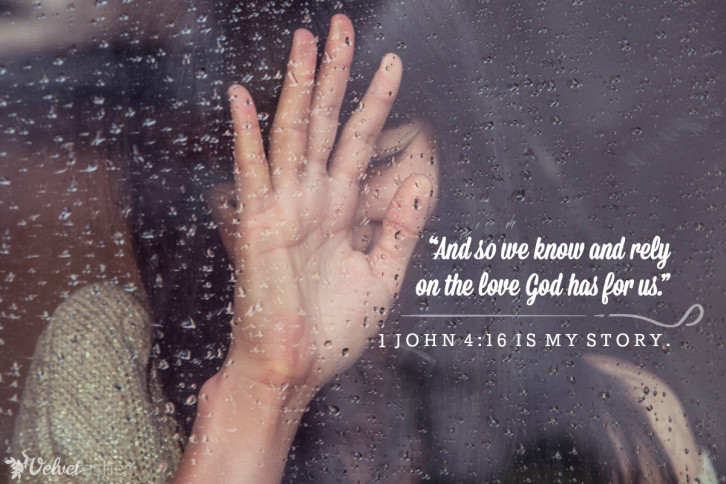
Shortly after my time with the counselor, I encountered I John 4:16 in the New International Version: “And so we know and rely on the love God has for us.” I stopped cold. For me, knowing God’s love came first, and relying on it came afterwards. How could this verse so perfectly sum up my experience of God’s love when it had been written some 1,900 years earlier??

I loved this verse so much I looked it up in other versions. The English Standard Version reads, “And so we have come to know and to believe the love God has for us.” When I looked it up in the Greek, I discovered that “know” implies a personal experience, and “believe” means to trust. I John 4:16 is most definitely my story. First I had a personal experience of God’s love, and now I find I can trust it.

My Brute Force Method had failed. Trying to trust had failed. It was only when I let go and stopped striving that I could actually trust His love for me. So maybe trust is more of a release than a grip. Maybe it’s more of an invitation than an instruction. Maybe radical Trust in God isn’t about my circumstances, but about His love.

Psalm 13:5 declares, “I trust in Your unfailing love.” Trust in His unfailing love is life to me now. I no longer believe the lies that tell me my husband is more valuable than I am. I know I’m loved, and I no longer need to slice through my husband’s heart with my perfectly-practiced, precision-cut lies.The most broken part of our marriage has been made whole. I never thought I’d be able to proclaim that.

I am daily living Paul’s prayer in Ephesians 3:17-19. I’m experiencing the love of Christ, and He is filling my life with His love. I’m trusting in Him, and He’s making His home in my heart. I feel my roots growing down deep into God’s love, and I trust its width, length, height, and depth like never before.

This is the cry of my heart for you today. I pray along with Paul, that “Christ will make His home in your hearts as you trust in Him. Your roots will grow down into God’s love and keep you strong. And may you have the power to understand, as all God’s people should, how wide, how long, how high, and how deep His love is. May you experience the love of Christ, though it is too great to understand fully. Then you will be made complete with all the fullness of life and power that comes from God.”

 ~~~~~~~~~~~~~~~~~~

Further resources that helped me know and rely on the love God has for me:

The life and ministry of Rich Mullins, especially his song “The Love of God

Anything by Brennan Manning, especially “Reflections for Ragamuffins

Beth Moore’s Beloved Disciple Bible Study or book

    ~~~~~~~~~~~~~~~~~~

What is the thing in your life that makes you doubt that God loves and values you as much as He loves other people??

What is God inviting you to trust Him for?

What To Do About Women’s Roles {Velvet Ashes}

Elizabeth is over at Velvet Ashes today for their discussion on Roles.

fs

I’ve sat around the table and been told – on more than one occasion and on both sides of the ocean – that what I’m doing is not Enough. That I am not working Hard Enough. That what I’m doing with my children is Too Small. That I’m not Properly Serving the needs around me. And all the while, I’d been following, to the best of my ability, what I thought God had for me in that season of my life.

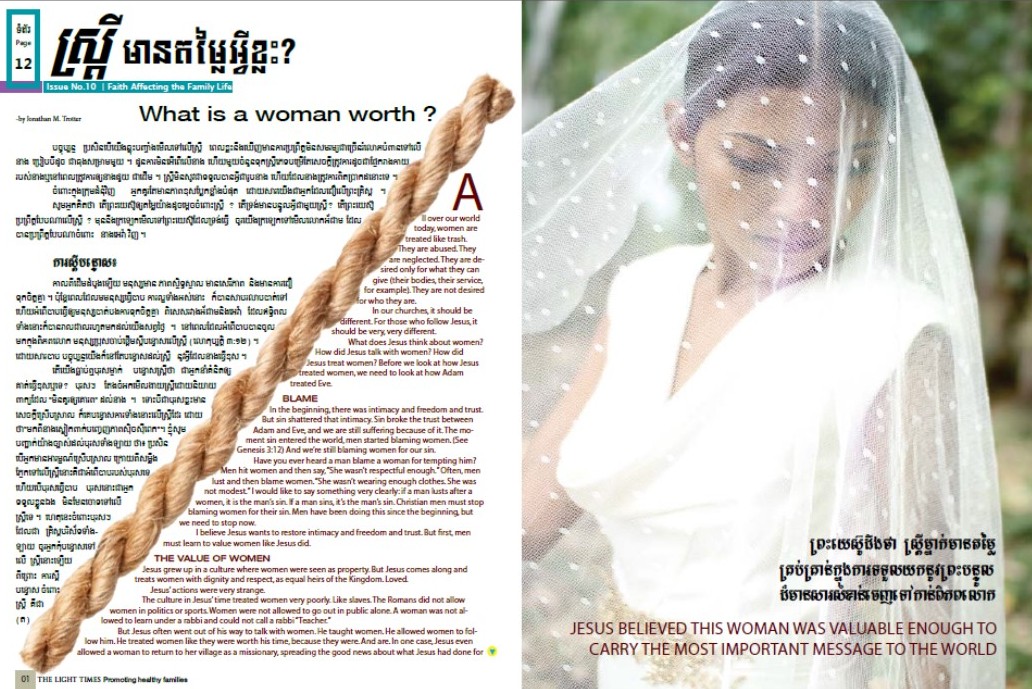
There have been times I’ve been beyond frustrated at the state of church culture. A culture that seems to honor and esteem men above women. A culture that grants men more options in where and how to serve God than it grants women. A culture that judges women for the few options they do have, no matter which ones they choose. You stay at home with your children? You should be working all day. You work all day? You should be staying at home with your children.

Sometimes I wonder why men are privileged to choose their ministry emphasis, but wives are pigeon-holed into their husband’s jobs. Is there no difference between the way God fashioned the two parts of a couple, that they might possibly be able to serve in different capacities?

I have cried so many tears over this.

I’d love to see a Christian culture that places fewer unattainable expectations on women. I’d love to see a Christian culture that ties up fewer heavy burdens on women’s shoulders. I’d love to see a Christian culture that lifts a finger — or five — to ease those unbearable demands.

The reality is, we may not be able to bring cultural change across all of Christendom. We may not be able to exert organization- or church-wide influence. But we can attend to the one thing we do have influence over: our relationship with God.

Click here to read the hopeful conclusion.

The Purpose of Marriage is Not to Make You Holy {A Life Overseas}

by Jonathan

Before we moved abroad, we did some marriage counseling. What I mean is, we sat in an old guy’s office for fifteen hours and cried. It was amazing.

He told us our marriage could be a safe-haven on the field. Or not.

He said we could strengthen and encourage each other on the field. Or not.

He said that our marriage could bring peace and stamina and even joy to the mission field. Or not.

He was right.

Continue reading at A Life Overseas…

photo-1422394866893-d01b99781fcd2

Distractions and the Voice of Jesus

by Elizabeth

distractions1

Follow Me. Jesus whispered these words to me a few months ago. I was in church. It felt like He was right there in front of me, pointing His finger at me and saying, “Elizabeth Trotter? Yes, you. I want you to follow Me. You — just you — follow Me.”

Rarely does Scripture come to me fast, strong, and seemingly out of nowhere like this. I knew this phrase came from John 21, so I opened up my Bible and read it. I hadn’t been reading this story lately, and it wasn’t a story that had ever meant much to me before. So I knew I had to pay attention to this message from God.

Over the next few weeks, I read the story, and re-read it, and then read it some more. Because the truth was, I was distracted, and I desperately needed to hear its message.

One morning after the Resurrection, Jesus and His disciples are by the sea, eating bread and fish. Jesus starts talking to Peter and asks, “Do you love me?” Peter answers, “Yes, Lord, you know I love you.” Jesus tells him, “Then feed my sheep.”

A second time Jesus asks Peter, “Do you love me?” A second time Peter answers, “Yes Lord, you know I love you.” And a second time Jesus tells him, “Then feed my sheep.”

Yet again Jesus asks Peter, “Do you love me?” Peter’s feelings were hurt, and he answered again, “Yes Lord, you know I love you. And again Jesus tells him, “Then feed my sheep.”

Jesus then tells Peter what kind of death he is doing to die. Peter turns to look behind him and sees John. Peter then asks Jesus, “What about him, Lord?” Jesus replies, “If I want him to remain alive until I return, what’s that to you?? As for you – follow me.”

I get distracted by so many things. I get distracted by feeling sorry for myself. I tell myself I’m such a terrible missionary because I don’t speak the language very well. I tell myself I don’t measure up, and I’ll never measure up. That I will never be good enough or worthy enough, and that everybody is rejecting me.

I get distracted by jealousy. I’ll see someone else who’s been given amazing ministry opportunities, and I’ll wish I had those opportunities. Why can’t that be me, God? Why can’t you let me do that? Why does she get to do that when You know I want to do it? Whether it’s teaching math and chemistry, or attending births as a doula, I can get distracted by what I don’t get to do instead of finding joy in what God has assigned me to do.

But the biggest distraction for me, by far, is controversies within the American church. Since I’ve moved overseas, I’ve kept up on hot-button issues in the United States. I tell myself I do this so that “I’m not out of the loop when I return.” But I’m not just informing myself when I read controversial blogs; I become emotionally embroiled in them.

I read what all the online voices are saying, and I become very worried over the direction of the Church. I have intense intellectual and emotional reactions to inflammatory blog posts. I formulate arguments in my head to combat them. ABC is right, and here’s why; XYZ is wrong, and here’s why. Surely that’s helpful, right?

Wrong. It doesn’t help. All it does is agitate and depress me. It distracts me from doing what God has already clearly told me I need to be doing with my time. Which means I’m wasting a lot of the time He has given me. It means I’m squandering His gifts.

Distractions, distractions, distractions. Not a single distraction is helpful for ministry, or my own personal spiritual life. Each distraction keeps me from doing what God has called me to do in this season of my life. When I get distracted by feelings of jealousy or inadequacy, or by worry over the future of the Church, I don’t have the time or energy to do any of the things He has called me to do. I cannot fulfill His purposes in my life if I spend all my time reading other people’s angry words.

The truth is, it’s not my job to guide the global Church. That’s the job of Jesus, and He can handle it. Hearing from God and writing out of my own relationship with Him does not in any way require that I be up-to-date on church controversies. It just doesn’t. I can follow Him without regard to what He is doing in anyone else’s life but my own. The truth is, I don’t have to know about religious debates in order to love my husband and children well, and to love women and teen girls well.

The truth is, I can do what God is calling me to do, right now, and I can be joyful in it, instead of being jealous. The truth is, I will never measure up as a “perfect” missionary or a ministry wife, because no one measures up — and that is actually the good news about Jesus’s sacrifice.

But when I’m distracted by any of these things, I’m not paying attention to God. When I’m distracted by these things, I don’t notice the person right in front of me. And I won’t be able to love them if I can’t see them. If I allow myself to be distracted, I won’t be able to follow the Greatest Commands to love God and people.

The day Jesus reminded me to follow Him only, I had been sitting in church, emotionally twisted over yet another American church issue. And I suddenly felt He was saying to me, “You – Follow Me. Stop turning your head to look at other people. Look at Me. Regardless of what anyone else around you is doing, I want you to follow Me.” In that moment, I realized I had been wasting my life on distractions. I wasn’t following; I was worrying.

Hearing the word of God on this issue made me re-evaluate my life. I can’t waste my time reading controversial blogs; instead, I must protect my time by staying away from online debates. I must say “no” to them — and I’m learning to. Refusing to read certain kinds of blogs releases me from the internal pressure to “save the American church.”

I must simply focus on what I can do, today, to serve God and others. I remind myself of Jesus’s words quite often. If I want to follow Jesus, then I, along with Peter, can’t look around at other people. I have to look at Jesus. I have to follow Him alone.

What about you? What has God already called you to do in this season of your life?

What distracts you and keeps you from fulfilling His purposes?

Is Jesus saying to you, today, “Follow Me”?

(This article originally appeared at A Life Overseas.)

(This