Note: this post was inspired by this article by David French.
As a homeschooled-in-the-80s kid, I’m well versed in the terrified cry, “The danger is out there! The danger is out there!” I can remember watching The Village and feeling like M. Night Shyamalan had just made a film about my life. (My parents didn’t yell this too loudly, but we were Gothardites.)
But is the primary threat “out there”? No. It is not.
Over the past couple of years, I’ve received a fraction of the pushback that David French has, but still, I resonated deeply with this:
“I get an enormous amount of criticism for not critiquing the secular left more than I do. Yet if I’m concerned for the health of the church, then corruption at the highest levels of the world’s largest Christian university, sexual predation by arguably Christianity’s most influential apologist, widespread conspiracy theories, and disproportionate disregard for the health and well-being of neighbors do more harm than the worst of Joe Biden’s culture war regulations or the most radical developments in the sexual revolution.”
The whole article is excellent, but here are a few more quotes worth pondering:
“If your reaction is that the greatest threat to human souls or to the church itself comes from without—from the external forces attacking Christianity or from the cultural temptations buffeting our children—then that dictates a very different posture to the world and approach to politics than if you believe the true threats lie within.”
A different posture indeed.
I have seen this fear, this alarm:
“If you believe the most dangerous threats come from without, fear can rise in your heart. As you lose political and cultural power, and you see others shape the environment in which you live, then you start to have genuine alarm that other people are destroying the souls of those you love. What a terrifying idea.”
There is hope, of course.
At the end of the day, the Church remains his, and he still loves her. He still calls her to remember her first love. I want to still love her too. I want to build more than I tear down. I want to heed with every fiber of my being Jesus’ call: “Your business is life, not death. Follow me. Pursue life.” (Matthew 8:22)
I want to love more than I fear.
I haven’t always done this, for sure. But I want to. I want to know Jesus more. I’m a few chapters in to Dane Ortlund’s new book, Gentle and Lowly, and it’s helping. It’s not about The Chosen, but it’s explaining, in theological terms, why the Jesus portrayed in The Chosen is so fascinating and healing and loving. He’s helping me understand why I cry every.single.episode.
Turns out, it’s because the stories are real. Ortlund writes, “Jesus is not trigger-happy. Not harsh, reactionary, easily exasperated. He is the most understanding person in the universe. The posture most natural to him is not a pointed finger but open arms.” He goes on to say that Jesus’ “deepest impulse, his most natural instinct, is to move toward” sin and suffering, not away from it.
Based on the interest expressed in the comments of my last post, today I’m sharing three of my favorite “healthier” chocolate desserts. They’re all pretty easy to make but have slightly different personalities.
—
Tahini Date Fudge I borrowed this recipe from Aviva Romm’s Instagram post.
3/4 cup dates, pitted, soaked, and chopped 1/4 cup cocoa powder 1/4 cup – 1/3 cup tahini 1/2 tsp vanilla
All you’re going to do is drop the ingredients in the food processor and process till smooth, but I have a few tips first. Choose Deglet Noor dates over Medjool dates. Everyone says Medjool dates are the sweetest and softest, but this has not been my experience in America. The Medjool dates at the store have been pitted and have dried out already. Even soaking them in hot water does not solve this problem.
The Deglet Noor dates I’ve found here are still soft, even if they’ve already been pitted. I don’t mind pitting them myself if I have to, although pre-pitted is convenient. (I had to pit them myself in Cambodia, where I was thrilled to find any dates at all.) The thing I love about using dates as a sweetener is that they are not only composed of sugar; they are full of vitamins, minerals, and fiber. I still soften my Deglet Noors in hot water and slice them into small pieces, just to make them easier to puree.
Depending on the thickness of the tahini, sometimes you need more, sometimes you need less. Sometimes I add a splash of water if the fudge isn’t coming together. I love tahini. I can eat it plain. But it’s pricy, so I don’t do that very often, only when I’m really craving it.
I don’t like my fudge to be super sweet. I’m going for the flavor of dark chocolate, not traditional fudge. I’ll play around with the amounts of the ingredients until it tastes just right. Sometimes that means adding more dates, other times that means adding more cocoa. The thing I love about this recipe is that it’s very fudgy and rich. Sometimes I make it too thin, and it’s more like cookie dough, but that’s delicious too.
I generally make this for myself only; I don’t share with my children. Store in the fridge.
—
Chocolate Silk Mousse I found this recipe in an old vegetarian cookbook somewhere along the lines.
2 packages silken soft tofu 1/3 cup cocoa scant 1/3 cup honey 2 tsp vanilla
Open the soft tofu and drop into the food processor; then add the other ingredients. Process till smooth. It takes a little while, but all the cocoa and honey does eventually get distributed in the tofu. And it does have to be soft silken tofu. (Obviously this recipe is only for those who eat tofu!)
This is a very fresh-tasting mousse. It has more protein and calcium than some dessert recipes. You can refrigerate or freeze it. I like it refrigerated, which makes it feel like a mousse or soft pudding. Just kind of dissolves in your mouth. My family prefers frozen, which makes it taste like a chocolate popsicle. Not exactly a fudge-cicle as it’s not quite rich enough for that. This recipe feels satisfying while not overly indulgent.
—
Coconut Milk Mousse I adapted this recipe from Mary Vance’s site.
2 cans full fat coconut milk, chilled in fridge 1/3 cup coconut sugar 1/2 cup cocoa powder 1 tsp vanilla extract
You’ll need an electric stand mixer for this one. Chill the coconut milk in the fridge for at least 30 minutes (you can also chill the mixing bowl). Open the coconut cans, and carefully spoon out the cream into the mixing bowl. You don’t want any of the water underneath. Start mixing for a minute or so until fluffy (it might not get fluffy; that’s ok too).
Add the cocoa, coconut sugar, and vanilla, and mix again until fully incorporated. Chill in fridge. This one is so delicious and rich. I love coconut cream by itself (when making curry, I often swipe bits of leftover coconut cream from the can). The flavor of coconut and chocolate here is a big hit in our family. It’s very rich, though, so even though you want to eat a lot at once, you really have to limit yourself to small amounts unless you’re willing to risk a stomachache! Pair it with berries to cut the richness.
A note on chocolate avocado mousse: I’ve tried it, and it doesn’t taste right. After it’s chilled, it tastes almost right, but the avocado just comes through too much. I want to like avocado mousse; avocados are so good for you, and I was looking for a way to get healthy avocado fats in me. But I just can’t do avocado mousse at this time. After this short detour through RecipeLand, my next blog post will return to my more “normal” blogging topics.
Remember how I said I wasn’t going to have a specific blog focus moving forward? That I was just going to write updates on my life, whether large or small, whether meaningful or mundane? Well, today is a recipe day! The kids and I are still on a much-needed spring break, so I have extra time to share some fun stuff.
The two recipes below are our family’s favorite vegan cheese sauces. Now, I don’t have anything against dairy in principle. I love cheese and yogurt, and half and half goes in my half-caf or decaf coffee every morning. But two of us (including me) have tummy troubles if we eat too much cheese, one of us gets eczema flares from dairy, and another tries to eat mostly plant-based for other reasons.
I have therefore attempted to fill the gap with various vegan cheese recipes. Some recipes require a lot of advance planning because cooked vegetables (like potatoes, sweet potatoes, cauliflower, carrots) form the base of the sauce. Others don’t taste quite right, like cashew-based sauces which are often too sweet and not savory enough. These two recipes are different. They are satisfying and delicious, and if you have all the ingredients on hand, they do not require advance planning (a plus for any cook!).
—
Cannellini Cheese Sauce I can’t remember where I found this cheese sauce recipe, so unfortunately I can’t give any credit. But it’s been our family’s absolute favorite until recently, when I discovered a new recipe that has divided us on which sauce is best. So I currently make both (and one family member combines the two).
This sauce has more protein and fiber than most cheese sauces and is an excellent addition to a baked potato bar. It calls for more ingredients than your typical cashew sauce might call for, but they give a depth of flavor to the sauce, so don’t skimp on any ingredients.
1 can cannellini (great northern) beans, drained 3/4 cup unsweetened plant milk 1/2 cup nutritional yeast 1 Tbsp olive oil 3/4 tsp salt 3/4 tsp vinegar 1/4 tsp garlic powder pinch turmeric
Blend all ingredients in a blender, then heat on medium till hot and bubbly. You’ll have to scrape down the sides regularly.
—
The Best (but more complicated) Vegan Cheese Sauce I found this sauce at Hungry Vegan Mama and thought I’d give it a whirl, even though it called for several ingredients I didn’t normally keep on hand. This is cashew-based, which I mentioned I don’t normally like, but it has so many unusual ingredients that, when combined, create the savory flavor you have been looking for. Yum! This one is especially good on broccoli.
I tend to blend up this sauce and then heat it in the microwave while I blend up the cannellini sauce to heat on the stove. That way I can make two cheese sauces at once without cleaning the blender in between. If you have a high-power blender, you don’t have to soak the cashews a full hour, which is good for my frequent lack of advance planning. I usually start soaking them when I start preparing dinner, and that seems to be enough.
1/2 cup raw cashews, soaked 1 hour 1/2 cup vegetable broth 1/2 cup water 3 Tbsp nutritional yeast 4 Tbsp plain instant mashed potatoes 2 Tbsp lemon juice 1.5 Tbsp white miso paste 1 tsp smoked paprika 1 tsp maple syrup 1/4 tsp turmeric 1 tsp garlic powder 1 tsp onion powder
Blend all ingredients on high in the blender, then heat in the microwave (or on the stove). Happy cooking!
Over the last few years of learning to eat and cook in healthier ways, I’ve collected some delicious better-for-you chocolate dessert options. Let me know in the comments if you’d like me to share those recipes sometime.
I wanted to pass this song on to you during Easter Vigil (the night before Easter Sunday). Perhaps you need it as much as I do.
The Paschal Troparion is an Orthodox hymn dating back to the 5th century. Originally written in Greek, one of its English translations proclaims: “Christ is risen from the dead, trampling down death by death, and upon those in the tombs bestowing life.”
It is a sort of bridge between a mournful Holy Saturday and a joyous Resurrection Sunday (though Orthodox believers usually celebrate Easter on a different date than Protestants and Roman Catholics).
The music and lyrics of the Paschal Troparion were reimagined by the husband/wife musical duo eine blume, and I first heard it during a Velvet Ashes retreat several years ago. Its simplicity lends it an easy memorability, and it joins the best of ancient words with a beautiful modern melody.
I love the comfort and solidarity of singing something that believers have prayed in faith for hundreds of years. This hymn has become one of the songs that our family sings to end our morning devotions. Originally we closed only with the Doxology, but now we close with either the Doxology or the Paschal Troparion (or occasionally both).
In case you haven’t heard this song, or in case you had and just needed reminding, I wanted you to have it before the dawn of Easter morn. Confluence Worship covered it here (or you can purchase it on iTunes like we did). I’ve also pasted the song below.
The 2000 film Return to Me is a family favorite. The movie features Bob and Elizabeth, who have been together since high school and who are still very much in love. One tragic night Elizabeth, who was an organ donor, is killed in a car accident. We watch as doctors transfer her heart to Grace, a woman who’s needed a new heart for a long time.
Grace goes nervously into surgery, hopeful for a new life. Bob, blood still on his clothes, goes home to an empty house. It’s an agonizing scene.
Months later, Grace has recovered from surgery. Bob, meanwhile, is having trouble living without Elizabeth and has buried himself in his work. Friends continually try to set him up with other girls, but Bob wants nothing to do with anyone new. He can’t get over the loss of Elizabeth. Then one night during one of these blind dates, Bob meets Grace at the family restaurant where she works. Sparks immediately start flying.
In the following weeks and months, Bob’s heart opens up to new love. But Grace is guarding a secret. Although she doesn’t know that Bob’s wife’s heart beats inside her chest, for some reason she can’t bring herself to tell Bob she’s had a heart transplant. Eventually the two of them figure this fact out, and the revelation is traumatic for both of them. Bob disappears; Grace flies to Italy to paint.
While Grace is gone, Bob realizes he loves her and can’t live without her. He looks for her at the restaurant only to find that she’s gone. He acknowledges, “I miss Elizabeth. I’ll always miss her.” Still, he’s ready to embrace a new life with Grace. He goes in search of her, and their reunion is sweet. The audience can see them building a future together.
One year after having traumatically evacuated Cambodia, I think I understand a little of what Bob meant in his restaurant confession. We left Cambodia in March, just as the pandemic began closing borders. We were relieved to have made it to U.S. soil, and for several weeks we assumed we’d be able to easily re-enter Cambodia in the fall as planned. But by May our visa and passport plans began unraveling, and by June, life as we knew it in Cambodia was over.
I didn’t even get to say goodbye.
2020 became one long grieving session. This might sound strange if you knew me in the early 2000’s when Jonathan felt called to missions and I didn’t. You might remember how I fought the call for so long. But now I felt like Mr. Holland from the movie Mr. Holland’s Opus, in which aspiring composer Mr. Holland longed for fame and renown, but instead ended up teaching music to high school students. At the end of his career, when budget cuts forced him to retire early, he observed, “It’s almost funny. I got dragged into this gig kicking and screaming, and now it’s the only thing I want to do.”
Like Mr. Holland, I didn’t initially want to move to Cambodia, but once I got there, I found a life I loved. I wasn’t ready to say goodbye — but covid said differently. For weeks, I woke up crying. Opening my eyes each morning was a painful reminder of where in the world I wasn’t. In Cambodia I had a strong support system. I lived every day with a sense of meaning and purpose. I had a place in the community and rituals and routines that brought structure to our chaotic cross-cultural life. We had raised our children there, and Cambodia was all they knew.
It was a difficult life, sure, but it was also an exceedingly good one. And I wasn’t sure I would ever stop crying over this loss. I lived in the “if onlys.” If only we didn’t have passport problems. If only we didn’t have visa problems. If only covid hadn’t happened. If only, if only, if only. I thought if I could just get back to Cambodia, I could recapture all my former happiness. In reality, even if I could have returned, I couldn’t have recaptured my old life. Covid made that impossible for seven billion of us.
Then one day my near-constant crying stopped. I thought I had accepted my new circumstances. And I do believe I had accepted that I couldn’t get my old life back. But reflecting now, I realize that I struggled deeply throughout the fall and winter. I had said goodbye to my old life — though not in person and not on purpose. But I still didn’t know exactly what my new life would look like, so it was hard to root myself here. Everything seemed bleak. I didn’t think I could ever be happy again.
We were looking for a home at the time. We knew we had to be out of our temporary housing by the end of December. After several housing disappointments (a story I’ll tell another time), I began to fear becoming homeless (emotions may exaggerate facts, but the intensity of the feelings are real). We didn’t have a church home yet because of covid, so I didn’t have local community to help me through this transition. I knew I couldn’t get my old life back, but I still desperately missed it.
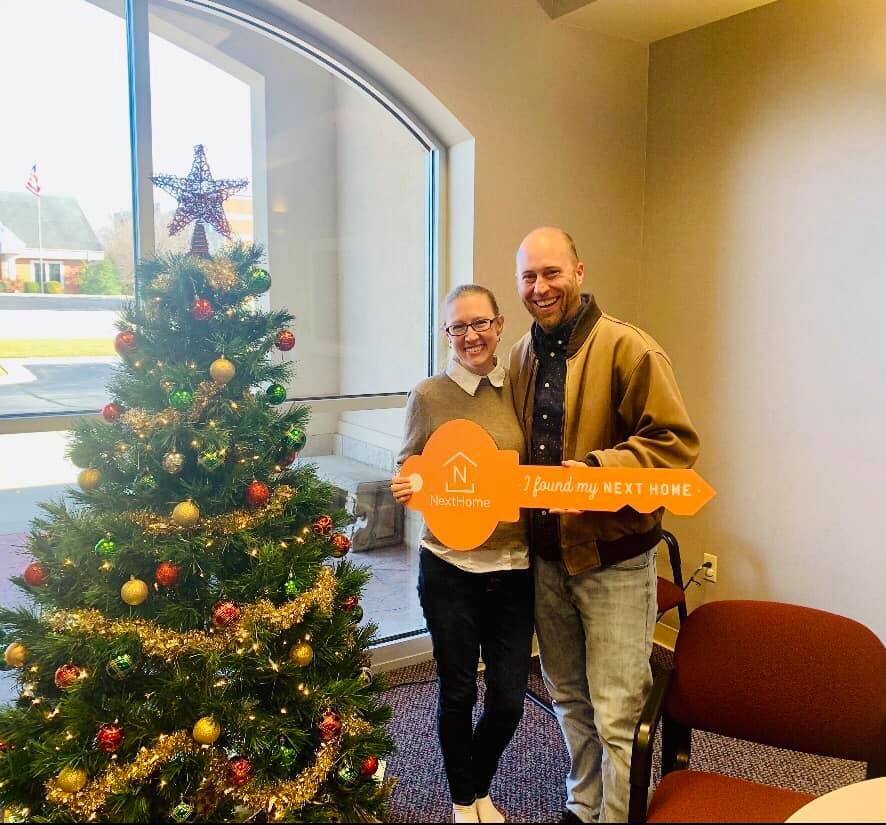
Finally, finally, we found a home that fit our family that was also in our price range. We signed the papers mid-December, which was a bit closer to the deadline than we would have preferred. Still, we were thrilled to have a place of our own. I had no idea it would be such an important milestone in our repatriation process.
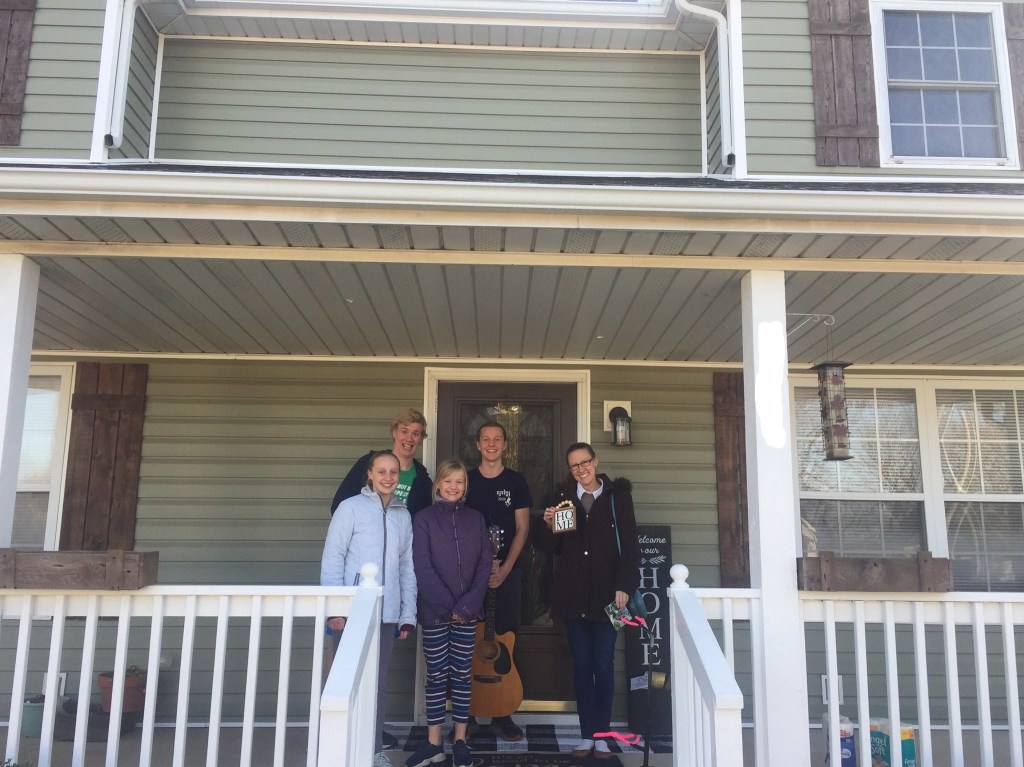
We’ve been in our new home for three months now. It fits us so perfectly (I promise I’ll explain in an upcoming post). I live in the daily disbelief that we could have found such a fantastic place for our family to live. We are making it our own, slowly writing our name in the land. Jonathan is working on the yard. We have pictures on the walls. We have rituals and routines, and I’m slowly re-building a support system. Living in our home has helped get me “unstuck” from the grief and helped me to move forward. It has given me a glimpse of what the next season of life might look like.
Cambodia is still a natural part of our conversations, and we frequently talk about our old life. The six of us have so many shared memories, both pleasant and unpleasant. Occasionally I even long for life in Southeast Asia. But I no longer think I can’t live without Cambodia, that life simply cannot go on without Cambodia. I’m beginning to understand what life can look like here on the other side of the ocean. I feel like Bob, who knew that he would always miss his old life, but who now knew that he could also live a new life with Grace.