Finding Christ in Leviticus

by Elizabeth

hires_leviticus_14.jpg

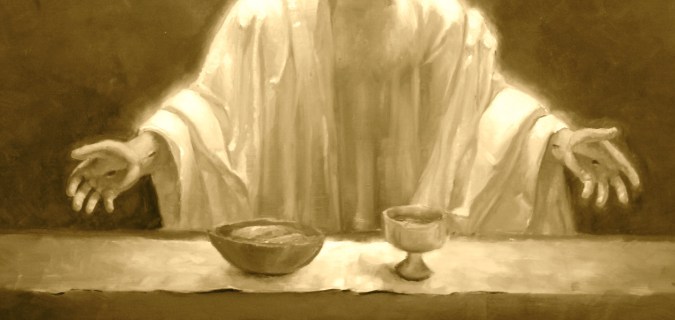
This image. It captured my attention last weekend, and I couldn’t look away. I was supposed to be listening to Sherry Lile speak on Leviticus 14, but by the time she got to this part of the story, I heard no more words. I saw only this picture.

Leviticus 14 might seem like a strange place to begin a ladies conference entitled “My Heart, Christ’s Home.” The event theme sounds warm and cuddly, but the Levitical chapter is anything but. It begins with the proper way to diagnose and treat skin diseases (yuck) and ends with the instructions for identifying and treating houses with mold (also yuck).

First we talked about how sin is like leprosy — how it can start small and then spread to a much larger area of our lives. And if it’s like the traditionally understood form of leprosy (Hansen’s disease), it causes us not to feel pain.

The problem then, is that we can get hurt even worse. I know for myself, most of the time when I sin, it’s a feeble attempt to protect my heart from further pain. But I only harden it harder and sin ever greater and pull farther and farther away from the Great Physician — even if I can’t, temporarily, feel the pain.

In Leviticus the sufferer of the skin disease must go to the Priest for healing. He can’t do it on his own. He needs help. There’s a parallel here, of course.

Then we moved into the second half of the chapter, the part about the houses. Again the priest must be called in. He is given very specific instructions about removing the contents of the house and checking for spreading mold. Contaminated stones must be removed, too, and taken to a designated place outside town. Sometimes the entire house must be torn down.

Other times the house may be saved from destruction, but it must still be purified. This is where the picture comes in. The priest takes two birds, some cedar wood, scarlet yarn, and some hyssop. One of the birds he kills over fresh water in a clay pot (strange, I know).

He takes the cedar wood, the hyssop, the yarn, and the live bird, dips them in the blood/water mixture, and sprinkles the house seven times. Almost like he’s sweeping away the impurities with a broom.

And then — oh then — he releases the live bird in the fields outside the town, and the house is finally cleansed from its defilement. That’s when this picture popped up on the screen and when I couldn’t take my eyes off it. You know when that happens, right? When words are no longer the best language, when art communicates truth more clearly?

So I went home and told my husband all about it, but without the context of the entire lesson, it’s hard to explain to someone why you’re so excited about a picture of a bloody bird. You just sound like a crazy person.

But here’s the reason I love this picture: these two birds represent the work of Christ for us. Both the sacrificed bird AND the free bird find their fulfillment in Him — in the Cross and in the Resurrection. Because of Christ, we get to go free. Like the bird in the picture, we’re released from the grip of death and given the gift of life.

But that gift did not come without a sacrifice.

hires_leviticus_14

Originally shared on Facebook.

Image used with permission.

A Missionary’s Call to the Psalms and a Deeper Emotional Intelligence

by Jonathan

I personally think we missionaries are a smart bunch. Our textbook education is typically high. We’ve been to college, perhaps seminary, and we know some stuff. We’ve figured out how to use our cognition for the King, our intellect for the Incarnated. But while western education is first and foremost intellectual (and that’s not necessarily a bad thing), life is lived and people are loved on the street level, not the lecture hall.

The classic quip about people caring how much you know only after they know how much you care is classic for a reason: it’s true. When we approach a hurting, lost world with brains first, we risk showing a skewed image of Christ. We need our hearts too.

hannah-morgan-37675

Sometimes I Wonder Where We Put Our Hearts
Hearts can seem to get in the way of missiology, and emotions are inefficient. Emotionally detached workaholics may be great at “getting the job done.” They might not make wonderful spouses or parents, but disconnected, task-oriented, stoic workers can be low-maintenance, efficient missionaries.

Conversely, we must remember that emotions are Christ-like. A missions force with low emotional intelligence is bad for missions, not to mention families, teams, and planted churches. When the DNA of new believers and new churches excludes the sometimes messy reality of the heart, it’s not healthy DNA. Furthermore, a disconnected, task-oriented, stoic missions force isn’t much like Jesus.

Have you ever met a man or woman who seems bottled up emotionally, but the minute they start talking about the lost or missions, they start crying? I’ve met many folks like this, and I’m always baffled. When it comes to their families or other interpersonal relationships, they seem distant and cold, but the minute you mention unreached peoples, cue the waterworks. Something is not right about this picture.

It’s awesome they care about the lost, but how is it that all of their emotional capital got put there? Religion should not be the only place in their life where they really feel emotion.

Building Emotional Intelligence
So, how do we add some heart back in? How do we build emotional intelligence in ourselves and our teams? I believe both the Psalms and the life of Jesus can help us find our hearts. John Calvin in describing the Psalms said this: “What various and resplendent riches are contained in this treasury, it were difficult to describe…for there is not an emotion of which any one can be conscious that is not here represented as in a mirror.”

To grow in emotional intelligence and awareness, we must practice. Read a Psalm and the Gospels and try to identify as many emotions as you can. Both involve people, and people feel. Ask yourself, “How do the hands of Jesus reveal the heart of the Father?” If Paul helps us to know the mind of Christ (a good thing), the Psalms show us Christ’s heart. It is the Psalms that Jesus turned to and quoted more often than any other book in the Hebrew Scriptures.

But even more telling, the context in which Jesus referenced the Psalms was almost always when he was in a difficult situation.  Jesus was hated without cause, which the Psalms foretold (Ps. 35:1969:4John 15:25). He quoted Psalm 22 while dying on the cross (Ps. 22:1Matt. 27:46Mark 15:34) and when talking about his betrayal (Ps. 41:9John 13:18). These are just a few of many examples. In stressful situations, when he was under duress or attack, Jesus referred to the Psalms. Maybe that’s when we need to remember the Psalms too.

In our own lives, and in the lives of the people we live among, “bad stuff” is common. Corruption, danger, and loss are the daily realities. And so we need the Psalms. As we watch global instability and fear spread, we need workers with hearts that understand grief and loss. We need workers who know Christ as Healer. We need workers who bring their full hearts to the mission field. Not just their work ethic or their seminarian-intellect, but also their vulnerable, wounded, and healing hearts.

If we connected heart and mind, we’d get kinder, gentler, more sensitive cross-cultural workers. And kinder, gentler, more sensitive disciples.

Making Room for Warrior Poets
The foreign field appeals to warriors, and we amplify this fighting spirit with our dramatic quotes and motivational epigrams. But the unreached peoples of the world also need poets and artists, those who see and speak in different tones, with different cadence and quality.

Too often we think of the “soft” qualities as counterproductive in church-planting work, especially among the least-reached. We recruit hard people for hard fields, and we can’t even imagine the artist or highly emotive worker surviving, let alone thriving. We need warriors, go-getters.

But this approach is wrong, and for the sake of the gospel, we must change it. Tenderness, creativity, gentleness, and whimsy are not soft, esoteric qualities. These are qualities flowing straight from the heart of Christ.

Yes, we should study the mind of Christ, but there is so much more. Christ’s death was not by guillotine, disconnecting head and body. His head was bloodied, his heart was pierced, and all of him was raised.

Let’s make sure that all of him is preached. Let’s make sure that all of him is shown:

  • Jesus the advocate and disrupter, the wild one who defied Rome from underneath.
  • The brilliant intellect who befuddled the learned men.

Let’s make sure we preach his heart too:

  • A heart that felt the sting of death and the tip of the spear.
  • A heart that felt abandonment and despair and cared about a widow’s son.
  • A heart that laughed and wept and wrote in the dirt.

Let’s remember a Christ who loved the Psalms, and let’s imitate him. Let’s connect with the heart of God, and let’s show the world a richer, fuller, more complete image of Christ.

~~~~~~~~~~~~~~~~~~~~~~~~~~~~~~~~~~

Suggested Resources
Emotionally Healthy Spirituality
The Gaping Hole in the Modern Missions Movement
The simple tool I use with 90% of my pastoral counseling clients


Originally published at www.imb.org. Used with permission.

Photo by Hannah Morgan on Unsplash.

That Time Paul Talked About Breastfeeding {Velvet Ashes}

by Elizabeth

1-Thes-2-7-1170x780

My husband and I worked in local church ministry for over ten years before moving abroad to serve for the last five and a half. There’s something I want you to know about this life: you’re going to need a lot of fortitude for the journey. Working with people, in any time and any place, is hard. It doesn’t matter if it’s in your home country or a host country. Working with people is heart-wrenching and soul-filling, and you need endurance.

This is something else I want you to know: in the years ahead, never hesitate to serve out of your feminine strength. A lot of teaching models are filled with masculine metaphors. There’s battle this, and army that. There’s fighting here and soldiering on there. The Bible itself is filled with battle-speak. We are to put on the full armor of God so that we can take our stand against the devil’s schemes. But the same Paul who told us in Ephesians 6 that our battle is not against flesh and blood and that we were to arm ourselves and stay alert and be persistent and stand firm, that very same Paul was not ashamed in his first letter to the Thessalonians to compare himself to a woman.

In I Thessalonians 2:7, Paul, Silas and Timothy jointly describe their conduct among the believers there: “We were gentle among you, like a nursing mother taking care of her own children” (ESV). I was in a training session this summer when I first truly took hold of this verse. We had studied the great faith and love of the Thessalonian church in chapter 1, and now we were in chapter 2 studying the attributes of the men who’d told them the Good News. When we got to the verse about these three men acting like a mother, some of the men seemed to want to brush it off and focus instead on verse 11, where the letter writers compare themselves to good fathers.

But I couldn’t brush Paul’s words off. I remembered how physically demanding it was to be a nursing mother. I had to speak out: “We have this idea of a mother with her nursing baby that’s all sweetness and light. But it’s not. It’s really hard work. You have to feed yourself well, so you can feed your baby. You have to get up at all hours of the night to care for a crying child, and you have to try not to be cranky about all that lost sleep.”

As I spoke, women all around me nodded their heads in agreement, and several told me afterward how glad they were that I had said that. They had lived it, too, and they knew the challenges of mothering. You need a lot of stamina. You don’t sleep through the night for months on end. Sometimes you get painful mastitis or yeast infections. You have to keep up your water and calorie intake. To your embarrassment, you leak milk everywhere. Or you have to work hard to make enough milk. Sometimes you can’t figure out for the life of you how to make this child stop crying, but somehow you have to stay calm while you do it. On top of that, you’re basically tethered to your child because you don’t know when they’ll need to eat again. You sacrifice many things for this child, this child whom you love so tenderly and so fiercely.

Somehow this was something the apostle Paul understood. When we serve people, we have to make sure we’re getting our spiritual nourishment first, before we can pass anything of value on to them. Living and working among the continual, desperate needs of other people can physically and emotionally deplete us. And sometimes other people’s needs interrupt our planned and preferred schedules. Paul knew all this. He lived all this. At the same time, Paul felt incredible affection for the Thessalonians. Paul, Silas, and Timothy loved them so much that they shared not only the good news with them, but their own lives as well (verse 8). And they’d spent plenty of time praising them in the chapter before.

Over the past few months I have been unable to let verse 7 go. I’ve learned that in the Greek, the noun was unmistakably feminine. It was trophos: a care-giver, a person sustaining someone else by nourishing and offering the tender care of a nurse. I’ve learned that it had the connotation of mother’s care, of holding a child close, wrapped in her arms. There is familiarity here. Affection. Tenderness. The verb was thalpo: to cherish, nourish, foster, comfort, nurture, or keep warm. There is action here, decision, deliberate investment. And the phrase “her own children” (heautou teknon) indicates belonging. An inclusion. A turning towards.

All of these feminine-sounding words can illuminate our own roles, wherever God has placed us. They are not weakness. They are not unnecessary or irrelevant or dispensable. They are strength and they are resiliency and they are essential. Whether or not you’ve ever been a nursing mother, you have a yearning for relationship that can solidify your ministry, not undermine it. Whether or not you’ve ever been a nursing mother, you have an instinct to care for people sacrificially. Whether or not you’ve ever been a nursing mother, you have the capacity to lead with endurance.

Paul wasn’t ashamed of these qualities, and neither should we be. It is good and healthy to identify as a woman and serve out of our God-given identity. Of course, men can be nurturers too – just see verse 11. And women can be warriors – just see Deborah. But when I read these verses, I feel so much validation. Validation of my work and validation of my worth. All those years living and ministering as a woman, they weren’t wasted. And as someone who has had a fraught relationship with the Apostle Paul over the years, these verses are yet one more reason I can love both him and his letters, for he wasn’t afraid to lean into the feminine for the sake of the people he was serving. It is something we needn’t be afraid of either.

Originally published here; reprinted with permission.

When Missionaries Starve — A message on the Power, Beauty, and absolute Necessity of the Word of God

When Missionaries Starve — A message on the Power, Beauty, and absolute Necessity of the Word of God. Recorded at ICA, Phnom Penh Cambodia, July 2017.

Click the link above to listen to the mp3, or check out the trotters41 podcast here.

I also wrote about this topic over at A Life Overseas.

trotters41-podcast

When Missionaries Starve {A Life Overseas}

by Jonathan

It’s something that’s caused the rise and fall of kingdoms. It’s confused the most erudite of the educated and been understood by the most childlike of children.

It’s been cherished and treasured by some, burned and ridiculed by others, and it’s absolutely necessary to your emotional health while living and serving abroad.

It is the Word of God.

The more pastoral counseling I do with cross-cultural workers and missionaries – and the more I get to know myself – the more I believe in the Power, Beauty, and absolute Necessity of the Word of God.

Many of us study the Bible as part of our jobs. We read it, parse it, argue about it, and teach it. But sometimes, in the middle of all of that, we forget to eat it.

We end up trying to feed ourselves with yesterday’s manna, and we starve.

We need to return to the slow chewing of the Word. For our own sustenance.

We need so much more than yesterday’s manna, so much more than the gorging of conferences or the regurgitations of famous teachers.

We need time with God and his Word. Today.

Each bite will not be Instagrammable. Each bite will not be magnificent and earth-shattering and memorable, and that’s as it should be, because sometimes you just need the calories.

Regular, non-crisis reading of the Word may seem to make zero difference in your life today or even tomorrow. But I promise you, in a year or ten or fifty, the consistent ingesting of the Word will make all the difference.

Continue reading at A Life Overseas