To the Returning Missionary {A Life Overseas}

by Elizabeth 

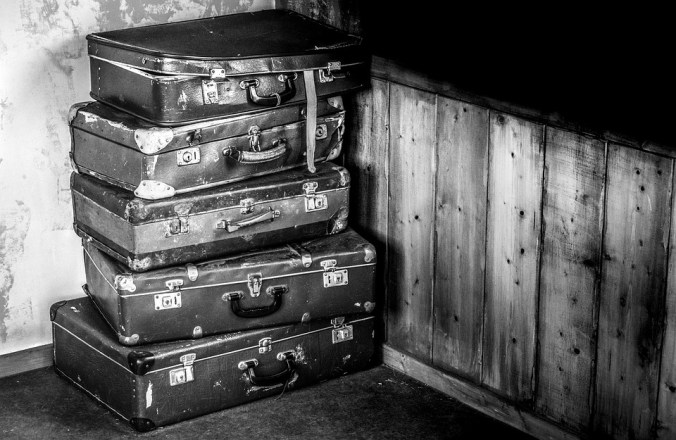
suitcases-2525193_960_720

You have walked with God in this place a long time, and He has walked with you. He has been beside you and inside you this whole time. The same Spirit remains in you and with you in your new place.

This place has changed you, and you have changed this place. Do not be distressed if you don’t understand everything that has happened and that is happening. Remember that the stories God writes are always long. They unfold over generations, not days or weeks or even months.

You have been here long enough to understand some of what God is writing, for both yourself and the people you’ve served, but some things may not make sense yet. Do not fret, and do not fear. The Father will show it all to you One Day. Until That Day, remember that you leave with our love, even as you live within God’s love.

Many years ago you came to this place as a foreigner, and the place you’re going now may also seem foreign to you. Everyone and everything has changed, including you.

So in the days and months and years to come, when you feel misunderstood, remember that no one understands your foreignness like Jesus, the One who came to the most foreign land to show his beloved creatures Truth and Light. He will understand your sorrows like no other.

You have seen so much change in your years here. Change in the people around you, change in yourself, change in the people you’re returning to. And you are tired. So tired. No one can work and live as long as you have and not be tired. Remember that Christ is your rest. (And on your journey, also remember to sleep.)

Circumstances change, and communities change, and in the end, He is all we have to hold onto. So don’t lose hope: He IS our hope. Hold onto Him, and remember that His love never fails. It will never fail you.

Though organizations may fail you, though supporters may fail you, though cultural acquisition may fail you, though years of experience may fail you, though people you love and invested in may fail you, though you may even feel you’ve failed yourself, still one thing will not fail you: the love of the Great Three in One will never fail.

And One Day, this squeezing in your heart and this aching in your bones from all these years and all these travels and all the years and travels to come, it will all be undone. Everything will be made new. Remember this.

Originally appeared at A Life Overseas.

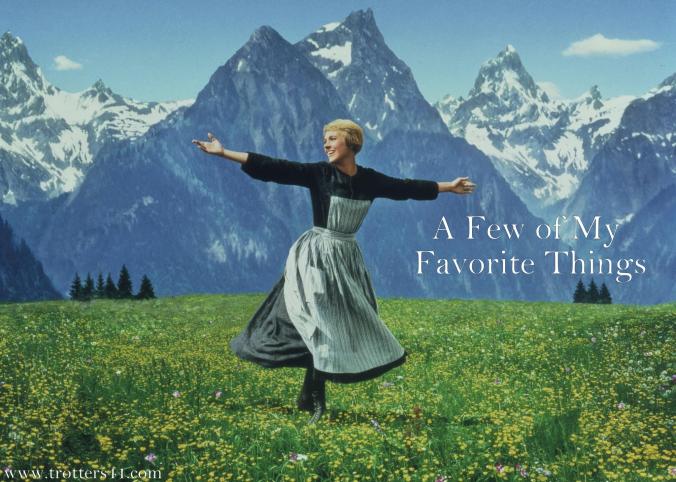
A Few of My Favorite Things {September/October 2017}

by Elizabeth

som2

Full disclosure: Life has been bumpy around here. We’ve had some health issues (which are as-yet unresolved) and some financial concerns (which are thankfully resolving) and some noise pollution issues (for over a month now) and some just plain too-many-things-on-the-to-do-list issues. I’ve been living with a lot of worry and fear, and I’m working on my issues, but these things take time. It’s been nearly two months since I offered you any reading, music, or other recommendations, so here I am. But please, if you think of it, say a prayer for the six of us Globe Trotters.

Did you know you can use coconut milk as coffee creamer? It’s delicious, with a fuller flavor than cow’s milk (well, if you like coconut, which I happen to like very much). But be careful, you don’t need much. I add a little extra dairy milk too, to balance out the heavy flavor. I don’t need sweet coffee, but I do like it creamy.

Teaching math/art class at home school coop. It’s been a joy to discover that these teenagers are interested in the concepts and in the projects. As every teacher knows, interested students make teaching much more exciting. I’m also thrilled that my own kids have a natural curiosity (including for subjects I myself am interested in), and as they get older, they become better and better conversationalists.

#6 pencil leads. These are way better than #2 pencils. Not for standardized testing of course, but for doing regular school and art work. We’ve also discovered the best little Faber Castell pencil sharpeners (at the IBC, for those in Phnom Penh).


BOOKS

Gaudy Night by Dorothy Sayers. I grabbed this detective novel when it was on super duper sale. The dialogue, let me tell you, it’s delicious. Intellectually I can’t keep up, but it’s still delicious. The book was surprising proof to me that women’s worries (including working women’s worries) of today are exactly the same as they were nearly a century ago.

The Light Princess by George MacDonald. I needed more time with this story, so I reread it. For me, The Light Princess is a metaphor for my life. If I ever find the time, I’ll share the reasons why in a blog post. Until then, if you want to know more about why I love this George MacDonald story, just ask me in person!

The Cloister Walk by Kathleen Norris. I’m still working slowly through this. Many selections (and their personal reflections) end up in my journal.

Classic Poetry (selected by Michael Rosen and illustrated by Paul Howard). From my children’s Sonlight curriculum. I haven’t been successful in convincing my kids to like poetry, but that doesn’t mean I can’t enjoy it, right? Particular favorites from this collection are Rudyard Kipling’s “The Way Through the Woods” and “The Deep-Sea Cables”.

Napoleon’s Buttons by Penny Le Couteur and Jay Burreson. I first read this book when I was pregnant with my second born, and I wanted to re-read it. It’s not a history of chemistry (that’s been done elsewhere), but rather a profile of various chemicals’ impact on human history. This second read-through is much more sobering than the first, after having seen so much suffering overseas and after having studied so much world history in our home school. After reading about the sad effects of the spice trade, sugar trade, and cotton trade on human souls, I was ready for a break. But I will return later.

Breaking Stalin’s Nose by Eugene Yelchin. An important read for the free peoples of Middle Earth. A Sonlight read aloud.

How To Survive the Apocolypse: Zombies, Cylons, Faith, and Politics at the End of the World by Robert Joustra and Alissa Wilkinson. This is dense, and I do not pretend to understand all of it, but I’m absorbing the social and theological commentary I do understand. I first discovered this book when I heard an interview with Alissa Wilkinson at CiRCE a couple years ago. She was formerly the critic-at-large for Christianity Today.


BLOG POSTS

This is for All the Lonely Writers by Jennifer Trafton. Long but worth every word. Tear-inducing.

Around the World, Girls are Taught the Same Limiting Lesson by Emily Peck. I think this is what I was pushing back against in my Paul/breastfeeding article.

Kepler Pursued God. He Found Him in Pomegranates. By David Hutchings. On curiosity, science, and God.

The Ethics of Aesthetics by Andrew Kern. On art, pleasure, and understanding. Short but worthwhile.

Dear Mamas, This is the One Thing That Will Destroy Your Home by Meg Marie Wallace. Long, gritty, honest, true, and gospel-centered.

When You’re Sure God Loves Ann Voskamp More Than He Loves You by Marilyn Gardner. Super important and applies to all people, but especially women and especially those working in ministry.

At the intersection of a Messiah-Complex Friendship and Depression. Helpful insight and advice from the always wise Rebecca Reynolds.


FOR MISSIONARIES AND EXPATS

What Did I Do Today? I Made a Copy. Woohoo! By Craig Thompson. Hilarious but incredibly true.

More on the topic of inconveniences overseas: Why things take so long, or ‘something always goes wrong’ by Tamie Davis.

The Terrible, Horrible, No Good, Very Bad Day by Anisha Hopkinson. Also hilarious and true.

I Am the Ugly Duckling (Part 1) by Lauren Wells. Help for distorted TCK thought processes. Also Part 2: Avoiding Terminal Uniqueness.

Where Your Story is Held by Amy Young. At the intersection of the physical and the spiritual. Wow.

No to cheese pizza, but yes to green pastures. Renee Aupperlee does it again! Reading her words is like meeting with a spiritual director.

Mental Health on the Field, an interview with Dr. Barney Davis from Michele Phoenix. Illuminates why we global workers are so stressed out.


PODCASTS, VIDEOS, AND TV

Angelina Stanford on why she loves fairy tales. A powerful 2 minutes.

And here’s a longer interview with Stanford on fairy tales. For the child within. On transcendent truth. I cried at several points. Touches on some of the same ideas as Wilkinson’s Apocolypse book but heads mainly in a different direction.

Taking Imagination Seriously, a 10-minute TED talk by Janet Echelman. At the intersection of art and engineering. Unbelievably beautiful.

Nate Bargatze on The Standups on Netflix. I’ve been told that other comedians in this series are NOT clean, but this guy is. And hilarious. And I need hilarious. (Don’t forget the Ryan Hamilton Netflix special from last month. We’ve let our kids watch both.)

The Crown. I rewatched the entire first season while my husband was traveling. It’s that good. Seemingly about royalty, it also has implications for marriages in ministry.

Arrival. I’d been wanting to watch this film and was able to watch it with my son while my husband was out of town. It opened up some great conversation about free will and predestination.

Andrew Peterson on Rich Mullins. What’s not to love about both Mullins and Peterson??

An interview with Susan Wise Bauer on Brave Writer. This is SWB at her best — candid and wise. For the home school parents.

What the Scholastic Reading Report Means For You at Read Aloud Revival with Sarah Mackenzie. For all parents.


QUOTES

“You are chosen. And so you must choose.” This sentence from a Sonlight read aloud, to me, explains so much about predestination and free will.

Most mornings lately I wake up and sing Job 1:21 from the Scottish Psalter, to the tune of either the “Doxology” or “The Lord’s My Shepherd.” I try to give God my expectations for quick answers. Then I read Philippians 4:11-13 and ask God to teach me how to be content in times of trouble. I have to do this practically every day, and even then I still get discouraged.


MUSIC

Man of Sorrows by Hillsong. Packed with theology and written in beautiful poetic verse, on first hearing this song I thought it was going to be from the Gettys. Nope. It’s Hillsong, something I realized when we got to the chorus. Lyrics here.

Doxology/Amen by the talented and ethereal Phil Wickham. We regularly sing the Doxology as a family; I love it. Oftentimes when a new chorus is added to an old hymn, it doesn’t seem to fit either lyrically or musically. This one does. Lyrics here.

King of My Heart by Sarah Macmillan.

“Polyvetsian Dance” from Alexander Borodin’s Prince Igor. I have loved this song ever since my 5th grade clarinet days, when we performed a version of this in concert. There’s a sad, minor quality to it in my piano arrangement of the song that I return to again and again. In my piano book there’s a bit of biographical data given — for instance, that the Russian composer’s day job was chemistry professor and that he was painstakingly slow to finish his musical compositions. I relate to him on all three counts — having another day job, being a chemist, and being slow to finish my work.

Arise My Soul Arise, a Charles Wesley hymn set to new music by Twila Paris. I have always loved these gospel words and was listening to them again this month.

Oh Love That Will Not Let Me Go, a hymn by George Matheson with updated melody. I’ve been singing it to myself for the past month or so, especially that third verse about the “Joy that seekest me through pain.” Lyrics here.

I was struggling so much with discouragement that last week I asked for prayers at church. At the end of that prayer time, my prayer partner told me to pay attention to the songs that “bubble up” in this time, that God will be speaking to me through them. And so I have, and so I am. These next three songs “bubbled up” this week.

You Satisfy my Soul by Laura Hackett Park.

Do I Trust You Lord by Twila Paris. I can’t find a link without distracting video. Paris wrote this song in the wake of Keith Green’s death in the early 1980’s. The part that always gets me is this: “I will trust you, Lord when I don’t know why, I will trust you Lord till the day I die, I will trust you Lord, when I’m blind with pain, you were God before and you’ll never change, I will trust you, I will trust you, I will trust you.”

I Shall Not Want by Audrey Assad.
 

Let the River Run

by Elizabeth

PiSky2

Only two songs have ever won all three major awards (Oscar, Golden Globe, Grammy) while being composed, written, and performed by a single artist. Carly Simon’s “Let the River Run,” the theme from the 1988 film “Working Girl,” was the first to do so.

Now, a few others have received all three awards but were co-written. One of those songs was Howard Shore’s, Fran Walsh’s, and Annie Lennox’s “Into the West,” the final song of the Lord of the Rings Trilogy and an absolute family favorite. “Into the West” speaks to something so deep and true, so simultaneously melancholic and hopeful, that it’s no wonder it won all three awards.

But anyway, back to “Let the River Run.” I first heard the song not from the movie, but from my junior high choir director Mrs. Chaney (whom you may remember from last week’s musical contemplations). Simon described her song as an “anthem with a jungle beat.” And indeed it was the sound that first drew me in, not the density of the lyrics — lyrics I could not possibly have comprehended fully at the time.

Even so, something in those words was stretching out and reaching for me. And I think it’s safe to say that, having won all those awards, the song spoke to deep, cracking places inside a lot of people. Of course there are layers of meaning here — some more material, some more spiritual.

And I’m still not sure I understand the song in its entirety, but I understand bits of it. I know it’s about dreams and desires. I know it’s about longing and risk. I know it’s about waking up and about waking up others. I don’t think you have to understand every part of the song anyway. It’s not necessarily for understanding but — like all art — for feeling.

Speaking of art, you all know I am no artist; I cannot even draw stick figures. But this semester I found myself teaching an art class in our home school coop. (In actuality, I’m substituting for the real art teacher until she gets back into town.) I love numbers, patterns, and designs, so I figured we could explore the intersection of math and art together.

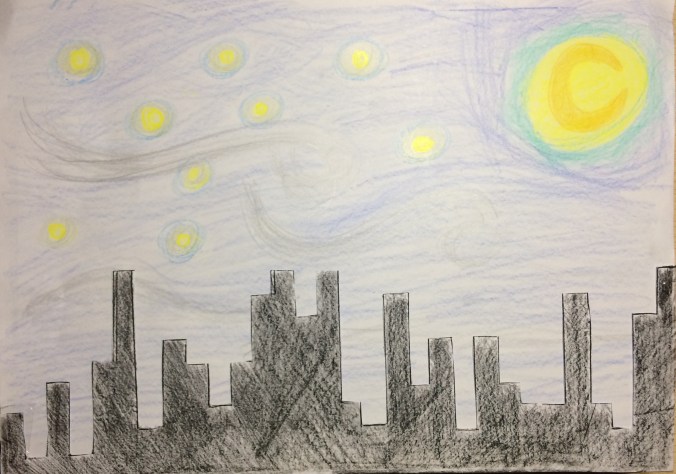
In preparing for this class I used some old material but also sought out new material. One of the new art projects I stumbled upon was the Pi Sky Line. While the New York City skyline (complete with Twin Towers) is the setting for the song “Let the River Run,” the Pi Sky Line is a city skyline whose building heights are based on the first 30 digits of pi.

Pi is the ratio of a circle’s circumference to its diameter. And it’s an irrational number, which means its decimals go on and on forever, never terminating and never repeating. There are no patterns to its digits, and there is no end either: it is infinity captured in a single number.

After you create your sky line, you paint or draw a background for it. And bringing this conversation full circle here, I knew I could not draw any background but Van Gogh’s night sky: “The Starry Night.” It was a painting I first encountered in Mrs. Chaney’s class. And this photo is the finished product. For me it is the intersection of art, music, math, literature and, most importantly, my soul in motion.

Educational thinker Charlotte Mason said, “Education is the science of relations,” and each week Mrs. Chaney assigned us a “Connection” paper. We had to connect something in her class to something in the rest of our lives. Every week we did this. She may not have known of Charlotte Mason’s century-old philosophy, but she knew that brain science supported the idea of interdisciplinary studies. Maybe that’s why, all these years later, the soundtrack of her class is still playing in my life.

Let the river run,
Let all the dreamers
Wake the nation.
Come, the New Jerusalem.

Silver cities rise,
The morning lights
The streets that meet them,
And sirens call them on
With a song.

It’s asking for the taking.
Trembling, shaking.
Oh, my heart is aching.

We’re coming to the edge,
Running on the water,
Coming through the fog,
Your sons and daughters.

We the great and small
Stand on a star
And blaze a trail of desire
Through the dark’ning dawn.

It’s asking for the taking.
Come run with me now,
The sky is the color of blue
You’ve never even seen
In the eyes of your lover.

What Jesus Has to Say About Dealing With Rejection

by Elizabeth

stamp-1726352_960_720

Rejection. I hate it. I hate the feeling. And I was feeling it again recently. In a major way. So I searched through my journals till I found an entry from over a year ago. It was the notes from a sermon Tim Krenz preached to the graduating seniors. The ideas helped me so much that I re-copied my notes into my current journal, and now I’m going to share them with you. It’s based out of the words of Jesus in Luke 10.

“Whenever you enter someone’s home, first say, ‘May God’s peace be on this house.’ If those who live there are peaceful, the blessing will stand; if they are not, the blessing will return to you. Don’t move around from home to home. Stay in one place, eating and drinking what they provide. Don’t hesitate to accept hospitality, because those who work deserve their pay.

“If you enter a town and it welcomes you, eat whatever is set before you. Heal the sick, and tell them, ‘The Kingdom of God is near you now.’ But if a town refuses to welcome you, go out into its streets and say, ‘We wipe even the dust of your town from our feet to show that we have abandoned you to your fate. And know this—the Kingdom of God is near!’”

Tim offered the graduates a handy little acronym for dealing with rejection: GRAD. It stands for:

GO

REMEMBER

ANTICIPATE

DETERMINE

Here’s how we can deal with the rejection we so much long to forget:

We GO out into the world like the disciples of long ago.

We REMEMBER who we are and what we have — God’s Word and God’s Spirit.

We ANTICIPATE rejection — whether it’s unfounded or not, we cannot avoid it.

Lastly, we DETERMINE ahead of time how we will respond: by shaking even the dust of that rejection off our feet. Even down to the last bit of dust, we will not carry it around with us, because we remember that even when man rejects us, God has not rejected us. We don’t call down fire from heaven on our rejectors like the Sons of Thunder wanted to do in the previous chapter (Luke 9:54). No, we do not take that rejection up: we shake, shake, shake it off.


You may also be interested in what I wrote about rejection a couple years ago.

Where does the love of God go?

by Elizabeth

building-2560843_960_720

Sometimes I need to remind myself that I believe in the love of God. And sometimes when I need to do that, I listen to Gordon Lightfoot. I first heard Lightfoot’s “The Wreck of the Edmund Fitzgerald” in Mrs. Chaney’s junior high music class. Mrs. Chaney was an ex-hippie who brought her love of 1970’s music into the classroom and subsequently taught me to love it as well (thus preparing me for life with a man whose mother loved that music too, but died young).

It is quite literally impossible to overstate how much Mrs. Chaney’s 7th and 8th grade music classes formed me both musically and personally (and she probably never knew this; but neither did my 10th grade British Literature teacher – so music, art and literature teachers, take heart).

It was Mrs. Chaney who taught us that “religious music is always the best music” and who had us singing religious music at our public school concerts. It was Mrs. Chaney who, after we’d spent hours and hours practicing and performing choral music with her, played us her favorite 70’s songs, handed us the lyrics, and had us sing along.

It was from Mrs. Chaney that I first heard Don McLean’s “Vincent,” along with the radical idea that suicide only happens to people who suffer from mental illness. (That’s radical for a girl whose religious culture considered suicide to be an unforgiveable sin.) And it was in her classes that I began a lifelong love affair with the song and with Van Gogh’s The Starry Night painting, a painting scientists later determined was a true artistic rendering of the scientific principles of fluid mechanics.

It was with Mrs. Chaney that I sang the Holocaust remembrance song “I Believe in the Sun.” It was she who arranged for girl who knew sign language to sign during performance, moving the audience to tears (a phenomenon I didn’t understand at the time). And it was with her that I first heard “The Wreck of the Edmund Fitzgerald.” I was immediately captured by its sound: the beautiful, haunting sound that’s woven into so many of our family’s favorite songs. The story stayed with me too, the tragic true story of a ship and crew lost to storm in the American Great Lakes.

Over the years I nearly forgot the song and the story, but one day I discovered how to google song lyrics and found it again. During one particularly sad season in my life, I purchased it. I still listen to it when I’m sad. I listen to it when I want to transport myself back to the simplicity of warm spring days in Mrs. Chaney’s music classes. And I listen to it when I want to remind myself why I believe in the love of God.

This is the way I do it. I listen to the entire tragedy, waiting for the 5th verse that asks, “Does anyone know where the love of God goes when the waves turn the minutes to hours?” And I place myself in the shoes of the 29 men on board who knew they were going to die together, and then I place myself in the shoes of their families back on shore, who didn’t. And then I wonder “what if” along with the musician: what if this terrible thing hadn’t happened? And I swallow a lump in my throat and stay quiet for a bit.

The last time I did this, one of my children asked me where I first heard that song, and I told them the whole story the way I just told you. I told them: I listen to this song to remind myself why I believe in God’s love. I listen to it to remember that when bad things happen — and they do happen, all the time — when bad things happen, where is the love God? Is it still there? Or has it gone away?

It might be a personal loss or a tragedy back home or a tragedy here in my host country or somewhere else in the world. Truly, there’s so much tragedy to choose from. Regardless of the loss, I know I can listen to this song and somehow remember and believe that God’s love is still here and is still real. That God is still good and God is still love. I always cry at that point in the song, and I always remember that the love of God is really all I have to hold on to. I know that if I don’t keep my belief in the love of God, I would be lost. I would have nothing left.

So even when I don’t understand – and I mostly don’t understand – the love of God has not vanished. It is not buried at the bottom of the sea like so many ships. It is still present, in the midst of us. It still survives, though millennium of loss piles on millennium of loss. For me “The Wreck of the Edmund Fitzgerald” gives voice to sadness but mysteriously brings me to a place of remembering God’s goodness. It helps me stand in the cruel face of tragedy, whether mine or someone else’s, and reminds me that no, God’s love has not gone away. Even though I can’t always see it or feel it, the love of God is still here among us.

~~~~~~~~~~~~~~~~~~~~