Over the years many moms have asked me how to get started in homeschooling. This post is basically a (prettier) copy of the saved email I send out to people asking about homeschooling preschool. ~Elizabeth
The first thing I always tell parents is that you don’t have to homeschool preschool. I’m not the only one who thinks this. In fact, I don’t know any homeschool moms of more than one child who do homeschool preschool. After you “do preschool” with a four-year-old child and then the next year “do kindergarten” with that same child and realize that kindergarten was just a repeat of preschool, most moms decide to ditch official preschool lessons altogether. That goes especially if you have other children in the home, either older children who actually need lessons, or babies and younger children who need a lot of hands-on care.
Here is what you actually need for the preschool years: a home full of life and love. And books. Lots and lots of books. Kids learn so naturally at this stage, and they’re interested in so many things, that there’s no need to do anything formal. Today I will share my favorite resources for educational theory and practice. I’ll share my favorite books to read aloud with young children. I’ll also include a list of sturdy educational toys that are a good foundation for a home schooling family to own, along with the very first curriculum you might want to buy.
EDUCATIONAL THEORY AND GUIDES
Cathy Duffy’s 102 Top Picks for Homeschool Curriculum. This book guides you through teaching and learning styles. It’s like a self-paced workshop to get you started on your journey.
Teaching from Rest by Sarah MacKenzie. This book is small but worth several re-reads. I also highly recommend her Read-Aloud Revival Podcast which is one of my favorite home school podcasts.
Here are 7 educational principles from my education mentor in the States.
As your children, I have many more recommended books and podcasts. But these are the ones to start with.
TOYS AND GAMES TO INVEST IN
A soft globe that can’t be pierced by toddler teeth. Only has the most basic details but helpful in the early years. We actually still use ours.
Peg boards. Kids can’t get enough of these things, and even as an adult I love playing with peg boards.
Wedgits starter kit. Wedgits never get old.
Pattern Blocks. Kids love these.
Wooden Blocks. Lots of open-ended play opportunities here.
Catch the Match game.
Cuisenaire Rods. I’m big on manipulatives, can you tell?!
My kids still play with all these toys (except for the peg board, which we did recently retire). They are great for imaginative, open-ended play, either alone or while being read to.
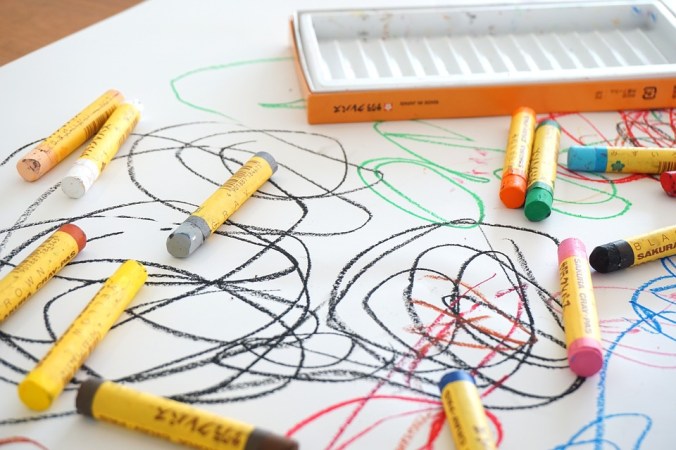
It’s also important to have lots of paper, crayons, colored pencils, and paints lying around, along with glue, tape, and scissors.
BOOKS TO READ ALOUD
In the beginning you just want to play with your kids and read aloud to them. If you have access to a library — great! If you live overseas without good library access, you may have to purchase some of these titles and transport them back in a suitcase. Get used to it — you’ll be doing that a lot once you start homeschooling the elementary years.
Beatrix Potter’s stories — all of them. A wonderful way to introduce your children to advanced language while they enjoy the lush illustrations. As an adult I adore Potter’s stories. It’s better to get them as individual books, but if you can’t, a treasury will work (I usually don’t recommend treasuries because of their bulk).
Mike Mulligan and More by Virginia Burton — we all love these stories, and though it’s a treasury, it’s not bulky.
Make Way for McCloskey. Another non-bulky treasury with the funny stories and beautiful pictures of Robert McCloskey.
Reading Mother Goose rhymes to your young kids is also great for them — it introduces them to poetry, is enjoyable, and gives them some cultural literacy. This is the one we have, but there are other good ones out there.
Reading your kids Fairy Tales is also part of their cultural upbringing. A First Book of Fairy Tales and Hans Christian Andersen’s Fairy Tales are good to begin with.
Anything by Arnold Lobel, especially the Frog and Toad books, Owl at Home, and Mouse Tales. These transition nicely from read alouds to early readers.
I’m not a huge Dr. Seuss fan, but we really like Horton Hatches the Egg, Horton Hears a Who, and Sneetches on Beaches.
A read aloud book from Usborne that’s a lot of fun is Farmyard Tales. It’s a treasury that’s not too bulky, and the stories are fun for reading aloud and then later reading alone.
Roxaboxen by Alice McLerran. A beautiful story about imagination and community.
Corduroy and Dandelion, both by Don Freeman and both about home and belonging.
The Story of Ferdinand by Munro Leaf. A deceptively small story about nature, introversion, and kind mothers.
The Little Brute Family by Russell Hoban. More grown-up wisdom for the little kids (or is it little kid wisdom for the grown ups?).
Really little kids love Eric Carle books. We don’t have very many of them anymore, but they’re pretty much all good.
For preschool Bible times, I love The New Bible in Pictures for Little Eyes by Kenneth Taylor. Much more comprehensive than most children’s Bibles while including a picture for each story.
When your kids are a little bit older, they will enjoy these non-picture books:
Grandma’s Attic series by Arleta Richardson– fun stories that aren’t too moralizing. Better than Laura Ingalls Wilder and better than Caddie Woodlawn.
My Father’s Dragon by Ruth Stiles Gannett. Fun and easy. There are two more by that author: The Dragons of Blueland and Elmer and the Dragon.
Charlotte’s Web by E.B. White. A classic.
Also popular are Stuart Little by E.B. White and The Cricket in Times Square by George Selden.
Mr. Popper’s Penguins by Richard Atwater is lots of fun.
The Mouse and the Motorcycle by Beverly Cleary is also lots of fun. There are two others in the series: Runaway Ralph and Ralph S. Mouse.
Kids love Gertrude Chandler Warner’s Box Car books. They make great read alouds and then middle grade readers.
Another popular one with older readers is My Side of the Mountain by Jean Craighead George.
Of course we can’t neglect C.S. Lewis’s Chronicles of Narnia. You want them as separate books.
All these stories are just as enjoyable by parents and kids, which is what you want in a home library. To buy these books all at once would be a lot of money; but I didn’t buy them all at once. I bought them slowly over time. The idea here is to give your children a taste for good literature so that they aren’t satisfied with lesser quality stuff.
But you do want to make sure the books you buy are books your family will love — all families are different. If you have access to a public library, you’ll be able to more easily and more cheaply get a feel for which books fit your family. You can get a ton of great book ideas from Gladys Hunt’s Honey for a Child’s Heart (or access the FREE book list at Read Aloud Revival).
When you invest money in good books and games and toys, you’ll want a special place for them, and you’ll want to teach your kids how to take good care of these items so they don’t get lost (or in the case of books, damaged). I like to keep books off the floor, mostly because of the constant risk of flooding in Cambodia.
That’s about it. In the beginning all you need are some of those building block sets, Play-doh (homemade or store-bought; good for open-ended play), the basic art supplies I mentioned earlier, and some good books to read. Take them to the park (if you have public parks — we don’t) and let them play outside. Give them basic chores to do like setting the table and putting their laundry in the bin and picking up their toys. It really doesn’t have to be complicated in the early years. They’re just learning what it means to live in a family.
BEGINNING CURRICULUM (FOR LATER)
As they begin reading and writing around age 5, you’ll want a good math program, a good reading program, and a good writing program. Focus on that for a year or two, then slowly add more “curriculum.” When your kids get older, Usborne and DK Eyewitness do have a lot of good science and history spines (spines are resource books that aren’t too “textbook-y”).
I use Singapore Math in the early years, but Math U See is getting consistently good reviews for being kid- and parent-friendly.
For teaching reading, I like The Reading Lesson because it’s got big print, and you can write and color in it. I’ve also heard very good things about All About Reading.
I also like the Bob Books Set 1 & Set 2 and the Sonlight Kindergarten and Grade 1 readers. Young children get a lot of satisfaction from reading an entire book, and each individual book is not too much work at once — you do not want to overtax the child’s mind.
Pretty much everybody I know uses Handwriting without Tears for handwriting. I think you can also buy the books on Amazon.
A good regular atlas and a good Bible atlas are important resources to have. The Student Bible Atlas is excellent. Nearly any atlas by National Geographic is a good one. I’ve got the World Atlas for Young Explorers. But there’s probably a newer, more updated one now.
Well, that’s the end of my “You don’t have to homeschool preschool” lecture. I hope this has been helpful to you. Feel free to contact me privately if you want more information or to talk about this more in depth.

 Jonathan & Elizabeth Trotter