Forced Shut Down

by Elizabeth

metastasis-1164063_960_720a

I don’t shut down my computer on a daily basis. It takes so long for my computer to shut down and later restart that it saves me time not to do it. At least, I think it saves time.

But then my computer starts running hot and slow and loud. Sometimes a little warning box even pops up, telling me it needs to shut down in order to install updates. It needs a reboot so it can download newer, fresher versions of my programs.

Most of the time I ignore the slowly loading programs and pages, the constantly whirring fan, and the overheating machine resting on my toasty, tropical lap. And I click a button and override that pesky little warning box.

Eventually though, my computer forces a shut down. And since I usually haven’t been shutting it down on a regular basis, it can take up to 30 minutes or more to close down, install updates, and restart.

I usually roll my eyes in annoyance when this happens, because I can’t get things done with those 30 minutes! I am instead forced to wait. But after all that waiting, the computer runs cooler and faster and quieter.

I treat myself just like I treat my computer. I don’t shut down on a daily basis. I run my life hot and loud and rushed, and I tell myself it saves time. It’s efficient. It gets things done.

But I’m wrong, and just like my computer, I sometimes need a forced shut down. And this past week, through quite an unexpected channel, I received just that: my husband left town and headed to the mountains of Europe for a work conference.

I dread my husband going out of town like I dread those recurring computer shut downs. But this time, his trip forced a shut down in me — a shut down I desperately needed.

I couldn’t leave the house to work or do ministry. By myself, I couldn’t even do as much at home. So I didn’t try to. I slowed down. I scaled back. We did our basic lessons. Then we played. We read. We laughed. We met with friends.

I rested. I did less. I started gently re-evaluating my plans and priorities. And the week reset me. I’m running better now. Less panic and more patience. Less self-condemnation and more calm. Less internal swelter and more farsightedness.

I probably still need some more reboots. But I’m running quieter and more efficiently. I’m happier than I’ve been in a long time. I needed a forced shut down, and thank God, He sent me one.

The Top 6 Things I’m Learning and Living this Year

A couple weeks ago I shared the “Top 5 Things I’m Learning and Living This Year (because I have neither the time nor inclination to blog)” on Facebook. Since that time I’ve been learning a 6th really key lesson; and since my Facebook readers and blog readers aren’t always the same, I’m taking the time to share this here too. I’d love to hear in the comments what you’re learning and living this year!

road-sign-799141_960_720a

1. ON MARRIAGE: I neglect Date Night only at my peril. Sometimes after a busy month I look at my husband and think to myself, “We don’t even know each other.” I don’t want to get to the end of 20 years and think those thoughts; 20 days is long enough. All my work is at the house: mom, teacher, writer, housekeeper. So I have to get out of the house with my man Jonathan Trotter. To breathe, to think. To connect, to focus. To relax, to commune. I literally can’t live without Date Night.

2. ON HOME SCHOOL: I’m loving read-aloud time (part of the reason I have neither time nor inclination to write). I’m finding that children’s literature is sometimes the best thing I can read by myself too. And I’m starting to think that one of the hardest parts about this home education gig is teaching basic phonics & decoding (reading) and base ten arithmetic. Those two hurdles are hard to jump for a 5 or 6 year old. And they’re so intuitive to this 34-year-old former engineer that they can be hard to teach, too.

3. ON FORGIVENESS AND HEALING: Sometimes healing from a fractured relationship means letting the other person go and being completely at peace with the loss of relationship. I never thought I would get there, but I am. Slowly.

4. ON SOUL CARE AND THE RHYTHMS OF WORK AND REST: I tend to work too hard and too long. I tend not to carve out enough time to rest. I have to take enough time to feed my soul and rest my body. I have to take time to feed my hunger for awe and wonder. It doesn’t get fed enough when I overcommit myself or work too much. I’m slowly coming back to a better rhythm of work and rest (also part of the reason I have neither the time nor the inclination to blog).

5. ON SYMBOL AND METAPHOR: I am all about the symbols and metaphors lately. Symbol: a word or phrase that encompasses a world of meaning. Like Genesis 1:1 or Prodigal God or Passover or Kassiah Jones. Just one word and everything I know about something comes flooding back to my mind. The symbol is paramount, as is the metaphor. I can’t get enough metaphors for God: Shepherd, Father, Rock, Bread, Wisdom. We can only see facets of His character — and we need them all — but He isn’t in any one of them. Still, I love the metaphor.

6. ON NEGLECTING REAL-LIFE COMMUNITY: Community is something I’ve neglected in my overwork and overwhelm. But I neglect it at the expense of my mental health. I was beginning to lose the mental game in several areas of my life — that is, I was beginning to lose the mental game until I started reaching out to real-life friends and confiding my struggles to them. Presto! Mental game, ON. We really must do as James says and confess our faults to one another and pray for one another, that we may be healed. So thankful for real-life friends who support and encourage me.

What about you? I’d love to learn what you’re learning, too.

A Few of My Favorite Things {April 2016}

Here are some highlights from the hottest month of the year. To be honest, it’s been kind of a rough one, what with the heat, the power outages, the broken things, the loud funeral chanting, the karaoke music in the morning, the metal shop next door, and even the middle-of-the-night cat fights outside our bedroom windows, but here are some honest-to-goodness bright spots. (And in answer to your unspoken question, yes I’m still writing in my gratitude journal! I’m just being honest about the hard things too.) ~Elizabeth
som2

Watching some dear friends and teammates in the local homeschool coop’s play. I wrote about what I learned from that refreshing evening here.

Heading to Mondulkiri province with our teammates for Khmer New Year. It’s unbearably hot in Phnom Penh, but it’s at least 10ºF cooler in Mondulkiri during the day – and so cool at night I need a blanket, even without any fans. We met up with some other missionary friends in the area and had a lot of fun fellowship. I completely “unplugged” during this time and didn’t even use my husband’s phone to check Facebook or email. And the kids were again able to traipse all over the campground with their friends (there were 21 children in total), really getting that “camp experience” that Jonathan and I cherish so much from our childhoods. Here’s what I wrote about Mondulkiri on Facebook last year, what I wrote about it this year, and what I blogged about it last year.

Participating in the Velvet Ashes online retreat. The theme was “Commune: Closer to Christ, Farther from Fear.” Karolyn’s testimony really resonated with me, as she talked a lot about the Shepherd. She taught us that we are supposed to find our identity in the Shepherd alone – not even in being sheep, but really, truly in belonging to the Shepherd. She talked about how our Shepherd leads us to different pastures, but that’s all they are: different pastures. The pastures are His, and He is with us the entire time. Sometimes I can get hung up on “place” and Home being a place, but I loved the beauty of what Karolyn said about the Shepherd leading us to different pastures and being with Him the whole time. Beautiful, true, comforting imagery.

Also in the retreat time Kimberly read aloud Psalm 23 in The Message, because we tend to gloss over familiar passages of scripture without really thinking about them. She wanted us to listen to the psalm and pick out which phrases really caught our attention. The phrase that immediately caught me was “You let me catch my breath.” It stood out to me because I’ve been really breathless lately. I feel I can’t catch my breath, there’s so much to do, and the idea of catching my breath with God sounds really, really inviting.

Co-leading a workshop on relationships for international teens. We focused on both friendships and dating/romantic relationships, and I really enjoyed our interactive sessions. Confession: I really miss youth ministry! It was a thrill to get just a little taste of it again. I led a session about female friendships and also participated in a panel discussion on guy-girl relationships with the other leaders.


BOOKS

A Circle of Quiet by Madeleine L’Engle. I broke through the “wall” I was hitting in this book, and it started flowing much more quickly and easily. L’Engle is completely out of time. She’s in my grandmother’s generation, but I keep reading her words thinking they are directed at today’s society, when in reality she was a 1940’s bride and has been dead nearly a decade. So she’s a good example of the fact that human nature and human needs don’t really change. There’s so much in this book that I underline and find profound – too much to quote. You should just read the whole thing!

Two-Part Invention: The Story of a Marriage, also by Madeleine L’Engle. Marvelous. Absolutely marvelous.  Her husband had one kind of upbringing: stable. And she had another: mobile. I found myself in her story, and I found her musings on home, belonging, and marriage to be deeply moving. Be forewarned — it’s a tear-jerker. A beautiful tear-jerker, but a tear-jerker nonetheless.

The Voyage of the Dawn Treader by C.S. Lewis. We finally finished reading this one! Goodness it takes longer to get through than any of the other Chronicles. I have so much less motivation to read it, although there really are some very good metaphors for the Christian life in it, including the baptism/transformation of Eustace and the appearance of Aslan in the form of a bird in one of their darkest, most fearful hours.


BLOG POSTS

What If? by Michele Womble. Poetry by Michele is something you should never skip!

Commune: In the Breaking by Patty Stallings. In preparation for the Velvet Ashes retreat. Beautiful.

Sometimes We Can’t Feed Ourselves by Amy Young. Also in preparation for the Velvet Ashes retreat.

Breath of Life by Amy Young. Because I forget that I need to b-r-e-a-t-h-e. So thankful for the reminder.

Resurrection by Sarah Bessey. Because there’s no way I can pass up Sarah Bessey on resurrection — and you shouldn’t either.

The Cult of Calling by Leslie Verner. Such great truth that really touched a nerve over at A Life Overseas.

Sisterhood: We Sharpen Iron Here by Idelette McVicker. I’ve talked about this before, but I’ll say it again: Christian female friendships have been some of my most life-giving relationships. I treasure them.

A Fit Bit (on belonging; not on electronic step tracking!) by Robynn Bliss. Not belonging or fitting in: this is the TCK condition. It is also the human condition. Beautiful, beautiful, beautiful. (And as an aside, when I met with Robynn in person, I felt like I belonged. I hope she felt the same.)

The Desert Shall Bloom by Emily Hamilton. Because “flourishing in the desert” imagery speaks my language.

On Freedom and Forgiveness by Jen Hatmaker. Such important truth, and so clearly and convincingly laid out here.


SONGS

Let It Be Jesus by Christy Nockels. Especially the phrase:

God I breathe Your name above everything.

Beneath the Waters by Hillsong. Especially the bridge:

Your word it stands eternal
Your Kingdom knows no end
Your praise goes on forever
And on and on again

No power can stand against You
No curse assault Your throne
No one can steal Your glory
For it is Yours alone


VIDEOS AND PODCASTS

If:Equip is going through the Nicene Creed. Here are my favorite discussions so far (they are each 2 minutes):

Day 7 on God being good

Day 10 on God as creator

Day 18 on the resurrection

Day 21 On the Holy Spirit

Day 24 on listening to the Holy Spirit

What Room Does Fear Have? video and backstory. This one’s 20 minutes, but worth the time.

Finding Allies in Imagination: Sarah MacKenzie of the Read Aloud Revival Podcast interviews S.D. Smith, author of The Green Ember (which I recently bought but haven’t read to the kids yet). Encouraging.

Navigating Fantasy: Sarah MacKenzie interviews Carolyn Leiloglou. Another WONDERFUL Read Aloud Revival podcast.

What does it mean to be emotionally healthy? by Kay Bruner. A short but comprehensive description of emotional health, including recommendations for some of our favorite books, Emotionally Healthy Spirituality by Peter Scazzero and the classic Boundaries by Henry Cloud and John Townsend.

Head, body, heart: three ways to work a problem by Kay Bruner. How much do I love this (also short) animation? So much. We are whole beings and have to treat ourselves as such.

And finally, this trigonometry animation, because I’m still more than a little obsessed with sine, cosine, and the unit circle.


FUNNY STUFF (because too often I forget to laugh)

27 Ridiculously Funny Things Sleep Deprived Moms Have Done. I laughed so hard at these! (Once I walked into a wall while on my way to fetch my little nursling.)

This Video Slays Every Video About Working Women Ever. Found this through a FB friend. Kind of like Igniter Media’s Nobody has it all together, minus the Christianity.

Jim Gaffigan on bowling. Because it’s Jim Gaffigan, and that means funny. (I actually do love bowling though.)

Jim Gaffigan on Disney World. As someone who doesn’t like amusement parks, I couldn’t stop laughing at this. (Beware one bad word.)


QUOTES (but only a few this month)

For the liturgical among us, Easter is a season, not a day. So even though it’s way past Easter, I’m going to share an Easter memory from Kimberlee Conway Ireton’s book The Circle of Seasons: Meeting God in the Church Year.  This particular story took place on Easter morning several years ago. The author’s son had been given a balloon in Bible class. He walked into the sanctuary where his mom was chatting with one of their pastors. He accidentally let go of the balloon, causing it to float upwards. The pastor immediately started walking for a ladder to retrieve the balloon for this heartbroken young lad. Kimberlee tried to stop him: “Please don’t. We believe in letting him experience the consequences of his actions.” But the minister turned around and said,

“It’s Easter, Kimberlee. There are no consequences.”

Aslan and Lucy in The Voyage of the Dawn Treader:

“Do not look so sad. We shall meet soon again.”
“Please, Aslan,” said Lucy, “what do you call soon?”
“I call all times soon.”

Stephen Hawking, in The Illustrated A Brief History of Time, explaining straight lines and the curvature of space in a way in which I finally “got it.” I must admit that my study of spherical (or globe) geometry from several years ago greatly aided my understanding of this section. Even so, this is the best explanation I’ve ever read:

Einstein made the revolutionary suggestion that gravity is not a force like other forces, but is a consequence of the fact that space-time is not flat, as had been previously assumed: it is curved, or ‘warped,’ by distribution of mass and energy in it.

Bodies like the earth are not made to move on curved orbits by a force called gravity; instead, they follow the nearest thing to a straight path in a curved space, which is called a geodesic. A geodesic is the shortest (or longest) path between two nearby points. For example, the surface of the earth is a two-dimensional curved space. A geodesic on the earth is called a great circle, and is the shortest route between two points. As the geodesic is the shortest path between any two airports, this is the route an airline navigator will tell the pilot to fly along.

In general relativity, bodies always follow straight lines in four-dimensional space-time, but they nevertheless appear to us to move along curved paths in our three-dimensional space. (This is rather like watching an airplane flying over hilly ground. Although it follows a straight line in three-dimensional space, its shadow follows a curved path on the two-dimensional ground.)

How can I not love this chemistry analogy from Mike Bickle in his book Growing in the Prophetic? Though it’s not a perfect description of the science (but really, what metaphor is perfect?), over and over this has been my spiritual experience: I sit and I sit and I sit before God, and nothing happens. Then all of a sudden one day, something BIG happens:

There is a chemistry experiment called a titration. In this experiment, there are two clear solutions in separate test tubes. Drop by drop, one solution is mingled with the other. There is no chemical reaction until the one solution becomes supersaturated with the other. The final drop that accomplishes this causes a dramatic chemical reaction that is strikingly visible.

Some sit before God in prayer rooms and renewal meetings for hours with no apparent spiritual reaction taking place. Then, suddenly, they have a power encounter with the Spirit that radically impacts them. In retrospect, they come to believe that a spiritual “titration” was going on through the many hours of waiting on God and through soaking in the invisible and hidden ministry of the Holy Spirit.

Corduroy by Don Freeman. I got back into reading shorter books with my younger kids this month and was particularly drawn to the end of Corduroy, where the little girl Lisa brings Corduroy home from the department store.

Corduroy blinked. There was a chair and a chest of drawers, and alongside a girl-size bed stood a little bed just the right size for him. The room was small, nothing like that enormous palace in the department store.

“This must be home,” he said. “I know I’ve always wanted a home.”

Lisa sat down with Corduroy on her hap and began to sew a button on his overalls. “I like you the way you are,” she said, “but you’ll be more comfortable with your shoulder strap fastened.”

“You must be a friend,” said Corduroy. “I’ve always wanted a friend.”

“Me too!” said Lisa, and gave him a big hug.

Isn’t that just the heart cry of all of us? We want home and a friend and unconditional acceptance.

Horton Hears a Who by Dr. Seuss. No matter how many times I read this book, little Jo-Jo’s YOPP at the end still gives me goose bumps. No matter what it is or how small it seems, the kingdom work you and I do matters.

And he climbed with the lad up the Eiffelberg Tower.
“This,” cried the Mayor, “is your town’s darkest hour!
The time for all Whos who have blood that is red
To come to the air of their country!” he said.
“We’ve GOT to make noises in greater amounts.
So open your mouth, lad! For every voice counts!”

Thus he spoke as he climbed. When they got to the top,
The lad cleared his throat and he shouted out, “YOPP!”

And that Yopp . . .
That one small, extra Yopp put it over!
Finally at last! From that speck on that clover
Their voices were heart! They rang out clear and clean.
And the elephant smiled. “Do you see what I mean? . . .
They’ve proved they ARE persons, no matter how small.
And their whole world was saved by the Smallest of All!”

Let me tell you about Kassiah Jones {A Life Overseas}

Elizabeth is over at A Life Overseas today, sharing a spiritual lesson she learned this month.

ants-1169349_960_720a

This month my husband and I took our kids to the local home school co-op’s spring performance. Some of our friends were in the play. It was called “The Race” and was an original play based loosely on the story of “The Tortoise and the Hare.”

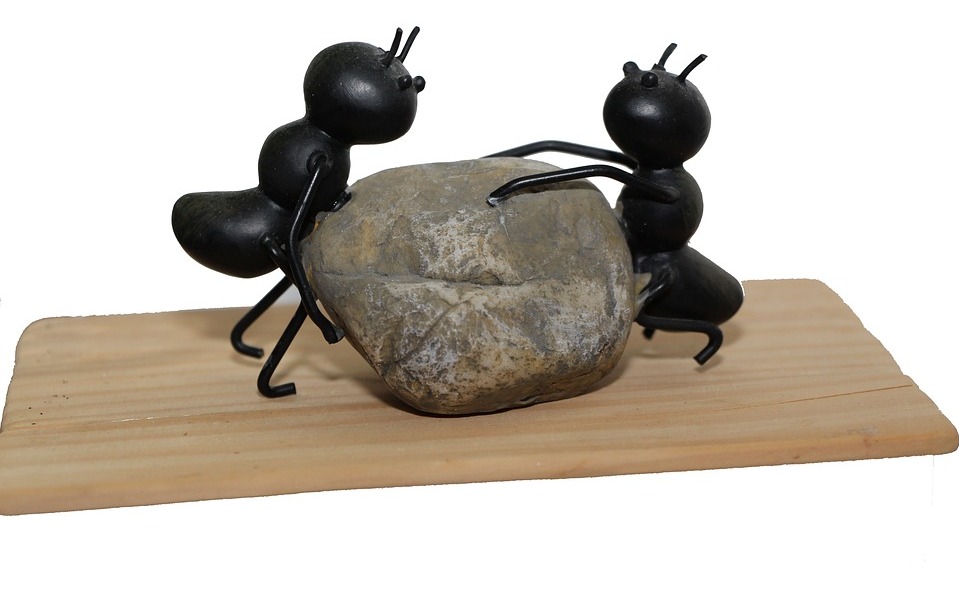
Every character in this play was modeled after an animal. There was a bear and a sparrow and a fennec fox (among others), but the character that most captured my attention was the character modeled after the ant. Her name was Kassiah Jones, and she never knew when to quit.

When it was time for the village inhabitants to prepare for the annual race, Kassiah trained harder than all the rest. She worked hard and never knew when to stop.

On race day Kassiah was in the lead, far ahead of the others, for the first three laps. But on the fourth lap she didn’t come back around the curtain with the rest of the runners. At the end of the race, after somebody else had won, the villagers went in search of her. They found her, collapsed from exhaustion, and had to carry her out on a stretcher.

Finish reading this post here.

Creating with the Creator {how to start writing with God}

Recently someone asked me how I got started with writing and if I could give any advice on how to begin. Here is the bulk of what I wrote in reply, cleaned up a bit for the blog. ~Elizabeth

pencil-918449_960_720a

I will try to answer your questions to the best of my ability. But you should know I don’t make money from writing; it’s all ministry. I don’t know if that affects anything for you.

To answer how I got started in writing: it was an “accident,” almost like a cosmic joke. Seriously though, I never thought of myself as a writer. But when we started the missionary journey, I started writing some in our newsletters. Then when we actually made the move, I would just record funny or crazy culture shock stories, anything that was going on.

By the end of the first year in country I realized not only did writing do something for my soul, I was seeming to connect with people through it. I began to take it seriously and tried to set aside a bit of time each day to do it. Then in that second year I was asked to write an article for our organization’s annual magazine.

At the beginning of our third year in Cambodia Jonathan and I were invited to write for A Life Overseas. Then a year later I was invited to write for Velvet Ashes. So it all just kind of snowballed from the initial recording of daily life here. I do still find it life-giving, especially when I write for my own blog, as there is less internal pressure to “get it right” or to be inspiring. But I also see writing as a ministry of encouragement.

That’s the formal part of my adult writing story, but I can pick out the threads of this tapestry many years into the past. I remember as a young child wanting to be a fiction writer when I grew up. In high school I wanted to be a Christian singer/songwriter, and I tried my hand at writing lyrics. But I don’t think they were any good! At university I served in youth ministry, and for one teen girls’ class I wrote plays about the women we were studying in the Bible. I had so much fun with that, and so did the girls. It’s a pity I lost them!

I never would have considered myself a writer, though I remember emailing silly stories about young motherhood to my best friend when I was a young mom and still lived in the States, and she once told me I was so good at that and how she wished I could use that skill someday. I didn’t think much of it at the time, but it must have been more than a bit prophetic. So I think the writing has always been there inside me in some capacity.

Which brings me to something important: if you are a writer, because that’s who you are and who God made you to be, you will always be a writer. The size of your audience doesn’t affect your identity as a writer. I think that’s massively important, and I borrowed that bit of wisdom from International House of Prayer musician Misty Edwards. So much of what she says about prophetic singing and worship leading applies to writing too, and I’ll type my notes from her onething 2015 breakout session at the end of this note.

For me writing is vocational – “an expression of worship,” just as you said. And I personally try to write out of the healed places in my life, not my current, gaping woundedness. I have definitely gone through un-free seasons, seasons where I was bound by fear of others’ opinions of me, seasons where I really had to seek God about my social anxiety and my need to please others. For the most part now I do feel free of that crippling fear, and it is a wonderful feeling. But of course I long for all of us to be free of competition and comparison, of envy and jealousy and insecurity.

So advice on getting started? Write. Just write. Write what’s on your heart and do NOT think about the audience. The audience comes later. The art comes first. Don’t think about who’s going to read it, don’t think about whether it’s any good. As you practice, you’ll get a feel for which types of writing you enjoy and which types you might be better at than others. You’ll find your distinctive voice.

Later on, make sure you’ve got a good grammar handbook (The Elements of Style is a good one), and make sure your style is following the rules where necessary, only “breaking” the rules on purpose, and also easy for a reader to follow. I am very picky about grammar, spelling, and punctuation (which is how I got the role of editor at A Life Overseas, which I love, but also another accidental job). And the rules of writing are important. Those things kind of reside in my gut now, because I wrote a lot of essays and reports in both high school and college. They are not automatically gut-level, but they can be trained into us.

The other part of style, the overall content and flow, is probably also trainable, but I find it to be gut level too. I like pretty words, and I like pretty paragraphs. I do think there are guidelines for developing those things, but I tend to function by gut anymore, so I might not have great advice on that. I know you can take workshops for that kind of thing in some places. The best advice I have is to read quality writing and literature, and you’ll start to get a feel for good structure and flow.

Then how to go public with it? That I have even less advice on! My writing journey was all accidental. Jonathan bought our blog domain six years ago only as a way to disseminate our newsletters. We never meant for it to take on a life of its own like this. But that meant that from the very beginning I had a place to write, with a few prayer supporters to read it. It grew organically, I guess. And then writing on other bigger blogs helps expand your personal reach and it all becomes one big muddled mess that I can’t tease the particulars out of!

So should you get a blog domain? I don’t know! People nowadays also use Facebook as blogging. You know, the long statuses where people don’t have to leave the Facebook app. Anne Lamott is famous for those. (She’s got some salty language, but her book on writing, Bird by Bird, is an absolutely essential manual.) So you could dip your feet in the waters by sharing your writing, the writing you feel really confident about, in a Facebook status. You might even say you’re just starting out and wanting to share things.

Or you can submit various pieces to various collective blogs (those are usually non-paying) or print magazines or newspapers (which sometimes pay — my best friend is a writer who does that sometimes, but I don’t really know anything about that personally).

Don’t ever forget that some things are just between you and God, and that’s still writing. I’ve got lots and lots of words that never see the light of day. They are just for me and God in the secret place.

In the same vein, just because something is uber-personal and you think it’s just for you and God, don’t assume it’ll never see the light of day. A lot of writers say some of their most impactful work is stuff they thought was just for themselves. I remember a story like that about Twila Paris and “The Warrior is a Child.” I wrote a poem on grief that I thought would never be public either. Jonathan has published things like that too. So keep writing privately no matter what, and you never know what might be of the greatest use to someone later on!

~~~~~~~~~~~~~~~~~~~~~~~~~~~

The following Misty Edwards quotes were recorded as quickly as I could write them down, so they may not perfectly represent her teaching or her message. If so, the mistake is all mine — but even so, I received so much encouragement from her talk and am grateful to have heard her speak.

“God could speak Himself audibly. But He chooses to speak through us. He chooses to use our voices and He chooses to break in to our world with words.”

“The main way He speaks to us is language. Mental images, pictures, words, imagination, that’s how God speaks.”

“We must be familiar with the language of scripture.”

“If you are an artist, because that’s what God made you to be and that’s who you are, it doesn’t matter who is watching, you are still an artist.”

“When you’re doing what you’re called to do, you feel alive and connected to God.”

“Don’t worry about the source of your inspiration if it’s grounded in Scripture.”

“Sing like yourself. It’s easier on your voice. Don’t damage it by singing like others! And breathe from deep within your belly, not your head.”

“This is all something we practice.”

“Don’t be afraid to collaborate.”

“Create. Don’t copy-cat.”

“The quality of our art is important.”

“What to do when you mess up? Because you will mess up. Find safe people, to get some perspective, to get out of your head. Laugh at the little mistakes. When you don’t, you put yourself in a prison. Don’t quit. And remember that God is not displeased.”

“Major on the majors, minor on the minors, don’t argue about small details, don’t lose friendships over arguments.”