The good stuff from this month: online, in print, and in real life. ~Elizabeth
Easter morning was incredible, probably the best Easter service I’ve ever attended. The best part for me was the way we sang Kari Jobe’s song “Forever,” which is already one of my favorite worship songs. First some church members acted out the last supper. Then they spent a good bit of time on the burial and the disciples’ grief and mourning, which we sometimes rush through. (And the actors were non-white, which to me felt more authentic.) Then a woman performed sign language as we sang the first half of “Forever.” Halfway through the song we stopped singing, and the actors portrayed the John 20 scene between Jesus and Mary. I’ve always loved that part of the story, but to see it in person was an experience like no other. Then as soon as Mary and Jesus embraced, we rolled right back into the triumphant part of the song. It was amazing, and I can’t stop thinking about it.
The rest of March was a whirlwind of a month. I finished up a big writing and ministry push (including speaking at a ladies’ event), and I’m looking forward to relaxing a bit more in April, including going on a team retreat with our Team Expansion team. I’m going to completely unplug from technology during that time and am really looking forward to both the unplugging and the team and family bonding time.
Two weeks of unbearable heat (meaning even the water coming out of the faucets is hot) were sandwiched in between two weeks of relative cool. But whether it’s unbearably hot or relatively cool, I’m still drinking coffee, and I’ve discovered that coffee really is better in your favorite mug: and my favorite mug is a plain white one.
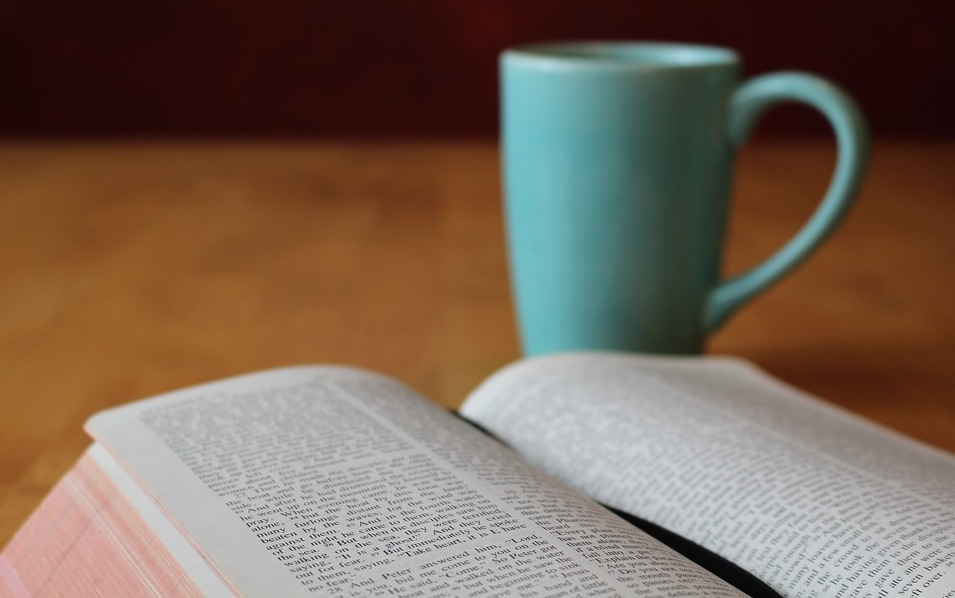
I’ve also discovered that a coffee break is even better with a book than with social media: and my current favorite is Stephen Hawking’s The Illustrated Brief History of Time (a Christmas gift from last year). I can make it through only a couple pages at a time before my brain is exhausted, the coffee cup is drained, and it’s back to home school.
 I was bummed to miss a partial solar eclipse this month, but our teammates captured an amazing picture of it. To console myself over the loss, I took note of the next time we’ll be able to see a partial solar eclipse in Cambodia (3 years from now).
I had to take a few solo tuk tuk rides across the city for various events. I hadn’t done that in a while, and I took advantage of that time to listen to worship music on my iPod. It was so calming and centering that I think I must have needed those hours to just listen and breathe.
We attended a workshop that explained a spiritual gifts inventory/DISC personality profile that we had previously taken. The workshop helped me understand myself and my husband better, highlighted a spiritual gift I never knew I had, and also offered guidance for how to approach people with different motivations and personalities than myself. (That last part I found extremely helpful!)
I’m absolutely elated that my husband is giving me the gift of one afternoon per week to get out of the house and write! It was his idea and such a surprise, and I’m getting so much more accomplished with these afternoons.
I’ve been drinking Twinings Pure Peppermint Herbal Infusion in the afternoons and evenings, steeping two bags at a time for extra minty power. (Those of you who’ve known me any amount of time know I love mint.)
I’m also loving Spin Pins from Goody, which keep my hair in a loose but secure bun that doesn’t induce headaches or put pressure on my scalp. I know that seems random and superficial, but as a headache-prone person in this kind of heat, the Spin Pins sure are quick, convenient, and comfortable.
And now on to some more useful favorites!
BOOKS
Jane of Lantern Hill by Lucy Maud Montgomery. I relate to Jane so much. She doesn’t fit in, and she’s searching for Home. (I wrote a little about my experience with this book in this post.) What I love about this book is how Montgomery has such a firm grasp on human nature, yet she tells this story through the eyes of a child. And the descriptive language is breathtaking. You’ll find some of my favorite quotes at the end of this post.
A Wrinkle in Time by Madeleine L’Engle. This was another childhood favorite of mine, and I relate to Meg so much. Just like Jane, Meg doesn’t fit in and is searching for belonging. (I also relate to Meg’s quirky love for math.) I was going to keep this gem all to myself for a little re-read until my older kids spied my copy of it and begged me to read it aloud to them. I relented, and was ever so glad. We read it in three days; we simply couldn’t put it down. A few of my favorite quotes are at the end of this post.
Prince Caspian by C.S. Lewis. Lewis’s own statement that “A children’s story that can only be enjoyed by children is not a good children’s story in the slightest” has been my guide as I re-read Jane of Lantern Hill by myself, as I read A Wrinkle in Time with my kids, and of course as we continue to read through the Chronicles of Narnia together. I continue to be amazed by Lewis’s wisdom and imagination, and I’m in a bit of a hurry to get to The Silver Chair, as it’s my favorite. But alas we’re going through The Voyage of the Dawn Treader first, as we probably should. Again, a few of my favorite Narnia quotes are at the end.
Luke: The Gospel of Amazement by Michael Card. I returned to Card’s book this month. The introductory chapters especially give a beautiful, broad sweep of the book of Luke. I could read them over and over again, they’re that good (but unfortunately are too long to quote here).
A Circle of Quiet by Madeleine L’Engle. I’m still reading L’Engle’s non-fiction on writing, words, life, and God. Sometimes she gets so dense I can’t follow her, but she’s always thought-provoking. I sometimes read little sections at night before bed. A few of my favorite quotes are listed at the end of this post.
Wondrous Encounters by Richard Rohr. I finished working through Rohr’s Lent devotional, but I have to confess that he, too, sometimes borders on the erudite. Sometimes I get him; sometimes I don’t. You’ll find some of his better, more straight-forward quotes at the end of this post.
And lastly, sometimes before bed I leaf through The 50 Most Extreme Places in the Solar System, a book I found two years ago for pretty cheap but had never really looked at it. (So if you want to explore that book, might I suggest a public library?) I appreciate the planetary science in this book, and I finally understand some questions about earth’s mantle that have been bugging me for years.
(A note about the number of books I’m reading right now, as I realize it seems like a lot: At the beginning of this year I committed to read more in print, both with my children and by myself. The Read Aloud Revival podcast had inspired me, and I want to keep enjoying read-aloud times with my kids even as they get older. I also knew I wanted to read less on a screen. This month’s book list evidences implementation of said resolution. But I should also add that with a number of these books — especially the ones I read on my own — I only read a page or two at a time!)
BLOG POSTS
You Just Never Know When a Coconut Might Kill You by Amy Medina. A fellow irrational fear-ist! Plus she’s funny.
The Metaphor in the Front Yard by Sarah Bessey. I’m so glad Sarah put this on her blog! I had read it in her January newsletter, but until now there was no way to share it publicly. Do NOT miss this amazing piece of writing.
Out of the Pit and Back Again by Jennifer May. A meditation on Psalm 40, especially for people in ministry and missions. Absolutely thick with insight. Jennifer is also a TCK/MK.
Parenting and the Power of Place by Marilyn Gardner. As a TCK, I can tend to focus only on heaven and life with Christ as my true home. I sometimes forget about the value of physical places — but of course my own memories of Home are always about physical places and physical people. So I was thankful for this reminder!
Hear Me Roar — But Don’t See Me Cry by Bronwyn Lea. She tells the truth about how I naturally deal with my emotions too, by covering over pain with anger. And I have to continually stretch myself in order to deal with the real, underlying issues instead of the icing of anger and irritation.
Good News on a Good Friday by Robynn Bliss. Read this winsome re-telling of the Gospel story.
Standing Up Crooked Together by Craig Thompson. A gracious offer of community and comradeship (I love the word comrade, don’t you?), and a beautiful picture of how the Church is supposed to function.
When You’re Craving Validation Today, Read This by Lisa-Jo Baker. I’ve never read anything by Lisa-Jo Baker before, but I think you’ll have to agree this is beautiful.
I found the next several posts through the hosting The Grove at Velvet Ashes. The theme was “Yoke,” and the link-ups simply overwhelmed me with goodness:
Master of this Yoke by Michele Womble. More great poetry from a lady whose words never fail me in their denseness and richness.
Seeking the Easy Yoke at Jodie’s Journal. This post quotes large sections from Paul W. Chappell’s book, The Burden Bearer. I don’t know the book, but Chappell’s quotes are not to be missed!
Traveling Light Through Life by Dorette Skinner. Astute correlations between life with God and the art of international travel.
Three Secrets of Soul Rest by Leslie Verner. The first point about where our burdens really come from might surprise you — but it’s been my experience nonetheless.
MUSIC
This is How Love Wins by Steven Curtis Chapman. This song was part of our Easter service. The video is kind of hard to watch, but don’t miss the chorus:
“This is how Love wins, every single time
Climbing high upon a tree where someone else should die
This is how Love heals, the deepest part of you
Letting Himself bleed into the middle of your wounds
This is what Love says, standing at the door
You don’t have to be who you’ve been before
Silenced by His voice, death can’t speak again
This is how Love wins”
No Longer Slaves by Jonathan and Melissa Helser. I love this song so much. So much. (In fact I wrote all about it here.) The truth about Abba Father’s love for us is what I want, above all else, to teach my children. If I can teach them nothing else, this is what I want them to know. You can listen to the beautiful back story of the song here.
This I Believe (The Creed) by Hillsong. I wrote about remembering Jesus through the Apostles’ Creed, and this steadying, steadfast song came rushing back to me. It’s been a Favorite before, but it’s worth a re-listen for its encapsulation of the foundations of our faith. (And speaking of the creeds, IF:Equip is currently studying through the Nicene Creed. They say it works better on a mobile device than a traditional computer, but I’m receiving the daily emails, so I can still listen to the conversations.)
None But Jesus by Hillsong. I think the phrase “there is no one else for me” pretty much sums it all up.
Cornerstone by Hillsong. This was the first song that played on one of my long tuk tuk rides. Then I arrived at the event, and we sang it corporately. I thought maybe God was trying to say something to me. . .
Where Would We Be by Matt Redman. “Where would we be without Your love? We’d still be lost in darkness. Where would we be without Your cross? You made a way to save us.” Another song from one of my long tuk tuk rides. Love that Gospel message. It never gets old.
This is Amazing Grace by Phil Wickham. We sang it on Easter morning. Enough said.
Sometimes by Step by Rich Mullins. A sermon about walking in step with the Spirit reminded me of this classic song, which I think might be the theme song for my life: “Oh God, You are my God, and I will ever praise You. And I will seek You in the morning, and I will learn to walk in Your ways. And step by step You’ll lead me, and I will follow You all of my days.”
(Speaking of Rich Mullins, you can never have too many of his songs, right? Here’s one of his last concerts, recorded at Wheaton. I especially love his song The Love of God, which was so precious to me last year.)
All Men are Broken by Misty Edwards. I fiercely want to communicate God’s love to my children, but I sometimes (like this month) find myself being more short-tempered with them than I’d like. I had to get on my knees and tell them I was sorry and that God is a much better parent than Mommy. I hope they can learn God is not like Mommy but is infinitely better.
MOVIES, PODCASTS, AND VIDEOS
Tracey Bickle on overcoming offense. Tracey’s book Chaos Beneath the Shade greatly helped me in working through some bitterness and anger at the beginning of this year. And it was largely because of her that I began a gratitude journal. This short video is a little snippet of her main message.
Q&A session with Dr. N.T. Wright at Oklahoma Christian University. I love listening to the way Wright answers questions with no hesitation and with such knowledge of the Scriptures. Listening to him makes me realize how very much I don’t know. I first heard Wright speak on women in ministry several years ago, and I loved the way he started with Mary Magdalene at the resurrection as the starting point for including women in ministry. He touches on that in this question-and-answer period and also gives thoughtful answers to questions about controversial topics like predestination. And, he LOVES the Church. It’s so obvious in the way he esteems both the Church and individual Christians. That’s uncommonly refreshing in this day and age.
Christianity and Gendered Eating by Christina Van Dyke. This isn’t anything I’d ever put words to before, but it’s something I’ve felt, and this was so very refreshing a perspective.
Undone/Redone podcast interviewed Jacque Watkins from the Mud Stories podcast, which I also love. Jacque’s story is a tear-jerker, so get ready to cry all over your desk (or wherever it is that you listen to podcasts). Here’s Part 2 of the interview.
This Is Not a Feminist Song by Ariana Grande and the ladies of Saturday Night Live. I should preface this by saying I don’t normally watch Saturday Night Live. But a friend shared this song, and I fell in love. It’s so funny I couldn’t stop laughing, and so true I couldn’t stop singing it. (And be forewarned that there’s one minor bad word.)
Wives and Daughters, a BBC adaptation of Elizabeth Gaskell’s novel of the same name. An international teenager who knew how much I loved Gaskell’s North and South recommended this one. A gentle love story with well-developed characters, and another triumph of screenwriter Andrew Davies.
The rest of the post is just quotes, so if you’re not interested, you can just stop here 🙂
C.S. LEWIS QUOTES (from Prince Caspian):
Too often I ask “what would have happened if. . . .” I needed this conversation between Lucy and Aslan as a gentle reminder to stop:
“’You mean, said Lucy rather faintly, ‘that it would have turned out all right – somehow? But how? Please, Aslan, am I not to know?’
‘To know what would have happened? No. Nobody is ever told that.’
‘Oh dear,’ said Lucy.
‘But anyone can find out what will happen,’ said Aslan.”
Then, an experience we have probably all had:
“’Aslan,’ said Lucy, you’re bigger.’
‘That is because you are older, little one,’ answered he.
‘Not because you are?’
‘I am not. But every year you grow, you will find me bigger.’”
On mutual joy between Creator and the created:
“But all night, Aslan and the Moon gazed upon each other with joyful and unblinking eyes.”
A hag/witch offers her services to fight evil with evil, illustrating the need to be wary of the source of our power:
“I have some poor little skill in small spells and cantrips that I’d be glad to use against our enemies if it was agreeable to all concerned. For I hate ’em. Oh yes. No one hates better than me.”
MADELEINE L’ENGLE QUOTES (from A Wrinkle in Time):
Closely following on that last Lewis quote is a quote from L’Engle’s main character Meg, who was told to fight the evil power IT with something she had that IT didn’t have:
“What have I got that IT hasn’t got. . . . suddenly she knew. She knew! Love. That was what she had that IT did not.”
And then Meg uses all the love she has received from her family and friends and the love she cherishes for her brother in order to save him from the clutches of the evil IT, who had taken her brother captive. Love: so much better and more powerful than hate and anger.
A statement from Meg, on understanding the tesseract (a way to skip through space-time faster than light):
“For just a moment I got it! I can’t possibly explain it now, but for a second I saw it!”
I read this statement as a child and hid it somewhere deep inside me. During engineering school I would pull it out and use it: I always wanted to understand WHY we used certain formulas. If I could understand a proof, even if for only a second, then I knew I could trust it forever. (And this was especially true of “residuals” with Dr. Sitton!)
From Calvin, who doesn’t fit into his own family, on his way to another family’s house for supper:
“I’ve never even seen your house, and I have the funniest feeling that for the first time in my life I’m going home!”
And a word for TCKs and other third culture people:
“It’s my worst trouble, getting fond. If I didn’t get fond I could be happy all the time.”
MADELEINE L’ENGLE QUOTES (from A Circle of Quiet):
These are some of the quotes that brought me to tears, because I was like, um, yes!
“Every so often I need OUT; something will throw me into total disproportion, and I have to get away from everybody – away from all these people I love most in the world – in order to regain a sense of proportion.”
“My special place is a small brook in a green glade, a circle of quiet from which there is no visible sign of human beings.”
“All during the decade of my thirties (the world’s fifties) I went through spasms of guilt because I spent so much time writing, because I wasn’t like a good New England housewife and mother.”
LUCY MAUD MONTGOMERY QUOTES (from Jane of Lantern Hill):
Because I think everyone can relate to this in some way:
“Jane opened the most secret chamber of her heart and took him in . . . nay, found him there.”
From the section when Jane first sees the sea on Prince Edward Island, because I feel this way about the sea too (and about palm trees):
“She had seen Lake Ontario, pale blue and shimmering, but this. . .this? She continued to look at it as if she could never have enough of it.”
Boy do I ever relate to this statement from Jane’s father:
“I can write, my Jane, but I can’t make porridgeable porridge.”
As I said, I like to look at the night sky, and this is one of the reasons:
“’Watch the stars whenever you are worried, Jane,’ said dad. ‘They’ll steady you . . . comfort you . . . balance you.’”
Thoughts on home and belonging:
“Jane said nothing at first. She could only look. She had never been there before but it seemed as if she had known it all her life. The song the sea-wind was singing was music native to her ears. She had always wanted to ‘belong’ somewhere and she belonged here. At last she had a feeling of home.”
“’This. . . this is home,’ said Jane. Home . . . something she had never known before. She was nearer crying then than she had ever been in her life.”
“’As soon as you hang a picture on the wall,’ said dad, ‘the wall becomes your friend. A blank wall is hostile.’”
“Moonlight was spilling over everything from a full moon that hung like an enormous bubble over what must be a bay or harbor, and there was one splendid, sparkling trail across the water. So there was a moon in P.E. Island too. Jane hadn’t really believed it before. And polished to the Queen’s taste. It was like seeing an old friend. That moon was looking down on Toronto as well as P.E. Island. Perhaps it was shining on Jody, asleep in her little attic room, or on mother, coming home from some gay affair. Suppose she were looking at it this very moment! It no longer seemed a thousand miles to Toronto.”
Thoughts on introversion and the inner life:
“Jane went out and up and sat on the hill . . . ‘to get back into herself’ as she expressed it. She had really been out of herself ever since the morning, more or less.”
“Jane had pushed the window open and the scent of fern came in. Also a strange, soft, faraway sound. . . the moaning call of the sea. The night seemed to be filled with it. Jane heard it and something deep down in her responded to it with a thrill that was between anguish and rapture.”
Because I live in Cambodia and laughed out loud when I read this:
“I made a cake yesterday and ants got in the icing. I was so mortified because we had company for supper. I wish I knew how to keep ants in their place.”
And lastly, some thoughts on grief:
“Jane walked the floor of her room all the rest of that afternoon. She dared not sit down for a moment. It seemed that as long as she kept moving, her pain marched with her and she could bear it. If she were to stop, it would crush her.”
Which reminded me of the quote from Barbara Kingsolver’s The Poisonwood Bible, which I didn’t read when the Velvet Ashes Book Club read it, but I remember them talking about this quote:
“As long as I kept moving, my grief streamed out behind me like a swimmer’s long hair in water. I knew the weight was there but it didn’t touch me. Only when I stopped did the slick, dark stuff of it come float in around my face, catching my arms and throat till I began to drown. So I just didn’t stop.”
RICHARD ROHR QUOTES (from Wondrous Encounters):
Prayers for everyday and everyone:
“God of Spirit and Truth, I know that no change of heart happens without a change of mind, and no change of mind happens without a change of heart. Get me started in one place or the other!”
“God of love and justice, let me know and live that they are not separate. Loving people will do justice, and just people will do their work with love and respect.”
On Jesus’s story of the publican and the sinner, and Hosea’s statement that “I desire mercy, not sacrifice”:
“The Pharisee is the common heroic ‘sacrificer.’ People do not realize that this gesture largely feeds the ego and one’s sense of self much more than anything else. God does not need it. You need it. Sacrifice is unconsciously an attempt to control God, who does much better without our control. ‘I fast twice a week, I pay tithes on all I possess . . . . I am not like the rest of men,’ he says. It looks like you are giving to God, country, church, the sports team, so all will undoubtedly admire you for it.
The social payoffs are so ego-inflating, there is no likelihood that ‘for God and country’ thinking will diminish anytime soon. Sacrifice is often good and needed in life to help other people, but too often it is an attempt to build a more positive self-image by distinguishing oneself from others.”
On prophecy:
“Most of us have been led to believe that prophets ‘foretell’ the future. That is true, and it is also misleading. It is not the point here. Prophets are seers of the big patterns; they see what is always and forever true. Prophets like Isaiah know how God acts by watching and listening, and they have no doubt about the ‘meta-narratives,’ the Real Story that is always going on inside of our little stories.”
On having blind spots:
“Our lack of self-knowledge and our lack of wisdom make humans do very stupid and self-destructive things. Because humans cannot see their own truth very well, they do not read reality very well either. We all have our tragic flaws and blind spots. Humans always need more light or enlightenment about themselves and about the endless mystery of God.”
On sin:
“Spirituality is about seeing. Sin is about blindness, or as Saint Gregory of Nyssa will say, ‘Sin is always a refusal to grow.’”
On prayer:
“The secret in biblical prayer in always to expect God to be true to God’s own name, identity, and patterns of goodness in the past, and not just begging God to conform to my immediate ego needs.”
On hope:
“Hope is not some vague belief that ‘all will work out well,’ but Biblical hope is the certainty that things finally have a victorious meaning no matter how they turn out.”



 Jonathan & Elizabeth Trotter