by Elizabeth
After nearly two years of living in Cambodia, our family visited the United States for the first time. I had grand plans for how I was going to spend my time in America. I would:
by Elizabeth
After nearly two years of living in Cambodia, our family visited the United States for the first time. I had grand plans for how I was going to spend my time in America. I would:
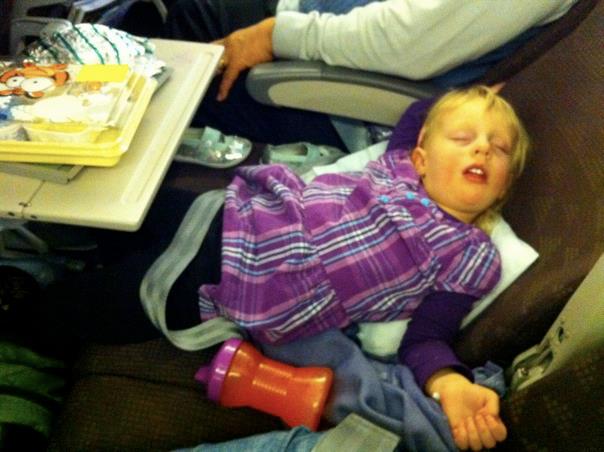
When you’re only three feet tall, the whole airplane is first class. But cheaper.
by Jonathan –
After living in Cambodia for nearly two years, we’re preparing for our first Furlough/Home Assignment/Flee the Field, or whatever it is your people call it. We’ll only be in the States for two and half months, but still, I’ve noticed a sort of odd feeling. A premonition that something’s about to die. Oh yeah, it’s my first term.
by Elizabeth
Most of the time living in Cambodia, I don’t feel like I am making huge sacrifices for God. In fact, I’ve found many things to love about living here. I’ve discussed this before, and in a future post, I plan to discuss more specifics about the joys of our life here.
I am so happy here that I sometimes forget that other people have made sacrifices for me to be here. Reminders come in the form of my children, when they miss the family and friends they’ve left behind in America. They come in the form of Skype sessions with my parents, when I realize anew how very much they miss us.
So I am sandwiched in the middle of two generations of people who have, in many ways, sacrificed more than I have – much more. My parents. My children. I have caused people I love to suffer. And I did it voluntarily. You might not hear many people talking about this. You are more likely to hear people talk about the sacrifices of the missionaries themselves (whether or not it’s a missionary who is speaking). But I think that does an incredible injustice to the thousands of people in America who are sacrificing right now to send a loved one overseas.
My best friend in America was the kind of girl who dropped everything the day Jonathan’s dad was diagnosed with brain cancer, just to sit with me in my shock and grief. She’s the kind of girl who would drive to my house when my husband was out of town, so that after my kids were asleep, we could talk for hours and hours. She’s the girl I laughed with and cried with for eight wonderful years. She’s also a writer. So I asked her to write about how she felt saying goodbye to me. And this is what she wrote:
A Letter from Home
by Teresa Schantz Williams
Last year, Elizabeth and Jonathan and their foursome said goodbye to their families and friends and flew toward the adventure God chose for them. Those left behind, with none of the distractions of a new culture, slowly adjusted to their absence. The Trotters were missing from the daily landscape of our lives, and knowing this was going to happen didn’t make it less painful.
At first when they left, I kept forgetting. I’d pick up the phone, punch in their number and sheepishly hang up. Or I would think I saw Elizabeth coming out of the library and wave too warmly at a confused stranger.
It was like when you rearrange the contents of your kitchen cabinets and spend the next four weeks trying to relearn where you store the salt. Things weren’t where they were supposed to be.
Their pew at church was too empty. No squirmy bodies next to Elizabeth’s mother, Mary, munching on grandma’s snacks and vying for grandpa’s lap. Those first few months were hard on the families stateside, especially as news of distress and health crises came their way. Powerless to help, family prayed.
A missionary wife once told me she hadn’t understood what the extended family sacrificed when she and her husband left for the mission field. She had since come to see that they relinquished precious time with their children and grandchildren, forfeited shared memories of celebrations and milestones, and suppressed their instinct to rescue when things went wrong.
Some are called to go. Some are called to let go.
If you have to say goodbye, this is the century to do it in. My grandmother had a dear friend who was a missionary with her husband in Burma during the 1950’s. Somehow they held their friendship together with letters and furloughs, and in the long silences between, they prayed.
Facebook, Skype, blogs, email have closed gaps. Within the digital universe, both sides of the ocean can post photos and videos and updates. Elizabeth can share funny stories about the kids, so women back home can “watch” them grow. To celebrate their special days, one can browse their Amazon Wish Lists to find a gift, or select something from itunes. Even international travel is more feasible than it once was. Visits are possible.
Nothing substitutes for presence. These days, I can’t sit next to the bathtub and hold Faith while Elizabeth brushes the boys’ teeth. I can’t watch the boys wrestle or Hannah belly-surf down the stairs. I can’t go to a girly movie with Elizabeth and rehash our favorite parts on the drive home. I can’t watch her eat the frosting from the top of a cupcake and leave the rest because she only eats the part she wants. I can’t hug her.
I concentrate on what I can do. I translate twelve hours ahead and try to anticipate what they might need. 1 p.m. here? Asleep there. I pray that the girls aren’t waking them in the night, that their colds will soon be gone. I pray that they will be able to play outside every day this week. That Elizabeth can find hummus at Lucky’s grocery store. I pray the details.
I can look over Elizabeth’s shoulder and see the frontlines of world missions and watch God’s plans unfold. I can see what the Holy Spirit has done in her, enabling her to do things I wasn’t at all sure she could do. (Bugs, germs, smells, change in all forms.) And through her blogging, the special qualities I knew were inside her are out where others can see (humor, insight, modesty in all its expressions).
Perhaps it sounds overdramatic, but I’ve concluded that for me, missing my missionary friends is a standing invitation to resubmit to God’s plans. My true and proper worship.
“I thank God for you—the God I serve with a clear conscience, just as my ancestors did. Night and day I constantly remember you in my prayers. I long to see you again, for I remember your tears as we parted. And I will be filled with joy when we are together again.” (2 Timothy 1:3, NLV)
by Elizabeth
Missionary culture is very transient. People are always arriving; people are always departing. Arrivals and departures are never on the same schedule. The fluidity and inconsistency of this relational landscape reminds me of the military culture in which I grew up. And although I “knew,” coming in, about the mobile nature of expat workers, I am still surprised by what it does to me on the inside.
I’ve only been in this country one year. In that time I’ve met plenty of people who moved here after me. I’ve met other people to whom I’ve already had to say goodbye. People I had just barely started to get to know. People I had started to pour my heart into. People with whom I had hoped to build a relationship. Poof! And one day, they’re gone.
And that’s only in one year. I dread this happening to me over and over again, for years on end. I say this because I do not like Goodbyes.
And in addition to my excessive fears and worries, my dislike of Goodbyes was actually one of the reasons I didn’t want to move to Cambodia. I didn’t want to MOVE, period. Growing up, I moved a lot. Moves (nearly) always entailed traumatic Goodbyes, and they always entailed traumatic Hellos. So now I just like to stay in one place. After we moved to the Parsonage in 2006, I told Jonathan, “I am never moving again!” That didn’t exactly pan out for me.
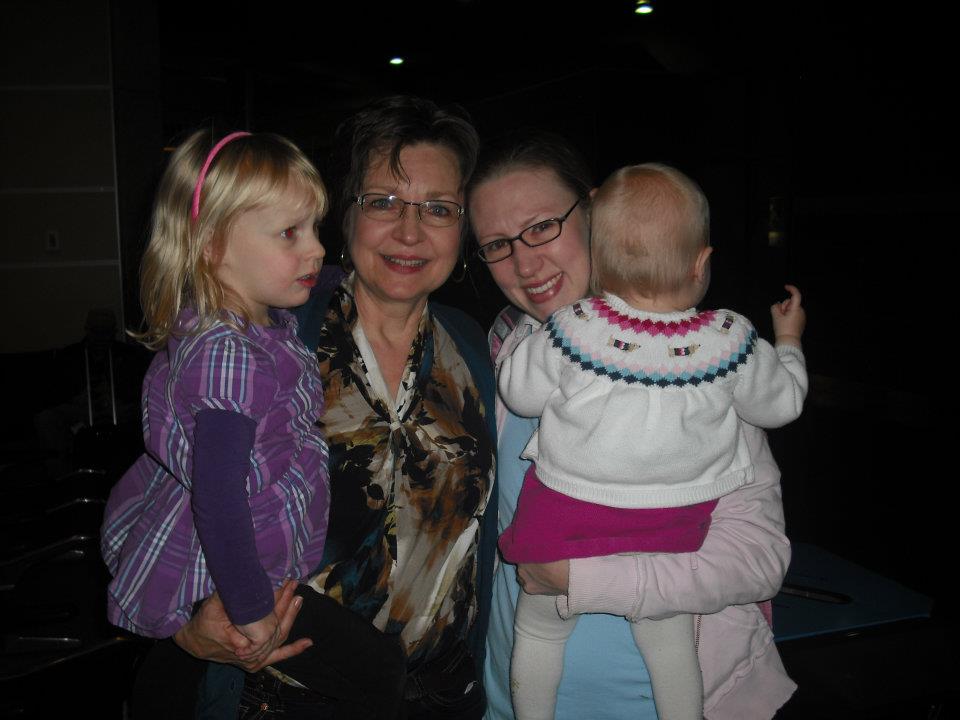
Leaving America — and the Parsonage — in January 2012
I lost a best friend once, during an Army move. I didn’t have another best friend for three years. And for reasons totally unrelated to being a TCK, reasons I’m still not quite sure I understand, I eventually lost that best friend too. The loss shook my world – a double whammy in the middle of my Year of Anorexia. (More on that in a future post.)
When I was heartbroken over this friend — and I mean heartbroken — my parents assured me that high school friends generally aren’t lifelong friends, but college friends can be. I must have internalized that pretty well, because I didn’t have another best friend until college, five long years later. It was then that I was finally able to form a lasting female friendship. (Hooray! We’re still friends.) When she got married and moved away, my new husband learned just how unexpectedly unstable I can be when faced with a Goodbye.
During some of our missions training, an adult TCK shared that there was such a revolving door of people in his childhood that he eventually closed his heart to new people. He just flipped a switch, and turned it off.
I have not yet closed my heart to new people . . . because I really like people. But when you really like people, saying Goodbye is something you really don’t like. And in this transient missionary community, no Goodbye is ever your Last.
I have a remedy for Goodbyes. It includes copious crying and hugging and hand waving. There is a prescription for Getting Lost in Jane Austen. On occasion a secondary prescription for Anne of Avonlea or Jane Eyre might be filled (as there is a Hierarchy of Needs which takes into account the depth of sorrow, time available for mourning, and whether or not the husband is out of town).
You may have a more effective remedy for Goodbyes; this is mine.
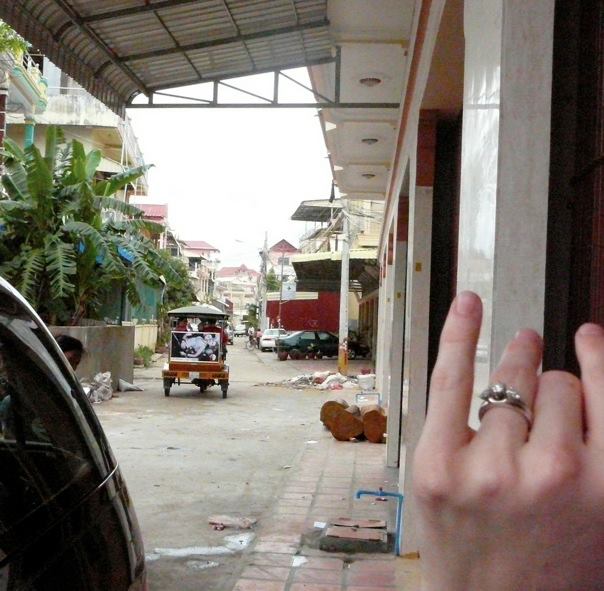
Implementing our “I’ll be waving as you drive away” philosophy.
For all of us, though, friendships are seasonal. And as we edge ever closer to the date of our death, we must all say more Goodbyes than Hellos. For military and missionary wives, and their husbands and third culture kids, those Goodbyes are simply accelerated and multiplied. In other words, we bid farewell early and often.
The task of the human heart, then, should any of us choose to accept it, is to open ourselves fully to new people, with the certainty that we will, at some time in this earthly life, have to say Goodbye.
— By Elizabeth
A Third Culture Kid (TCK) is a person who has spent a significant part of his or her developmental years outside the parents’ culture. The TCK frequently builds relationships to all of the cultures, while not having full ownership in any. Although elements from each culture may be assimilated into the TCK’s life experience, the sense of belonging is in relationship to others of similar background. (Definition from the book Third Culture Kids by David C. Pollock and Ruth Van Reken)

Third Culture Kids don’t live in their passport country, or the country of their parents’ culture. They live in a host country. They don’t belong to their parents’ culture (the first culture), nor do they truly belong to their host culture (the second culture). They are in a culture all their own, a third culture. Their life is both global and mobile. My kids are TCK’s now. In early May I recorded some of my concerns for them:
———-
It’s still a common occurrence for our kids to talk about missing people and places “back home,” but they are becoming happier here as well. They get sad A LOT about missing home, Grandma mostly, but also saying that our new home will NEVER be as good as our old home.
I recently learned more about missionary kids (MK’s) from another missionary who is himself an adult MK and currently works with teenage MK’s. He said that the culture that most affects an MK’s stability and happiness is the culture of the family’s home, not the host culture. He also told me that 8 out of 10 times, an MK’s attitude toward language learning and the host culture comes from the mom, simply because of the extra time kids spend with their mom. He said those pieces of information are either encouraging to parents, or discouraging to parents, depending on their situation. I found it to be encouraging because our home is a happy place — Jonathan and I work hard to make our family fun, open, and loving — and because I am no longer the “trailing spouse,” as of 2 years ago this month.
Sometimes, however, I wonder what I am doing wrong and why my good attitude isn’t rubbing off on my kids like it should. I like it here, why don’t they?? That other missionary said they would, right!!?? But then I realized that I have been in the process of transferring my heart from America to Cambodia for the last 2 years. Although our family talked a lot about Cambodia and why we were going, their little hearts simply lived where they had always lived until they stepped on that plane in mid-January. I sent my heart ahead of my body, so I’m a bit ahead of them in my adjustment. Their bodies travelled first, leaving their hearts in America with friends and family. They need time, and I will give that time to them.
I tell them a lot that nothing will ever replace home, or Red Bridge, or Grandma, or Susan, or cheese bagels, or our awesome yard. Just because we were happy in America, it doesn’t mean we can’t be happy here. We won’t ever try to take away from the good of our life in America, but I want them to have hope that life can be good here as well.
———-
In our training we were told to say goodbye well, and that it’s ok to grieve the loss of people and places when we make an international move. We’ve tried to be very understanding when our kids get sad and talk about home. We let them talk, we look at old pictures, we let them Skype family. We hug them when they’re sad. At the same time we are making new memories here. We take them to the park, we take them swimming, we play badminton on our roof. We make jokes and laugh uncontrollably around the dinner table. Our kids’ lives have changed drastically, but one thing has not changed: they know they are immensely loved.

Our family in America
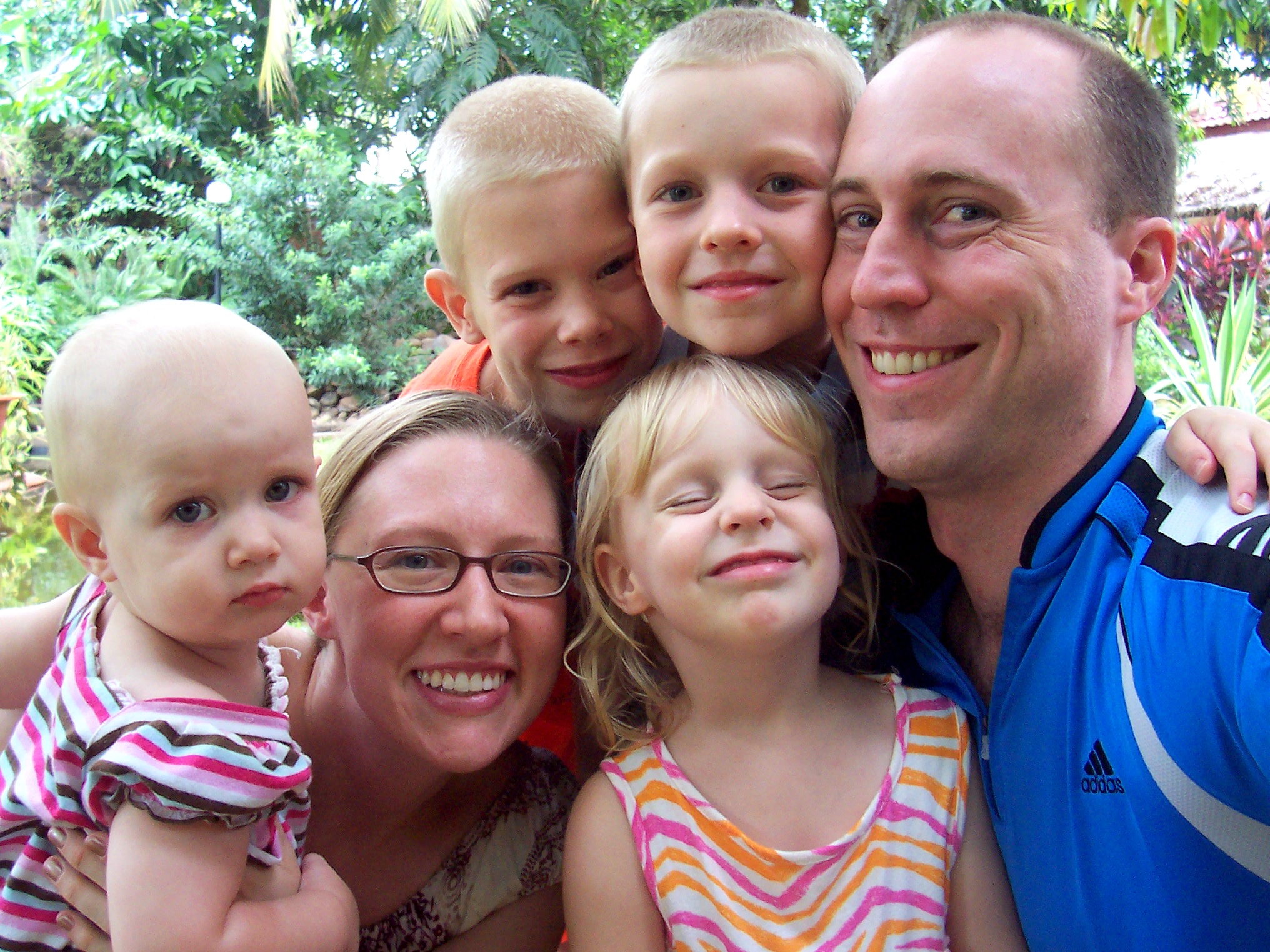
Our family in Cambodia
 Jonathan & Elizabeth Trotter