A Little Perspective From an Old Book

If I have the language perfectly and
Speak like a native
And have not His love,
I am nothing.

If I have diplomas and degrees and know
All the up-to-date methods,
And have not His touch of understanding love,
I am nothing.

If I am able to argue successfully against
The religions of the people and make fools
Of them and have not His wooing note of love,
I am nothing.

If I have all faiths and great ideals
And magnificent plans
And not His love that sweats
And bleeds and weeps and
Prays and pleads,
I am nothing.

If I give my clothes and money
To them and have not love for them,
I am nothing.

If I surrender all prospects. Leave home
And friends and make the sacrifices
Of a missionary career and then turn
Sour and selfish amid the daily
Annoyances and slights of the missionary life,
Then I am nothing.

If I can heal all manner of sickness
And disease but wound hearts and hurt feelings
For want of His love that is kind,
I am nothing.

If I can write articles and publish books
That win applause but fail to transcribe
The word of the cross into the
Language of His love,
I am nothing.

From a sermon by Stephen Brown, as quoted in Paul Hiebert’s book, Anthropological Insights for Missionaries

What My Neighbors Taught Me

Note: This experience happened awhile back, before both the Night of the Epi-Pen and also the possible attempted break-in. But because what happened in this story is significant to my life and ministry in Cambodia, I’m still going to share it, even if it’s a little late.

~~~~~~~~~~~~~~~~~~~~~~~~~~~~~~~~~~~~~~~~~~~~~~~~~~~

I love my neighbors. Yes, the ones that might move. (Insert frowny face here.) I cherish a special affection for two ladies in particular. They always welcome me to sit down and talk with them while they cook. My communication with them is rather stop-and-start, but they never seem impatient with me.

A couple weeks ago, as my kids were playing outside, I walked up to these two ladies and made small talk. Small talk about babies. My friend just had twins; I asked about the word for twin. Small talk about pregnancy. The neighbor is pregnant; I shared stories from my pregnancies. Small talk about cooking. They asked about mine; I told them it’s not great. Small talk about the weather, about wet season and dry season. About how different it is from America, that for six months, it almost never rains, and then during the next six months, barely a day goes by that it doesn’t rain.

I make small talk because studying 2 hours a day for 6 months just cannot produce a fluent speaker.  That amount of study enables me to navigate life in this city . . . and to make small talk.

They offered me vegetable soup; it smelled wonderful. I sat down to eat it with them; it tasted as good as it smelled. While we were eating together, one of the ladies asked me to tell her about myself. Jonathan had told her I was a scientist, and she wanted to know about my education. So I started to tell her.

I told her I liked studying math when I was younger. I liked studying science when I was younger. Then I decided to go to university to study more math and science.

I realized, though, as I was telling my education story, that it’s not just an education story. It’s a testimony. A testimony to the Creator’s work, and to my love for that Creator.

I still remember Mr. Fox’s 9th grade geometry class, where I first learned about right angle trigonometry and was struck with the realization that God invented those mesmerizing SOH CAH TOA relationships. I used to talk about how I really “found God” in Scientific American magazine. The universe God created, from the tiniest quark to the largest galactic supercluster, and every element of my beloved Periodic Table in between, amazes me. God amazes me.

I wanted to tell her that.

But I couldn’t.

The closest I could get was, “The God that is above everything, the God that created everything, I am amazed by the stuff He made. So I like to study it.”

I once heard another missionary mom say she was on the “20 year plan” to learning Khmer. I liked that phrase so much that I’ve incorporated in into my own personal vernacular. Being on the 20-year plan means I plan to study Khmer, summer after homeschool summer, until I’m no longer homeschooling my children. I thought I would just review my first 6 months of study and practice basic conversation this summer. I didn’t think I’d get to spiritual conversations until, oh, about year 8 or so. I certainly didn’t expect it to happen in year 2.

But my neighbors taught me something that night. Something important. They taught me that when people ask me, the foreigner, “What do you do? Why are you here?” I have this amazing opportunity to inject my testimony, my faith in God, into their lives.

Even if I am on the 20 year plan.

So I have a new goal for my summer study: I can learn how to say my testimony. I can memorize my story. And I can plant tiny seeds of faith while answering the most basic of questions: What on earth are you doing in Cambodia?

 ~~~~~~~~~~~~~~~~~~~~~~~~~~~~~~~~~~~~~~~~~~~~~~~~~~~~~~~~~~~~~~~~~~~~~~~

The heavens declare the glory of God; the skies proclaim the work of his hands. Day after day they pour forth speech; night after night they reveal knowledge. They have no speech, they use no words; no sound is heard from them. Yet their voice goes out into all the earth, their words to the ends of the world. Psalm 19:1-4

Always be prepared to give an answer to everyone who asks you to give the reason for the hope that you have. 1 Peter 3:15
Market Day, Harvest Time

by Elizabeth

We recently decided that in order to minimize the time stress in our lives, I should make solo trips to the grocery store (instead of all 6 of us going). Because I don’t drive, I have to take tuk tuks. This week, after I return home and pay the tuk tuk driver, he demands more. I call Jonathan to bring me the extra 2000 riel I need (that’s only 50 cents, but I’m out of riel). Before he can bring it to me, the tuk tuk driver sighs, trudges to his moto, and drives away (possibly because I have already given him a fair wage??). Jonathan suggests that I walk to the drivers’ loitering place to give it to him.

So I do.

But I can’t find my driver. The other drivers tell me that he has gone home.  And I’m not sure, but I think they say I can wait for him. (I’m working in Khmer here.) As I stand on the street trying to decide whether to return home or wait longer, an older woman approaches me and begins shooting questions in Khmer. Am I a Christian? Do I go to church?  Do I know Christina, who is Catholic? I try to answer the questions, but that only leads to more questions. Am I Baptist? When do I go to church? Who do I go with? Lok Dtah, over there, he speaks English well, can I go talk to him? (Lok Dtah is the word for Grandfather, and although this man is her husband, that’s the respectful way to address him.)

So I follow her to meet Grandfather. He says he has been a Christian for 4 years; he no longer goes to the pagoda. He speaks to me in both English and Khmer; I speak back mostly in Khmer. I learn that it is Lok Dtah’s grandson who invited Jonathan into his home 2 weeks ago (before viral meningitis took over our lives). He also says he is a Christian and even wants to go to church with us. I never do figure out if the grandmother is a Christian. I am, however, gone long enough that Jonathan worries and calls to check on me.

During this conversation I smile pleasantly and behave as if everything is fine. I appear to believe their confessions of faith.

But there is a war in my mind.

We’ve learned that the entire structure of Cambodian society – for a thousand years – is built on corruption. Bribes. Cheating. Poor people seeking wealth, and seeking to use people to gain more wealth. Even if those people are Christian missionaries. Our training with Team Expansion teaches us never to allow money to be involved in church planting. But these people aren’t asking for money — or a job. They are simply giving me confessions of faith. How should I treat them? Shouldn’t I believe them to be Christians? Shouldn’t I treat them as Jesus instructs us in Matthew 13:

Here is another story Jesus told: “The Kingdom of Heaven is like a farmer who planted good seed in his field. But that night as the workers slept, his enemy came and planted weeds among the wheat, then slipped away. When the crop began to grow and produce grain, the weeds also grew. The farmer’s workers went to him and said, ‘Sir, the field where you planted that good seed is full of weeds! Where did they come from?’ ‘An enemy has done this!’ the farmer exclaimed. ‘Should we pull out the weeds?’ they asked. ‘No,’ he replied, ‘you’ll uproot the wheat if you do. Let both grow together until the harvest. Then I will tell the harvesters to sort out the weeds, tie them into bundles, and burn them, and to put the wheat in the barn.’” Then, leaving the crowds outside, Jesus went into the house. His disciples said, “Please explain to us the story of the weeds in the field.” Jesus replied, “The Son of Man is the farmer who plants the good seed. The field is the world, and the good seed represents the people of the Kingdom. The weeds are the people who belong to the evil one. The enemy who planted the weeds among the wheat is the devil. The harvest is the end of the world, and the harvesters are the angels.  Just as the weeds are sorted out and burned in the fire, so it will be at the end of the world. The Son of Man will send his angels, and they will remove from his Kingdom everything that causes sin and all who do evil. And the angels will throw them into the fiery furnace, where there will be weeping and gnashing of teeth. Then the righteous will shine like the sun in their Father’s Kingdom. Anyone with ears to hear should listen and understand!”

I am determined to fight the skepticism planted in my heart. I am committed to believing confessions of faith. I refuse to allow money to be an ingredient in church planting. But I will love my neighbors as myself. I will accept their testimonies. And I will certainly leave the judgment in the hands of the Son of Man.

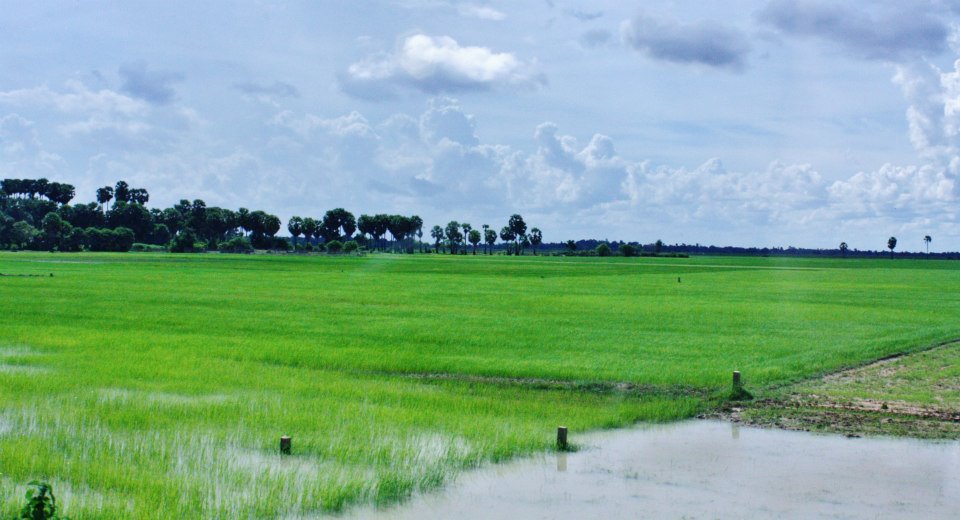
ricefield

Music’s Up

I just finished uploading several songs into the media section of the site.  They’re near and dear to my heart, and I’m trusting God to use them as he sees fit…

Consumed?

“But I don’t want to be consumed!”

Sometimes I wonder if I’m sort of like a candle.  Maybe we all are.  I sit around and discuss how to light up the world, spread the “aroma of Christ,” give heat to the cold and dark places.  But then I realize that I don’t really want to do all that.  I mean, that’s messy and disfiguring, and it’s hot too.  And who knows where all that melted wax would end up.  Plus, that would require me to be consumed.  Ugh.

But isn’t that what I’m called to do?  To be consumed for the King?  Isn’t that what we’re all called to do?  Lord, consume us with a passion for You.