Outlawed Grief, A Curse Disguised

by Jonathan

[Note: For an expanded version of this article, click here. The expanded version appeared on A Life Overseas in December, 2013 and is geared more for a missions/TCK audience.]

Someone dies, or gets cancer, or gets cancer and then dies.  Someone else says something eminently useful like “All things work together for good” or “He’s in a better place” or “I have a time-share in Florida and the carpet’s getting replaced this week.”

Someone moves to a foreign field, and it’s hard, and it’s sad, and they have kids.  And the kids feel it too.  They’re sad.  They miss grandma, and McDonald’s, and green grass.  Someone tells them, “It’s for God,” or “It’ll be ok someday; you’ll look back on this as one of the best things that ever happened to you.” Maybe their parents tell them that.

And grief gets outlawed, and the curse descends.  And the child understands that some emotions are spiritual and some are outlawed.

Continue reading

A Little Perspective From an Old Book

If I have the language perfectly and
Speak like a native
And have not His love,
I am nothing.

If I have diplomas and degrees and know
All the up-to-date methods,
And have not His touch of understanding love,
I am nothing.

If I am able to argue successfully against
The religions of the people and make fools
Of them and have not His wooing note of love,
I am nothing.

If I have all faiths and great ideals
And magnificent plans
And not His love that sweats
And bleeds and weeps and
Prays and pleads,
I am nothing.

If I give my clothes and money
To them and have not love for them,
I am nothing.

If I surrender all prospects. Leave home
And friends and make the sacrifices
Of a missionary career and then turn
Sour and selfish amid the daily
Annoyances and slights of the missionary life,
Then I am nothing.

If I can heal all manner of sickness
And disease but wound hearts and hurt feelings
For want of His love that is kind,
I am nothing.

If I can write articles and publish books
That win applause but fail to transcribe
The word of the cross into the
Language of His love,
I am nothing.

From a sermon by Stephen Brown, as quoted in Paul Hiebert’s book, Anthropological Insights for Missionaries

Third Culture Thoughts Part 1 (On My Kids)

By Elizabeth 

A Third Culture Kid (TCK) is a person who has spent a significant part of his or her developmental years outside the parents’ culture. The TCK frequently builds relationships to all of the cultures, while not having full ownership in any. Although elements from each culture may be assimilated into the TCK’s life experience, the sense of belonging is in relationship to others of similar background. (Definition from the book Third Culture Kids by David C. Pollock and Ruth Van Reken)

Third Culture Kids don’t live in their passport country, or the country of their parents’ culture. They live in a host country. They don’t belong to their parents’ culture (the first culture), nor do they truly belong to their host culture (the second culture). They are in a culture all their own, a third culture. Their life is both global and mobile. My kids are TCK’s now. In early May I recorded some of my concerns for them:

———-

It’s still a common occurrence for our kids to talk about missing people and places “back home,” but they are becoming happier here as well. They get sad A LOT about missing home, Grandma mostly, but also saying that our new home will NEVER be as good as our old home.

I recently learned more about missionary kids (MK’s) from another missionary who is himself an adult MK and currently works with teenage MK’s.  He said that the culture that most affects an MK’s stability and happiness is the culture of the family’s home, not the host culture. He also told me that 8 out of 10 times, an MK’s attitude toward language learning and the host culture comes from the mom, simply because of the extra time kids spend with their mom. He said those pieces of information are either encouraging to parents, or discouraging to parents, depending on their situation. I found it to be encouraging because our home is a happy place — Jonathan and I work hard to make our family fun, open, and loving — and because I am no longer the “trailing spouse,” as of 2 years ago this month.

Sometimes, however, I wonder what I am doing wrong and why my good attitude isn’t rubbing off on my kids like it should. I like it here, why don’t they?? That other missionary said they would, right!!??  But then I realized that I have been in the process of transferring my heart from America to Cambodia for the last 2 years. Although our family talked a lot about Cambodia and why we were going, their little hearts simply lived where they had always lived until they stepped on that plane in mid-January.   I sent my heart ahead of my body, so I’m a bit ahead of them in my adjustment.  Their bodies travelled first, leaving their hearts in America with friends and family. They need time, and I will give that time to them.

I tell them a lot that nothing will ever replace home, or Red Bridge, or Grandma, or Susan, or cheese bagels, or our awesome yard. Just because we were happy in America, it doesn’t mean we can’t be happy here. We won’t ever try to take away from the good of our life in America, but I want them to have hope that life can be good here as well.

———-

In our training we were told to say goodbye well, and that it’s ok to grieve the loss of people and places when we make an international move. We’ve tried to be very understanding when our kids get sad and talk about home. We let them talk, we look at old pictures, we let them Skype family.  We hug them when they’re sad. At the same time we are making new memories here. We take them to the park, we take them swimming, we play badminton on our roof. We make jokes and laugh uncontrollably around the dinner table. Our kids’ lives have changed drastically, but one thing has not changed: they know they are immensely loved.

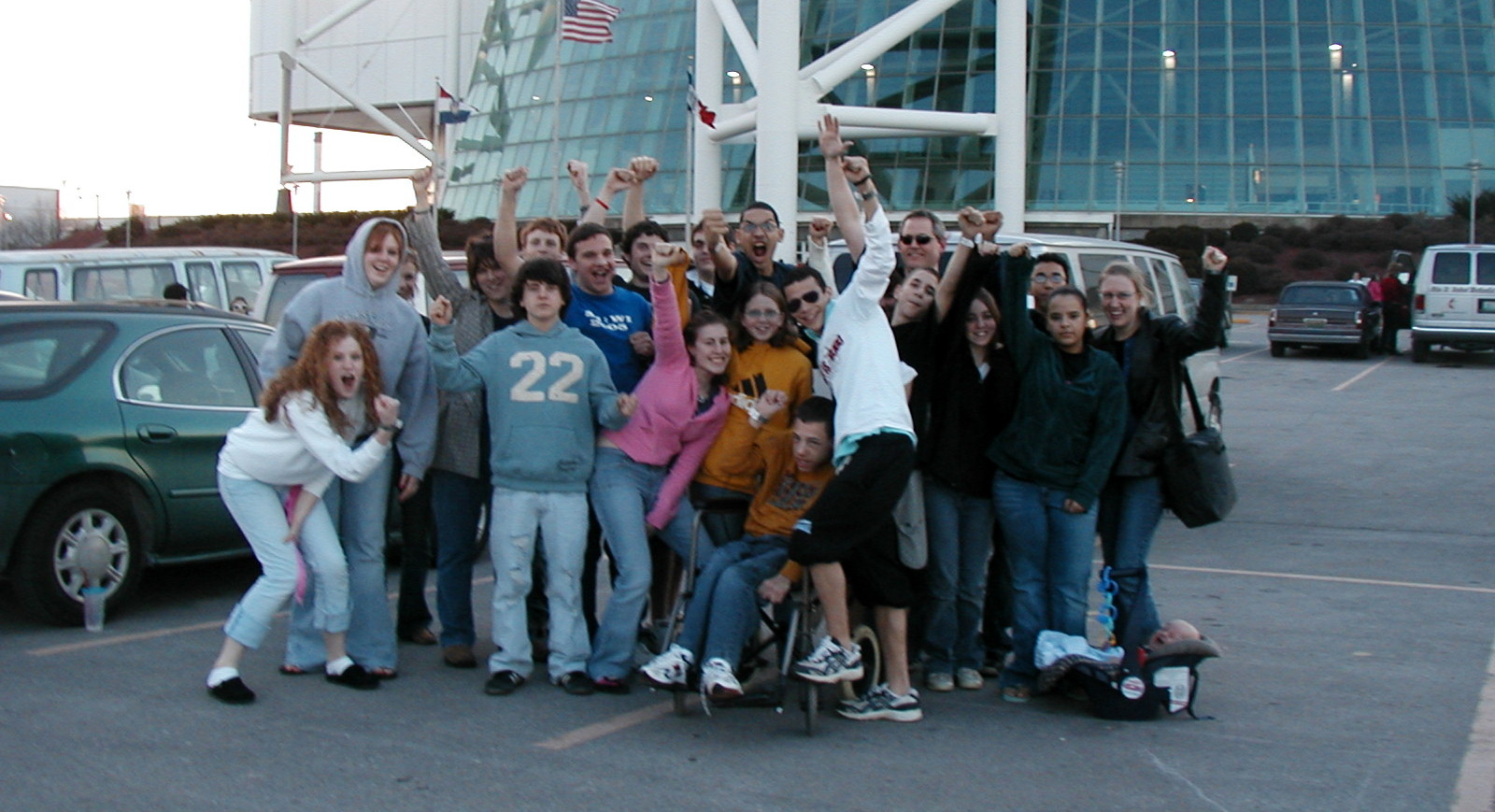
Our family in America

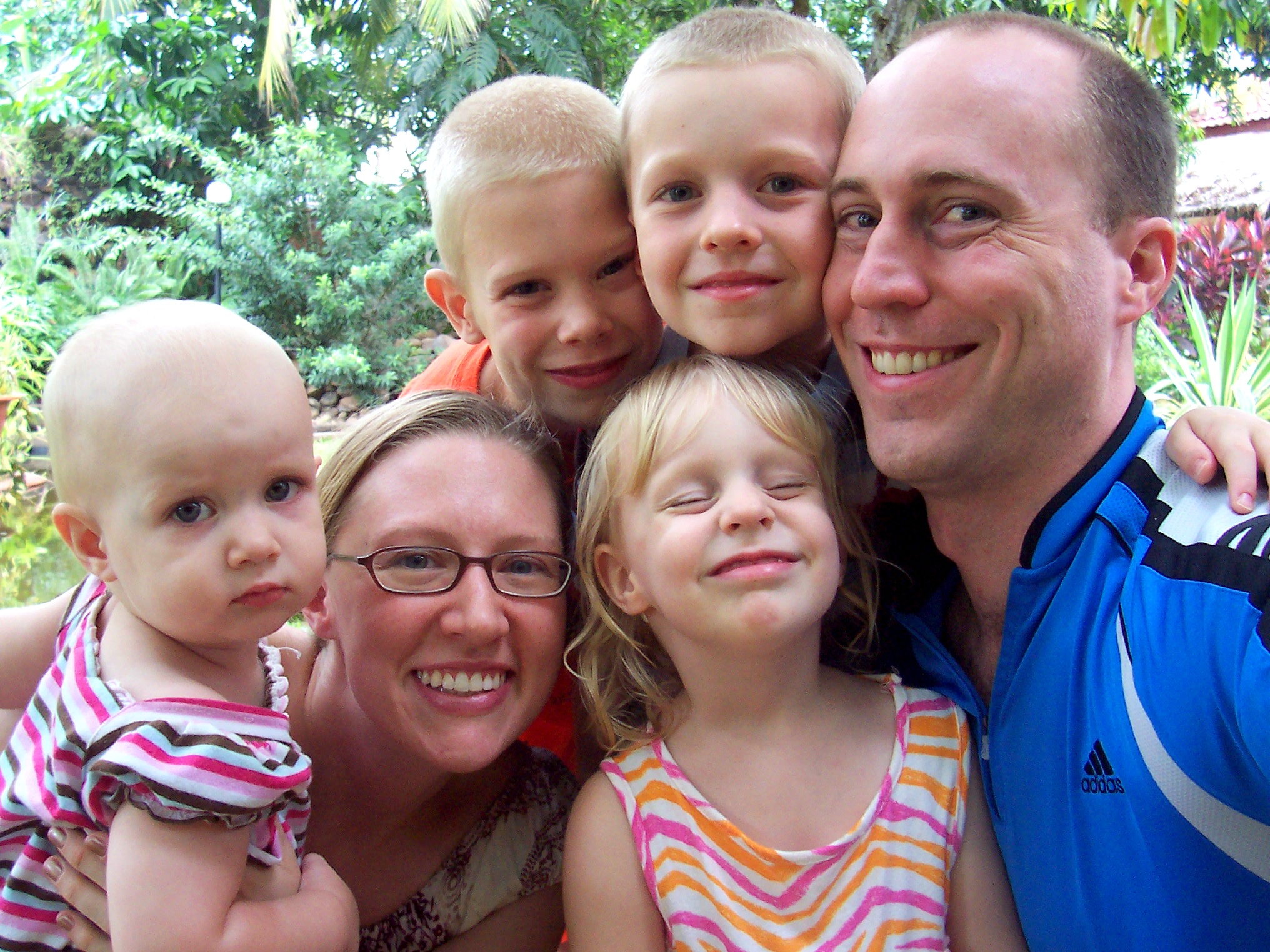
Our family in Cambodia

Climb Every Mountain (Or, How I got to the Top of Mt. Meru & Back Down Again)

by Elizabeth

Recently our family traveled to Angkor Wat, an ancient Hindu temple in Cambodia. The center of the main temple represents the mythical Mt Meru (the Hindu center of the universe), and to get to the top you must climb treacherously steep stairs (read: nearly vertical).  This design illustrates the difficulty of aspiring to the home of the gods, and in essence, it requires the climber to crawl up those stairs, prostrate before the gods.

Since it was my first time to Angkor Wat, I figured I wanted to climb to the top of that central tower. I decided to do that without thinking how high or steep it would be.  This is my view from the bottom.

For safety purposes, the original stone steps have been covered with wooden steps, but they are still quite steep. Tourists also have the benefit of a hand rail. Unafraid, I stand at the bottom and start climbing. A few steps up, I realize just how high I am going to get, and just how fast that’s going to happen. I tell myself not to look down. I tell myself not to look up. I tell myself just to look at the steps in front of me. I whisper one of Elisabeth Elliot’s favorite quotations to myself: “Do the next thing.” So I do the next thing: I take the next step.

When I get to the top I’m a little shaky because I know I will eventually have to climb back down. But I follow the tourist signs around the tower, and in only a few minutes I find myself back at the stairs. I tell myself to do the next thing: focus on each step and don’t forget to hold on to the rail.  This is me on my way down.

I had to climb the “mountain” one step at a time. I couldn’t look at the big picture of what I was really attempting. It was too scary. Each step was still scary, but it wasn’t as terrifying as looking at the entire wall I had to climb.

My life with God has been like that.

I’ve never had a Master Plan for my life. At each step of the way I just asked Him what to do next, and I felt He answered.

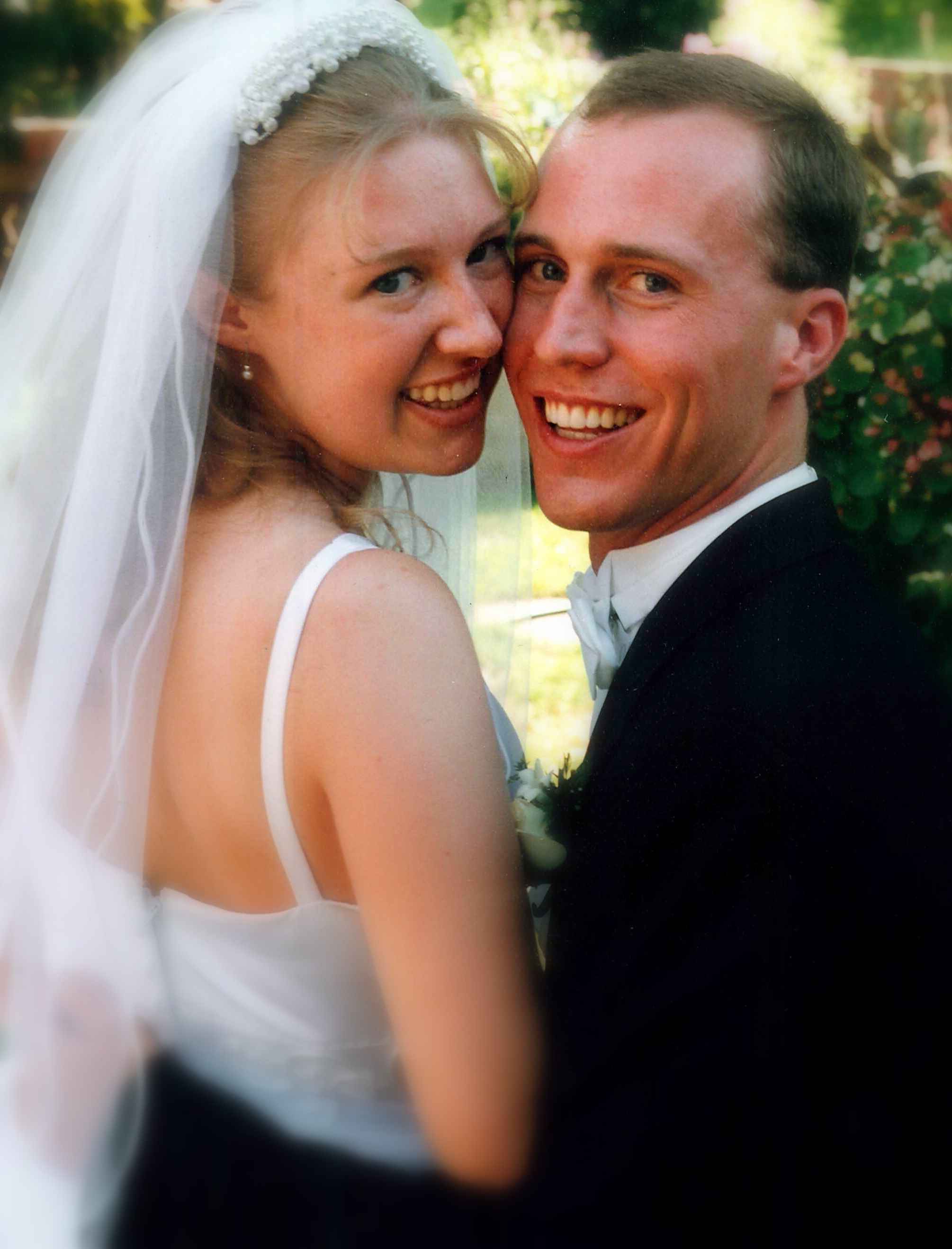
I asked Him whom I should marry. He led me to marry Jonathan.

Together we asked Him what to do at our first church home in Rolla, MO. He led us to work with youth.

We asked Him when to start a family. And He said “now.”

We asked Him what to do and where to go after I graduated from university. He led Jonathan to go to nursing school in Kansas City.

We asked Him to supply a job in Kansas City, and He led us to work as youth ministers at Red Bridge.

We asked Him to supply a nursing job for Jonathan, and He led him to Truman Medical Center’s Emergency Department.

We asked Him whether we should apply with Team Expansion, and He said “yes.”And even though I was scared out of my mind, we followed Him. Each step of the application process was scary. But I only had to finish one step at a time.


Now that I’m in Cambodia, it doesn’t seem so scary. But if you had told me when I was saying “I do” to Jonathan Trotter, that in 12 years we would take 4 young children across the Pacific to a 4th world country as missionaries . . .

Thankfully, God has been gracious to me. He knew I couldn’t follow Him if I knew the Master Plan. He knew my fear would paralyze me. So He gave me an incremental plan, and now I can look back and say, “Oh, so that’s why You led us to do ____________!” Each piece of our life puzzle prepared us for where we are now. That’s the amazing grace of God, that He can script our life story if we will only “do the next thing.”


A Good Day

– By Elizabeth

I had a good day today.

Yes, it’s true.

I had a good day yesterday too.  And not just “good for Cambodia,” but honest to goodness, downright good.

Last November I climbed a 20 foot pole.  And jumped off it.  (I know you’re all asking yourselves if this is the same non-athletic Elizabeth Hunzinger you thought you knew.)  I climbed it with no fear.  But when I got to the top, I froze.  The transition from crouching at the top of the pole to standing on the top of the pole was incredibly frightening.  It’s the shortest part, about 1 second of motion, but it’s the most difficult.  And I needed Jonathan to coach me through it.  Once I was standing, I felt fine again.

It’s the same in labor.  Transition, that part of labor just before full dilation, is the shortest part.  It’s also the most intense and the place where a mom doubts herself.  She needs help to get through it.  (Jonathan claims that since he did this for me 4 times, I owe him 4 doula fees).

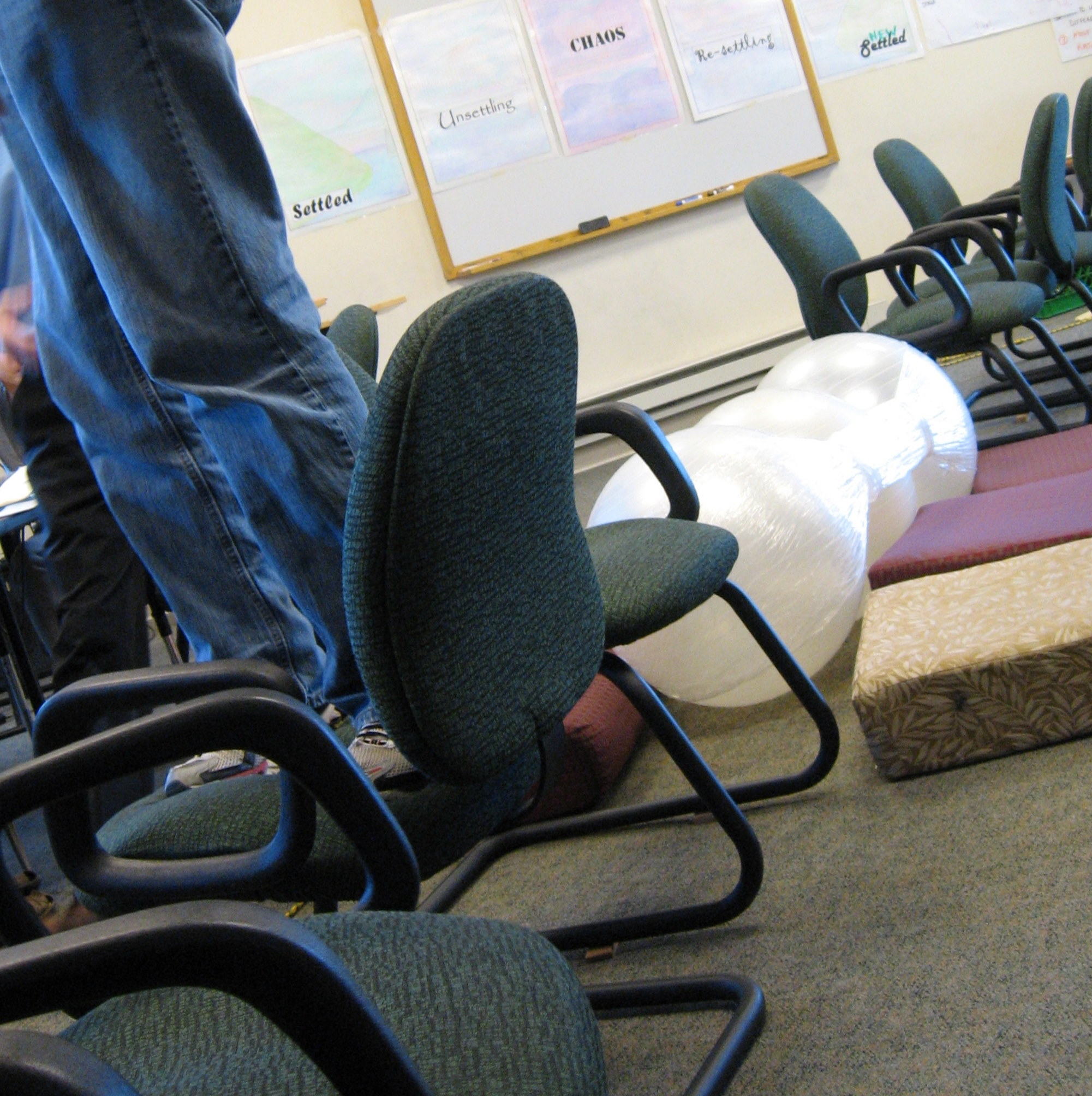
At MTI last fall we learned about the “Chaos Bridge,” which is an analogy for transition (or “transsizion,” as our South African SPLICE leader called it).  We start out settled and stable, move into unsettled with all its farewells, and then into the bouncy bubbly transition.  We start to come out of it while resettling, and then finally reach a new settled state.

When I was neck deep in missionary transition, you supported me with prayers and encouragement.  I couldn’t have made it through without your doula-ing, as all my birthie friends would say.

Transition.  The most terrible part.  The shortest part.  Now I know with certainty that it doesn’t last forever.  And I can assure the next person I see experiencing transition that it does indeed end.  It’s painful, but it won’t last long.  Not much longer now.  I promise.

~~~~~~~~~~~~~~~~~~~~~~~~~~~~~~~~~~~~~~~~~~~~~~~~~~~~~~~

Even though I walk through the valley of the shadow of death, I will fear no evil, for you are with me; your rod and your staff, they comfort me. Psalm 23:4