A Brother’s Letter {Velvet Ashes}

by Jonathan

I’ve always appreciated women.

Growing up, I watched my mom and dad interact as equals, with each other and with their friends.

I loved watching my mom’s eyes flash with intellectual fire as she discoursed with others about theology or how to define (and practice) radical obedience. I loved her sweet smile as she pondered the red geraniums outside her window, often while nursing a baby.

I loved scratching the dirt in the fall, at her direction, planting the blobs she called bulbs. And then I loved watching her eagerness as we looked for the first hint of spring: the brave but tiny crocuses, deciding that their appearance would be more surprising if they poked through a crust of snow.

I am a man, but I learned much about manhood from a woman.

And so I want to say I’m sorry.

I’m not sorry I’m a guy, but I am sorry that a bunch of my sisters have been mistreated by guys, both in the church and out of it.

A Brother’s Apology
I’m sorry that, instead of really hearing the devastating echoes of #metoo, we sat silent, sometimes scared, shuddering for all the innocent men who’ve been falsely accused. Not only was our response statistically absurd, it was also staggeringly unempathetic. I am so sorry.

I’m sorry we’ve treated you as if you were, all of you, The Great Temptress, hatching plots to take us down. I’m sorry we’ve been afraid to speak to you, afraid to have an actual friendship with you. Unless we were dating you or married to you, we were so afraid of what things would look like that we never actually looked at you. And so we missed you. We missed seeing you as the human that you are. We missed your giftings and we robbed ourselves of the opportunity to learn from you. We were mistaken.

We were so insecure, so driven by a deep Adamic fear of being controlled. We forgot the power of the Cross to roll back the curse.

Continue reading the full article at Velvet Ashes.

riccardo-mion-641809-unsplash

The Day I Left

I’m linking up with Velvet Ashes for their theme on Parents. ~Elizabeth
map

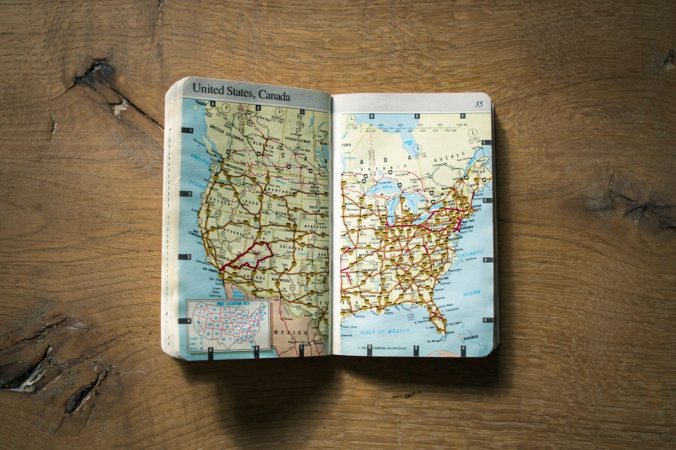
Seven years ago I left Kansas City for Phnom Penh. In the early hours of a frigid January morning my husband and I boarded a plane with our four small children, leaving behind two devoted grandparents and a very full life.

I threw myself into life in Asia and began to identify Cambodia as home. It was where my life was. It was where my husband and children were. I embraced my inner Third Culture Kid, threw off the shackles of American culture, and flattered myself that I was becoming a more global citizen. But roots grow down deep, don’t they?

This past summer when I visited Kansas City, I had strong feelings of “this is home.” That this was my city. Although I have always felt at home at my parents’ house, on my two previous U.S. visits I had not felt that attachment for the metropolitan area as a whole. But being in KC in the summer is different from being there in the winter. It’s friendlier. Happier. This past summer was the most magical summer of my life. It stirred up a host of good memories and reminded me of a former life — a life that I don’t want to forget.

I recently found my journal entry from that day and was surprised by the intensity of my feelings of “home” towards Kansas City and by the sheer volume of memories. I find that in the span of seven years, I have come full circle, back to the feelings of this original journal entry:

Kansas City is my home. After moving a lot as a military kid, I’ve been in KC 18 years. It is home.

Driving through the Grandview Triangle to church hundreds of times. Going to the dentist. Going to LSHS. Running, biking, swimming in Bridgehampton in the summer. Babysitting the Craddocks.

Falling in love with God at Red Bridge. Falling in love with Jonathan at Red Bridge. Youth ministry and four babies. Burying Mark and seeing a counselor at Christian Family Services. Living in the Parsonage for five and a half years. Some of my favorite memories in life.

Closing the garage door that last time to drive away was harder than I anticipated. Even when I come back, I can’t go back there. So many good memories of family life. So much life.

During the farewells at KCI I cried and shook telling Mom goodbye. We’ve had a wonderful friendship, and I love her dearly. I worry about her being alone. I wish she could keep kissing the grandkids twice a week. I want them all to know her as well as I do.

I’m thankful that after seven years, my children do know my parents well. My parents Skype or FaceTime my kids once a week. They’ve visited us here. And of course we live at their house — my home — while on furlough. The girls cook and garden with Mom, and the boys help Dad with car, fence, and yard work. We all watch movies and eat popcorn together. We sit around the back yard fire late into the night and talk and sing and stargaze.

After a childhood of military moves where we never stayed in a house more than four years, the 18 years my parents have lived in their current home seems a lifetime, and I love both the house and the stability it’s given me and my family.

My kids don’t remember as well, but when we lived in KC before, we often saw my mom more than twice a week at church (which was a given). Since I was pregnant so frequently, I often had to go to prenatal or postnatal appointments. Mom would watch the kids while I went. Then we would eat lunch together and, many times, spend the rest of the day together. Some days I would just sit in her kitchen nursing a baby and talking for hours on end.

Jonathan was on staff at church and left early on Sunday mornings. Mom showed up at the Parsonage and helped me get the kids dressed and across the parking lot in time for Bible class. She brought books and toys, and we sat together in church while Jonathan sat up front leading worship. After Wednesday night service my parents often came to our house for a few minutes to hang out.

Our relationship has been cemented by all those times together. I can’t think what I would do without parents like these. Thank you, God, for good parents — all across the globe.
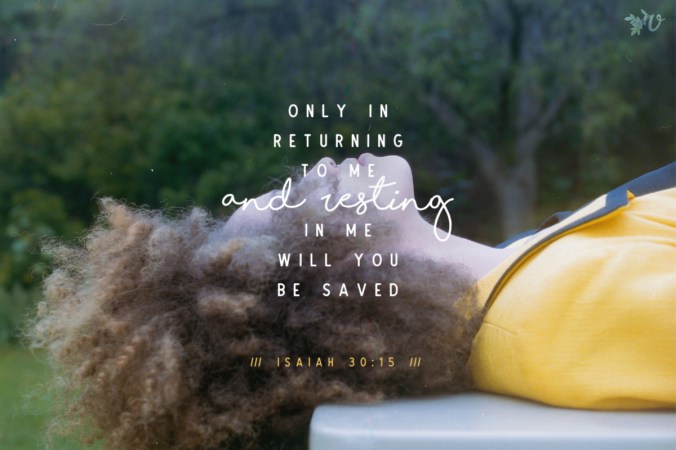
Rest is Not the Absence of Work, It’s the Presence of the King {Velvet Ashes}

Elizabeth is over at Velvet Ashes today . . . .

Isaiah-30_15

The words sleep and rest are nearly synonymous in my mind. We wake feeling rested after a good night’s sleep. Conversely, we feel disappointingly not rested after a fitful night’s sleep. Sleep is a gift, and certainly, it is a type of rest, but it’s not the only kind of rest we need.

We also need the kind of rest that lets us stop striving. The kind of rest that lets us stop worrying, that lets us stop working. We need the kind of rest that lets us stop rushing. “All our busy rushing ends in nothing,” David proclaimed in Psalm 39:6. Our daily lives have changed significantly since then, but in all those years the human heart hasn’t changed. David’s words are as true today as they were 3000 years ago.

If we spend some time studying the world David lived in, we can find fresh meaning in the word rest. In the Old Testament, “rest” referred to a dwelling or habitation. More specifically, the settlement in Canaan provided rest to the Israelites. In ancient times in general, rest meant that the battle was over and the king was on his throne. Rest meant that regular rhythms could be taken up because the people weren’t at war anymore.

Finish reading here.

What an Open Sewer Taught Me About Resurrection {Velvet Ashes}

Elizabeth is at Velvet Ashes today . . .

new-life-1170x780

A river runs through my city. And on the main riverfront there’s a tree. Actually, there are many trees along the riverfront, and they’re mostly palm trees. Palm trees grow everywhere in the tropics. And while they are stunningly beautiful, palm trees don’t grow very large.

But there’s a tree on the riverfront that dwarfs all the palm trees. It’s the biggest and greenest tree around, and it’s planted on the banks of the river right where raw sewage is discharged. My city’s waste rushes thick, black, and odorous right into the river where the tourists walk by.

The first time I noticed this, I was struck by the sight. How could two such unlikely things come together like this? An enormous, thriving tree and an ugly, smelly, polluting flow of refuse? I couldn’t stop looking at it. I couldn’t stop gazing and pondering: a tree full of life next to a stream of death.

This riverside tree became, to me, a symbol for Resurrection. For the ability and tendency of God to take garbage, to take death, and to make new life out of it, to make beauty out of it.

Finish reading here.

The True Myths That Keep Me Coming Back to God {Velvet Ashes}

Elizabeth is over at Velvet Ashes today . . . 

rescues-his-people-himself-1170x780

The word myth often conjures up the idea of epic fantasy tales or of commonly held beliefs that need debunking. In fact, the Oxford Dictionary defines myth as both “a fictitious or imaginary person or thing” and “a widely held but false belief or idea.”

The dictionary also defines myth as “a traditional story, especially one concerning the early history of a people or explaining a natural or social phenomenon, and typically involving supernatural beings or events.” The word derives from the Greek mythos which simply means “story.”

And that is what I think of when I think of myth: I think of story. I think of narrative. So when I use the word myth to describe the Bible, I’m not saying it’s not true – because I most certainly believe it is true. Rather, when I say the Bible is myth, I’m saying that it’s full of stories that infuse meaning into our lives and that it is, in actuality, one overarching Story.

The God of the Bible audaciously makes a world, joyfully populates it with creatures, and then willingly redeems those creatures from sin and death. This story is unlike any story humans have ever told. Indeed, the Bible’s uniqueness among world myths is one reason I believe it, love it, and base my life on it.

Finish reading here.