I wanted to pass this song on to you during Easter Vigil (the night before Easter Sunday). Perhaps you need it as much as I do.
The Paschal Troparion is an Orthodox hymn dating back to the 5th century. Originally written in Greek, one of its English translations proclaims: “Christ is risen from the dead, trampling down death by death, and upon those in the tombs bestowing life.”
It is a sort of bridge between a mournful Holy Saturday and a joyous Resurrection Sunday (though Orthodox believers usually celebrate Easter on a different date than Protestants and Roman Catholics).
The music and lyrics of the Paschal Troparion were reimagined by the husband/wife musical duo eine blume, and I first heard it during a Velvet Ashes retreat several years ago. Its simplicity lends it an easy memorability, and it joins the best of ancient words with a beautiful modern melody.
I love the comfort and solidarity of singing something that believers have prayed in faith for hundreds of years. This hymn has become one of the songs that our family sings to end our morning devotions. Originally we closed only with the Doxology, but now we close with either the Doxology or the Paschal Troparion (or occasionally both).
In case you haven’t heard this song, or in case you had and just needed reminding, I wanted you to have it before the dawn of Easter morn. Confluence Worship covered it here (or you can purchase it on iTunes like we did). I’ve also pasted the song below.
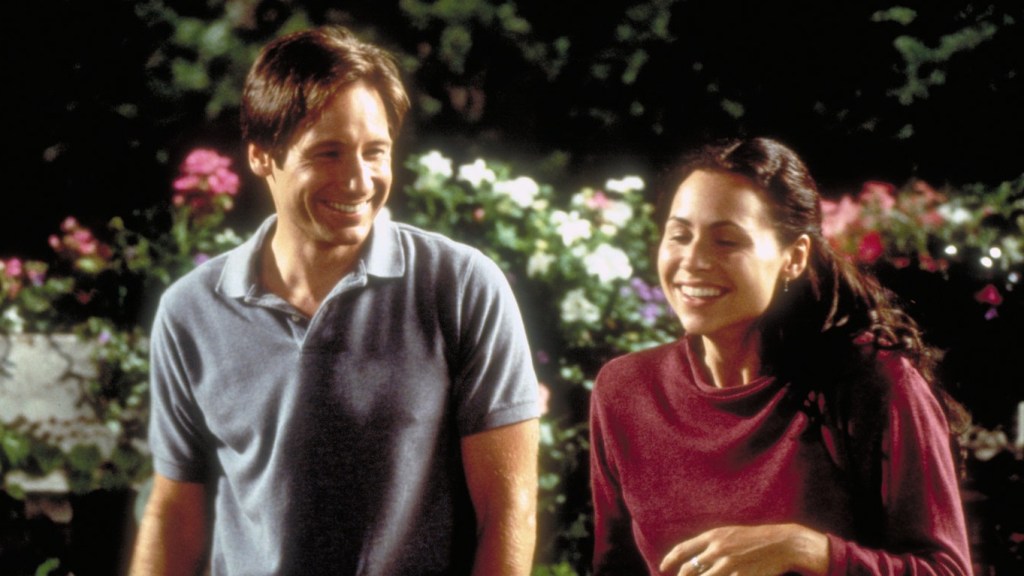
The 2000 film Return to Me is a family favorite. The movie features Bob and Elizabeth, who have been together since high school and who are still very much in love. One tragic night Elizabeth, who was an organ donor, is killed in a car accident. We watch as doctors transfer her heart to Grace, a woman who’s needed a new heart for a long time.
Grace goes nervously into surgery, hopeful for a new life. Bob, blood still on his clothes, goes home to an empty house. It’s an agonizing scene.
Months later, Grace has recovered from surgery. Bob, meanwhile, is having trouble living without Elizabeth and has buried himself in his work. Friends continually try to set him up with other girls, but Bob wants nothing to do with anyone new. He can’t get over the loss of Elizabeth. Then one night during one of these blind dates, Bob meets Grace at the family restaurant where she works. Sparks immediately start flying.
In the following weeks and months, Bob’s heart opens up to new love. But Grace is guarding a secret. Although she doesn’t know that Bob’s wife’s heart beats inside her chest, for some reason she can’t bring herself to tell Bob she’s had a heart transplant. Eventually the two of them figure this fact out, and the revelation is traumatic for both of them. Bob disappears; Grace flies to Italy to paint.
While Grace is gone, Bob realizes he loves her and can’t live without her. He looks for her at the restaurant only to find that she’s gone. He acknowledges, “I miss Elizabeth. I’ll always miss her.” Still, he’s ready to embrace a new life with Grace. He goes in search of her, and their reunion is sweet. The audience can see them building a future together.
One year after having traumatically evacuated Cambodia, I think I understand a little of what Bob meant in his restaurant confession. We left Cambodia in March, just as the pandemic began closing borders. We were relieved to have made it to U.S. soil, and for several weeks we assumed we’d be able to easily re-enter Cambodia in the fall as planned. But by May our visa and passport plans began unraveling, and by June, life as we knew it in Cambodia was over.
I didn’t even get to say goodbye.
2020 became one long grieving session. This might sound strange if you knew me in the early 2000’s when Jonathan felt called to missions and I didn’t. You might remember how I fought the call for so long. But now I felt like Mr. Holland from the movie Mr. Holland’s Opus, in which aspiring composer Mr. Holland longed for fame and renown, but instead ended up teaching music to high school students. At the end of his career, when budget cuts forced him to retire early, he observed, “It’s almost funny. I got dragged into this gig kicking and screaming, and now it’s the only thing I want to do.”
Like Mr. Holland, I didn’t initially want to move to Cambodia, but once I got there, I found a life I loved. I wasn’t ready to say goodbye — but covid said differently. For weeks, I woke up crying. Opening my eyes each morning was a painful reminder of where in the world I wasn’t. In Cambodia I had a strong support system. I lived every day with a sense of meaning and purpose. I had a place in the community and rituals and routines that brought structure to our chaotic cross-cultural life. We had raised our children there, and Cambodia was all they knew.
It was a difficult life, sure, but it was also an exceedingly good one. And I wasn’t sure I would ever stop crying over this loss. I lived in the “if onlys.” If only we didn’t have passport problems. If only we didn’t have visa problems. If only covid hadn’t happened. If only, if only, if only. I thought if I could just get back to Cambodia, I could recapture all my former happiness. In reality, even if I could have returned, I couldn’t have recaptured my old life. Covid made that impossible for seven billion of us.
Then one day my near-constant crying stopped. I thought I had accepted my new circumstances. And I do believe I had accepted that I couldn’t get my old life back. But reflecting now, I realize that I struggled deeply throughout the fall and winter. I had said goodbye to my old life — though not in person and not on purpose. But I still didn’t know exactly what my new life would look like, so it was hard to root myself here. Everything seemed bleak. I didn’t think I could ever be happy again.
We were looking for a home at the time. We knew we had to be out of our temporary housing by the end of December. After several housing disappointments (a story I’ll tell another time), I began to fear becoming homeless (emotions may exaggerate facts, but the intensity of the feelings are real). We didn’t have a church home yet because of covid, so I didn’t have local community to help me through this transition. I knew I couldn’t get my old life back, but I still desperately missed it.
Finally, finally, we found a home that fit our family that was also in our price range. We signed the papers mid-December, which was a bit closer to the deadline than we would have preferred. Still, we were thrilled to have a place of our own. I had no idea it would be such an important milestone in our repatriation process.
We’ve been in our new home for three months now. It fits us so perfectly (I promise I’ll explain in an upcoming post). I live in the daily disbelief that we could have found such a fantastic place for our family to live. We are making it our own, slowly writing our name in the land. Jonathan is working on the yard. We have pictures on the walls. We have rituals and routines, and I’m slowly re-building a support system. Living in our home has helped get me “unstuck” from the grief and helped me to move forward. It has given me a glimpse of what the next season of life might look like.
Cambodia is still a natural part of our conversations, and we frequently talk about our old life. The six of us have so many shared memories, both pleasant and unpleasant. Occasionally I even long for life in Southeast Asia. But I no longer think I can’t live without Cambodia, that life simply cannot go on without Cambodia. I’m beginning to understand what life can look like here on the other side of the ocean. I feel like Bob, who knew that he would always miss his old life, but who now knew that he could also live a new life with Grace.
Actually, this is a post about the best Christian book on sex that I’ve ever read. Christian marriage books often bother me. (I talked about one of them here.) Sometimes they give bad relationship advice in general, and sometimes they give bad sex advice in particular. Many times they offer a poor theology of marriage. On the other hand, secular books often give good relationship advice or offer scientifically valid sexual information, but their values don’t always align with mine.
This book is different. It’s called The Great Sex Rescue: The Lies You’ve Been Taught and How to Recover What God Intended, and it was written by Sheila Wray Gregoire, Rebecca Gregoire Lindenbach, and Joanna Sawatsky. It’s based on research and takes women’s sexual issues seriously. The authors also take the Bible seriously. So they’re able to explain, with data and with Scripture, all the things that tend to bother me about Christian marriage books. And they’re able to offer a better way.
So if you’ve ever been frustrated by the state of the Church’s teaching on sex (especially for women), this book will speak to you. If you’ve ever wondered if sex is supposed to be more than just a way to keep your husband from sinning, this book will speak to you. If you’ve ever searched for practical answers to your difficult sexual issues, this book will speak to you.
Sex is not supposed to be good only for husbands; it’s supposed to be good for wives too. I could say much more, but the book says everything far better than I ever could — and far better than I’ve ever seen anywhere else. Read the book if you want to know what I’m talking about, and then spread the good news about sex — share it with your friends and pastors.
***I’ve been working on telling the story of how we found our house, but it’s just not coming together yet. So until that story is ready to tell, I’ll be dropping other content into your inboxes.
I’m in love with a cat. This revelation is as shocking to me as it is to you, if you’ve known me any length of time. I’ve never been an animal person. Dogs scare me, cats are scratchy, and fish stink. Rodents stink even more. So when asked what my favorite animal is, my reply has always been, “human beings.” And yet here I am, taking pains to care for a small furry creature.
Let me explain how I got here.
The kids have wanted a pet for quite some time. For reasons beyond my dislike of non-human animals, having a pet in our Cambodian row house was out of the question. As soon as we moved back, however, the requests started. It was clear the kids still wanted a pet.
We had to push the question of pet ownership further into the future while we continued living in temporary housing. (We did this for a total of 9 months, which makes me wonder if there’s some sort of birth metaphor hiding inside that number.) During that time, we were stretched thin trying do our jobs while also finding a permanent place to live. The housing search proved to be surprisingly difficult and illustrated to me in real time Maslow’s hierarchy of needs — but more on that in an upcoming post.
Once we moved into our new home, the rumblings began again. Nothing had changed — the children wanted a pet. And the father wanted to get the children a pet. It had been a hard year of loss for the family, he reasoned. Now we had a yard to host the pet in. We weren’t ready for the rigors of a dog (the bathroom duties of dog ownership, the higher costs incurred, and the potential for loud barking being the main reasons).
But he was sure we could handle a cat.
When he pitched the idea to me, I wasn’t sure I had a choice. I knew he was right; after all these years and especially after Last Year, the kids did deserve a pet. All I asked was that the cat not be an inside cat. I didn’t want to do cleanup duty, live in a house that smelled of cat, or manage the incessant furniture scratching. No, he assured me, the cat would stay outside. After all, he said, some of us have cat allergies.
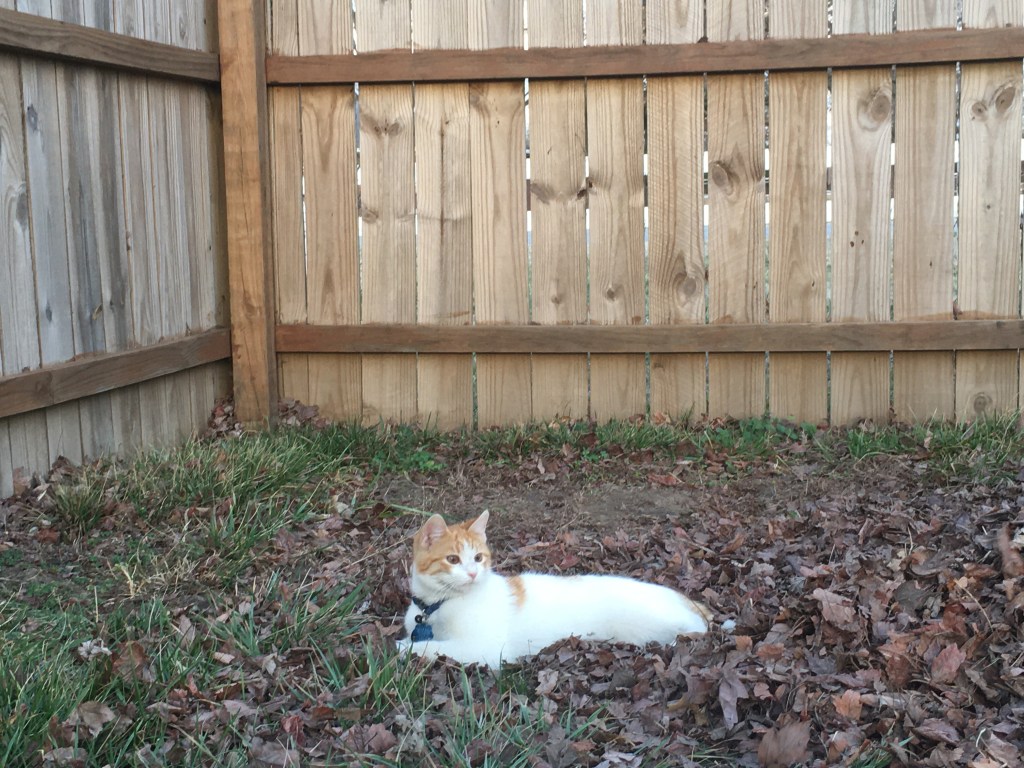
So the non-animal-haters made a plan to visit the Humane Society. I instructed my children to listen to their hearts and choose the pet who was just right for our family. They came back with a half-grown orange-and-white tabby who needed mounds of fattening up. He’d been a stray before the Humane Society found him and cleaned him up. We called him Gryff, after the House of Gryffindor.
I didn’t love him right away, but I thought he was pretty cute, and I was glad the kids were so happy with him. Then the Snowpocalypse came to Joplin, and I worried about him freezing to death in the garage. I could not let this little kitty die in the cold! My children loved him too much. And I loved seeing them so happy. I drove to the store in the rain, just before it turned to ice, and bought him a carrier. That way he could sleep in the house without getting his dander all over it.
We lived this way for two weeks, because that’s how long it took before the snow melted and the temps inched above freezing at night. Now he’s back to the garage and the yard. I love watching him prowl around, play with crickets or catnip, or just lounge in the sun. I love watching my children cuddle him. Playing with the cat is a great stress reducer around here.
I guess we are cat people. I never thought I’d say that.
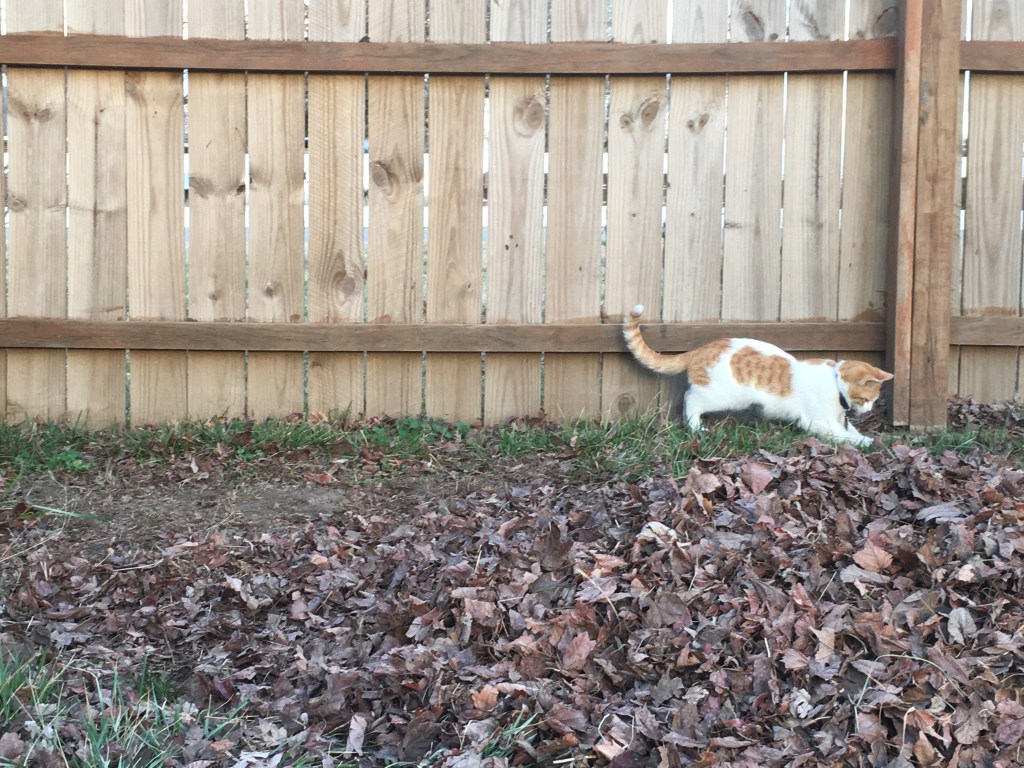
Gryff is still young, and sometimes he’s strange. Sometimes we call him our dog-cat. In the beginning he would follow Jonathan around like a dog. He even ran like a dog. He also had a tendency to run away and get lost. It’s normal for cats to disappear and come back later, and Gryff often left through an opening in the fence and came back. But once he didn’t come back before dark.
We went looking for him and found him in a neighbor’s yard. He’d jumped the fence into their yard but couldn’t figure out how to get back in to ours. Another time he disappeared for two days. After the first day, we got worried. I walked the neighborhood, talking to strangers and asking about our cat. No one had seen any sign of our cat. I walked the streets so long I got a sunburn.
I agonized over this situation. After everything our kids had been through this year, after all the loss they’d endured, getting this cat was supposed to be a way of healing their hearts. To think they might lose him too?? It was too much to bear. Some of us cried. Some of us prayed. For a cat.
I missed how alive the yard felt with Gryff in it. I couldn’t believe how empty it felt without him, after just a few short weeks in the family. Eventually another cat owner noticed him hanging around their house and found our information on his collar. Late one night, after we figured we would never see him again (after all he was still a kitten, perhaps not quite grown enough to figure out how to come home), a neighbor rang the doorbell and returned him. We were so happy. But we learned that no one really ever owns a cat. Not really.
Then one day just after breakfast he disappeared again. I didn’t worry quite as much this time, but I still wanted him to return. The next morning I was up early in my office when I heard the mewing. I ran to the back door, and there he was, crying for his breakfast. In that moment, I knew I could relax. Gryff could and would come back. He’d figured out where home was — or at least he’d figured out how to find the place where people feed him canned cat food every morning.
Yes, I know. I can’t believe it either. Somehow this cat sank his claws deep into my heart, and I buy him the tasty wet food. I know I don’t have to. The vet said we don’t have to, that people sometimes give their cats wet food on Sundays or special occasions. But after I watched this cat go bananas for a can of salmon, I decided he needed wet food more than once a week. Maybe every other day. Or maybe, every day? After all, he still needs some fattening up.
My husband laughed at me, the way this cat beguiled me. He never in a million years expected that. But you know what I think about my silly love affair with this cat? I think, at least it taught him how to come Home.
Remember the old days of blogging? I do, and fondly. I loved how blogging was like carving out my own online space to be creative, to express myself, to have conversations and connect with the people I loved.
But eventually blogging started to stall. People started migrating to Facebook and Instagram; these were the new methods of communicating your message. And they came with new rules. Provide shorter, pithier (and sometimes meaner?) content. Always include a photo. Maybe even build your post around the photo, instead of the words. Extra points if you can edit and improve the photo.
And so for a time, it became easier and simpler for me to just to pour my personal content onto the Facebook platform. After a while the photo requirements started to feel heavy. I’m not a visual artist or a talented photographer. I know nothing about photo editing. I tell stories through words, usually long stories. Even with all these changes, I still kept at it.
But years of this social media habit took its toll. Facebook began to stress me out. It wasn’t the light-hearted online gathering place it used to be. It was filled with angst and stress. But I couldn’t figure out a way to get off of Facebook and still be a communicator, because Facebook was where the people were. And if you want to have meaningful conversations, you need other people to be involved. And importantly, I loved the ability to keep in touch with friends who were far away.
But about a month ago, after reading a book and doing some personal reflection, I signed out of Facebook. I didn’t tell anyone I was doing it, not even my husband, because I didn’t know how long my decision would last. A few days later he asked me a question about something that had happened on Facebook, and I replied, “I haven’t been on Facebook for 3 days. I don’t know what’s happening there.”
He (and the rest of the family) seemed thrilled that I wasn’t on Facebook.
As the days and weeks went by, I found I was less stressed out. I didn’t necessarily think I was acting any differently, but my family told me I seemed happier. And every time I considered signing back in, perhaps to try to connect with friends or find out what they’d been up to, I was filled with dread. I just couldn’t bring myself to do it. I was afraid of getting sucked back into the endless scroll again or being activated by triggering content.
This experiment proved to me what I had only previously wondered about: Facebook is a place of stress for me. At this point the stress is so intense that it’s not worth the gains of being on it. Once upon a time, it hadn’t been stressful. It is now. Even though I dearly miss catching up with far-away friends on social media, I’ve realized that taking care of my mental health in this way is the right thing for me to do in this season.
But what to do about the writers and experts I followed on Facebook? After some investigation, I learned that serious writers back up all their content on their own websites, and they have email lists for people like me who want their content but don’t want social media. I signed up for all the email lists I needed, and now I happily receive their content without the stress of social media.
This made me consider the idea that perhaps the future of blogging lies in its past. That maybe people are returning to website-oriented writing once again. Or that maybe in the future, they will. This blog is our own: Jonathan and I pay for the privilege of hosting our own online space. The content doesn’t belong to a “free” social media company that bombards you with pointless or offensive ads, or that is constantly monitoring your online behavior (read the aforementioned book if you want more insight into the monitoring).
Regardless of whether or not the future of blogging lies in its past (my prediction could very well be wrong), I’m choosing to return to my blogging roots. I don’t plan to get back on Facebook any time soon. If you want to follow my journey (especially as I repatriate to the States), following the blog will be the fastest way to see new content. (Simply click on “Follow trotters41” on the side bar if you don’t already subscribe.)
I’ll also plan to use third party aps to post to Facebook, but I won’t be around to answer comments on Facebook itself. And I’ll eventually make that announcement on Facebook, too, so my online friends know what’s going on with me.
I want to start writing again, and this is the place where I’m going to do it. It may be in fits and starts. It may be small updates at first. I might include longer essays at some point. I may share mundane things that are going on with me; I may share books that are helping me along my journey. I may suddenly share something really private and profound. I don’t know how it will unfold. I’m just going to begin again.
I’m going to let trotters41 be in 2021 what it was for me when we first transitioned to Cambodia in 2012: a place to share my journey and a way to walk into the future, whatever that future looks like. In a way I’m coming home. This is the place I first found my voice, and I intend to find it again. I hope you’ll join me here.


 Jonathan & Elizabeth Trotter