Regarding Burnout {A Life Overseas}

Elizabeth is at A Life Overseas today. . . .

rbalo

Last year I flirted with burnout. I was camping out along its edges, and I didn’t even know it. Only after some conversations with my husband and with a spiritual director, did I recognize what was going on and how I’d been complicit in my own spiritual sickness.

These are the things I’m doing to carve out rest and Sabbath in my life and to move farther and farther away from burnout. I’m no expert, and this is by no means a comprehensive list. They’re just things that seem to be working in my life. Some are deceptively small and simple; others are larger and more extreme and took more courage to do.

Read Elizabeth’s list of 10 ways to find Sabbath and avoid burnout.


A Few of My Favorite Things {March 2017}

by Elizabeth

som2

Ash Wednesday service at the Anglican church. I had never been to an Ash Wednesday service before but really wanted to go. I didn’t quite know what to expect, and I certainly didn’t expect to find a literal puddle of tears forming on the lenses of my glasses during the first kneel-down prayer (and oops, I’d forgotten to pack tissues). Ash Wednesday offers us a communal way to come back to God, to remember that “we are dust, and to dust we shall return,” and to be reminded to “Repent, and believe in the gospel.” In the sermon the priest spoke about the nature of sin to isolate, but how confession breaks this power. He also taught that regret can take up space in our souls, and sometimes we don’t even realize it. Confession frees up that space. I also learned something important about burnout from the Psalm 51 reading.

Team Expansion Ladies’ Retreat. I love the ladies on my team, but with all of us having busy schedules and some of us separated by long distances, we don’t often get to spend time just being with each other. So for 24 hours, that’s just what we did. We talked, we ate, we laughed, we played games, we took a walk at sunset, we made art, and we stayed up way too late. It was awesome.

Baked Oatmeal. I’m loving this crock pot recipe lately. It’s not too sweet, so even though it smells like oatmeal cookies while it’s cooking, it’s not sweet enough to attract my children’s taste buds, which leaves more for me to eat for breakfast throughout the week, right?

I’m also back into hummus and carrots, after quite a long absence in my diet. I’ve taken to rinsing and removing the skins of the chick peas before grinding, which both makes the hummus smoother and reduces the amount of olive oil needed (thereby reducing stomach issues for me).

Crying with friends. I was having a particularly bad day/week this month, and although I didn’t intend to, I broke down in front of a couple friends (in the school library, of all places). I’m thankful for friends who accept me at my most raw (and I felt so much better after crying with them).

The wisdom of G.K. Chesterton. My husband is reading Chesterton’s Orthodoxy, and he reads memorable sections out loud to me. They are morsels of wisdom in a world gone mad. Although Chesterton was writing about a hundred years ago, he is surprisingly current.


BOOKS

Mere Motherhood by Cindy Rollins. If the mark of a good book is that I laugh all the way through it and cry at the end, then this book is a GOOD book. I had avoided reading it because of 1) the drab cover and 2) the uncommunicative title. Truly, it needs a happier cover, because Cindy doesn’t take herself too seriously, and she had me laughing out loud in bed and laughing out loud in the church fellowship hall. So do yourself a favor and get this book. It’s geared towards homeschooling moms, but any mom-of-littles or mom-of-many will appreciate Cindy’s wisdom. It’s not on Amazon Kindle yet, but they promise it will be soon.

Invitations From God by Adele Ahlberg Calhoun. You must read this book. It’s the current Velvet Ashes book club book, and it’s basically a collection of all the spiritual lessons I’ve been learning over the last 5 years or so, written in a very conversational tone. Jonathan recommends Emotionally Healthy Spirituality all the time, as a collection of the lessons God has taught him over the last several years. Invitations from God is going to become MY go-to spiritual growth recommendation.

Cold Sassy Tree by Olive Ann Burns. This book is a coming of age story that’s definitely an “adult read.” This story does not shy away from grief and sorrow, and I certainly did not expect to ugly cry so much at the end of it. It does make me wonder — is grief a natural and accepted part of American Southern culture in general? (I’m thinking along the lines of Steel Magnolias and Because of Winn-Dixie here.)

The Penderwicks by Jeanne Birdsall. With this book, sometimes you just gotta stop and laugh. So we did. I hope to get my hands on the other books in the series someday soon.

Mark by Michael Card. Yes, still slowly working through this. Oh my goodness, the commentary on chapter 10 was excellent – I’ll share some in the Quotes section.

The Irrational Season by Madeleine L’Engle. I read through her lengthy Lent chapter, which was full of gold nuggets. I’ll also list some below.


BLOG POSTS

The Crown Must Always Win, a conversation between Joshua Gibbs and Heidi White. I love the show The Crown. It’s emotionally and politically dense, and certainly not a binge-watching show, but I love the interplay between Call/Duty and Love/Relationship. As a missionary/pastor’s wife, I relate to these issues so much, even if I’m nowhere close to being royal.

So I Quit Drinking by Sarah Bessey. This is a LONG read, like a book chapter, but it’s so good I cried. Not because I drink — though I’ve had friends and family who’ve struggled to put down the drink — but because that tender, tenacious conviction from the Spirit is how I felt about taking Sundays off technology. I was nudged and nudged and nudged that way until I finally obeyed, and lo and behold I am light and free and have begun to count on my tech-free Sundays for true Sabbath.

The Gift of a Second Salvation by Esther Kline. This guest post at A Life Overseas tugged at my heart and resonated with my spirit and is such good news.

A Conversation with Jen Wilkin from Russell Moore. I can’t tell you how refreshing it is to hear “conservatives” push back against hyper-conservative practices such as the outlawing of women in ministry or of male/female friendships (my husband wrote on that subject here).

Reconciliation Before Promotion by Russ Parker for Amy Boucher Pye’s Forgiveness Fridays series. I dare you not to cry at this true story of forgiveness and reconciliation.

Why Students Need to Hear Epic Unrelated Tangents by Joshua Gibbs. This article reminds me of my more favorite and impactful teachers: the ones who were free to “tangent.” It reminds me to allow my kids to tangent with their interests. Of course this tangential approach to teaching only works if we have LOTS of time at home and no rush to get anywhere (which wasn’t the case at our house for most of month).

An Open Letter to Paul Ryan About Poverty and Empathy by Karen Weese. Around here I purposefully refrain from posting about political topics, and to be honest I don’t really even know who Paul Ryan is or what he stands for. I only know that after having spent some time in the States and abroad working with poverty, the statements and stories in this article ring true to me.


PODCASTS AND VIDEOS

The Shoe Song: a gift to every parent who’s having a tough day from Jen Fulwiler. Pure fun. Also desperately true sometimes.

Thoughts from the mother of a beautiful brown child as the Confederate flag flies from the back of pickup trucks. From a friend. Well-articulated and compassionately delivered.

The Intersection of Effortlessness and Hard Work with Dr. Christopher Perrin at Schole Sisters. I have almost given up listening to podcasts – it’s what I did on Sunday afternoons that didn’t provide me the rest I really needed, and when I went offline on Sundays, I mostly don’t listen anymore. But I occasionally find time and this one was a good one. (I’ve listened to Dr. Perrin speak about Schole before.)

This interview with Tara Owens, author of Embracing the Body, was also good.

As was this interview with Jonathan Rogers, who wrote a book on St. Patrick. I love St. Patrick’s Day (I explain why here). Did you know there’s not much evidence to suggest Patrick used the shamrock to teach about the Trinity? I was also interested to learn that he was consistently in trouble with Rome for reaching out to the native pagan Irish (having been sent to Ireland only to care for the small transplanted flock there). His fight against the establishment made me like him more now than ever.

Faerie Tale Theatre. These shows are old, old, old, but when we started reading fairy tales together, I remembered them from my childhood. Not all of the episodes are child-friendly enough, but The Snow Queen and The Dancing Princesses are. My family watched them on the only English-speaking channel when we were stationed in West Germany in the 1980s. I found old copies on Youtube to show my kids.

And finally, the new Beauty and the Beast film. I particularly appreciated the Beast’s transformation. You can literally watch love begin breaking in to his heart. It makes the storyline more enjoyable and more believable.


MUSIC AND POETRY

Refugee by Malcolm Guite. Oh my goodness, do NOT miss this poem.

Only King Forever by Elevation Worship. Good gracious, these LYRICS (and that RHYTHM).

Our God a firm foundation
Our rock, the only solid ground
As nations rise and fall
Kingdoms once strong now shaken
But we trust forever in Your Name
The Name of Jesus
We trust the Name of Jesus

You are the only King forever
Almighty God we lift You higher
You are the only King forever
Forevermore, You are victorious

Unmatched in all Your wisdom
In love and justice You will reign
And every knee will bow
We bring our expectations
Our hope is anchored in Your Name
The Name of Jesus
Oh, we trust the Name of Jesus

You are the only King forever
Almighty God we lift You higher
You are the only King forever
Forevermore, You are victorious

We lift our banner high
We lift the Name of Jesus
From age to age You reign
Your kingdom has no end

Even If by MercyMe. Wow. May this be true of my faith.

I know You’re able and I know You can
Save through the fire with Your mighty hand
But even if You don’t
My hope is You alone


QUOTES

Ecclesiastes 7:3 in The Message, sent from my “crying library” friends:

“Crying is better than laughing. It blotches the face but scours the heart.”

From Sue Hanna, in a lesson taken from Abraham and his father Terah:

“When we begin life in Christ, we are headed for the Promised Land, but most of us settle in Haran. Then we die there.”

“It’s all right to get stuck (for a while). It’s not all right to settle.”

Michael Card in Mark:

“Jesus’ response, that the man should sell everything and follow him, is not the answer to the man’s question. It is a litmus test that reveals the truth; he has not kept all the commandments. He has broken the first one and made money his god.” (On the rich young ruler’s question about what he must DO to inherit eternal life.)

“A person does not enter the kingdom with anything — not with wealth, not with accomplishments, not with degrees. We come into the kingdom with one possession: the grace of Jesus Christ.” (On the camel going through the eye of a needle and rich people entering the kingdom.)

Madeleine L’Engle in The Irrational Season:

“We all know that no one can see God and live, it’s all through the Bible. And it isn’t only a Judeo-Christian idea — it’s in Greek and Roman mythology too: in fact, it’s a basic presupposition of humankind.”

“But he [Jacob] recognized God when he wrestled with Him, and he limped forever after. And that limp is important, for the point the Old Testament writer is making by emphasizing Jacob’s thigh is that anyone who has seen the living God and survived is marked by this experience and is recognized forever after by the mark.”

I Had an Arranged Marriage

by Elizabeth

17390459_10210684745007818_6977167644667865183_o

One time Jonathan and I were at a wedding here in Cambodia, celebrating the marriage of a Brit and a Filipino. Sitting at the table with us was a young lady from India. When the table conversation strayed into the topic of marriage, this young lady asked us if we had a “love marriage” (as opposed to the Indian custom of arranged marriage).

Our first answer was yes – yes, we had a love marriage. A second later we added, “Our parents were really involved in our relationship.” And they were. They were intimately involved.

Another time we were sharing a meal with our Pakistani friends, when the conversation turned to marriage. They told us their story, and we told them ours. When we explained the way our parents had helped to guide us, we laughed and told them that at the time some people thought we were crazy.

There was another time when I was chatting with a lady from India about the cultural differences between India, Cambodia, and America. I asked if her daughter, who is studying in America, will have an arranged marriage, or not. She said she probably won’t have an arranged marriage, and that she herself did not have an arranged marriage, so how could she expect her daughter to?

I told her I got married at 18, and to her that seemed very young. (She was right. It was.) She said that in India, parents prefer their children’s marriages to take place a little later, so husband and wife and older, wiser, and more stable when they’re just starting out.

Then I explained how our relationship had unfolded – how Jonathan had talked to his dad, how his dad had talked to my parents, how Jonathan had then talked to my parents, how my parents had eventually talked to me — and she said that is exactly how marriages happen in India.

That was the moment I realized I had an arranged marriage. That was the moment I realized that “courtship” as I knew it was really “arranged marriage, American style.”

It makes sense: an arranged marriage is not a forced marriage. My friend went on to explain that even when it is a so-called “love marriage,” Indian families prefer marriage to be  formalized in this way — that children will talk to their parents, who will talk to the other parents, and so on.

In fact that is how she expects it to happen with her daughter, that she will tell her parents the man in whom she’s interested, and they will get to know the other family, etc. Parents know their kids, she explained, and they know how their kids react to certain situations and people, and they want their children’s marriages to be successful.

I like this idea of families knowing each other. It’s all too easy at university to find someone and fall in love them without any family context, and not to know what you’re getting into. But a marriage is not just a union between two people. A marriage always involves the families of origin, for we are formed by our families and bring our original family culture into our marriages, whether healthy or not.

Now that I’ve been married for nearly 17 years, I can honestly say I’ve loved nearly every moment of marriage. Yes, we’ve had conflict. Yes, we’ve had disagreements. Yes, we’ve sometimes been so busy we barely spoke to each other.

But most of the time we’ve enjoyed being married to each other.

And while I can’t attribute the success of my marriage solely to its arrangement, that arrangement does deserve some credit. Looking back, I can clearly see the way God moved to bring us together under the blessing and authority of our parents. That knowledge and belief is a sure foundation to lean upon when committing to a lifetime of love and togetherness.

Marriage doesn’t have to be as formally arranged as it was for Jonathan and myself or for my Indian or Pakistani friends. Still, it can be good for family to be involved. Or if, for whatever reason, it’s not possible for family to be involved, it can be good for someone to be involved, intentionally guiding a young couple toward marriage.

In the end, marriage is a community matter. The strength and stability of our marriages affect our churches and our culture at large. Proverbs 15:22 tells us that “plans fail for lack of counsel, but with many advisers they succeed.” We can all use a little outside input to make wise decisions — decisions that will hopefully last a lifetime.

_______________________________

Other articles I’ve written about marriage:

What I Want to Teach My Daughters About Married Sex

Our Journey to Finding Joy in Marriage (and the things we lost along the way)

When Marriage and Ministry Collide

Open letter to trailing spouses (and the people they’re married to)

Articles Jonathan has written about marriage:

The Purpose of Marriage is Not to Make You Holy

3 Ways to Care for the Heart of Your Wife

A Marriage Blessing

Love Interruptus?

Love with Faith (or Play Guitar with Both Hands)

Recorded at ICA in Phnom Penh, Cambodia, March 2017.

To listen to the message, Click Here or visit the trotters41 podcast on iTunes.

Paul concluded his message to the Ephesians with the idea of Love mixed with Faith(6:23), and I borrowed his thoughts for a bit. Here are some excerpts…

Love comes to seek and save the lost, while Faith believes they can be.

Faith empowers Jesus to prophetically imagine a new paradigm for the co-crucified: “Today, you will be with me in Paradise.” While Love communicates the fantastical truth: “I want you with me in paradise.”

Faith innervates Jesus’ declaration to the Samaritan woman, “If you only knew the gift God has for you….”

But Love is what got Jesus talking with her in the first place.

“Love joined with faith.”

Faith helps me believe the Gospel. Love helps me share it.

Without Faith, Love lacks vision and imagination, leaving us without mooring and definition.

Without Love, Faith becomes cold and unapproachable, leaving us bitter and mean.

We need both.

Love mixed with Faith.

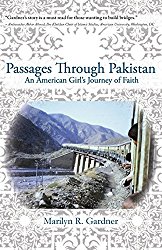
Passages Through Pakistan {book reviews from both of us}

ptp

Last year Jonathan and I were privileged to read fellow blogger Marilyn Gardner’s new book Passages Through Pakistan. It’s a chronological journey through her childhood as a Missionary Kid and Third Culture Kid in Pakistan. Somehow Marilyn manages to arrange the book around various forms of transportation while still maintaining that chronological progression. (The writer in me was impressed with that clever little device.)

On the surface my TCK experience seems quite different from Marilyn’s, so I initially wondered how much of her story I would relate to. Where hers involves missions and boarding school, mine involves military service and public schools. But my concerns were completely unfounded. There was so much to relate to, on so many levels. Truly, this is a story for everyone.

As I’ve said in other places, for me the mark of a good book is that I laugh all the way through and then cry at the end. Passages Through Pakistan certainly measured up in that regard as well.

One of the funnier parts came when reading about her family’s visits to the ruins of the ancient Indus River valley. Somehow the ancient Indus civilization managed to install covered drains in their city, while during Marilyn’s childhood, Pakistan had not yet done so. I could relate — the lack of covered sewers in Cambodia is something I continually lament.

I also laughed over her comparisons of popular (but fleeting) camp songs to the steady and stalwart hymns of our faith. But by the time I finished the book, I have to tell you I was wrecked. Wrecked.

In the end, Passages Through Pakistan is simply the story of a child’s faith in God. Marilyn holds her story loosely and tells it humbly, so it’s worth a read even if you’ve never lived overseas.

Jonathan’s and my reviews are featured below. We were thrilled to be part of her book launch team (and also to have our reviews printed in the book — wow such fun!).

~~~~~~~~~~~~~~~~~~~~~~~~~~~~~~~~~~~~~~~~~~~~~

From Elizabeth:

For anyone who has wrestled with heavy bouts of homesickness or lived through long stretches of loneliness, Marilyn Gardner’s new book, Passages Through Pakistan, is a gift.

For anyone who has walked through the valley of the shadow of death or of betrayal while simultaneously trying to hold onto faith in a good and loving God, this book is a light in your darkness.

For anyone who longs for the people and places of your past or has ever had to pack up a life and say goodbye, this book is a trustworthy traveling companion.

For anyone who has ever grappled seriously with their privilege or come face to face with their own shortcomings, this book is a safe place to land.

And for anyone who’s ever wondered if it’s even possible to raise a happy family in difficult or unusual circumstances, Passages Through Pakistan offers hope and, what’s better, guidance.

But these stories are also a sober reminder to parents that no matter how much love and security we lavish upon our children, we cannot protect them from the sorrows and difficulties of this life — nor is it our job.

Marilyn’s book is a gem for all these reasons, and it is also a joy to read. The language is beautiful, and each story is seasoned with profound truths about life and faith. Somehow as we read, we are able to swallow the bitter along with the sweet. That is what grace is all about, and that is what this book is all about.

~~~~~~~~~~~~~~~~~~~~~~~~~~~~~~~~~~~~~~~~~~~

From Jonathan:

It’s been said that if you dig down into your story deep enough, you find the common things. I didn’t grow up in Pakistan, and I didn’t experience boarding school or life as a missionary kid. But that doesn’t matter, because in this book Marilyn digs down deep enough into her own journey that I found myself resonating throughout. And crying.

The cross-cultural connections and the cross-cultural stretching, the faith struggles, the reverence of older missionaries, the questions about God’s sovereignty in the midst of catastrophe, and the confusion surrounding the loaded word, Calling. It’s all here.

We need this story. The missions community needs this story. Yes, it’s one person’s history, but this is a book that missionaries and TCKs of all stripes need to read, because Passages through Pakistan ties us to our shared history. It links us with the bigger Story, and it reminds young cross-cultural workers that they’re not the first. Not the first to travel. Not the first to care about social justice. Not the first to raise children abroad. It shows us that we are part of a larger plot arc that both preceded us and will in fact follow us. These reminders are much needed and deeply enriching.

I am sure that Marilyn’s gentle storytelling and textured memories will encourage and inspire and heal many.