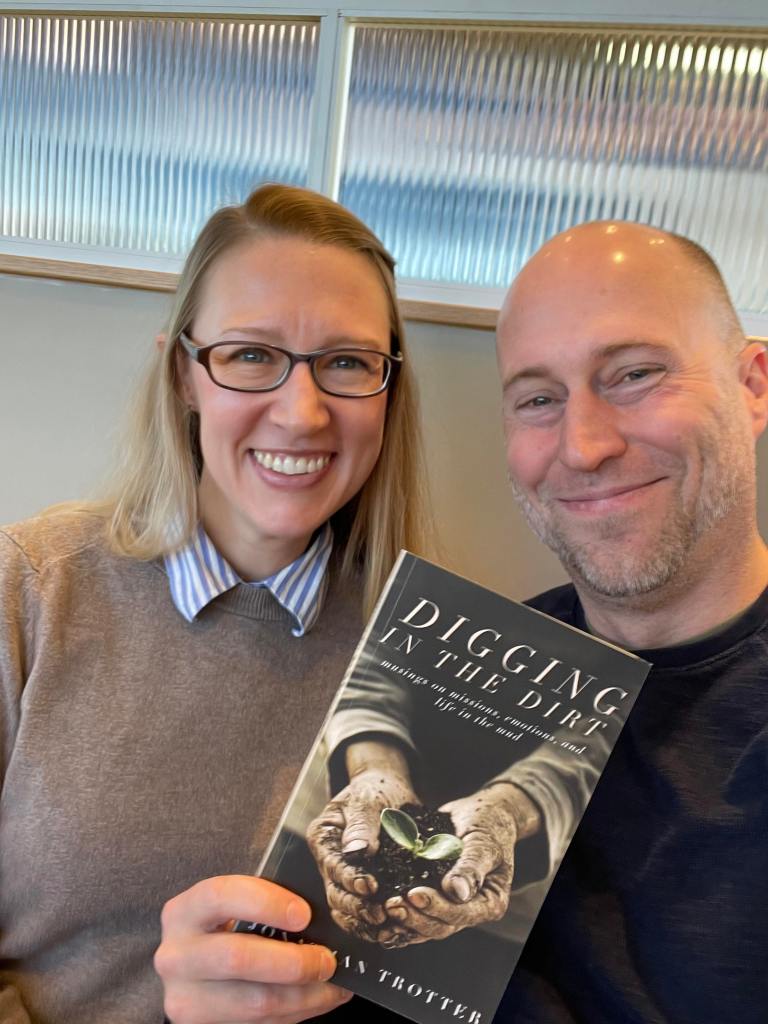
BOOK LAUNCH! Digging in the Dirt is here!

Buy it here!

From the back cover:

Welcome to ground level, to the dirt and the mess.

We like the mountain tops and the sunshine. We like green grass under a clear blue sky. We like victory and breakthrough and answered prayers. But sometimes it rains, the shadows deepen, and life turns muddy. Sometimes God seems quiet. What then? What happens when depression descends, or anxiety hangs like a sword overhead? What happens when loneliness suffocates, the thief steals more than stuff, and you get blood on your shoes?

In Digging in the Dirt, Jonathan Trotter delves into the disasters, the darkness, and the deluge, and he offers comfort, presence, and a gentle invitation to hope.

With humor and prose, with poetry and Top Ten lists, Jonathan welcomes us to the dirt, to the places where we actually live. He invites us to boldly see life as it is, with eyes wide open, and reminds us that even when the digging is scary, we are never alone.

To the ones who are dealing with devastation and distress, welcome. To the ones who need to uproot, to pull out, to clear ground, welcome. To the ones who seek desperately to plant seeds of grace and hope in once barren soil, welcome. To the missionary abroad and the believer at home, welcome. Receive the invitation, and join with Jonathan here at ground level, together.

Come, dig in the dirt.

From the preface:

Hello and Welcome!

I’m Jonathan, and it’s such a pleasure to meet you. I look forward to journeying with you through these pages. Together, we’ll delve into the dirt of life and relationships, of sorrows, pain, and loss. And maybe we’ll plant some things too.

Perhaps, along the way, we’ll see small, green stalks of life and hope begin to poke through, watered with the tears of the journey. Digging like this can be messy, but it can be good too.

These musings will meander from the hot dirt of Cambodia to the sticky mud of American politics. Some of these musings are inspired by international missionary life; some of them are firmly rooted in an American context. But whether you’re American or not, whether you’re a missionary or not, I hope that you find them all a blessing, an encouragement, and perhaps sometimes a challenge. I wrote them for you, and I share them with you with my whole heart.

Start reading Digging in the Dirt wherever you’d like, and feel free to skip ahead or go backwards. Are you a cross-cultural missionary? Start there if you want. Are you interested in developing emotional intelligence, or are you exploring whether or not Christians are allowed to have feelings? Consider starting in the Emotions section. Are you reeling from recent life events that have left you feeling like you’re choking on the mud and muck? First of all, I’m so sorry. Second, breathe a slow, deep breath, look over the Table of Contents, and start wherever you need to start.

Wherever you are, and whatever your story, welcome to ground level, to the dirt. It is here that the real work happens; the good, hard, sweet, healing work. It is my deepest hope that here, among these musings, you may find grace, peace, and a hope that just might be strong enough to crack through the crust.

All for ONE,

Jonathan Trotter
What people are saying about Digging in the Dirt:

A genuine book where no topic is off limits, Digging in the Dirt hits you right where you are regardless of location or vocation. This book is a must-read for anyone who is or is thinking about serving in missions and ministry! – DeAnna Anderson, former Director of the Launch Team for Wycliffe Bible Translators and missionary

Digging in the Dirt is a breath of fresh air for Christians. – Kim H.

Jonathan has such an authentic insight into life on the field, and he addresses the hard things in such a real and tangible way that helps you to know you are not alone. I would totally recommend this book for anyone who is serving overseas, sending someone overseas, or remotely interested in mission life. – Sydney, PI Leader for Southeast Asia

Rarely does an author bring the perspective of a missionary, nurse, theologian, pilot, counselor, parent, and gardener to cross-cultural ministry, family dynamics, depression, grief, politics, and the church, all in one book. Even rarer is a book that combines all of those things in a way that rings authentic and meaningful. Digging in the Dirt manages to do both, bringing thought-provoking and heartfelt lessons out of an incredible range of real-life experiences. – Reuben James

Digging in the Dirt is a must-read for anyone in missions or ministry. It’s refreshingly humble and vulnerable, and no matter what stage of life and ministry you’re in, you’ll walk away with some wisdom and new insight. – B.W., Stateside missions support worker

__________________________________________

Check it out on Amazon here!

*Amazon affiliate links

Khmer resources

Here are some emotional words/vocab lists that I’ve picked up from a couple of friends. Many thanks to Mary and Wendy!

Emotions and Feelings in Khmer and English

Emotions according to intensity

More Emotion Words in Khmer

Here’s an additional resource in Khmer: What is a Woman Worth?

And here’s a master list (with video) about Church Planting Movements and Inner Healing.

Night shot Phnom Penh

photo credit: Nick Radcliffe

The Psalms: More than Just a Matt Redman Lyric

Do you like roller coasters? The slow climb up to the top, then the controlled crash down? Some people love ‘em, some people throw up.

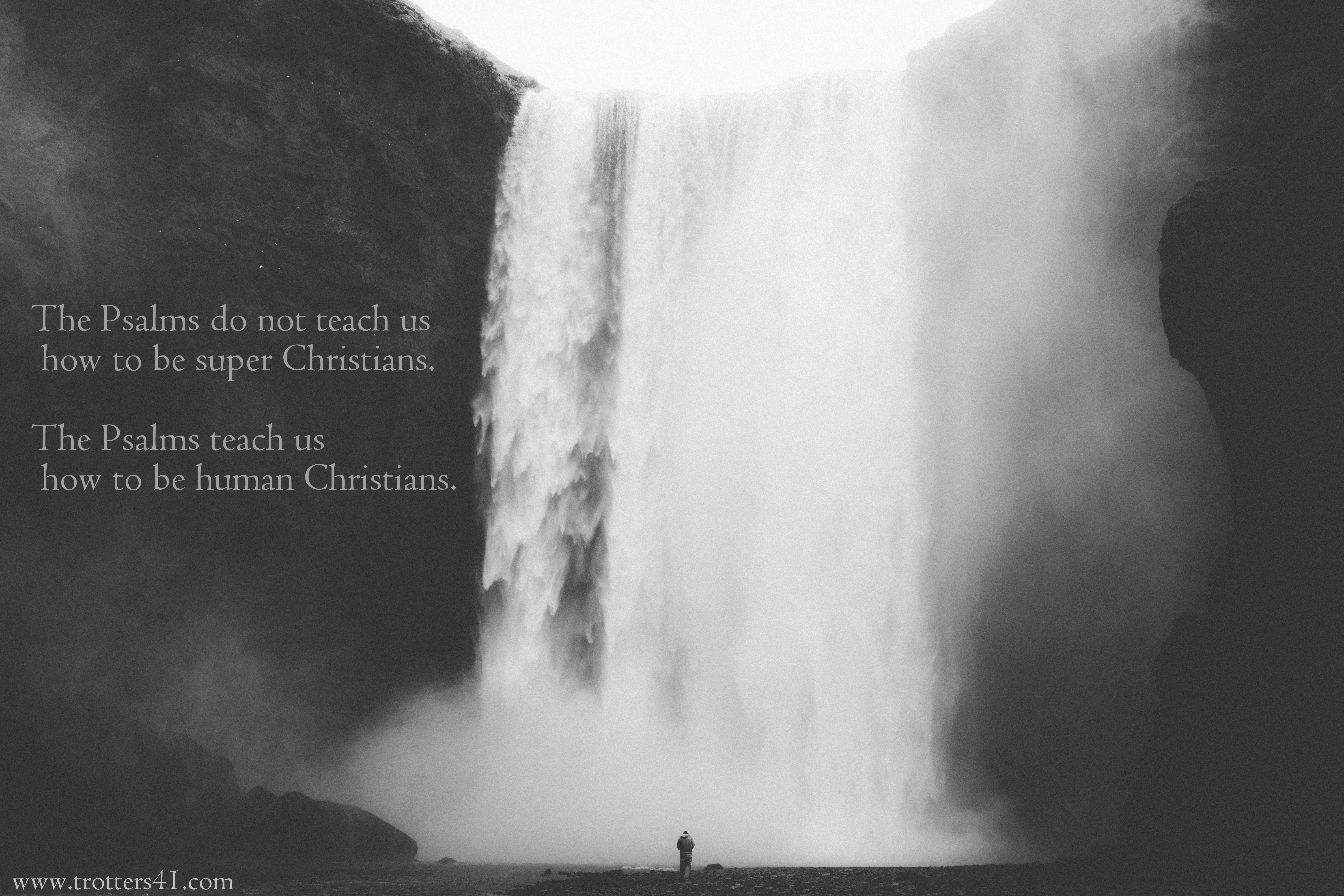
How about emotional roller coasters? Ever been on one of those? The Psalms are sort of like a roller coaster, and I believe that we need to ride this thing a whole lot more. The ups and the downs. The happy jumpy praisey parts and the depressed anxious homicidal parts.

I want to invite you into the chorus of the Church; to remind you of the prayer book of God’s people.

Theologically, we need the Psalms.
Emotionally, we need the Psalms.

psalms.t41

Jesus loved the Psalms
In fact, Jesus quotes from the Psalms more than any other Old Testament book. Here are the top four books Jesus quotes:

#4 Exodus
#3 Isaiah
#2 Deuteronomy
#1 Psalms

The thing is, when Jesus references the Psalms, it’s almost always in a difficult situation. That is to say, when Jesus was in a stressful spot, he most often fell back on the Psalms.

  1. When he’s speaking to angry leaders who are mad because he healed someone. [Matthew 21:16]
  2. When he’s dying on the cross. [Matthew 27:46]
  3. When he’s hated without cause. [John 15:25]
  4. When he’s talking about his betrayal. [John 13:18]
  5. When the Jews want to stone him for claiming divinity. [John 10:34]
  6. When he’s being interrogated by Pilate. [Matthew 26:64]
  7. When his authority’s challenged by the chief priests and elders. [Matthew 21:42]
  8. When he’s talking about the coming destruction of Jerusalem. [Matthew 23:39]

If Jesus himself needed the Psalms in hard times, I might too.

And if that’s not reason enough to dive into the Psalms, here’s a collection of thoughts on the Psalms that might nudge you to jump in…


NT Wright, The Case for the Psalms
“The celebration is wild and uninhibited; the misery is deep and horrible. One moment we are chanting, perhaps clapping our hands in time, even stamping our feet. . . . The next moment we have tears running down our cheeks, and we want the earth to open and swallow us.”

“The Psalms not only insist that we are called to live at the intersection of God’s space and our space, of heaven and earth, to be (in other words) Temple people. They call us to live at the intersection of sacred space, the Temple and the holy land that surrounds it, and the rest of human space, the world where idolatry and injustice still wreak their misery.”

“The Psalms are among the oldest poems in the world, and they still rank with any poetry in any culture, ancient or modern, from anywhere in the world. They are full of power and passion, horrendous misery and unrestrained jubilation, tender sensitivity and powerful hope. Anyone at all whose heart is open to new dimensions of human experience, anyone who loves good writing, anyone who wants a window into the bright lights and dark corners of the human soul – anyone open to the beautiful expression of a larger vision of reality should react to these poems like someone who hasn’t had a good meal for a week or two. It’s all here.”

“The Psalms are the steady, sustained subcurrent of healthy Christian living.”

“Scripture is not simply a reference book to which we turn to look up correct answers – though it’s full of those when we need them. Scripture is, at its heart, the great story that we sing in order not just to learn it with our heads but to become part of it through and through, the story that in turn becomes part of us.”

“If the Psalms provide a sense of sacred space, that space is where celebration and sorrow are held together within the powerful love and presence of the one God.” 

Dietrich Bonhoeffer, The Psalms: the Prayer Book of the Bible
“Whenever the Psalter is abandoned, an incomparable treasure vanishes from the Christian church.”

 “The Psalter impregnated the life of early Christianity.”

 “That can be very painful, to want to speak with God and not to be able to.” [Bonhoeffer saw this moment as the best time to pray the Psalms.]

“There is in the Psalms no quick and easy resignation to suffering. There is always struggle, anxiety, doubt. God’s righteousness which allows the pious to be met by misfortune but the godless to escape free, even God’s good and gracious will, is undermined. His behavior is too difficult to grasp. But even in the deepest hopelessness God alone remains the one addressed. . . . He sets out to do battle against God for God.”

“If I am guilty, why does God not forgive me? If I am not guilty, why does he not bring my misery to an end and thus demonstrate my innocence to my enemies? There are no theoretical answers in the Psalms to all these questions. As there are none in the New Testament. The only real answer is Jesus Christ.”

Billy Graham
I used to read five psalms every day – that teaches me how to get along with God. Then I read a chapter of Proverbs every day and that teaches me how to get along with my fellow man.” 

Martin Luther
The Psalter promises Christ’s death and resurrection so clearly – and pictures his kingdom and the condition and nature of all Christendom – that it might well be called a little Bible. In it is comprehended most beautifully and briefly everything that is in the entire Bible.”

Further Resources
Psalms – Songs for our time (31mb, mp3) This is a message I preached at the Red Bridge Church of Christ on November 29, 2015.

One way to combine the Psalms with Discovery Bible Studies and inner healing ministries.

A three-minute video showing one way to interface with the Psalms. You can read more on this method here.


What I Want to Give My TCKs {Velvet Ashes}

by Elizabeth

tck

I didn’t know how hard it would be to parent Third Culture Kids. I assumed that my own TCK upbringing would make it easier; I was only partially correct. While it’s true that we share common feelings and experiences, and that my kids enjoy hearing stories from my own TCKhood, I didn’t foresee the way living overseas would duplicate the pain of my youth. The grief of constant goodbyes, the temporariness of our community, the missing of friends and family back “home” – all these things deplete me.

I didn’t know I’d need to juggle my own complicated emotions at the same time as my children’s. It’s hard for me not to outlaw my own emotions, so it takes conscious effort to give my kids the time and space they need to grieve and mourn their own losses. I want to find the silver lining too soon, to rush too fast to a happy ending. It’s hard not to swoop in prematurely in an attempt to ease their pain.

So in times of emotional distress, I actually tell myself to shut up. Then I open my arms and give them space to cry. I open my ears and give them time to speak. I want to give them a safe place to express themselves and to process their own emotions. I don’t do this perfectly by any means, but it is my heart’s desire nonetheless.

There’s something else I want to give my TCKs, and that’s privacy. I’ve chosen a very public profession; my children, however, have not. They may go wherever I go and live wherever I live, but they didn’t choose to live a public life the way I did. Perhaps when they’re grown, they will. I don’t know. I only know I want to give them the luxury of choosing it for themselves.

Not too long after moving to Cambodia, I decided to keep my children’s lives and struggles offline. I pulled back from sharing things about them on social media, and I focused on telling my own stories, and not theirs, on my blog. I’m guided by my own mother’s example in this. Some of you know I struggled with an eating disorder as a teenager. I’m open about it now, but I would have been mortified if my mom had shared it publicly then, and I’m thankful for the way she protected my privacy.

I’m absolutely in love with my TCKs. They’re amazing — so amazing, in fact, that they deserve to grow up out of the public eye. They’re public enough as it is. That doesn’t mean I’ll never tell a story about homeschooling or family life, or share photos from a vacation or outing. But it does mean that, especially as they grow older and barrel towards upper elementary and middle school, I try not to post private details about their lives. It means I think carefully before sharing about them, and that in any public discourse, you’ll find me honoring them by accentuating the positive rather than the negative.

None of this means I don’t have trusted real-life people to whom I turn for prayer and parenting advice, because I do. And it doesn’t mean we don’t have a sending organization and a sending church that are checking up on us and making sure that our whole family is thriving, because we’re blessed to have both. And it most certainly doesn’t mean we don’t celebrate our children and their hilarious antics with our family and friends. Because we do! That’s one of my favorite parts of family life, in fact, and we have a private Facebook messaging group for our closest family and friends just so we can share their sweet words and funny stories across the continents.

I love these words from fellow blogger and overseas worker Lindsey Lautsbaugh: “If people want to share their good news on Facebook and bad news in person, what’s it to you? That actually sounds pretty healthy to me. ’Keeping it real’ does not need to be an occasional #hashtag. If I see only people’s success and not their struggle, failure, and fights with their kids, then I assume someone else gets the privilege of seeing those glorious moments. Someone else gets to gently say, ‘Let your children live to see another day, walls can be re-painted.’ Someone else gets to say, ‘Call the counselor, and I’ll babysit for you and your husband tonight.’ Another friend gets to challenge our tendency to hide our weaknesses and struggles.”

In saying all this, I recognize that different families do things differently. Some families may be more comfortable sharing their kids’ stories publicly – and I don’t judge that. All I want to do today is share my own personal parenting philosophy: I respect your right to feel your feelings, and I respect your right to keep those feelings private. Those are the things I want to give my TCKs.

Originally published here; reprinted with permission.

For the times when you hold back the tears

cas1

by Elizabeth

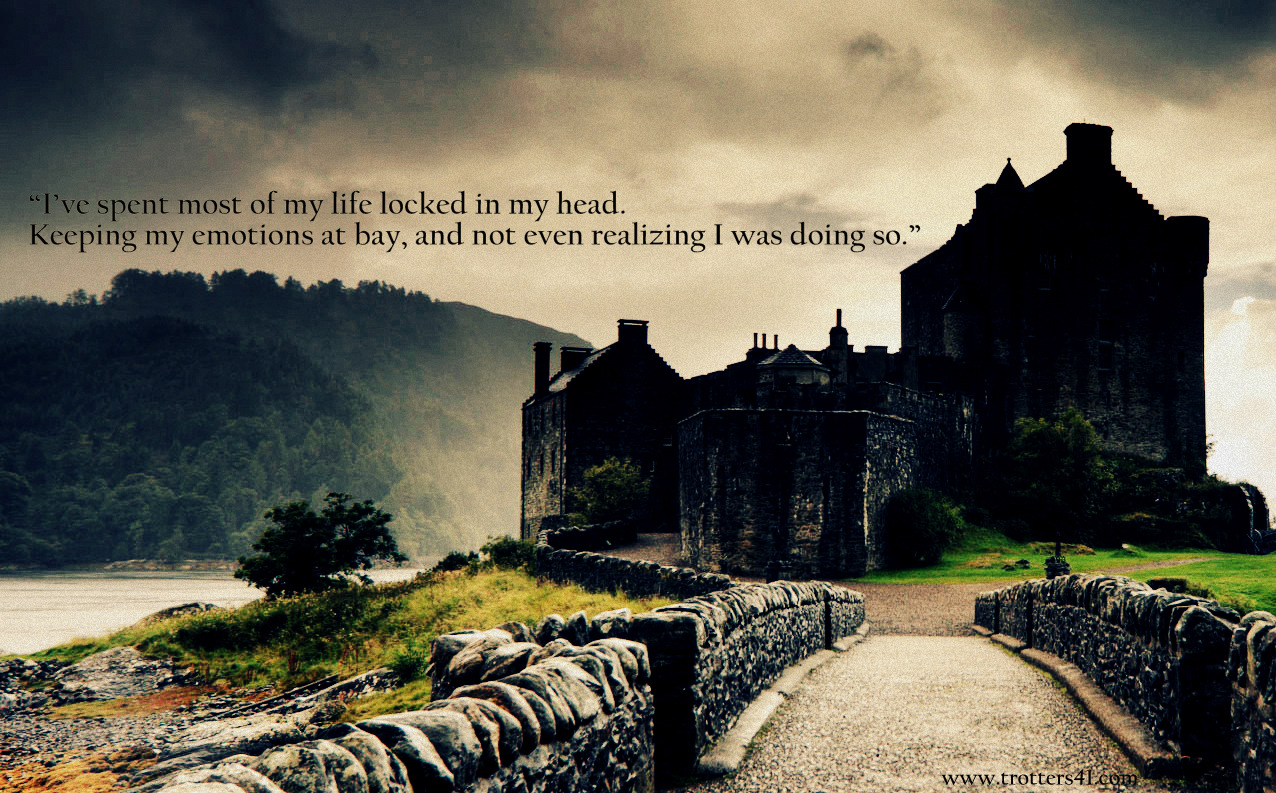
I’ve spent most of my life locked in my head. Keeping my emotions at bay, and not even realizing I was doing so.

I still do this, even though I know by now what’s going on inside of me. I can feel tears rising up inside me, begging to be poured out. But I shove them down and don’t engage.

I swallow the lump in my throat. I blink back the tears. I’m so good at this that I don’t even have to blink sometimes.

I can literally watch myself do this. It’s like an out-of-body experience. I can say to myself,“She’s locked in her head right now, refusing to deal with those pesky emotions. Why is she so stubborn??”

Why? Because emotions take time. They take energy. And after I engage my emotions, I seriously need a nap. So it’s easier for me to detach from them. It’s easier to ignore them.

It might not be easier in the long run. But in the short run, it’s certainly faster. Because I’ve got things to do. People are depending on me. I can’t take the time to deal with this. Crying won’t help my situation.

No, crying might not help my situation. But it might help me. When I’m done crying, my problem might not be better, but I am be better. My problem might not be solved, but I no longer feel like it’s insurmountable.

I don’t always let myself do that. I’m afraid that if I start crying, I won’t stop. I’m afraid it won’t fix my problem. And I’m all about solutions, people.

But. What if the tears are the solution? What if the tears allow my soul to say something that words can’t?

I need to feel.

I don’t always feel like feeling.

But I need to feel.

So today, if you’re like me, and you have a hard time accepting the fact that you’re human and that you have feelings in the midst of all the goals and tasks of life, I give you permission to feel.

And if it’s easier to shove the tears down your throat than to let them flow freely, I give you permission to cry. Cry as hard as you need, for as long as you need. Use all the tissues you need.

And if too much is going on in your life, and you don’t think you have the time to stop and cry, I still give you permission. After you’ve cried a little, or even a lot, you just might find you have the strength to carry on.

And when you’re finished, you can look up and remember that if I were with you today, I’d be sitting right beside you, with a tearful smile and a warm hug.

I promise.


 photo credit