by Elizabeth
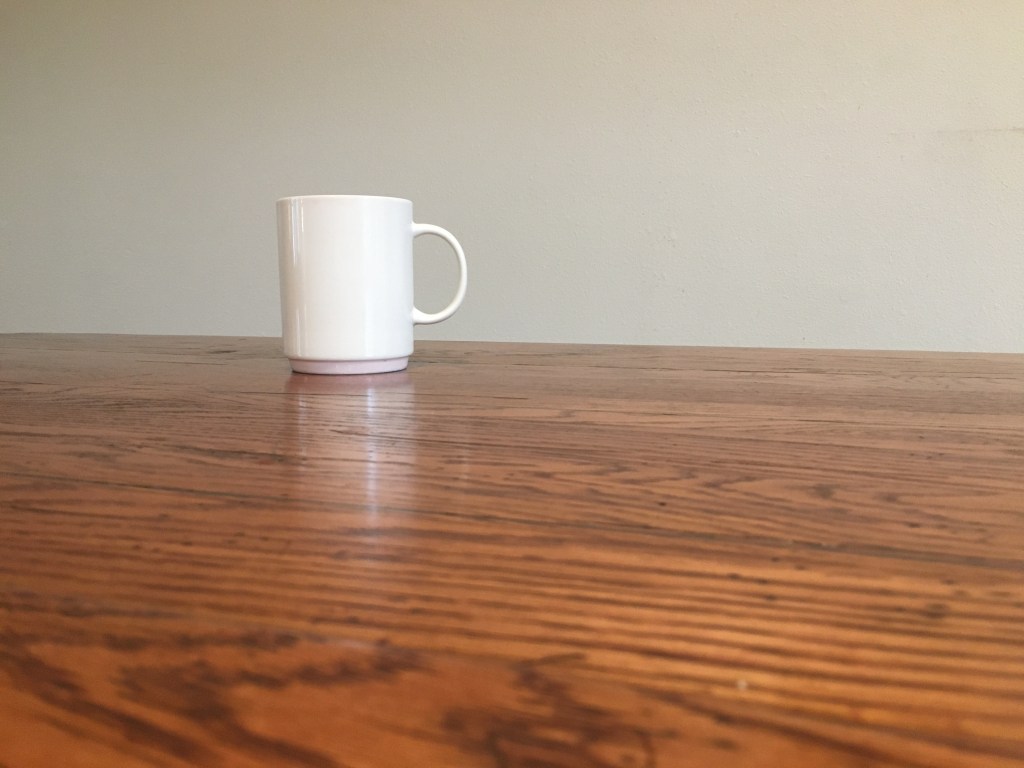
In 2006 when our lead minister and his wife became empty nesters and moved out of the church parsonage so that we could move in, they left their kitchen table. We were a young family who didn’t have a kitchen table and were grateful for all the other furniture they left too.
Over the next six years, our family grew around that table. We added babies, and we added memories. We created a family and ministry culture around that table, and when we left the States for Cambodia, my best friend took the table into her home.
It was full of memories for her too. Memories of late-night conversations when she would visit me because I was stuck at home with young children and a traveling husband. (I now try to return the favor to young moms when I can, going to them during naptime.) It was full of summer days with our kids eating snacks around the table and then playing in the yard or doing science projects together. She had to let me go, but she didn’t have to let that table go.
A new kitchen table was one of the first things we needed to find when we arrived in Phnom Penh in 2012. Some friends took us to a local furniture shop and helped us pick out both dining and living room furniture. The pieces were cheap, but they looked good enough.
Our first table soon fell apart. Huge flying termites bored holes into the table and migrated into our door frames as well. We could hear them chewing away at the wood. Jonathan tried to tear out the rotten pieces and kill the termites, but eventually he gave up the struggle. The table had to go. Its cheap, untreated wood had probably brought the termites with it from the shop in the first place. Next time we would be more careful.
In the meantime, we needed something to eat from, so we pulled out a spare metal round table, the kind that Khmer people set up at weddings. It took up a lot of space in our kitchen, but we discovered we liked the equanimity of a round table. Everyone could participate in family life the same. We were all the same distance from each other, and family life thrived. We decided our next table needed to be round.
Eventually we found a super heavy, high quality Khmer round table, and it took several delivery men to pull it up the two flights of stairs to our kitchen. We couldn’t host people around that table very well, but we couldn’t host people very well around our rectangular table either. Our kitchen was just too small.
We loved that round table. You can see it in lots of family photographs from our time in Southeast Asia. It became emblematic of Trotter family life, and after a few years we all signed our names under our places at the table.
Then covid happened. We returned to America early for a planned furlough, leaving our table and other belongings behind like usual. When we realized we weren’t going back, Jonathan did everything he could to rescue our Cambodian kitchen table, that centerpiece of family life. After multiple failed attempts with one company, we found a legitimate company that could transport our most precious belongings back to the States. It consisted mostly of books, pictures, and personal items, but we also shipped the table.
The shipment took several months, getting stuck in U.S. customs and requiring unexpected fees, but it eventually found its way to Joplin, where we were resettling. We pulled our heavy Cambodian table into our new home in December 2020 and breathed a sigh of relief that we had preserved part of our children’s childhood for them.
But it took up a lot of space here as well as there, and after a couple years Jonathan started dreaming about a table that could host more people. We weren’t engaging in much hospitality during the pandemic, but he knew he wanted to host people again. He wanted to live like we did at the parsonage, regularly inviting people into our home and our backyard. He wanted to live like he did growing up on an acreage in a small Kansas City suburb, where his parents frequently hosted people for evening bonfires, sunrise services, and hot cocoa. To do that, we would need a different table.
The family wasn’t sure how to take this news. We loved our round table. It reminded us of Cambodia. But I caught the vision. I knew he was right – we needed a different table if we wanted to invite people into our home and into our lives. But tables are expensive, and we needed everyone to get used to this new plan, so the idea sat for a year or two.
All along, he kept an eye out for wooden tables and benches (which seat even more people than chairs). Then one Saturday morning he saw a friend selling wooden benches online. He texted right away, explaining that he was looking for benches to go along with the long kitchen table he was still dreaming of.
She said they still had the table that went with the benches, the table they had raised their family around. The table they had invited dozens of people to over the years. This table had a heart for ministry. It had a legacy. Its owners decided to gift it to us.
And what a gift it was. To know that this table had seen years of love and care and fellowship, years of laughter and soul secrets and tears. And to know that we were receiving such an incredible heritage from these generous people so that we could do the same thing they had done, the thing we had been dreaming about doing again, was such a sweet gift from the Father.
So we rearranged our kitchen to welcome this new table, which came with two benches and two extensions for larger groups. Daily life doesn’t require the extensions, but we can already envision our married children and grandchildren gathering around this table someday.
Our Cambodia table still has a place in this new arrangement. We cut off both leaves, along with the rolling feet, and set this reduced mass in an open area near our kitchen. Now we have a place to put food and utensils when we host people, since our kitchen has next-to-no counter space. And this is getting into the geometry of it (which I find fascinating, though you might not), but a round table maximizes circumference (which is why it took up too much floor space in our kitchen) while minimizing surface area (which is why there was no room on the table for food). This new table solved all of our problems at once.
A few weeks later we got a taste of this new way of living. We tried out the arrangement with guests, and it worked splendidly. Everyone could relax comfortably, the kitchen didn’t get overcrowded, and we could all eat whenever we wanted. Our home feels like it’s meant to feel – open and warm and clear, and most definitely ready for guests.

 Jonathan & Elizabeth Trotter