Intensity and Intentionality {a note about marriage and motherhood on the field}

A while back our organization asked me to write a little something about marriage and motherhood on the field. At the time I wasn’t sure whether I wanted the article to be anonymous or not, as I obliquely discuss both my children and my marriage in it. So I waited awhile before deciding (with both Jonathan’s and my children’s approval) that this is something that I could share publicly. ~Elizabeth

~~~~~~~~~~~~~~~~~~~~~~~~~~~~~~~~~~~~~~~~~~~

Two words come to mind when I think about marriage and motherhood on the field: Intensity and Intention. After living internationally for over four years, my experience has been that everything about living overseas is more intense than living in your passport country.

It’s more physically intense. It’s wildly hot where I am, with no central air conditioning. Housework takes longer as there are fewer automated devices. Electricity and water are sometimes unreliable, and food and water supplies aren’t as clean. That meant that in the beginning especially, we were ill more often – and more severely – than we were back “home.” Life in another country is also more mentally and emotionally intense. Learning a strange, new culture and doing everything in a new language is hard work. You make mistakes and misunderstand things every day.

Anyone crossing cultures must deal with these changes and stressors, but as a parent, I also bear witness to the strain of crossing cultures on my children. They get annoyed by aspects of life here: it’s loud, it’s crowded, and we have no yard or playgrounds nearby. They don’t like the way local people touch them or stare at them, and they don’t particularly like the local cuisine (or at least, not all of it). Life here is transitory, and the friends they make often move in and out of their lives with little advance warning. On top of all that, they miss friends and family back home – especially grandparents.

In light of the intensity of missionary life, I have to be more intentional about marriage and motherhood. I need to care for my children’s hearts in a way I wouldn’t if we lived in America. Of course we have the same pre-school and pre-adolescent emotional turmoil that children and parents have in their home culture, but we also have more potential issues. I have to keep my own heart soft towards my kids, and I need to take the time to validate their feelings. This is difficult to do as I am already emotionally, physically, and spiritually stretched to the max myself. Practically speaking, it means I also need to carve time out of our schedule so they can communicate with friends and family back home (usually that’s through Skype).

Marriage is the same way: I have to be intentional about taking care of it. Simply surviving here takes more time and energy, so it’s tempting not to spend enough time on my marriage. But of course when I don’t spend time on it, my marriage suffers. The less time I spend on my marriage, the farther I drift away from my husband, and the harder it is to bring us back to together again. Likewise, the more time and effort I pour into my marriage, the easier and more fulfilling it is. It becomes life-giving instead of life-draining, as it does when I’m not nurturing it enough.

In order to pour so much time and energy into my husband and my children, I have to be intentional about filling myself up. I have to be vigilant about taking care of my spirit by getting up early to spend time with God. I have to be diligent about taking care of my mind and body by eating at regular intervals throughout the day, exercising four or five days a week, and going to bed on time. If I don’t do these things, I don’t have enough emotional energy to pour into my husband and children, who need me so much.

In many ways marriage and parenting on the field is the same as it is in my home culture, but its intensity level is higher. Missionary life simply requires more of me, and in order to match its intensity, I have to be intentional about taking care of both myself and my family. I have to daily turn my heart toward them and toward God. When I don’t, the consequences are great. But when I do, the reward is greater still.

This article originally appeared here.

a practically perfect porch

by Elizabeth

I’ve been getting back to my roots with a stroll through Lucy Maud Montgomery’s Jane of Lantern Hill. It’s as good as — or better than — I remember it. At age 11, it was my very first Lucy Maud book. I stayed up late reading it, hunched over the night-light in the bedroom on Forsyth Avenue.

download

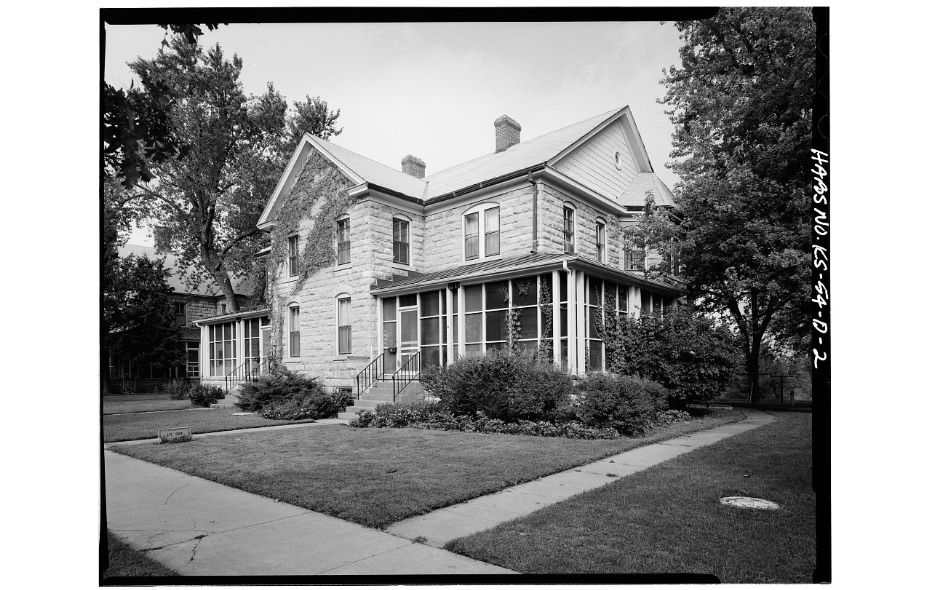
Forsyth Avenue, Fort Riley, Kansas

I also read it during daylight hours, swinging back and forth on the porch swing in the screened-in wrap-around porch (complete with ceiling fan if I remember correctly — quite the dream porch if you ask me). We were guests in that house, and its pantry gave me my first introduction to V8 juice, which I would drink while reading on the swing.

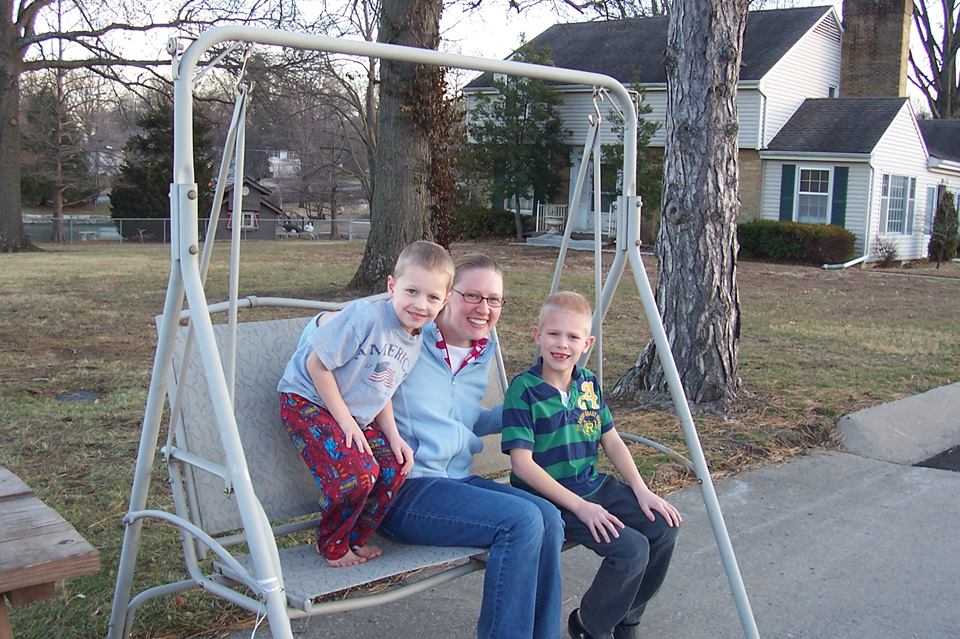
Years later, and just before his own father died, my husband gave me a covered porch swing as a surprise birthday present. He knew I’d always wanted one. And I cherished that gift. I would sit on it and watch my kids play in the yard. I would sit on it and read science magazines and natural childbirth books and home school catalogs. I would sit on it and talk to my husband during the at-home dates we would manage to steal after tucking our kids into bed — winter, spring, summer, or fall.

12804458_10156576007680621_63830042_n

Saying one last goodbye to the porch swing.

It was with great difficulty that I parted from that swing the year we moved to Cambodia. And to this day, when my man wants to show me he loves me, he buys me a can of V8 — the search for which can sometimes be quite the treasure hunt in Phnom Penh.

These are the legacies of Lucy Maud and of the innocent joys of a childhood well-spent.

~~~~~~~~~~~~~~~~~~~~~~~~~~~~~~

photo credit: Library of Congress

My blogging friend and fellow Third Culture Kid Marilyn Gardner encouraged me to take this TCK story, which was originally a Facebook status, and turn it into a blog post.

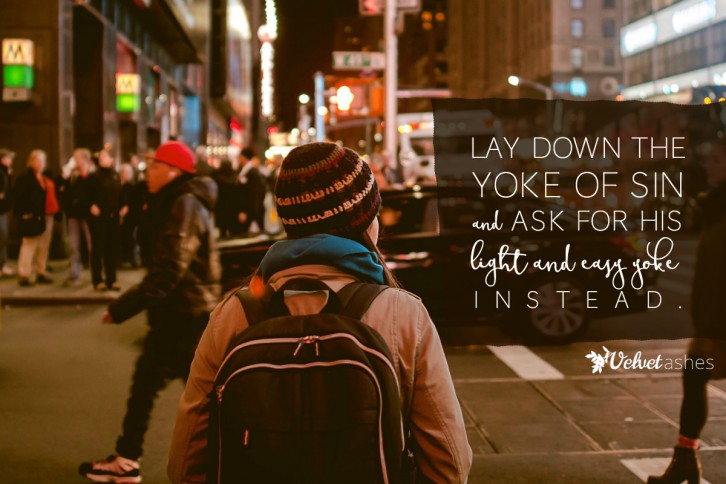
It’s Time to Trade the Yoke {Velvet Ashes}

I’m hosting The Grove at Velvet Ashes today. This is the first thing I wrote after finishing a “writing fast” a few weeks ago. (As an aside, completing this purposeful season of electronic quietness must have unleashed a torrent of words inside me, as evidenced by the sheer number of blog posts and Facebook statuses I’ve shared in the time since writing this post.) ~Elizabeth

lay-down-the-yoke-of-sin-726x484

At the beginning of this year I sensed God pressing the pause button on my writing. Not now, He said, not yet. I nodded and said OK. You’ve got stuff in your heart that needs to come out, He said —black, tarry, sticky stuff. I sighed and told Him I knew.

There was a stronghold in my life, a particular set of sins I’d been unequally yoked to. So I stopped writing and started working hard with God instead. Except I wasn’t always working with Him; sometimes I was working against. I complained, I reasoned, I argued. I contended that I was right and He was wrong. I kicked against those goads, oh yes I did.

Until one morning this month when breakthrough began, and the yoke began to crack. Later that day I sensed God lifting the ban on writing, almost as if to say, Ok, now you can start writing again, and THIS is what you need to write about.

Which is why I’m here today, taking a deep breath and walking to the front of the online support group we call Velvet Ashes. It’s why I’m steadying my feet, looking into your lovely virtual faces, and announcing that I’m Elizabeth, and I’ve been yoked to bitterness. I’ve harbored unforgiveness in my heart. I’ve been very, very angry.

Finish reading this post here.

Authenticity is Not New

by Elizabeth

foots-73310_960_720

These days people toss around the words “authentic” and “vulnerable” as if they were brand new ideas. As if no one had ever experienced them before. As if they weren’t already there for the taking.

These statements sound strange to me when all along, I’ve been quietly receiving the benefits of authentic community and vulnerable relationships – and in the Church no less, a place people often complain they can’t find any community. And to further confound stereotypes, I’ve found this type of friendship even as a ministry wife.

I don’t think we need special buzzwords to validate our experiences. I’ve been inviting people into my home and into my heart for nigh unto 16 years. I’ve been developing real, honest, gritty relationships as long as I’ve been of age — as did my husband’s parents before me. And that was back in the 80’s and 90’s, before people began being vulnerable and authentic with each other (or at least before the words were trendy).

They invited people into their messy home to talk about their messy pasts and their messy relationships and their messy eating disorders. No one needed to validate them. No one needed to approve them. No one needed to give them permission. They simply lived, and they simply did fellowship the way believers have been doing it for thousands of years: open, honest, and real. In community. Before community was “buzzing.”

God designed us to have these kinds of relationships, and His people have been tasting of them for thousands of years. We need only look to Ruth & Naomi or David & Jonathan to realize this.

So when you develop relationships that are authentic and vulnerable, don’t delude yourself into thinking you’re doing something new or novel. Rather, tell yourself that you’re doing something holy and good, something God created you to do, and something that brings Him pleasure.

May you remember that you stand on holy ground when you partake of the ancient practice of community. May you honor the memory of friends who have walked with you into authenticity and vulnerability in the past. May you lift your hands to heaven in thanksgiving for the friends who are currently walking with you through the storms of life. And if through some tragedy you have never had your own safe and secure people, may the wind of the Holy Spirit blow some your way.

~~~~~~~~~~~~~~~~~~~~~~~~~~~~~~~~~

And because I’ve been feeling extra sentimental lately, here’s one of my favorite songs on fellowship, from the dark ages of the 1990’s and sung by the group Acappella.

~~~~~~~~~~~~~~~~~~~~~~~~~~~~~~~~~~~

Other posts in the Church series:

Hungry for Community

“Me Too” Moments

On Not Being the Casserole Lady

Dear American Church

I am a Worshipper

I am a Worshipper

by Elizabeth

RealWorship

~~~~~~~~~~~~~~~~~~~~~~~~~~~~~~~~~~

I will sing to the Lord as long as I live. I will praise my God to my last breath.

Psalm 104:33

~~~~~~~~~~~~~~~~~~~~~~~~~~~~~~~~~

I was nine years old when I attended my first week of Bible camp. I came back singing. The preacher’s daughter (who provided my transportation) told my parents this story about our four hour return trip: if I wasn’t singing, I was sleeping, and if I wasn’t sleeping, I was singing. And I’ve been singing ever since.

Years later it became a sort of joke in our youth group that “Let’s sing!” was all I ever proposed doing. And sing we would. Our church building had a back stairwell where the sound of our voices reverberated particularly beautifully, and when we wanted to sing, that’s where we would go.

I remember learning new worship songs at the Tulsa Workshop. We still used overhead projectors back then. Nowadays we have Zoe Group for teaching us new acappella songs, but when I was a teenager, the only group singing acappella worship songs was Free Indeed, and boy was I in love. They still produced cassette tapes back then. I remember collecting those tapes and singing my little heart out to and from school in a massive maroon Mercury Sable.

I was always singing. I took voice lessons. I was in choir at school. I sang in the shower. I joined the church youth group choir (Go CYC!). I wanted to be like my singer/songwriter hero Twila Paris — though this probably had more to do with my pride than anything else. In college I sang on the worship team at our campus ministry, but after a couple years of singing into a microphone, I quit. I just couldn’t shake the feeling that my singing up front was too much about ME.

I may not sing on a stage anymore, but I can’t get enough of worshipping God through song. It’s one of the strongest ways I relate to God. I crave it, whether it’s in a large group with modern worship anthems, or a small group singing “camp songs” around a fire, or by myself, picking out simple hymns on the piano or blaring worship music through my tiny purple iPod shuffle.

Worshipping in song is still my favorite part of a Sunday (or anyday) service. It’s where I most often and most consistently meet God. It’s what takes me “past the outer courts into the holy place,” and I can’t get enough of it. I get crazy excited singing songs about God’s worthiness and holiness, whether it’s Jesus Culture’s “Alleluia,” David Brymer’s “Worthy of It All,” Brandon Hampton’s “There is Only One Found Worthy,” or Kari Jobe’s “Forever.” Worship never gets old for me.

We preach to ourselves through our worship music. Laura Hackett Park puts it this way: “Sometimes you gotta sing your way into the truth.” Singing the truth tends to penetrate my heart much faster than someone simply instructing me — that’s especially true if I’m in a spiritually resistant phase. Singing is more participatory than preaching, and if feels safer too, as though I’m choosing to believe and obey instead of being ordered to believe and obey. A song might send the same message as a sermon, but it speaks to my heart instead of lecturing to my head.

Worship music opens the door for hearing God’s voice. That’s why we must make space for worship in song. We have to take the time to let the words sink deep into our souls and allow God to speak to us there. Some of the most important things God says to me happen in worship. Weird, unexpected things happen to my attitude. And they are holy moments, these times when I invite God into my heart in order to change it.

I’ve come to realize that my role in calling believers to worship may not be through “my” music or “my” singing, but it will be through sharing my experiences in worship. It will be through encouraging the Body not to neglect both private and public worship.

I may never be a worship leader or lead singer the way I used to dream. But may I always and ever be known as a Worshipper. May I be someone who calls people to worship. We must be a Church full of worshippers. The world needs to see us loving God with all our heart, soul, mind, and strength.  And honestly, when we worship? It’s just a little taste of heaven.

So I will be a worshipper. I will worship alone, in the secret place, and I will worship corporately, with other believers, and I will call the saints to worship even more deeply than before.

I will be a worshipper.

~~~~~~~~~~~~~~~~~~~~~~~~~~~~~~~~~

Other posts in The Church series:

Hungry for Community

“Me Too” Moments

On Not Being the Casserole Lady

Dear American Church

Authenticity is Not New