Ghosted: An American Story by Nancy French. Nancy is married to David French, whose work I’ve been reading for years. Like her husband, she’s absolutely in love with God, and I so enjoyed getting to know her. Her salvation story was incredibly moving, but the entire book was a page turner. And like any good writer, Nancy waits for the very last page for the “turning.” I won’t ruin it for you. Content warning: numerous discussions of childhood sexual abuse.
If you want a taste of the book, watch/listen to this interview with Russell Moore. But honestly, as much as I love Russell Moore, the book is way better than the interview.
Escaping Enemy Mode: How Our Brains Unite or Divide Us by Jim Wilder, PhD psychologist, and Ray Woolridge, retired U.S. Army Brigadier General. This book changed my brain and my life, and I think it has the power to change the church and the world. It’s all about “refriending” or strengthening and repairing relationships, which seem weak and distressed society-wide, especially since the pandemic.
There’s a lot of brain science in this book that I couldn’t keep up with, but the main point is that there are three types of enemy mode: simple, stupid, and intelligent. Simple enemy mode occurs when we don’t have the “relational circuits” in our brains turned on or warmed up. Basically, we’re not paying attention to the people in our lives. This can be relatively straightforward to resolve.
Stupid enemy mode happens when we get angry and say and do dumb things in our anger. Instead of our brains being “too cold” as in simple enemy mode, in stupid enemy mode, our brains are “too hot.” Calming techniques can help with stupid mode. Although people don’t intend to hurt others in these two modes, a lot of relational damage gets inflicted.
Intelligent enemy mode is different. In intelligent enemy mode, a person is paying attention and staying calm but using the relational data they have to hurt people on purpose. It’s harder to heal a brain in intelligent enemy mode, particularly since those people don’t generally want to escape their enemy mode. In my experience, however, most of our daily interactions are with simple and stupid enemy modes–and the good news is that there’s so much we can do about this!
Pro Tip #1: Reading The 3D Gospel: Ministry in Guilt, Shame, and Fear Cultures ahead of time will enlighten the experience. Dr. Wilder shows how honor-shame really does permeate all of American culture. I recommended The 3D Gospel by Jayson Georges in June, and it’s much shorter and more digestible than Escaping Enemy Mode.
Pro Tip #2: If you don’t understand the brain science in this book, skip it and read the stories and the solutions. I think this book has the power to change the church and change society. Spread the word!
Christianity Today. Not a book but a periodical, CT reimagined and redesigned their magazine this year so that the volumes come out less frequently, but the stories are tied together with an overarching theme. The changes make the magazine more cohesive and even more of a joy to read than before, touching on deep theological and emotional issues. I’ve subscribed to CT for close to a decade, and it has always strengthened my faith and pointed me back to Christ, but never more so than in the past few years.
A thousand generations falling down in worship To sing the song of ages to the Lamb And all who’ve gone before us and all who will believe Will sing the song of ages to the Lamb
Your name is the highest Your name is the greatest Your name stands above them all All thrones and dominions All powers and positions Your name stands above them all
And the angels cry holy All creation cries holy You are lifted high, holy Holy forever
If you’ve been forgiven and if you’ve been redeemed Sing the song forever to the Lamb If you walk in freedom and if you bear His name Sing the song forever to the Lamb We’ll sing the song forever and amen
Where would I run But to the throne of mercy Where would I kneel But at this cross of grace How great the love How strong the hand that holds us Beautiful, so beautiful
So here I bow to lift You high Jesus be glorified In all things, for all my life I am Yours, forever Yours
There is a King who bore the scars of healing There is a Son who came in grace and truth How great the love that carries us to kindness Wonderful, You’re wonderful
God here and now, be lifted high Right here and now, be glorified God of Heaven and Earth God who brought me back to life I am Yours, forever Yours
Out of the depths I cry to You In darkest places I will call Incline Your ear to me anew And hear my cry for mercy, Lord
Were You to count my sinful ways How could I come before Your throne? Yet full forgiveness meets my gaze I stand redeemed by grace alone
I will wait for You, I will wait for You On Your Word, I will rely I will wait for You, surely wait for You ‘Til my soul is satisfied
So put your hope in God alone Take courage in His power to save Completely and forever won By Christ emerging from the grave
Now He has come to make a way And God Himself has paid the price That all who trust in Him today Find healing in His sacrifice
QUOTES
“The presence of God is the concentration of the soul’s attention on God; remembering He is always present.” –Brother Lawrence
“We live at the mercy of our ideas.” –Dallas Willard
“We are made for work as surely as we are made for rest. Because of sin, we make idols of both, bending them to serve our self-promotion and sloth. Our work does not fully satisfy, and our rest does not fully restore.
“But one day, we will labor again as we were created to labor. And we will sabbath as we were created to sabbath. Our labor will not frustrate, and our rest will not bore.
“For now, we can and should still do our jobs with all our hearts, as working for the Lord (Col. 3:23). When we see our labor as serving the Lord Christ, even menial tasks are transformed from work into worship. Our efforts become offerings, whether as expressions of our gifts or as acts of simple obedience.”
I thought I would drop in with a mini “favorite things” post. Here are just a few things I’ve loved over the past few months. ~Elizabeth
The Upgrade: How the Female Brain Gets Stronger and Better in Midlife and Beyond by Louann Brizendine, MD. I saw this book recommended on a menopause website and was intrigued. I bought it on Kindle and practically underlined the entire thing. I have several other books about taking care of physical health in perimenopause and menopause, but nothing ever addressed the mental work of midlife like this book. It was also very hopeful about the second half of life – something I both appreciated and needed.
Inside Out 2. When the puberty button was pushed and all those new thoughts and feelings appeared out of nowhere, I felt like I could relate to Riley. Like her, I thought I had all my belief systems, thinking patterns, and emotions under control, then bam perimenopause happened, and I had to recalibrate. It’s been a lot of work to ride this emotional roller coaster, but it has certainly made me more reliant on the Spirit — which is never a bad thing.
Abide by Aaron Williams. I was seeking discernment about a few things in my life this spring, and one Sunday while we were singing this song in church, I felt like God gave me the answers I had been seeking. A beautiful song that draws us to the heart of God.
Christ Be All Around Me by All Sons & Daughters. At one point this summer I was really craving a prayer that could ground me. I love the prayer of St. Patrick (and I love St. Patrick) and had a distant memory of singing his words once in a song, so I went searching for it.
Same God by Elevation. This song ministered to me after a specific time of prayer about my identity. With so much in my life in flux, I felt adrift. God was basically saying to me, “I’m the same God I always was to you, and you’re the same girl you always were to me. Nothing about any of that has changed.” And I still need this God, the same God who has shown up for His people for thousands of years, every day of my life.
This is Our God by Phil Wickham. I get goosebumps with every verse. I remember the walls, the prisons, the giants – I’ve faced so many of them in my life. But look at what God does! And what a joy to be able to tell the stories of His faithfulness throughout our lives.
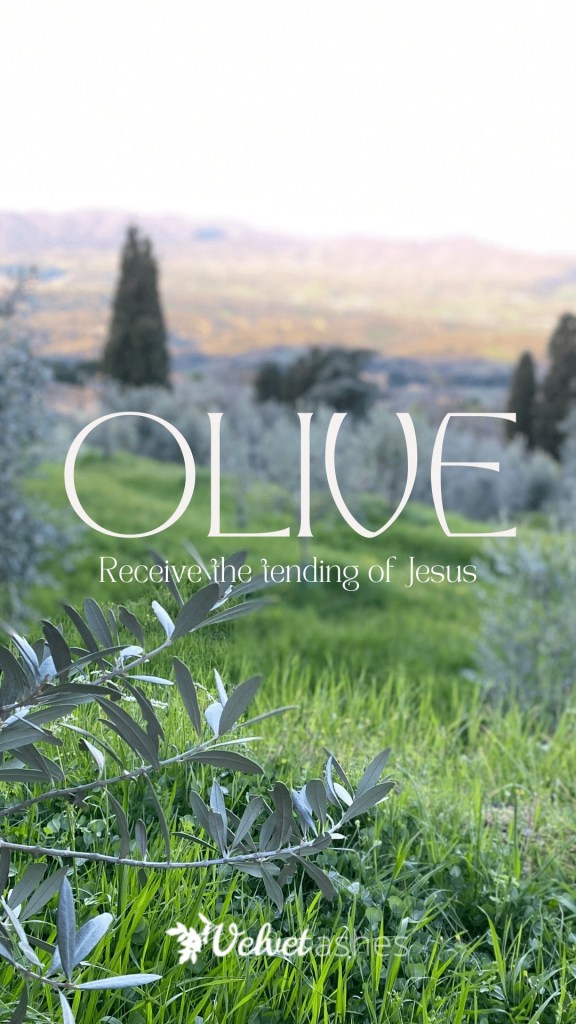
Olive Velvet Ashes Retreat image. This is the wallpaper on my phone now. The themes of this year’s retreat matched so much of what God was already speaking to me that I wanted to remind myself of it every time I opened my phone. Plus, those colors made me happy and calm.
This spring I read three of the best books I’ve ever read. One in particular I couldn’t stop talking about for weeks – but it wasn’t the sex book! I had to start with that word, though, because I knew it would grab your attention.
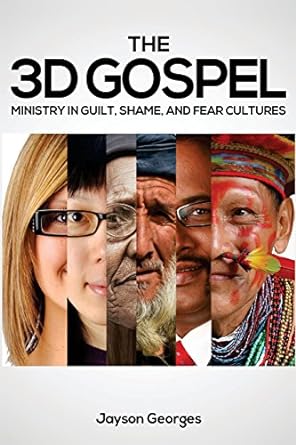
When Christine Paterson of FieldPartner recommended the book and mentioned that it was only $3.99 on Kindle, I figured I’d give it a try. I intuitively knew that American culture held more than just a guilt/innocence worldview and that shame/honor and fear/power comes into our thinking as well, and I was eager to learn the specifics of each worldview.
What I didn’t expect was for the book to so thoroughly rewrite my understanding of culture. I underlined nearly the entire book. At only 80 pages in paperback, there’s no fluff here. Every word seems essential, and every sentence sheds light on world cultures and their differing assumptions and thinking processes. I began to understand shame/honor and fear/power cultures more fully, and I began to see how the Bible beautifully addresses all three cultural concerns (guilt, shame, and fear).
Once my eyes were opened to this, I even began to see these three concerns addressed in most of our worship songs. In Western cultures we tend to tell the gospel story only through a guilt-innocence lens, and while that’s not wrong, it is incomplete. We look to God for help with our problems regarding fear and shame, but we don’t tend to bring these perspectives into our telling of the Gospel story, and this hinders our spiritual growth.
Thankfully, we can offer people a more three-dimensional gospel, one that has the power to redeem their day-to-day struggles with fear and shame, whether in our passport culture or a host culture. God knows the human heart and has offered a solution for all our problems in Jesus Christ.
This book made me fall in love with God all over again.
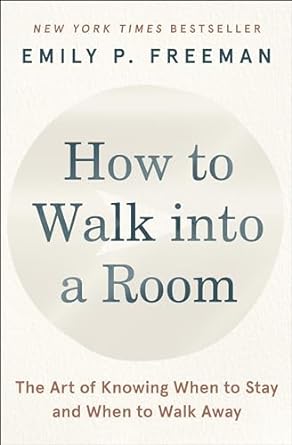
I remember resonating so deeply with Emily’s podcast episode, “How to Walk Out of a Room,” a couple years ago. The episode was mercifully devoid of details so that her principles could apply to all sorts of situations. When I heard she was writing a book based on that episode, I knew I would want to read it.
Emily is a spiritual director and has a master’s degree in spiritual formation, and she has a way of walking with people in discernment that is quiet and calm. She offers a “non-anxious presence,” as they say in spiritual direction circles. (Full disclosure: I’ve been meeting monthly with a spiritual director for about the past year, and it’s been a huge part of drawing my heart back into conversation with God after some dry, lonely years.)
I had a feeling this book would be important, and so I decided not to mark it up but to leave it empty and, in a way, sacred. Instead, I would rewrite meaningful sections in my journal. This helped slow me down and really savor Emily’s words. It helped me process the past, it helped me learn how to make better decisions, and it gave me peace in the decisions I was making. Then one day I looked around and realized I was making decisions much more easily than I had in the past, even small daily decisions, and I had to wonder if this book had something to do with it.
The thing I love about this book – and that sets it apart from other books purporting to help people recover from restrictive religious environments and explore a more expansive relationship with Christ – is that Emily gives tangible steps people can take to process the past and discern their present and their future. To walk with Emily is to learn together how to listen to God.
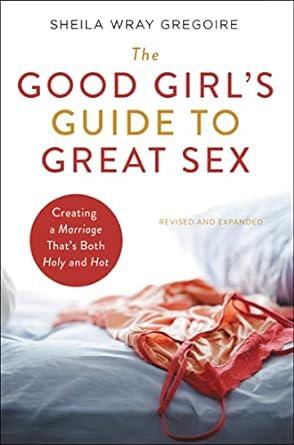
This is the book every woman needs to read before she gets married – or after, if things in the bedroom aren’t working, whether she got married a year ago or 30 years ago. Sheila co-wrote The Great Sex Rescue with two other authors, and it’s a great research-based book that helps people untangle their unhealthy and unbiblical beliefs about sex, but The Good Girl’s Guide really gets into practicalities.
I heard it recommended by a Bible college professor who teaches classes about sexuality, and I wanted to check it out myself. There was an earlier version of the book, but just this year it was revised and expanded, so I read the revised version. This is the book I will give to my daughters when they are engaged or newly married. I still recommend Aanna Greer’s Darling: A Woman’s Guide to Godly Sexuality for those who are quite innocent or naive about sex and their bodies, but Sheila’s book is a necessary follow-up.
Sheila, along with her pediatrician husband, also wrote The Good Guy’s Guide to Great Sex: Because Good Guys Make the Best Lovers. I haven’t read that one, but I’m assuming it’s good because that same Bible college professor recommended it and because it’s from an author I trust.
I hope these books will help you or someone you love.
It’s been about a year since I published one of these roundups, so buckle up! There’s a lot to talk about. From the best missions books to the Duggar documentary to menopause, married sex, and toxic masculinity, it’s all in here. ~Elizabeth
BOOKS
Magic for Marigold by Lucy Maud Montgomery. I’ve loved Lucy Maud since I was in sixth grade reading Jane of Lantern Hill on a porch swing with V-8 in hand. I even dressed up as Montgomery for a middle school language arts assignment. But I’d never heard of Magic for Marigold until last year. It was absolutely delightful (and cheap on Kindle!). When I got to the last page, I was ready to begin all over again.
And I think I’ve mentioned this before, but I like to read Montgomery’s The Blue Castle about once a year. It’s also cheap on Kindle and well worth the read if you’ve never experienced it. (I love to read from my Kindle before bed; it doesn’t have the bright blue lights to keep me awake, and I don’t have to worry about a book falling on my face or about flipping the book from side to side as I read.)
Mere Motherhood by Cindy Rollins. This was perhaps my fourth time through the book and my first as a parent of adult children. Somehow Cindy speaks to the moms of littles, middles, and bigs all at the same time. Each successive reading has been better than the previous. I wrote more about Mere Motherhood here, so be sure to check that out if you’re interested in Cindy or her book(s).
Facing Fear:The Journey to Mature Courage in Risk and Persecution by Anna Hampton. I loved Anna’s work on both witness risk and dysfunctional family systems so much that when I found out she was writing a new book, I practically begged her for the opportunity to read an advance copy and endorse it. This book specifically focuses on facing the fear that comes with living in “witness danger,” but the Biblical teachings in Anna’s book will help and encourage any believer who deals with fear, even one who doesn’t live in danger or risk. Here’s my official endorsement of the book:
“Facing Fear is a book for all believers. Author Anna Hampton dives deeply into the Hebrew and Greek words for fear and courage, explores the neuroscience of fear and attachment and their implications for our relationship with God, and shows us a better way to respond to the grief and suffering of others through her compassionate treatment of the wife of Job. For those living in dangerous situations, she also offers a roadmap for assessing risk and discerning the next right step. Facing Fear offers comfort, courage, and a way forward even in the darkest of circumstances.”
The Missionary Mama’s Survival Guide: Compassionate Help for the Mothers of Cross-Cultural Workers by Tori R. Haverkamp. Tori was my first book coaching client to reach publication. And while I’m super excited for her and so proud of the book she has produced, her message also moved me on a deep heart level. Tori helped me understand how hard it was for my own mom to be separated from family (those grandkids!) for so long. Reading Tori’s book also inspired me to host more pieces from parents of missionaries at A Life Overseas; this has historically been a missing part of the missions conversation.
You can read an excerpt from my favorite chapter at A Life Overseas. Even though I’m only launching my kids to college and not the mission field, I still relate to what Tori writes in that excerpt. And I love that she’s not afraid to talk about menopause or midlife (more on menopause later!).
She Deserves Better: Raising Girls to Resist Toxic Teachings on Sex, Self, and Speaking Up by Sheila Wray Gregoire, Rebecca Gregoire Lindenbach, and Joanna Sawatsky. I don’t know how they did it, but the authors of The Great Sex Rescue have managed to create another gem for the modern church. Each page is packed with Biblical and thought-provoking commentary, along with data analysis (which the scientist in me loves). If you grew up in the church and sometimes wonder about purity teachings that, though well-intentioned, placed a disproportionately heavy burden on the backs of girls only, while giving boys a pass, you’ll be interested in this book – especially if you have daughters yourself.
Gregoire, Lindenbach, and Sawatsky produce theBare Marriage podcast, which unpacks a lot of the ideas in both The Great Sex Rescue and She Deserves Better. Importantly, they discuss the fact that evangelical women have much higher rates of pain with sex. This can be traced back to the obligation sex message, the idea that women “owe” their husbands sex whenever they want it. But in the Bible, in both the Old and New Testaments, sex in marriage is painted as something that is mutually pleasurable. So if we’ve got pleasure for the husband and pain for the wife – or even pleasure for the husband but no pleasure for the wife – that is not how God designed sex in marriage to work. If this is your situation, please know there is help available. You can see a counselor, a physician, and/or find resources for female pleasure on Gregoire’s site.
REFLECTION & CONTEMPLATION
Aviva Romm (a midwife, herbalist, M.D., and expert on all things healthy living) on perfectionism.
This article (if you can access it) reflects even more deeply on masculinity in society. I found the discussion to be nuanced and well-researched. There are a number of reasons masculinity is in crisis in our society, and we need solutions and role models other than the voices pushing toxic, abusive forms of masculinity.
Shiny Happy People, a documentary about IBLP and ATI, the homeschool group my husband Jonathan grew up in. We found it to be both highly accurate to the experience and empowering to survivors. WARNING: the subject matter begins dark and only gets darker throughout the episodes. So if you’re not in the mental space to watch it, please feel free to give it a pass.
If you are in a place to view the documentary, the Aftershow is also worth watching. There’s good news here: you don’t have to reject Jesus or even the church because of the false teachings in IBLP-adjacent groups. Gothard and other teachers twisted Scripture to control people, and it distorted many people’s view of God. But there’s hope – we can find God outside fundamentalism. Alex Harris was particularly well-spoken in the follow-up interview (yes, THAT Alex Harris – co-author of Do Hard Things and brother to I Kissed Dating Goodbye’s Joshua Harris). So if you watch nothing else, skip to the second segment at 23:15 and watch only the parts where Alex talks.
FULL DISCLOSURE: There was a time a few years ago when I wanted to reject everything I had ever believed. I wanted to be an atheist and was about to give up on God. Not believing in God seemed like a less painful option than believing in the God some people around me were preaching. I had to do some hard soul searching and some hard seeking after God, and eventually I found Him again.
What I know now is that I wasn’t chafing against Christ himself, but against Christian nationalism and other forms of cultural Christianity, such as those depicted in Shiny Happy People. It took me so long to untangle man-made religion from the God of the Bible.
I wanted to say this here in case any of my readers are in a dark place right now. It’s ok to be where you are. It’s ok if you find yourself rejecting human religion and desperately searching for something more. It’s ok to respond out of pain. It’s ok to not understand everything. It’s ok to take time in the valley — there’s no need to rush. What I want you to know is that God is still with you and that it’s possible to find God again.
HEALTH & LIFESTYLE
Ballet class. I’m still attending ballet class and finding it to be a good workout. Like any good workout, it is both challenging and relaxing. The teacher added a tap class this summer, so I’m getting back to my roots. (I took both ballet and tap as a child, but I wasn’t very good.) These days I’m working hard on my technique and enjoying the process.
DISCLAIMER: I am not a doctor or medical practitioner. I am just a woman living in a 40-something body who still wants to be happily married to a man in a 40-something body. The things I’m writing about below are things that have helped me, but do your own research and talk to your own doctor.
At first I wasn’t sure if I wanted to talk about this, but I’ve talked about everything else in life, and neither Jonathan nor I have shied away from talking about sexuality, so here goes: Hormone therapy has been life changing for me.
I never thought I would say that. I never thought I would use hormones. I was into natural living, and besides, everyone knows hormones are dangerous. The Women’s Health Initiative proved that in 2002, right?
But the more I looked into solutions for perimenopausal and menopausal symptoms, the more I became convinced that not only is hormone therapy safe, but it also reduces the risk for heart disease, osteoporosis, and dementia (diseases that increase after a woman enters menopause). And of course, hormone supplementation reduces the bothersome symptoms of perimenopause and menopause.
I wanted to manage my symptoms as naturally as possible for as long as possible, but my symptoms started getting worse this year, and I was determined not to walk out of my midwife’s office without a prescription. Thankfully we had discussed options in the past, so when I told her things were getting worse, she whipped out that prescription pad immediately.
My symptoms improved almost overnight. Hormones are like magic.
I don’t share all of this TMI just for the sake of oversharing. I want this information to help someone. So first of all, if you’re in your late 30s or early 40s, you might be experiencing symptoms of perimenopause. That’s because your hormones can start shifting up to 10 years before your periods actually stop.
So what does perimenopause look like? It might look like worsening anxiety or PMS. It might look like heavier or more painful periods. It might look like sleeping problems or brain fog or increased irritability. It might look like frequent urinary tract infections or pain during sex. It might look like hot flashes or a sudden gain in weight, especially around the middle. Your mind and your body just aren’t working the way they used to, and these hormone changes might be affecting your relationships.
But we don’t just have to suffer through the symptoms, even in perimenopause. There are a number of safe, effective, inexpensive, FDA-approved formulations of body identical (bioidentical) hormones, so if your symptoms are feeling more and more unmanageable, please talk to your doctor, midwife, or nurse practitioner about your options.
Importantly, be aware that there are local estrogen therapies to treat the genitourinary symptoms of menopause (whether that’s dryness or pain with sex or recurrent urinary tract infections), and these medications are not absorbed systemically. For more information on local estrogen therapy (usually in the form of a cream, tablet, or ring), see: Dr. Kelly Casperson or Dr. Rachel Rubin (both urologists). A woman’s quality of life matters. Her sex life matters too. Hormones help with both.
I still do a lot of lifestyle interventions to stay as healthy as possible, especially when it comes to diet and exercise – because there are certain changes with menopause that hormones can’t fix, such as loss of muscle and increased insulin resistance. The following authors have helped me on my journey:
1. Lift heavier than before. It’s harder to build and maintain muscle in midlife and beyond, but we need muscle to keep our strength and our balance and to manage our metabolism and blood sugar. This motivated me to buy a heavier set of dumbbells.
2. Eat more protein. We need more dietary protein as we get older because our bodies aren’t as good at building and repairing muscle. Protein also helps us modulate our blood sugar. This motivated me to increase my protein intake.
3. Do more interval training (especially high intensity interval training, or HIIT). Interval training is kind of hard, and I don’t always like it, but I gave it another try and found that I actually do like the way it makes me feel.
4. Stretching, mobility, and balance are more important than before. Honestly I’ve always skipped stretching and core work because they were SO boring. I’m trying to adjust.
The Galveston Diet by Dr. Mary Claire Haver (also check out her YouTube channel, which has a wealth of information). One of the main things I’m learning from Dr. Haver is the importance of intermittent fasting. As women get older, the hormone shifts of perimenopause and menopause cause us to be at higher risk for insulin resistance, metabolic syndrome, and diabetes. Intermittent fasting, or time-based eating, is one way to reduce our insulin resistance. Humans are designed to eat during the daytime and not eat at night, but modern life with its electricity and constant streaming capabilities has interfered with this pattern. Intermittent fasting honors it. Intermittent fasting doesn’t have to be extreme – Dr. Haver doesn’t recommend going over 16 hours of fasting. Just go at least 12 hours without eating at night: it’s the way humans used to live.
Like Stacy Sims, Dr. Haver also recommends increasing our protein intake in perimenopause and menopause. Actually, she recommends tracking all macro and micronutrients. I refuse to do this. It would be stressful and would take over my life. So I loosely aim for more protein in my morning and noon meals but stick to a plant-based meal for dinner, because I find I feel better and sleep better that way. And all the menopause experts say you need to get better sleep.
Cold brew coffee. I loved cream in my coffee and couldn’t imagine drinking it black. But one of the ways to go 12+ hours without eating is to drink your morning coffee black. I tried Dr. Haver’s tip of adding a pinch of salt to cut the bitterness, but it didn’t impress me much. The black coffee hurt my stomach, and my taste buds still cried out for cream. Then I tried cold brew. It’s so much smoother and richer than hot brew, and it never gives me a stomachache. I think this has something to do with the reduced acidity (though minor) in cold brew as compared to hot brew. It also tastes a lot better!
[I know, I know, we’re not supposed to consume caffeine at all, and a few years ago I had managed to wean myself off all caffeine. But these days I find I still need a little bit of kick in the morning, so I use a mixture of half caf and decaf in my morning coffee.]
MUSIC & SPIRITUALITY
The song “Wandering Day” from the Rings of Power series. Granted, the show wasn’t the perfection of Peter Jackson in the original Lord of the Rings, but it was good for what it was (something completely made up), and this song was breathtaking.
Chording. This year I’m trying to teach myself chording so I can play modern worship songs (and songs like “Wandering Day”) with lead sheets. I only took a year of piano lessons as a child, so my skill level is very low, but I’m still learning and enjoying as I go. Every few years I try to get back to piano, but this is the first time I’ve tried to learn chording.
Searching for song. I’m happiest when I’m singing. Some of you might remember my first email address, isingbunches@yahoo.com. What you might not know is that I fell in love with singing when I was 10, the summer I went to church camp for the first time. I’ve been told that on the three-hour trip home, I was either singing or sleeping. If I was awake, I was singing.
And I’ve been singing ever since. Some of you may remember me as the girl in youth group who was always saying, “Let’s sing!” And since we were in a cappella churches, we really could just sing anytime, anywhere. All we needed were our voices and our memories. (Excuse me a moment while I reminisce.)
All of this to say, I have to do whatever I can to get enough singing in my life. One of those things is playing the piano and singing at home, and another one of those things has been attending worship nights at local churches wherever I live. There were a couple international churches in Phnom Penh that hosted regular Saturday worship nights, and I tried to attend whenever I could. It was always such a rich experience with God.
Here in Joplin there’s a local church that hosts a worship night once a month. It reminds me of worship at our international church in Cambodia, the way the leader creates so much time and space to commune with God. I cried the first time I went to one of these monthly worship times. It felt so much like being in Cambodia. I can’t make it every month, but it’s been such a comfort to have the option of more worship through song.
Lent series on the saints and their different expressions of Christian spirituality. When I attended Ash Wednesday service in February, I saw an announcement for a teaching series on the saints and their various forms of spirituality. I was intrigued; I didn’t know anything about the saints or their spirituality.
I’m so glad I went each week during Lent. I would walk in, and the tension in my shoulders would start to unwind. I could breathe more easily. Father Ted just had a way of ushering us into a deeper connection with ourselves and with the Lord. I’m know I’m drawn to contemplative Christianity and am currently trying to figure out how to get more of it in my life. I’m considering finding a spiritual director; I think I would benefit from the guided prayer times. But whatever I decide to do in the future, I’m glad I spent this spring learning about the saints and their faith.
I haven’t published a Favorite Things post for over two years – not since the pandemic began – and I wasn’t sure exactly how to begin them again. But there were all these little things I wanted to talk about. Things that might seem superficial or insignificant but that help me enjoy life more, and those things are important.
There’s so much heaviness in the world right now; there has been for quite some time. I’ve always tended to talk about big, heavy things, but I don’t know how to talk about some of these things. I want to acknowledge the distressing things going on in the world right now (the war in Ukraine, the gun violence in the States, the difficult economy, the unpredictability of the pandemic, the continuing political divisions in my country). They are big, and they are important, and they weigh on me – as I’m sure they weigh on you.
But while we can’t ignore the heaviness, I also don’t want to ignore the little joys in life. So today I’m going to inject a little lightness into this blog with some of the things that I’ve been enjoying in my life over the past year or so. Who knows? Maybe this post will be the thing that will inspire me write again more frequently.
SKIN CARE AND HAIR CARE
Differen (adapalene) gel. For years I’ve been using 2% salicylic acid to care for my oily, acne-prone skin. Then I read about differin gel, which is the only over-the-counter FDA-approved prescription strength retinoid. Retinoids are a form of topical Vitamin A that are good for both acne and signs of aging. Differin is designed more for anti-acne purposes than anti-aging purposes, but it still does double duty. Of course, I have responsibly paired the adapalene with a good sunscreen to protect from further sun damage and a good nighttime moisturizer to counteract the drying effects of the retinoid. (These are both from Cerave and are both designed for the oily skin that I have.)
Highlights. I walked into a salon in February searching for myself. That’s a pretty big statement, so let me unpack it. The whole time I was in Cambodia, I didn’t do much with my hair. I kept it long and put it in braids, buns, or ponytails. The heat made it necessary to keep hair off your neck (except maybe once a year in December), and the constantly blowing fans that were supposed to reduce the effects of that heat made it necessary to keep hair off your face, too. Result: boring hairstyles. Additionally, over the decade that I lived in Cambodia, my hair turned from a lighter blonde to what my stylist would call a “dark blonde.” (In my mind, it was sooo dark, but she assured me it really wasn’t.)
So I walked into the salon looking for something different, something new – or was I really looking for something old? I didn’t know what the lighter color and shorter length was going to look like or feel like, but when my stylist turned me around to look at the back of my hair in the mirror, I nearly cried. I looked like the me I had always known. (30+ years is a long time to stay naturally blonde.) I did the highlights for me, but it turned out that my husband loved them too. Score one for Team Trotter.
Purple shampoo. Purple shampoo counteracts the brassiness/yellowness of blonde highlights and keeps them looking fresh. I use this about once a week, and it makes me happy.
Lather/Rinse/Repeat. The bleach used for blonde highlights can damage your hair, and I did notice more dryness and brittleness after getting the highlights. Then I started double conditioning, and everything is soft again. I don’t know why this works or why one application of conditioner isn’t enough. I only know that this does work.
Heatless curls. This solves two problems: damage from heating tools and a lack of time (or lack of commitment to the time it would take) to style my hair. I just sleep in a curling ribbon (robe-curl-style), and in the morning I take it out. Voila! I have curls. They loosen up throughout the day and become waves, but I’m happy with both. I do this once or twice a week and definitely on Sundays!
Silk pillowcase. I bought one of these to protect my skin and hair from excess tugging and pulling. At first I didn’t notice that much of a difference until one night when I had to sleep without the silk one. Ouch! Everything hurt. These are inexpensive and are a nice way to pamper yourself.
HEALTH AND FITNESS
Tempeh. I hadn’t tried tempeh because I just couldn’t get over the mental hurdle of fermented soybeans. (And also I had seen some photos of it, ew.) But since it’s such a healthy, high-protein alternative to meat, and since my family had gotten tired of tofu scramble, I needed some new recipes. And you know what? Tempeh is delicious, filling, and easy. We do Tempeh Bolognese, Tempeh Tacos, and Sweet and Sour Tempeh (which tastes almost like my Cambodian helper’s Sweet and Sour dish).
Roastaroma tea. I go through phases of really liking this tea and then not craving it at all. I’m currently in a craving stage. It’s bitter, like dark chocolate (I go for 90% these days, by the way), and it’s what made me realize that I actually like bitter. I think it’s one of the flavors God made us to enjoy, but our modern packaged food culture, with all its salt, sugar, and unhealthy fats, has dulled our appreciation for its unique flavor.
I also go in for Chai Green Tea from time to time, which gives the health benefits of green tea without the flavor of plain green tea, which for some reason I don’t care for. My favorite flavors are still probably peppermint and spearmint (I prefer spearmint, but it’s harder to find).
Daily walk. I’ve realized that life in Joplin, MO, as a homeschool educator and freelance editor is not as naturally active as my life in Phnom Penh, where I climbed endless sets of staircases and walked the streets frequently. So about a year ago I added a short one-mile walk to my day (Leslie Sansone anyone??). I go through phases where I get busy and forget, but I always feel better on the weeks when I consistently take a one-mile walk in the afternoon, before doing a harder workout after supper.
Step workouts/heavier weights. About the time I realized I needed more activity in my life, I also realized I needed to level up my exercise regime. I already had a step with risers, and I bought an extra set of risers to increase the step height. I already had 3 kg weights (6.6 lbs) from Cambodia, but I bought a set of 8 lb dumbbells from the local sports store. Each of these things has helped me increase my fitness and reduce my stress – because, let’s face it, exercise is more about happiness than about appearance.
In fact I have quite the ritual for evening stress relief. I exercise, I take my magnesium supplements, I take a relaxing shower, and I read in bed. I don’t know why, but reading in bed puts me to sleep pretty fast. I need to read a few pages of fiction (I’m currently in a P.G. Wodehouse novel) to put my mind to sleep, even if I’m already physically exhausted. This of course means it can take me a long time to get through a novel.
FAMILY MOVIE NIGHTS
One of my favorite things to do is introduce my kids to the movies I enjoyed as a child. They’ve enjoyed this tradition so much that from time to time they ask if I remember any other movies from my childhood that they haven’t seen. Here I’m highlighting the funny ones in alphabetical order (because it’s hard to choose a favorite, though Bejeweled and North Avenue Irregulars come close).
Bejeweled. A 1990s Disney Channel mystery movie. So hilarious (but also hard to find).
Candleshoe. A 1970s Disney mystery with Jodie Foster. May have initiated my lifelong love affair with “Greensleeves.”
Follow That Bird. A 1980s Sesame Street movie. Cleverly written to be enjoyable by adults and children alike, and impressive in its inclusion.
Freaky Friday. The 1970s Disney version, of course.
No Deposit, No Return. A 1970s classic caper movie, also by Disney. Utterly unrealistic but tons of fun.
Savannah Smiles. A 1980s B movie that is absolutely hilarious. Shares some similarities with No Deposit, No Return.
The North Avenue Irregulars. Another 1970s flick. A bunch of church ladies on a crazy adventure. My children know that to make me laugh, all they have to do is quote a random line from this movie.
VOCATION Stories Set Free. A year ago I didn’t have a business. Now I’m booked a month or two in advance. I didn’t believe in myself, but Jonathan encouraged me to put myself out there anyway. I’m glad I took the risk! I love my clients. I believe in the work they are doing, and I love reading their words and working with them to shape and smooth their stories. It is an absolute privilege to work with writers, and I’m thankful.
A Life Overseas. I continue to lead the missions website that I’ve been leading for 7 years. I love my writers, both new and known. I love receiving their submissions and sharing their true and beautiful messages with a larger community. I love helping them craft their words until they are just right. Readers still talk about how much they appreciate the articles, and the journey continues to be an exciting one (for example I’ve added several new writers this past year, and I’m adding a few more soon). For me this has been a very fulfilling ministry, one that I enjoy and one where I feel that my gifts are being used for Kingdom purposes.
Biologos and the Integrate curriculum launch (this is the one where I got to meet Francis Collins!!!). We talked about our unforgettable trip to D.C. on Facebook, but I never wrote about it here. A few years ago, frustrated with the quality of homeschool science materials, I started googling. I found the Biologos site and their pilot program for Integrate, a program that seeks to integrate quality science with a Biblical worldview. The truth is, you don’t have to give up good science to be a Christian, and you don’t have to give up Christianity to be a scientist. I have always believed this. Faith and science don’t have to be at odds. In fact, some of my greatest moments of awe and worship happen when I study science.
I applied for the Integrate pilot program and began piloting sample modules with my older children. Later when the curriculum was published and Biologos decided to throw a launch party for it, they invited me to come be a part of it. I felt out of my depth – nearly everyone there was a PhD scientist, and I was just this little homeschool mom with a stale bachelor’s degree in engineering. I can’t tell you what it did for my soul to be invited to spend time with this special group of people. For so long I have felt so alone. I couldn’t bond over a shared love of science with my Christian community, and I couldn’t relate to non-believing scientists on the deepest levels of reality. I was always hiding a part of me. But when I was with the Biologos people, I didn’t feel I had to hide anything. All parts of me were welcomed and accepted. And when we sang the Doxology together, I cried. I felt at home with them, even if for just a little while.
(Bonus: I’m heading to a homeschool convention in July to support the Biologos booth. I’m so excited!)
(Bonus to the Bonus: I might even get to meet Susan Wise Bauer at this convention.)
SPIRITUALITY
College Heights Christian Church – especially the New Creation Sunday School class. The believers in this class showed me that you can be faithful to the Scriptures without being corrupted by MAGA nationalism. They have restored my faith in the people of God, and I will be forever grateful for that.
My spiritual life really suffered over the last two years. When we returned to the U.S., I looked on in horror as American Christianity became infected with MAGA idolatry. I questioned everything I had ever known. It’s not like I hadn’t questioned things before. I had. I’d had plenty of faith crises in my life (and I’d written about them publicly), but this felt entirely different. Had I devoted my life to a religious movement that was only ever masquerading as biblical Christianity but was actually founded on an insidious quest for political power? I wasn’t sure I wanted my name associated with this political movement. It was some of the most profound pain I have ever experienced.
Today, I still believe Christianity is true – when it is unfettered by the base desire for power. In many ways it was the people at this local church who helped me believe it was possible to uncouple Christianity from power-hungry political movements.
But in addition to restoring my faith in faith, these people have welcomed us into their family. I felt very bruised and battered after losing Cambodia so suddenly and unexpectedly. Cambodia was my whole life. I’d never wanted that life, but after a few years, I fell in love. I didn’t know how to live without it. These people have gently taken care of our needs and showed me how to belong again.
After 20 years of sitting separately from my husband in church, it has been a relief to sit in the back row with my whole family and just be. No need to volunteer or minister to anyone. Just rest and recover. At the same time, it’s comforting to know that, when I’m ready, our church family has plenty of ministry opportunities for me to take part in. It’s a good place to be. (Oh, and the youth group has been great for our kids!)
LIFE
My house. A year and a half after signing the papers, I still can’t believe I got this amazing house. The yard, which is always wonderful, is especially beautiful right now. I have my own office. I have my own workout room. I have my own bathroom (this wasn’t always true in Cambodia). And due to multiple small miracles, we can actually afford this house, even in this tight economy.
My husband. He is still my best friend, and after 22 years I am more in love with him than I have ever been. We have two standing date nights a week. (Note: Date night doesn’t mean you have to spend money, although we sometimes do. Date night can be a walk in the neighborhood and coffee on the porch).
Years 18 to 21 were a strain on us. I had multiple health problems which interfered with our marriage; we repatriated unexpectedly to the States in the middle of a pandemic; and we self-isolated for longer than most to protect Jonathan’s health, which led to painful social isolation. Add in a faith crisis, and well, those were hard years. But we have found ourselves and found each other again since settling in this house, and marriage is good.
My self. When I look back over this list, I realize that some of the things I’ve done or am doing are about finding myself again. You change when you live overseas for a long period of time. You can’t help it. And when you come back, you’re different. You don’t know exactly where you fit, and you don’t know exactly who you are. For instance, I found that being an overseas missionary had become wedded to my identity in a way I hadn’t expected (especially since I never wanted to go in the first place!). Losing the expat life was a big loss and a big shift in my identity that I had to grapple with.
I think some of the items in this Favorite Things post have been about trying to find my place in my new life, about trying to figure out who Elizabeth Trotter is in this context. I was so unhappy for so long. It took me 12 months to truly accept that this was my new life, and 18 months to truly love it. So I feel like celebrating the seemingly little things that have helped me on my journey to love my new life in Joplin, MO. In the end, I think that’s really what this article was about.

 Jonathan & Elizabeth Trotter