Prayer Requests on Repeat

I’m asking for prayers for the Trotter family once again. It has been a difficult month. After Jonathan recovered from meningitis, we gradually eased back into our normal work and study schedules. Then we (excitedly!) welcomed my parents for a visit to Cambodia (and thoroughly enjoyed them).

But as strange as this may sound, Jonathan is fighting a massive ear infection. What started in the outer ear has progressed to something else. He’s got unrelenting ear pain and pressure, plus a fever, aches and chills, and occasionally that pain-induced nausea that he’s all-too-familiar with by now. He’s not sleeping much because of the pain. He’s on oral antibiotics, antibiotic ear drops, and over-the-counter and Rx pain meds, but he’s still not getting better. Is it good news that he’s not worsening?? (Oh, and our doctor friends tell us he will need to go to a clinic tomorrow if he hasn’t improved.)

This is discouraging for him, as he wants to work but is stuck in bed with intense pain. Much of the time I find him covering his ear with his hand. It is discouraging for me, as I watch my husband battle the most debilitating pain he’s ever experienced twice in the same month. When I signed up for this missionary gig, I always assumed that if anyone would get sick, it would be me. After all, I’m the one prone to migraine headaches and intermittent stomach pain, plus I’d heard so many stories of missionary wives having chronic illness/fatigue. I did not expect him to get sick.

Both our girls have fevers now and have not slept much the past 2 nights (which means that mommy hasn’t been sleeping much either). The kids are all complaining of ear pain to a certain degree, and everyone is sad that we had to say goodbye to the grandparents last night. This morning I told Jonathan that I never want to swim in the ocean again! (He would tell you it was the best break he’d had in a LONG time, though.)

We have been repeatedly told by long-term missionaries that we are in the middle of the hardest time of year, starting in October with Pchum Ben (Hungry Ghost Festival) and continuing all the way through the end of November with the Water Festival. These are big pagan celebrations, and as much as I prefer not to focus on this reality, dark spiritual forces do exist in this world.

We were told that there is more illness and more discouragement during these months. I have been vigilant in guarding my mind and warring for a good attitude since learning about this difficult season. (It’s a bummer that it corresponds to my favorite season in the U.S.) I have the hope that this difficult season will end this year, as it does every year.  I struggle against the sins that are crouching at my door; however, I have very little control over physical sickness, despite our best attempts at frequent hand sanitizing (ahem, ER nurse and germophobe wife). So please pray for us, both for our family’s health and for our spirits.

We are generally happy and healthy people, and I feel very needy to be requesting your prayers so soon after our last crisis. Yet we know we need them. I am confident in the prayers of the believers. On the last night of Pchum Ben, Hannah woke up 3 times, crying over her bad dreams. By the 3rd time, I finally got the hint, and prayed with her that her bad dreams would go away. After that she slept soundly till morning.

So here we are, once again, being quite honest with you, our friends and our family, about our need for prayer. We trust that you will answer our requests for prayer. But more importantly, we trust that God will answer the prayers themselves.
Market Day, Harvest Time

by Elizabeth

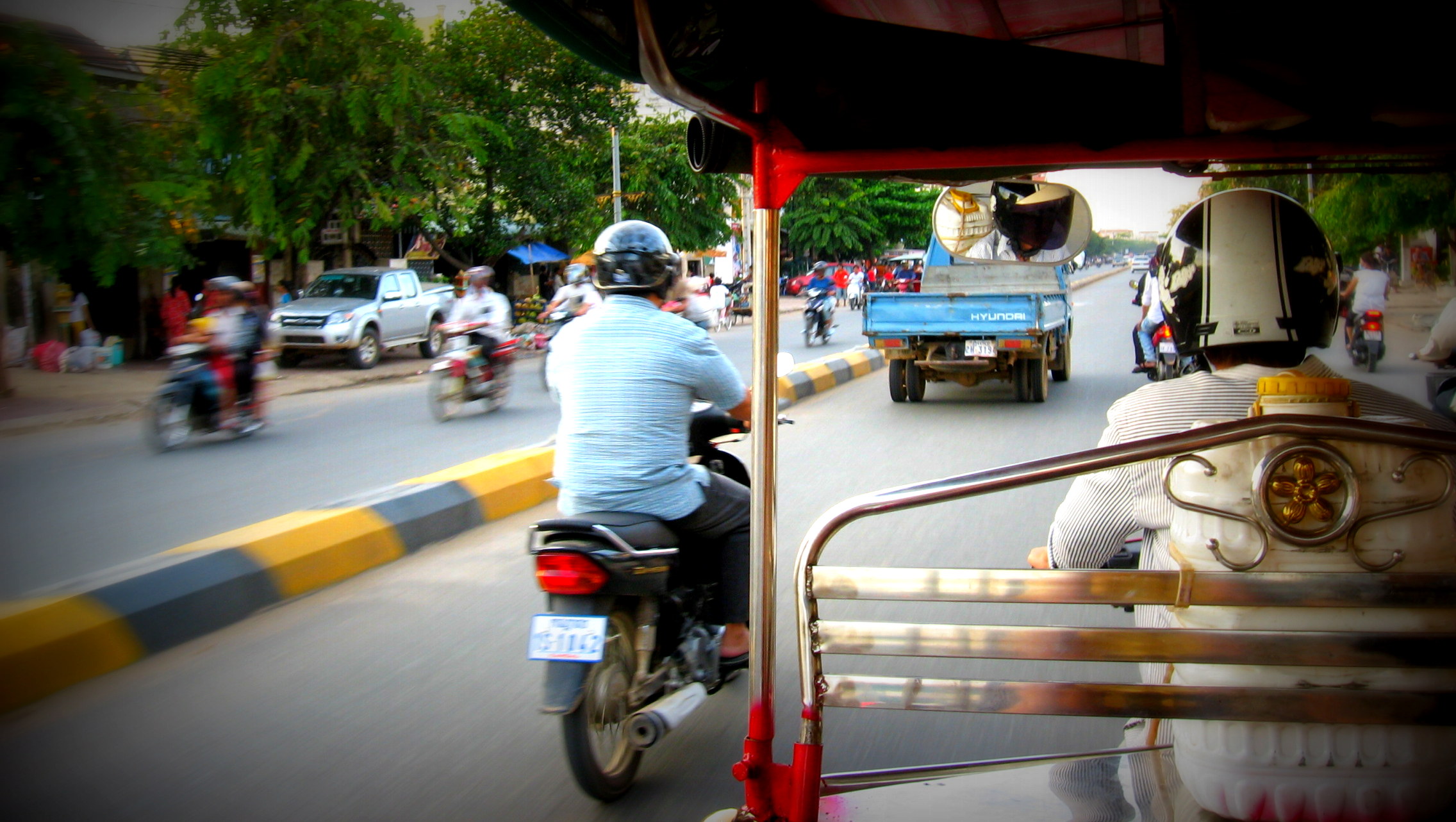
We recently decided that in order to minimize the time stress in our lives, I should make solo trips to the grocery store (instead of all 6 of us going). Because I don’t drive, I have to take tuk tuks. This week, after I return home and pay the tuk tuk driver, he demands more. I call Jonathan to bring me the extra 2000 riel I need (that’s only 50 cents, but I’m out of riel). Before he can bring it to me, the tuk tuk driver sighs, trudges to his moto, and drives away (possibly because I have already given him a fair wage??). Jonathan suggests that I walk to the drivers’ loitering place to give it to him.

So I do.

But I can’t find my driver. The other drivers tell me that he has gone home.  And I’m not sure, but I think they say I can wait for him. (I’m working in Khmer here.) As I stand on the street trying to decide whether to return home or wait longer, an older woman approaches me and begins shooting questions in Khmer. Am I a Christian? Do I go to church?  Do I know Christina, who is Catholic? I try to answer the questions, but that only leads to more questions. Am I Baptist? When do I go to church? Who do I go with? Lok Dtah, over there, he speaks English well, can I go talk to him? (Lok Dtah is the word for Grandfather, and although this man is her husband, that’s the respectful way to address him.)

So I follow her to meet Grandfather. He says he has been a Christian for 4 years; he no longer goes to the pagoda. He speaks to me in both English and Khmer; I speak back mostly in Khmer. I learn that it is Lok Dtah’s grandson who invited Jonathan into his home 2 weeks ago (before viral meningitis took over our lives). He also says he is a Christian and even wants to go to church with us. I never do figure out if the grandmother is a Christian. I am, however, gone long enough that Jonathan worries and calls to check on me.

During this conversation I smile pleasantly and behave as if everything is fine. I appear to believe their confessions of faith.

But there is a war in my mind.

We’ve learned that the entire structure of Cambodian society – for a thousand years – is built on corruption. Bribes. Cheating. Poor people seeking wealth, and seeking to use people to gain more wealth. Even if those people are Christian missionaries. Our training with Team Expansion teaches us never to allow money to be involved in church planting. But these people aren’t asking for money — or a job. They are simply giving me confessions of faith. How should I treat them? Shouldn’t I believe them to be Christians? Shouldn’t I treat them as Jesus instructs us in Matthew 13:

Here is another story Jesus told: “The Kingdom of Heaven is like a farmer who planted good seed in his field. But that night as the workers slept, his enemy came and planted weeds among the wheat, then slipped away. When the crop began to grow and produce grain, the weeds also grew. The farmer’s workers went to him and said, ‘Sir, the field where you planted that good seed is full of weeds! Where did they come from?’ ‘An enemy has done this!’ the farmer exclaimed. ‘Should we pull out the weeds?’ they asked. ‘No,’ he replied, ‘you’ll uproot the wheat if you do. Let both grow together until the harvest. Then I will tell the harvesters to sort out the weeds, tie them into bundles, and burn them, and to put the wheat in the barn.’” Then, leaving the crowds outside, Jesus went into the house. His disciples said, “Please explain to us the story of the weeds in the field.” Jesus replied, “The Son of Man is the farmer who plants the good seed. The field is the world, and the good seed represents the people of the Kingdom. The weeds are the people who belong to the evil one. The enemy who planted the weeds among the wheat is the devil. The harvest is the end of the world, and the harvesters are the angels.  Just as the weeds are sorted out and burned in the fire, so it will be at the end of the world. The Son of Man will send his angels, and they will remove from his Kingdom everything that causes sin and all who do evil. And the angels will throw them into the fiery furnace, where there will be weeping and gnashing of teeth. Then the righteous will shine like the sun in their Father’s Kingdom. Anyone with ears to hear should listen and understand!”

I am determined to fight the skepticism planted in my heart. I am committed to believing confessions of faith. I refuse to allow money to be an ingredient in church planting. But I will love my neighbors as myself. I will accept their testimonies. And I will certainly leave the judgment in the hands of the Son of Man.

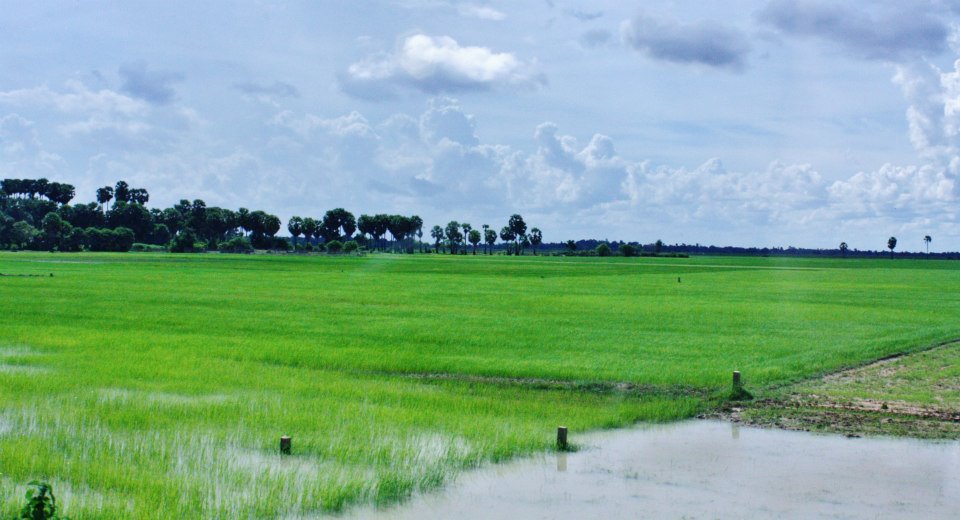
ricefield

Yuck Ducks and a Yay Day

Note: The following blog post discusses long-term unrelenting stress. I wrote it just before Jonathan became severely ill with viral meningitis. He was sick for over a week, and at times his high fever and extreme pain frightened me. (He’s not quite fully recovered yet.) Long term unrelenting stress can be evaluated numerically by something called the Holmes-Rahe Stress Scale. Stress is cumulative, and as it accumulates in a person’s life, the Holmes-Rahe score increases. When the score is high, a person’s risk for physical illness increases. The double whammy about stress and illness is that not only can higher stress levels lead to illness, but illness itself causes higher levels of stress. The fact that Jonathan’s illness delayed the publication of this post simply illustrates my point: we have been under greater stress lately.

———————————————

Long Term Unrelenting Stress: a phenomenon we learned about during mission training. Stress that simply refuses to let up. The little things — and big things — that put pressure on us in life.

Long term unrelenting stress has been appearing in our lives lately. It ranges from the mundane of ant armies invading my kitchen and laundry taking 4 days to dry completely, to the profane of living in a house with post-trafficked girls on one side and 30 institutionalized children on the other, to the insane of neighbors blasting their music at odd hours.

And lately we’ve felt the time crunch of Jonathan’s increased language study and my increased homeschooling responsibility. As he has increased his language hours, mine have correspondingly decreased, and I often feel embarrassed that my vocabulary, comprehension, and pronunciation skills are far below his. In fact, shop owners and neighbors usually tell me that this is so (as if I didn’t already know??). After 2 weeks of intense homeschool lessons, I finally got the chance to talk to my neighbors. I could not understand the grandmother’s Khmer, and she could not understand my Khmer. Her granddaughter was forced to translate our Khmer to each other. Fortunately, both of us understood the granddaughter.

Chatting with my neighbors reminded me that I need to venture into the community regularly to practice language. In fact, our field coordinator and his wife told us at the beginning of our training that even if I don’t have a ministry role outside our family, I need to learn the local language. If a wife doesn’t learn the local language, they told me, she can feel isolated and eventually want to go back home.

I decided I needed some quality time with my host country.

So I went out alone the next morning. I don’t drive in this crazy Asia traffic, so I hired a tuk tuk to run my errands. My tuk tuk driver didn’t know the location of any of my desired destinations, so I had to give him directions. In Khmer (quite the accomplishment considering I couldn’t read a map when I first married Jonathan). I bought the school supplies and groceries I needed and used only one word of English: tortilla. (Is there a Khmer equivalent??) While I waited for those tortillas, I felt confident enough to initiate conversation with the workers.  And what’s more, I enjoyed it.

Passing the Russian Market on my way home, I noticed the tourists (who by now are easily identifiable) and realized how far I’ve come since deplaning on January 16th. I feel comfortable getting around the city by myself.  I returned home with a great sense of accomplishment – a definite yay day in an ocean of yuck ducks.

But the bonus that God provided? That afternoon I got to tutor math (thankfully that was in English). Tutoring math is one of my favorite things to do. (And I am not even joking.) From time to time in America I had the opportunity to tutor math, but I never dreamed I would get that opportunity a mere 8 months after moving here.

Our approximate four score years on this earth will invariably be seasoned with long-term unrelenting stress. But I thank God for the remarkable joys He has given me lately.

Housecleaners, Housewarmers, and Homecomers

The heat in Cambodia encourages people to leave their doors and windows open during the day, and since we lie in a flood plain, the ground is nothing but silt and sand. Those two facts combine to literally coat our houses in dirt. Besides the excessive dirt, household chores like dishwashing and laundry are not quite as automated as in the States, so foreigners living in Cambodia generally need the help of a national house helper. They are, in fact, expected to hire a helper, thus contributing their highly valued American dollars to the Cambodian economy. Having a Khmer person in your house regularly can also help with language acquisition. So . . . when we arrived here, finding a house helper was top priority.

God graciously provided a house helper within the first couple weeks, and I’ve fallen in love with her. She’s trustworthy, having faithfully worked for missionary friends for the past 6 years. She’s so efficient that my house is spotless in just 3 hours a day. She loves my kids like her own grandkids, and she wears a constant smile. She speaks no English, so our communication over the last 7 months has steadily increased from a baseline of zero. In the beginning a friend helped translate everything. Now, I usually understand her in 3 repetitions or less.

She recently finished building a new house and invited our family to her housewarming party. It’s common in Cambodia for people to celebrate moving to a new house (whether they built it or not). They invite their friends and family to their new home and serve them food. The guests, in return, give a gift of money, mainly to cover the cost of the food they will eat (it’s similar to the purpose of monetary gifts at a Cambodian wedding).

At the party, I was able to converse with my helper and her family in Khmer. I sat around a seafood-filled table near my American friend (for whom our helper also works part time).

Aside from the seafood, it felt very natural to be right there, at a Cambodian friend’s house in the Cambodian countryside. It was the first time I didn’t feel isolated at an event as a non-Khmer speaker. I could communicate information about myself and my children, and I could understand some of what they were talking about. Not all, and not without some slow repetition, and not without occasionally requiring my friend’s translating skills. But the experience was far removed from the day I first interviewed my helper and needed 100% translation help.

Although I was thrilled at how far I’ve advanced in this language, I also realized how much more I must learn. Thankfully, this was a pleasant cultural interchange that motivated me to want more. I did, however, marvel at the normalcy of my night. Four years ago when we first contemplated leaving America for the mission field, I never imagined I could feel so at home in such a seemingly exotic environment. God has enabled me to be far more adaptable than I would ever have predicted, and I’m reminded again that wherever He leads me, I can always feel I’ve come Home.

Third Culture Thoughts Part 2 (On My Childhood)

— By Elizabeth

I’m a third culture kid myself.  I didn’t realize the uniqueness of my upbringing until we started preparing for Cambodia, but life as a military kid gave me a TCK experience. Until I was 5, I lived in West Germany – yes, it was so long ago that Germany was divided into East and West. We ate pomme fritz (fries) with miniature plastic forks. I wore a German dress called a dirndl. My dad would call out “auf wiedersehen” as he left for work.

The next five years were mainly civilian while my dad taught Army ROTC at an American university. But the next few years were highly mobile, including 4 school moves in 4 years and lifeon post.” The school moves were hard — at each school I was the “new kid” for several months, and other kids picked on me. Until the next school year began, anyway, because by then we were all friends. Sometimes half-way through that next year I would have to move again, starting the whole painful process anew.

I was 12 when we left military life and began “re-entry” into civilian life. Civilian life is different. Even the vocabulary is different. Instead of living in quarters, I now lived in a house. Instead of shopping at the PX and the commissary, we shopped at Wal-Mart and Hy-Vee. I didn’t swim at the Officers’ Club pool during the summers anymore. I kept calling policemen “MP’s” (military police). I wondered where all the black people were. (I came from a multi-racial military installation, but the Kansas City suburb where we settled was primarily Caucasian.) And I was the new kid yet again, ripe and ready for being made fun of.

The question “where are you from?” is hard for TCK’s to answer. I had always had difficulty answering that question. Where was I from? I wasn’t sure.  For many years, I didn’t really feel like Lee’s Summit, MO (where my parents moved after the Army) was home. I hadn’t lived there long enough to feel at home. It certainly wasn’t any of the other places I had lived either.  Sometimes I answered that I was from Kansas City. Sometimes I listed all the places I’d lived. Other times I said that my parents were from a small town in central Iowa.

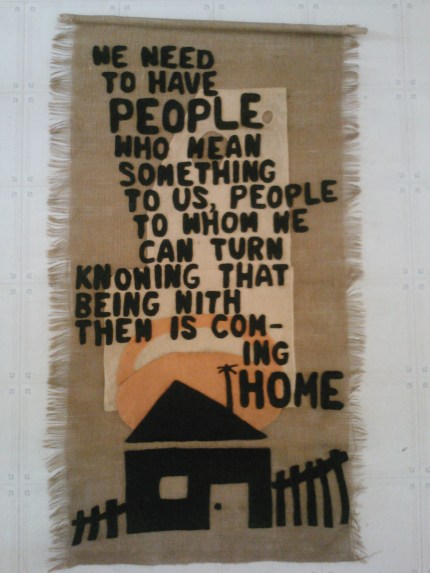
 Growing up, this quote from Bernard Cooke was always hanging on the walls of my many homes.

Fast forward to last year. Now I’m a parent of future missionary kids, so I read Pollock and Reken’s Third Culture Kids book. All of a sudden I identified with these TCK’s. Even though it didn’t span my entire childhood or take me to a third world country, I realized that my transient young life, coupled with an entirely different American military sub-culture, gave me insight into what being a TCK will be like for my kids. Reading about TCK’s helped me understand more about myself, and assured me that I would be able to empathize with my children in their difficult experiences.

TCK’s often feel homeless. They are moving, or their friends are moving.  Constantly.  They don’t have roots in one place, but have connections all over. They feel at home everywhere, and they feel at home nowhere. This was a big concern for me as a mom. Home is important to me. I want my kids to feel at home somewhere.

To me, though, home is where family is. It’s where memories have been made, and where they will continue to be made. I think you can have more than one home. And really, don’t we all have another home in Heaven?

My parents’ home town in Iowa still feels like home to me – the place and the people stayed constant throughout all my moves. My parents have lived in their current house for 12 years now (their longest stay), and it feels like home. Today, I live in Phnom Penh, Cambodia with my husband and 4 children, and it feels like home. In the words of musician Alex Ebert, “Home is wherever I’m with you.”

In the end, the best part about being a TCK for me is the nebulous definition of home as everywhere and yet nowhere.  How wonderful that my Heavenly Father could use a few uncomfortable years of my childhood to help me fully embrace wherever He puts me in His wide world.