Father in heaven who loves us, who longs to know us, who longs for us to know You and to know each other in marriage, we confess that we do not always see You or Your goodness in marriage.
But we thank you for Your good plans for us and our marriages. We thank you for Your good plans for Your church across the globe. And we thank you that your plans are not in conflict with one another.
Help us to see the image of God in one another. Help us to rejoice in each other and in our relationships. Restore the joy of first love to us.
Give us the courage to say no to the world and yes to each other. Give us the strength to seek healing from You that we may bring it to our marriages and thus to the world. Let our marriages shine the light of You to others so that they may ask where we found it and want what we have.
Thank you for giving us Your Son, who loved and blessed marriages. Amen.
I thought I would drop in with a mini “favorite things” post. Here are just a few things I’ve loved over the past few months. ~Elizabeth
The Upgrade: How the Female Brain Gets Stronger and Better in Midlife and Beyond by Louann Brizendine, MD. I saw this book recommended on a menopause website and was intrigued. I bought it on Kindle and practically underlined the entire thing. I have several other books about taking care of physical health in perimenopause and menopause, but nothing ever addressed the mental work of midlife like this book. It was also very hopeful about the second half of life – something I both appreciated and needed.
Inside Out 2. When the puberty button was pushed and all those new thoughts and feelings appeared out of nowhere, I felt like I could relate to Riley. Like her, I thought I had all my belief systems, thinking patterns, and emotions under control, then bam perimenopause happened, and I had to recalibrate. It’s been a lot of work to ride this emotional roller coaster, but it has certainly made me more reliant on the Spirit — which is never a bad thing.
Abide by Aaron Williams. I was seeking discernment about a few things in my life this spring, and one Sunday while we were singing this song in church, I felt like God gave me the answers I had been seeking. A beautiful song that draws us to the heart of God.
Christ Be All Around Me by All Sons & Daughters. At one point this summer I was really craving a prayer that could ground me. I love the prayer of St. Patrick (and I love St. Patrick) and had a distant memory of singing his words once in a song, so I went searching for it.
Same God by Elevation. This song ministered to me after a specific time of prayer about my identity. With so much in my life in flux, I felt adrift. God was basically saying to me, “I’m the same God I always was to you, and you’re the same girl you always were to me. Nothing about any of that has changed.” And I still need this God, the same God who has shown up for His people for thousands of years, every day of my life.
This is Our God by Phil Wickham. I get goosebumps with every verse. I remember the walls, the prisons, the giants – I’ve faced so many of them in my life. But look at what God does! And what a joy to be able to tell the stories of His faithfulness throughout our lives.
Olive Velvet Ashes Retreat image. This is the wallpaper on my phone now. The themes of this year’s retreat matched so much of what God was already speaking to me that I wanted to remind myself of it every time I opened my phone. Plus, those colors made me happy and calm.
The early days of homeschooling are intense. You’re afraid of messing up. You haven’t fully settled into your teaching style yet. You’re still getting to know your children’s learning preferences. You’re still uncovering their abilities and their challenges.
And often, you have little ones running underfoot while you attempt to educate your older ones.
Older moms offer advice, and it’s good, but you don’t know how to apply it to your situation. You read books, and they’re good, but sometimes the requirements feel overwhelming. How can anyone do all these things and do them well?
And sometimes the advice conflicts, and you don’t know which to choose.
Now, after 20 years of motherhood and over 15 years of homeschooling, I’ve become that older mom who has advice to offer and guidance to give. And the first thing I want to say is: let’s all take a deep breath. We make better decisions when we’re calm.
Beyond that, there are all sorts of things I could tell you. Things like figuring out your educational approach and your teaching preferences and your family culture and your students’ learning preferences. And those things are all important, and I talk about them with moms.
But the two questions I always ask young moms are the two questions they sometimes forget to ask themselves. They are:
What are you doing to take care of yourself?
And, if you’re married, what are you doing to take care of your marriage?
These two areas are the bedrock upon which a healthy, happy homeschool is built. If you’re burnt out, you won’t bring your best self to the task of home education. You’ll be tired and worn down, you’ll run out of energy and enthusiasm, and you might let too many things slide that shouldn’t be sliding. (What needs to slide and what needs to stay is a conversation for a future post.)
If you don’t take care of yourself, you won’t have the love you need to pour out on your children. Your relationships with them won’t be as good as they can be because you aren’t as full as you could be. You’ll be snappier than you want to be, and you’ll regret those moments.
Answering these two questions can be really hard when you have young children. You’re almost always short on time, and you’re probably short on sleep, which means you could also be short on brain power. Hopefully you can take some time, either in the early morning before your children get up or in the evening after they go to bed, to get quiet and ask your soul these two questions.
Don’t be afraid to ask your husband for help with the children in order to discern these things. You might even need the help of a friend or coach to talk it out. But don’t discount the power of solitary journaling to help you figure these things out. Write out all your angst until the answers appear on the page. And then go live them.
**NEW BOOK COMING IN SUMMER 2025**
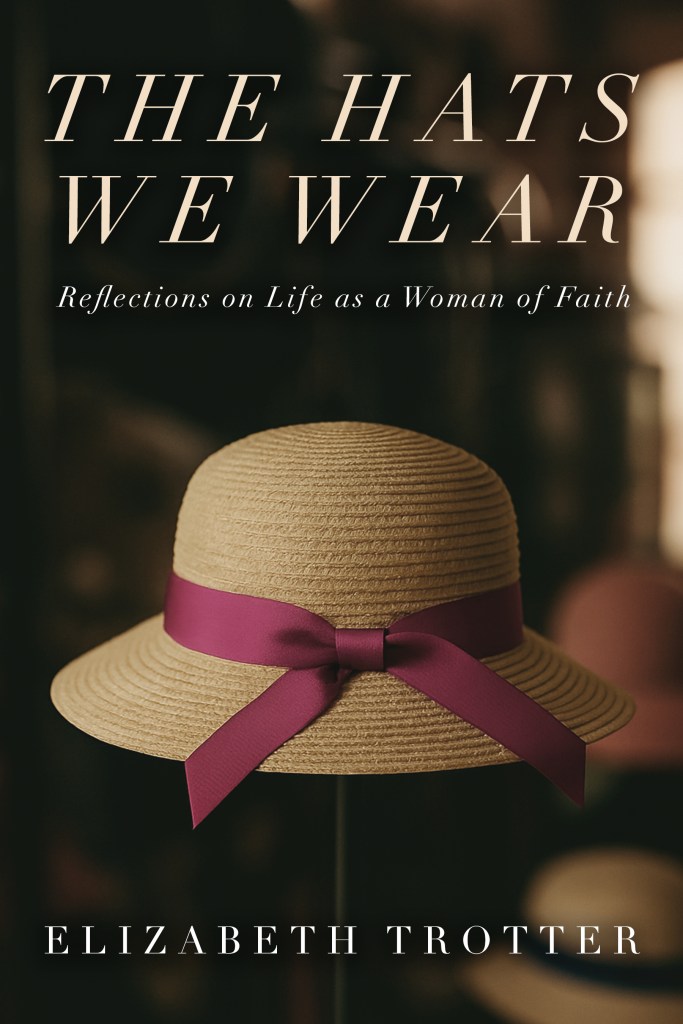
The Hats We Wear: Reflections on Life as a Woman of Faith addresses six different aspects of being a woman of faith, with sections on spirituality, emotions, and embodied living, as well as marriage, motherhood, and homeschooling.
This spring I read three of the best books I’ve ever read. One in particular I couldn’t stop talking about for weeks – but it wasn’t the sex book! I had to start with that word, though, because I knew it would grab your attention.
When Christine Paterson of FieldPartner recommended the book and mentioned that it was only $3.99 on Kindle, I figured I’d give it a try. I intuitively knew that American culture held more than just a guilt/innocence worldview and that shame/honor and fear/power comes into our thinking as well, and I was eager to learn the specifics of each worldview.
What I didn’t expect was for the book to so thoroughly rewrite my understanding of culture. I underlined nearly the entire book. At only 80 pages in paperback, there’s no fluff here. Every word seems essential, and every sentence sheds light on world cultures and their differing assumptions and thinking processes. I began to understand shame/honor and fear/power cultures more fully, and I began to see how the Bible beautifully addresses all three cultural concerns (guilt, shame, and fear).
Once my eyes were opened to this, I even began to see these three concerns addressed in most of our worship songs. In Western cultures we tend to tell the gospel story only through a guilt-innocence lens, and while that’s not wrong, it is incomplete. We look to God for help with our problems regarding fear and shame, but we don’t tend to bring these perspectives into our telling of the Gospel story, and this hinders our spiritual growth.
Thankfully, we can offer people a more three-dimensional gospel, one that has the power to redeem their day-to-day struggles with fear and shame, whether in our passport culture or a host culture. God knows the human heart and has offered a solution for all our problems in Jesus Christ.
This book made me fall in love with God all over again.
I remember resonating so deeply with Emily’s podcast episode, “How to Walk Out of a Room,” a couple years ago. The episode was mercifully devoid of details so that her principles could apply to all sorts of situations. When I heard she was writing a book based on that episode, I knew I would want to read it.
Emily is a spiritual director and has a master’s degree in spiritual formation, and she has a way of walking with people in discernment that is quiet and calm. She offers a “non-anxious presence,” as they say in spiritual direction circles. (Full disclosure: I’ve been meeting monthly with a spiritual director for about the past year, and it’s been a huge part of drawing my heart back into conversation with God after some dry, lonely years.)
I had a feeling this book would be important, and so I decided not to mark it up but to leave it empty and, in a way, sacred. Instead, I would rewrite meaningful sections in my journal. This helped slow me down and really savor Emily’s words. It helped me process the past, it helped me learn how to make better decisions, and it gave me peace in the decisions I was making. Then one day I looked around and realized I was making decisions much more easily than I had in the past, even small daily decisions, and I had to wonder if this book had something to do with it.
The thing I love about this book – and that sets it apart from other books purporting to help people recover from restrictive religious environments and explore a more expansive relationship with Christ – is that Emily gives tangible steps people can take to process the past and discern their present and their future. To walk with Emily is to learn together how to listen to God.
This is the book every woman needs to read before she gets married – or after, if things in the bedroom aren’t working, whether she got married a year ago or 30 years ago. Sheila co-wrote The Great Sex Rescue with two other authors, and it’s a great research-based book that helps people untangle their unhealthy and unbiblical beliefs about sex, but The Good Girl’s Guide really gets into practicalities.
I heard it recommended by a Bible college professor who teaches classes about sexuality, and I wanted to check it out myself. There was an earlier version of the book, but just this year it was revised and expanded, so I read the revised version. This is the book I will give to my daughters when they are engaged or newly married. I still recommend Aanna Greer’s Darling: A Woman’s Guide to Godly Sexuality for those who are quite innocent or naive about sex and their bodies, but Sheila’s book is a necessary follow-up.
Sheila, along with her pediatrician husband, also wrote The Good Guy’s Guide to Great Sex: Because Good Guys Make the Best Lovers. I haven’t read that one, but I’m assuming it’s good because that same Bible college professor recommended it and because it’s from an author I trust.
I hope these books will help you or someone you love.
The old conversation about women and work has been circulating again. People are quick to take sides. They’re for women working. They’re for women staying home. (Never mind the fact that this is a false binary, and that women who stay at home work, regardless of whether they work for pay.)
To me this conversation seemed like a lot of wasted cortisol and adrenaline. Why would I torture my body with extra stress hormones just to justify my life choices to strangers?
But it did make me think about the past 20 years of my mothering. For the first several years I stayed at home full-time and cared for our four children. I loved it. I always wanted to have a lot of kids. I didn’t always want to homeschool them, but I fell in love with that path too.
At the time I knew in my head how hard my husband was working to allow me to stay home and also pay the bills, but I don’t think I fully grasped his sacrifices. Only now, having learned what it’s like to earn income while trying to remain an engaged parent, can I more fully appreciate all that he did during those years. And I am impossibly grateful.
Because amid the exhaustion, I loved those years. I loved playing with my kids and reading aloud to them and being free to just traipse all over whichever city on whichever continent we lived for playdates and errands and homeschool activities.
I felt a unique sense of purpose in those years, contributing to society by contributing to my family in (obviously) non-monetary ways. Along the way, we created our own family culture. Sometimes I didn’t realize what an incredible gift that really was.
Fast forward to today, when I still stay at home and homeschool my younger children, but I also work from home part-time. Now I understand more fully the financial pressures facing my husband these last 20 years.
Working from home also makes me appreciate the years I had with my kids as my main focus. As fulfilling as my freelance work is, it can be hard to live with a divided psyche, to have my heart in more than one place.
And yet I am impossibly grateful. Grateful that I’ve been given work that is meaningful to both me and the people I serve. Grateful that I’m able to bring in extra income and help pay the bills while still mostly staying home. The economy is different now than when we left America in 2012. It’s even harder to live on one income now than it was then.
And so families sacrifice. ALL families sacrifice. Whether we’re sacrificing one spouse’s income so they can stay at home with the kids, or whether we’re sacrificing one spouse’s time to either leave the house for work or to work from home – whether part-time or full time – everything is a sacrifice. Families are working hard to take care of their kids and their bills, and the last thing any of us needs is to feel judged or to judge others for our choices.
So when I first read about the recent gender roles controversy, I wrote it off. I thought some of the claims people made were silly, but as I said at the beginning, I didn’t have the time or the cortisol to waste on a conversation that is so nuanced and complex and personal and which so many people reduce to maxims and memes.
The longer I heard and saw people talking about it, however, the sadder I got. There are a lot of women walking around without knowing their worth. Without knowing their belovedness. Without understanding their deep value to God apart from what they do.
When we know our belovedness, no one’s opinion of what women should or shouldn’t be doing with their lives can push us off kilter. We know who we are, we know who God made us to be, we know who loves us, and we know the ones we love. We don’t have anything to prove to anyone, because we are secure in Christ’s love.
I can say, “I am a child of God, and I know my Father loves me.” And I can say to you, “You are a child of God, and your Father loves you – whether you stay home with your children or whether you work from home or whether you work out of the home or do any of it for pay.”
This is what I wish we all knew, truly knew, deep in the viscera of our bodies and the basement of our souls:
The woman who stays at home? Loved. The woman who works from home? Loved. The woman who works nights so she can be with her kids during the day? Loved. The woman who works days because it’s the only way to make ends meet? Loved. The woman who stays home when her kids are little and then goes back to work? Loved. The woman who works because she genuinely enjoys her job? Loved.
You are the beloved of God, and no one can take that away from you. You are hidden in Christ with God, and your real self is found in Him, not in the approval or disapproval of other men and women. You are a child of God, and that is the most important thing about you.
The God who adopted you as Daughter will lead you in ways that are personal and particular to you. Your life may look different from mine, but we are all the beloved of God. He is ours, and we are His.
May we cherish each other in the same way the God of the universe cherishes us. May we honor each other’s choices, just as we honor the same God who leads us in different directions. And may we remember that our value comes from Him, not the particular ways we serve our families and communities. For we are the beloved of God, and no power on earth can convince us otherwise.