Rose of Sharon | Postcards from Re-entry

by Elizabeth

We moved into our new home in December. The days were frigid, the nights were long, and the trees wore the mid-winter appearance of death. The maples, we recognized. But there were several other tree-like shrubs planted throughout the yard whose identity we had no knowledge of. They grew warped, woody stems, and their trunks often jutted out from the ground at an angle. To my eyes at the time, they were ugly.

Later in the spring we met the sellers, who told us the name for these tree-bushes: Rose of Sharon. I had heard the name, but I wasn’t familiar with its personality. The former owner said she loved them and planted them in pairs throughout the yard, which is supposed to encourage their growth. They were planted in lines along the outside edge of the fence and in pairs by my office and by the firepit. At that point in time, I had no emotional investment in them.

Throughout the spring the petunias and daylilies bloomed, along with the maples and the other potted plants we’d purchased. The daylilies in particular were the highlight of our day. Situated straight across the yard from my desk window, the bulbs produced new orange blooms every day till the last day of spring. We were sad that the life of the daylily was coming to an end for this year.

The very next day was the first day of summer. That was the day the Rose of Sharon bushes started blooming. I hadn’t bothered to look up any information about the plant and didn’t know what to expect, so their beauty surprised me. In some ways, they reminded me of our favorite tropical flower, the frangipani. (Americans call these flowering trees “plumeria.”)

Now I was intrigued, so I searched for information about the Rose of Sharon. Turns out, it is not a rose but a hibiscus, and it’s Asian in origin (mainly from India and China). That would be why it reminded me so much of home. In fact, Rose of Sharon is often recommended to people who want a tropical feel in a temperate climate, as it’s fairly hardy.

Our Rose of Sharon trees bloomed in four different colors: pink, purple, light pink, and white. The pink and purple grew by my office; the purple stood by the firepit, still visible from my office window; and light pink and white ones were scattered between the road and the fence. Purple is generally a favorite color of mine, but for some reason I fell in love with the white Rose of Sharon. I think it was because, from a distance, they reminded me of an actual white rosebush.

For me it is a precious thought that the previous owners planted something all over the yard that would remind me, a future owner, of my old home in Asia. I already knew this house was a perfect fit for us, but this summer I was reminded that God takes care of even the little things in life, like flowers.

After blooming daily for two months, they precipitously dropped off in August. The branches were weighed down with buds full to bursting, unable to flower during the dry season. And of course, winter is coming. The lovely Rose of Sharon will shrivel back into crooked little stems, and for a while they will look barren.

But next summer they will come back to life again, brimming with the colors of Cambodia.

Our Rose of Sharon at summer’s end.
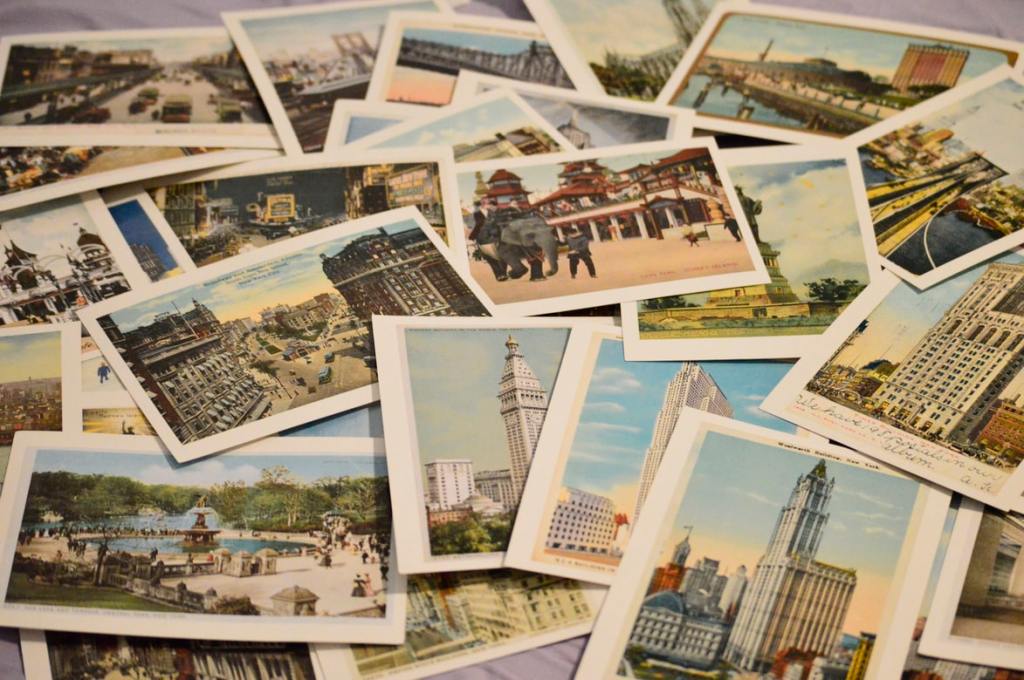
Postcards from Re-entry {a new series}

by Elizabeth

For a while now, I’ve been trying to figure out how to tell the stories of re-entry. There are the big stories, of course. The ones that can take pages and pages and still feel unfinished. But there are ever so many little stories. Short little vignettes that capture fleeting feelings and everyday experiences. They are what I want to focus on in this series.

I’m calling it “Postcards from Re-entry” to designate the briefer and less meditative nature of these stories. They’ll capture my life, but not in a way that feels overwhelming for me to write or that takes too much of a time investment from my readers. I like to think of my blog posts as letters to my friends. So I’ll still be sending you letters, but they’ll (hopefully!) be shorter than my usual ones.

So look for the first installment soon!

My Sex Life Died on the Field {Velvet Ashes}

This week I’m at Velvet Ashes. The title kind of says it all, I guess. It’s a brand new story I’ve never told. But if you’ve been following my journey the past few years, I think this post will weave together a lot of the strands of things I *have* written about: anxiety, depression, dance, PMS, being underweight, etc.

As scary as it is to talk about, Jonathan and I decided together that it was time to start being more open about this difficult season in our life and to maybe, just maybe, be able to offer hope to others in dark seasons of their own.

I don’t know where you are today, but wherever that is, I hope that you will be as gentle with your own story as you are with mine. And if healing is what you need today, what I want you to know is that God wants to walk with you into healing, whatever that journey might look like for you.

Grace and peace, Elizabeth

I Was Stuck in the Past. Counseling Couldn’t Help Me.

by Elizabeth

Re-entry is messy. So messy, in fact, that much of what transpired in my life in the last year did not end up here on the blog. I was in emotional and situational chaos, and I had absolutely zero mental margin to publish – or even process – what was happening to me.

I think that’s as it should be. Not every difficult thing that happened in Cambodia was meant for public consumption either. And I’m not sure the value of platforming topics when they’re as raw as they were this last year and a half.

But I can tell you that in the middle of this mess of mine, I was meeting with a counselor. I’ve been raving about the benefits of counseling ever since 2006 when I first met with a Christian counselor. Over the years I’ve met with counselors off and on, whenever issues in my life popped up and kept me from functioning (the most recent being in early 2019 when my life was so rudely interrupted by anxiety and OCD). So, over the past year during our tumultuous repatriation, I thought I was doing the right thing by talking to a counselor.

Except I wasn’t getting anywhere.

On some level, I knew I wasn’t getting anywhere. Processing the past wasn’t helping me to accept my present circumstances the way it had helped me before, and it wasn’t helping me to move forward in life either. It seemed like nothing was helping. But the only construct I had for getting better (or “bettering,” as my friend Amy Young likes to call it) was Christian counseling, so I kept at it.

In February, fueled by a historic midwestern snow and ice storm, my spirits hit an all-time low. I knew I needed more help than I was currently getting, so I reached out to someone for debriefing. She’d been highly recommended to me by others. Meeting with her was helpful, and after a few sessions, I thought I was stable enough to make it to our formal week-long debrief in August.

I was much more forward-facing by that time, and even my debriefer noticed it. I still had questions about how in the world I was going to thrive in America, but she assured me that the week-long debriefing would help me move forward – and that if I still needed help figuring out the future after the big debrief, I should come and see her again. (I’ve been told that one of the purposes of “debriefing” is to move the past into the past so that you can walk forward into the future.)

Soon after I debriefed with her, my agency suggested Christian coaching as a way to get “unstuck” and move forward in life. It sounded intriguing. I’d never done coaching before, and in fact, I’d never been drawn to the idea. I’d always figured that when my emotions were a mess, I needed a treatment that addressed the emotions. But since counseling wasn’t currently working, I thought I could at least try the coaching.

I’m glad I did. Coaching is the reason I started writing again (I have several more blog posts in the works). It’s the reason I finally created a webpage for my freelance editing. It’s the reason I started working on a few other background projects. It’s the reason I started dreaming about the future again and the reason I’m living in the present instead of the past. I just didn’t have enough motivation for any of these things before coaching.

During the sessions my coach asks a lot of targeted questions, and I really have to think through my problems and the possible solutions to those problems. It’s hard work, and it’s practical (though come to think of it, the last time I sought counseling in Cambodia, my sessions were highly practical, immediately applicable, and pulled me out of my head, where I’d been stuck for the previous six months).

It’s also comforting not to have to figure out the past, at least for now. Perhaps I was trying too hard to process my past. Perhaps I needed to stop looking in the rearview mirror. Perhaps I needed to, along with Paul, forget what is behind and strain towards what is ahead. Don’t get me wrong. I’m still a huge proponent of counseling. It’s helped me so much in the past. It’s just that in my particular circumstances this year, I’m beginning to think I needed something else.

I’m not done with the coaching process, so I’m sure I have a lot more learning and growing to do. For instance, I’m still figuring out how to live in the tension of unsolved problems. I can, however, attest to its efficacy in moving me out of a very stuck place. I’m curious if any of you have ever been helped by either coaching or counseling — or some other avenue — and which life circumstances were particularly suited for the varying helping professions.

We Went to Church

by Elizabeth

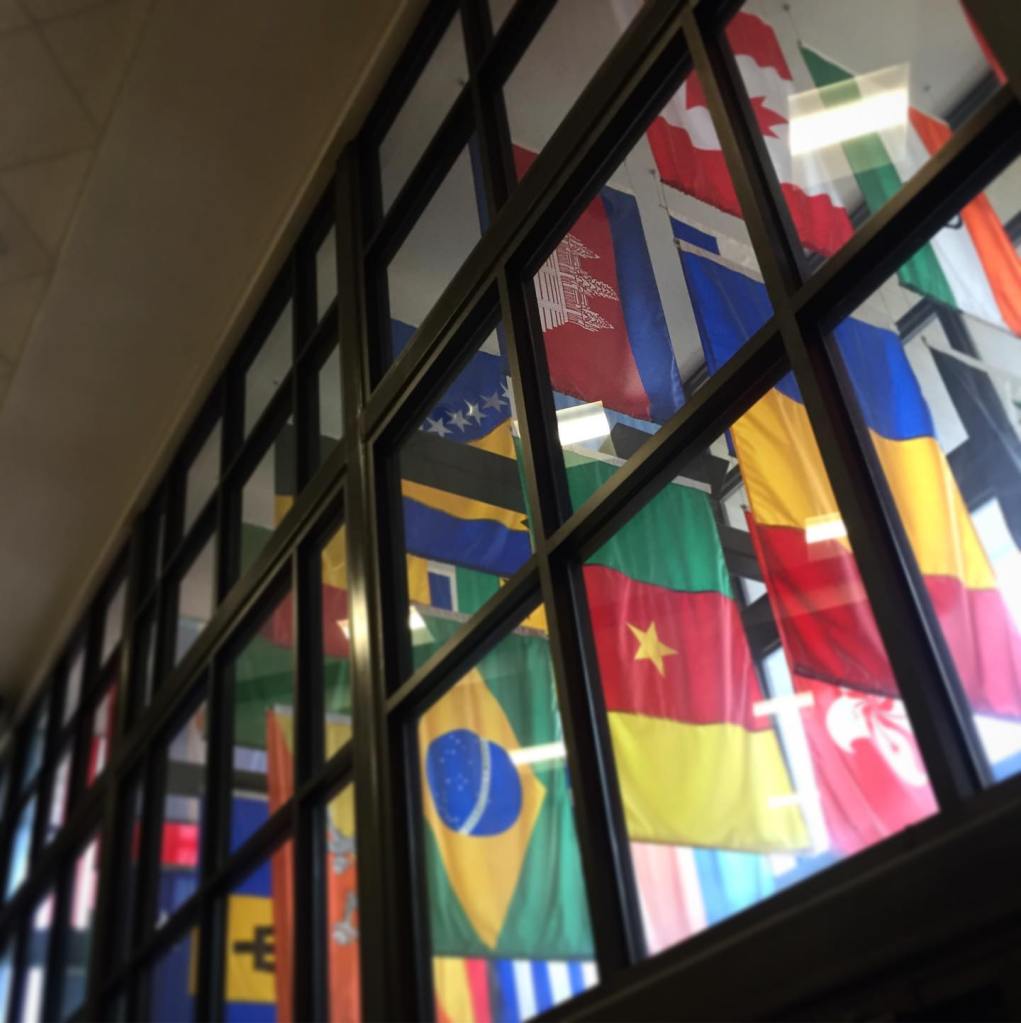
Jonathan knew the first time he walked through those doors. When he saw flags from all around the world hanging up in the foyer – including the Cambodian flag — he knew he’d come home.

I wasn’t so sure. In theory, I knew this church could be a good fit for us. But I didn’t really want to be here. I didn’t want to be at an American church. My heart was still back home in Cambodia, worshipping with people from 40 nations.

At that point we’d been out of church for over a year, waiting out this interminably long covid season. We’d had our vaccines, but our children hadn’t yet had theirs. We brought them to church once and then decided to leave them at home until they could achieve full vaccination status right along with us.

But it feels strange not to attend church as a family, so over the next few months we were in and out of services. It was just as well, though, because I had a lot of unfinished emotional and spiritual business to take care of.

Just last night I was telling the kids about Jeremiah 29. Not the overused verses 11 through 13 promising only good things to the Lord’s people, but the less familiar ones from just a bit earlier, in verses 5 through 7. The ones about building houses and settling down, the ones about planting gardens and eating what they produce, the ones about seeking the peace and prosperity of the city into which we have been carried.

I told my family I was ready to follow the instructions in Jeremiah 29, that I felt like I finally was following them. We’d settled into a house and made it a home. We’d planted gardens and even eaten a bit of what they’d produced. It was time to seek the peace and prosperity of the city.

This morning we walked all over the church campus, dropping children off at their various Sunday school classes. We found one for ourselves, too — one recommended by a friend. And as I sat there listening to the teacher talk about his heart for God and his heart for the world and about some of his church background and about some of the authors he’s read, I closed my eyes to blink back the tears.

I knew I had come Home.

It was the same feeling I’d had the first Sunday I walked into our international church in Cambodia and cried through the whole service. I knew I’d come home that day, and today I experienced the feeling again.

Mysteriously, both today’s Bible class and today’s sermon touched on Jeremiah 29, the earlier verses. They were written to a people in exile, a people separated from the land they’d been given. Missionaries often feel like exiles. We leave our passport countries to sail into the unknown. We don’t quite fit in our host countries, but we no longer fit in our first homes either. In time we settle into our secondary homes, but we must one day leave those too. In some way or another, we always feel like exiles.

You don’t have to be a missionary to feel like an exile, of course. We are all exiles in Babylon. None of us really belongs here, no matter which city each of us lives in. We belong to a different country, a better country. But sometimes when we’re with other citizens of that country, we can get a taste of home. This morning reminded me that I don’t have to be with citizens of a couple dozen earthly countries to feel like I’ve come home – although it was wonderful to live that reality for eight years.

All I have to do is find citizens of the Other country to which we all belong.