When Depression Descends

Author’s note: This article should not be used to diagnose or treat clinical depression. If you are having thoughts of hurting yourself or attempting suicide, please seek out a medical and/or mental health professional immediately, visit the Lifeline online, or call 1-800-273-8255 (U.S.). A list of international suicide prevention hotlines can be viewed here and here. — Jonathan

It feels like a leaden mantle descending over everything, blotting out the sun, joy, and the belief that there is anything good in the world. It leaves your feet bolted to the floor and your heart frozen in the empty void of black space.

It feels like liquid cement pouring into your body, heavy and thick, slowly solidifying, hardening, restricting movement. It feels like your chest is being crushed. Like a polio victim without an iron lung, desperately searching for the energy to overcome diaphragmatic paralysis. It feels like a suffocation.

It doesn’t always feel like sadness. It might look like incessant weeping, sure, but it just might look like staring at a blank wall for fifteen minutes. Unmoving.

Even if you’re a missionary. Even if you love your wife and kids. Even if you have enough money and love your job. Even if you have a fulfilling ministry, both on and offline. Even if you work with therapists and help pastor a church. Even if you love the Psalms and know about lament and have written extensively about emotional health. Even if you’ve studied depression and sat with suicidal clients (in a counseling center) and patients (in an ER). Even if.

Sometimes, it’s just there, and it is so terribly heavy.

I have been there. And still, after our unplanned transition back to America, our dislocation and eventual resettling, COVID-19, a dark winter, and political chaos, it still threatens. Occasionally I get a whiff of the darkness, and it turns my stomach sour.

If you’ve been there, if you’ve felt these things, please know this: you are not alone.

For me, at the scariest point, I started thinking about ending my life. I never developed a plan (which is a blaring warning sign, especially if the person has the means to carry out the plan), but I was ruminating more and more about death and dying, and it scared me tremendously.

I had started taking an occasional non-narcotic pain medication to help me sleep. In Cambodia, so many prescription medications do not require a prescription and are available in blister packs at the cash register. This can be handy, but it’s also very dangerous and should probably be the topic of a later essay. Anyways, we had neighbors on both sides of our row house that kept very late hours. On one side, it was drunk karaoke followed by the smashing and screaming of domestic violence. On the other side, it was a bit of a house-turned-warehouse where they repackaged boxes for local distribution – think screeching packing tape – until 1 or 2 am nightly. The packaging center was about three feet away from the head of our bed. The drunken abuse was about five feet from the foot of our bed. Bricks and a little plaster and tile were not enough. I wasn’t sleeping well, and I was getting more and more anxious and agitated.

So I started taking this medication.

Looking back, I think the spiritual, environmental, and psychological stresses brought me to the tipping point, and the medication nudged me over the edge.

Incentive to Hide

In any sort of Christian ministry, there can be an immense incentive to hide things like this. If the person who’s asking how you’re doing also has the power to fire you, relocate your family, or detach you, your spouse, and your kids from your church, school, and social support, well, honestly, that’s a ridiculous ask. (I’m not saying that’s a healthy dynamic, by the way, I’m just saying that it’s pretty typical in the missions world. Again, another essay for another time.)

But when it comes to depression, silence could be deadly. And while I certainly understand the reasons for hiding, hiding depression can lengthen your misery, shielding you from help and resources. Depression is very treatable once it’s identified.

Don’t hide, and please oh please don’t feel like you’re a failed Christian or a failed missionary just because you’re depressed. You’re not less than or anything of the sort; you just may need a little bit of extra support for a time.

I did.

I still do from time to time.

How to Respond: Tell Someone

I talked with a doctor. I’ll never forget the day he said, “You know, it’s a rare side effect, but it is a documented side effect of that particular medication.” I went home and threw those blister packs in the trash like they were filled with gecko poop and crawling with giant cockroaches.

I increased the frequency of meetings with two good friends, one of whom was a therapist and one of whom was a pastor. I broadened my support base. I changed my diet, reducing processed foods and sugar, increasing fruits and vegetables. I started exercising more.

If you’re not sure, but you think you might be depressed, please consult with your doctor and/or a mental health professional. Check out our resources page for mental health professionals in your area. You do not have to do this alone.

There are so many resources available, and there are so many treatment modalities that are proven to help (talk therapy, medications, lifestyle changes, etc.). You do not have to do this alone.

NOTE: If someone hears your story and tells you that you just need to try harder or read your Bible more or root out the sin in your life or be more disciplined or some such nonsense, please smile and nod, turn around, and run the other direction towards someone who will give you good advice. Because that person’s not.

How to Respond: Educate Yourself

Sometimes, the depression’s so thick that you don’t have it in you to do any sort of online research or reading. That’s ok. If that’s where you’re at, reach out to someone and skip this part.

But if you can and if you want to, remember that you have access to a whole host of online resources. I typically turn to the Mayo Clinic or the Cleveland Clinic for medically accurate information that’s written for non-medical folks. Read their information on depression here and here and chronic depression (over two years) here and here.

The NHS has a short depression self-assessment tool that might also be a helpful place to start.

And now, please don’t laugh, but I REALLY appreciated the material in the book Cognitive Behavioural Therapy for Dummies, by Rhena Branch and Rob Willson. Their section on depression has been immensely helpful for me and several friends. Check it out.

Additional Resources

This is the first time I’ve written so explicitly about depression. Here are some musings (and a sermon/podcast) about related things, like Grief, C.S. Lewis and the Deeper Magic, and Hope.

Remember, you are not alone. The promises are true.

You are not alone.

~~~~~~~~~~~~~~~~~~~~~~~~

From the Mayo Clinic: When to get emergency help

If you think you may hurt yourself or attempt suicide, call 911 or your local emergency number immediately.

Also consider these options if you’re having suicidal thoughts:

  • Call your doctor or mental health professional.
  • Call a suicide hotline number — in the U.S., call the National Suicide Prevention Lifeline at 1-800-273-TALK (1-800-273-8255). Use that same number and press “1” to reach the Veterans Crisis Line. [Visit their website here.]
  • Reach out to a close friend or loved one.
  • Contact a minister, spiritual leader or someone else in your faith community.

If you have a loved one who is in danger of suicide or has made a suicide attempt, make sure someone stays with that person. Call 911 or your local emergency number immediately. Or, if you think you can do so safely, take the person to the nearest hospital emergency room.
Eight Hundred Thousand

When you think of COVID-19, where do you start? What’s your initial gut reaction to discussions of pandemic response, vaccines, etc.?

Obviously, these are treacherous waters, and our society has fractured along some new and some old fault lines. But why? I’ve been pondering this hard, trying to figure out, as an American, as a Christian, what motivates (or scares?) people in these discussions. It seems to me that the primary difference in these discussions hinges on whether you believe that the pandemic threatens either liberty or life.

For some, the pandemic is an overblown risk that governments around the world are seizing upon as an opportunity to strip away liberties and long-held freedoms: freedom of movement, bodily autonomy, even the freedom to worship.

For others, the pandemic involves a deadly disease that has killed 800,000 people in our country alone, and governments (and people) have a responsibility to mitigate the loss of life as much as possible.

Where we start often determines where we end up, so this matters.

If the issues circle around freedom, you’re likely to claim government overreach, saying things like “Don’t tread on me” or “Give me liberty or give me death.” Vaccine requirements, social distancing, and even mask mandates, present an existential threat to your freedoms. Fair enough.

If the issues circle around public health and the threat to life (yours and others’), you’re more likely to embrace masks and vaccines and be ok with government regulations that aim to prevent the spread of a deadly pathogen. You’re willing to give up some liberty and some opportunities. Also, fair enough.

If you’ve read much of what I’ve written, you know which side I generally reside in. As an ER nurse and pastor/missionary for twenty years, one of the hardest things for me to reconcile has been the fact that so many Christians seem to reside — almost exclusively — on the liberty side. Sean Feucht’s “Let Us Worship” gatherings represent what I’m talking about. White evangelical Christians have seemed so very LOUD when it comes to defending religious liberty and bodily autonomy. I have not heard so much about masking and vaccines as a form of loving your neighbor. Those things are ploys of the devil (or democrats) to steal my liberties.

But 800,000 souls have been lost in our country alone, and the tidal waves of grief and loss emanating from those losses impact millions. So many people (including several friends) are dealing with long-haul COVID, and that is no joke. Again, we’re just talking about the US here. Hospitals and healthcare staff around the country are being stretched to the margins, and we may only be at the beginning of a winter surge.

I guess what I’m saying is, let’s look at our starting points and honestly assess them. Hey, I love freedom, and I’m glad I live in America. I am grateful for the parts of our heritage that value liberty and freedom. Those are worth caring about and defending. But as a Christian, if my biggest concern and motivating factor is personal freedom (even of religion), I’ve lost the plot. We are called to so much more.

I’ve heard pastors say that we shouldn’t worry because 99% of people who get COVID will be fine. That gives you personally a pretty good chance, sure, but across a population, that would mean over three million dead Americans. Can someone care about those deaths without being a communist?

Is there a middle ground? Is it possible to care about liberty and life? Is it possible to recognize that some mitigation measures have been too onerous and caused way too many negative outcomes, while also having empathy for the sick and vulnerable and acting in their best interests? Is it possible to care about life and not support draconian lockdowns? Is it possible to worship God without exposing everyone around you to a potentially lethal pathogen?

Is it possible to behave with mercy and gentleness and the love of Christ in this day and age?

I hope so.

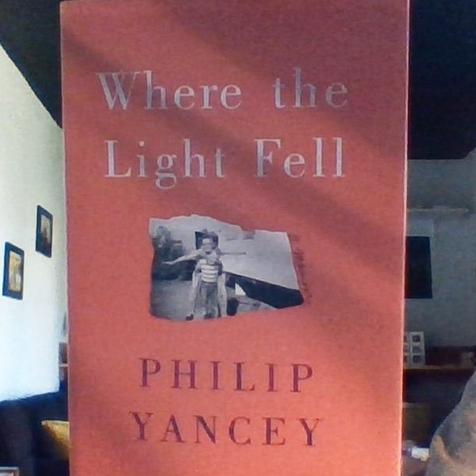
Book Review: Where the Light Fell

by Jonathan

I thought I’d like this memoir from Philip Yancey, but I had no idea it would be such a page turner, lurching from fundamentalism to racism to grace to dysfunction to mercy to LSD to classical piano to faith and on and on and on.

“An upbringing under a wrathful God does not easily fade away.”

For someone who’s written so much (and so gently) about suffering and grace, I should not have been surprised at the terror, trauma, and healing present in Yancey’s story.

“Like every secret, it gained power as it lay hidden.”

If you’ve wrestled with religious burn out, or if you’ve had a hard time reconciling the church with Christ, you might resonate with this book.

“As a boy wandering in the woods, a teenager constructing a psychic survival shell, a lovesick college student running from the Hound of Heaven — in all those places I found what T.S. Eliot called ‘a tremour of bliss, a wink of heaven, a whisper.’ I came to love God out of gratitude, not fear.”

This book will endure for quite some time, I think.

Find it on Amazon here.*

*Amazon affiliate link

And Then Our Cat Died

by Elizabeth

I’m not even sure how to write about this. Four months ago we bought a cat for our children. He was a beautiful stray who had been rescued by the Humane Society, and we fell in love with him. He was our little Lion King. He filled our yard with life and light. And we thought he’d be a part of our family for a long time.

But it wasn’t to be.

Gryff was a wanderer. He was constantly trying to get into other people’s houses. Sometimes he succeeded. He left us often, and most of the time he came back on his own. But nearly as frequently, we received calls from people as far as 3 streets away to come pick him up at their house.

Still, we were ridiculously in love with this cat. The kids liked to study outside with him. They liked to draw pictures of him. They liked to snuggle him. People often commented on how sweet of a cat he was.

He had started staying out at night and not coming back till the next morning. We were expecting this; he was supposed to be an outside cat. But then he didn’t come back, and we also didn’t receive a call from anyone. Eventually a neighbor stopped by to tell us what had happened — another neighbor had seen the accident and told her.

A car hit him on the road near our house. We weren’t at home when it happened. But when we found out, Jonathan went looking for the body and helped us bury him. We cried and even wailed over Gryff’s death. It was a deep pain and a deep loss. He was our first pet. We didn’t know how sad it would be to lose a pet.

Now we know.

A mom doesn’t want her kids to suffer, but she can’t stop the suffering. I wish my kids didn’t have to lose Cambodia. I wish they didn’t have to lose their cat. But as much as I wish to prevent them from experiencing pain, I have no power to do so. It’s one of the most difficult parts of being a parent. All I can do is walk through the pain with them.

So we held a funeral for him. We talked about the silly things he did. We talked about the annoying things he did. We talked about how much we loved him. We honored his place in our lives for just a short time. He helped us settle our hearts in America, and for that I will be forever grateful.

It’s been a week since we buried him, and there’s still an empty spot in our hearts. In the beginning we couldn’t bring ourselves to spend time in the yard without him. It was too sad and lonely. The first few days without him were especially rough. We watched with our own eyes as my husband shoveled dirt onto his body. Still, we kept expecting him to show up at the back door, begging for food. Other times we thought we could hear him meowing.

For days we couldn’t bring ourselves to clean up his water bowl and food bowl. I still haven’t put away the blanket he slept on. And at first I didn’t think I could ever buy my family another cat. I could not give my heart to another creature, only to lose it again so soon after. But after visiting some friends whose cats are just as loveable as ours was and learning how many cats they’ve lost over the years, I’m beginning to think I could possibly welcome another cat some day. But not yet.

So we are slowly adjusting to life without our beloved kitty. After all, there are still birds to feed and plants to water. God’s good, green earth still grows even in the midst of death. Through the pain — and maybe because of the pain — our hearts and souls grow along with it.

Return to Life

by Elizabeth

The 2000 film Return to Me is a family favorite. The movie features Bob and Elizabeth, who have been together since high school and who are still very much in love. One tragic night Elizabeth, who was an organ donor, is killed in a car accident. We watch as doctors transfer her heart to Grace, a woman who’s needed a new heart for a long time.

Grace goes nervously into surgery, hopeful for a new life. Bob, blood still on his clothes, goes home to an empty house. It’s an agonizing scene.

Months later, Grace has recovered from surgery. Bob, meanwhile, is having trouble living without Elizabeth and has buried himself in his work. Friends continually try to set him up with other girls, but Bob wants nothing to do with anyone new. He can’t get over the loss of Elizabeth. Then one night during one of these blind dates, Bob meets Grace at the family restaurant where she works. Sparks immediately start flying.

In the following weeks and months, Bob’s heart opens up to new love. But Grace is guarding a secret. Although she doesn’t know that Bob’s wife’s heart beats inside her chest, for some reason she can’t bring herself to tell Bob she’s had a heart transplant. Eventually the two of them figure this fact out, and the revelation is traumatic for both of them. Bob disappears; Grace flies to Italy to paint.

While Grace is gone, Bob realizes he loves her and can’t live without her. He looks for her at the restaurant only to find that she’s gone. He acknowledges, “I miss Elizabeth. I’ll always miss her.” Still, he’s ready to embrace a new life with Grace. He goes in search of her, and their reunion is sweet. The audience can see them building a future together.

One year after having traumatically evacuated Cambodia, I think I understand a little of what Bob meant in his restaurant confession. We left Cambodia in March, just as the pandemic began closing borders. We were relieved to have made it to U.S. soil, and for several weeks we assumed we’d be able to easily re-enter Cambodia in the fall as planned. But by May our visa and passport plans began unraveling, and by June, life as we knew it in Cambodia was over.

I didn’t even get to say goodbye.

2020 became one long grieving session. This might sound strange if you knew me in the early 2000’s when Jonathan felt called to missions and I didn’t. You might remember how I fought the call for so long. But now I felt like Mr. Holland from the movie Mr. Holland’s Opus, in which aspiring composer Mr. Holland longed for fame and renown, but instead ended up teaching music to high school students. At the end of his career, when budget cuts forced him to retire early, he observed, “It’s almost funny. I got dragged into this gig kicking and screaming, and now it’s the only thing I want to do.”

Like Mr. Holland, I didn’t initially want to move to Cambodia, but once I got there, I found a life I loved. I wasn’t ready to say goodbye — but covid said differently. For weeks, I woke up crying. Opening my eyes each morning was a painful reminder of where in the world I wasn’t. In Cambodia I had a strong support system. I lived every day with a sense of meaning and purpose. I had a place in the community and rituals and routines that brought structure to our chaotic cross-cultural life. We had raised our children there, and Cambodia was all they knew.

It was a difficult life, sure, but it was also an exceedingly good one. And I wasn’t sure I would ever stop crying over this loss. I lived in the “if onlys.” If only we didn’t have passport problems. If only we didn’t have visa problems. If only covid hadn’t happened. If only, if only, if only. I thought if I could just get back to Cambodia, I could recapture all my former happiness. In reality, even if I could have returned, I couldn’t have recaptured my old life. Covid made that impossible for seven billion of us.

Then one day my near-constant crying stopped. I thought I had accepted my new circumstances. And I do believe I had accepted that I couldn’t get my old life back. But reflecting now, I realize that I struggled deeply throughout the fall and winter. I had said goodbye to my old life — though not in person and not on purpose. But I still didn’t know exactly what my new life would look like, so it was hard to root myself here. Everything seemed bleak. I didn’t think I could ever be happy again.

We were looking for a home at the time. We knew we had to be out of our temporary housing by the end of December. After several housing disappointments (a story I’ll tell another time), I began to fear becoming homeless (emotions may exaggerate facts, but the intensity of the feelings are real). We didn’t have a church home yet because of covid, so I didn’t have local community to help me through this transition. I knew I couldn’t get my old life back, but I still desperately missed it.

Finally, finally, we found a home that fit our family that was also in our price range. We signed the papers mid-December, which was a bit closer to the deadline than we would have preferred. Still, we were thrilled to have a place of our own. I had no idea it would be such an important milestone in our repatriation process.

We’ve been in our new home for three months now. It fits us so perfectly (I promise I’ll explain in an upcoming post). I live in the daily disbelief that we could have found such a fantastic place for our family to live. We are making it our own, slowly writing our name in the land. Jonathan is working on the yard. We have pictures on the walls. We have rituals and routines, and I’m slowly re-building a support system. Living in our home has helped get me “unstuck” from the grief and helped me to move forward. It has given me a glimpse of what the next season of life might look like.

Cambodia is still a natural part of our conversations, and we frequently talk about our old life. The six of us have so many shared memories, both pleasant and unpleasant. Occasionally I even long for life in Southeast Asia. But I no longer think I can’t live without Cambodia, that life simply cannot go on without Cambodia. I’m beginning to understand what life can look like here on the other side of the ocean. I feel like Bob, who knew that he would always miss his old life, but who now knew that he could also live a new life with Grace.

My old life and my new life, side by side.