Return to Life

by Elizabeth

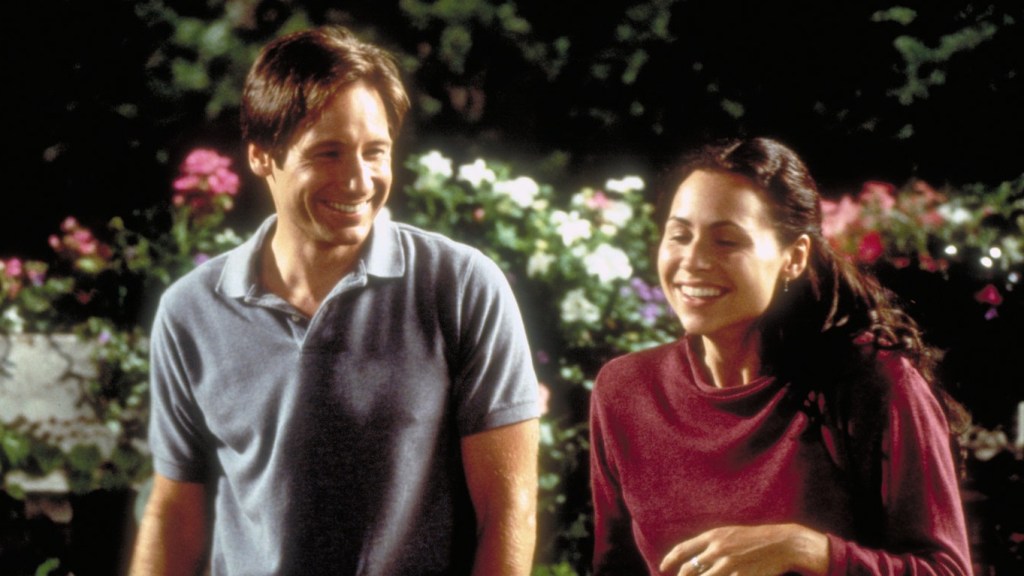
The 2000 film Return to Me is a family favorite. The movie features Bob and Elizabeth, who have been together since high school and who are still very much in love. One tragic night Elizabeth, who was an organ donor, is killed in a car accident. We watch as doctors transfer her heart to Grace, a woman who’s needed a new heart for a long time.

Grace goes nervously into surgery, hopeful for a new life. Bob, blood still on his clothes, goes home to an empty house. It’s an agonizing scene.

Months later, Grace has recovered from surgery. Bob, meanwhile, is having trouble living without Elizabeth and has buried himself in his work. Friends continually try to set him up with other girls, but Bob wants nothing to do with anyone new. He can’t get over the loss of Elizabeth. Then one night during one of these blind dates, Bob meets Grace at the family restaurant where she works. Sparks immediately start flying.

In the following weeks and months, Bob’s heart opens up to new love. But Grace is guarding a secret. Although she doesn’t know that Bob’s wife’s heart beats inside her chest, for some reason she can’t bring herself to tell Bob she’s had a heart transplant. Eventually the two of them figure this fact out, and the revelation is traumatic for both of them. Bob disappears; Grace flies to Italy to paint.

While Grace is gone, Bob realizes he loves her and can’t live without her. He looks for her at the restaurant only to find that she’s gone. He acknowledges, “I miss Elizabeth. I’ll always miss her.” Still, he’s ready to embrace a new life with Grace. He goes in search of her, and their reunion is sweet. The audience can see them building a future together.

One year after having traumatically evacuated Cambodia, I think I understand a little of what Bob meant in his restaurant confession. We left Cambodia in March, just as the pandemic began closing borders. We were relieved to have made it to U.S. soil, and for several weeks we assumed we’d be able to easily re-enter Cambodia in the fall as planned. But by May our visa and passport plans began unraveling, and by June, life as we knew it in Cambodia was over.

I didn’t even get to say goodbye.

2020 became one long grieving session. This might sound strange if you knew me in the early 2000’s when Jonathan felt called to missions and I didn’t. You might remember how I fought the call for so long. But now I felt like Mr. Holland from the movie Mr. Holland’s Opus, in which aspiring composer Mr. Holland longed for fame and renown, but instead ended up teaching music to high school students. At the end of his career, when budget cuts forced him to retire early, he observed, “It’s almost funny. I got dragged into this gig kicking and screaming, and now it’s the only thing I want to do.”

Like Mr. Holland, I didn’t initially want to move to Cambodia, but once I got there, I found a life I loved. I wasn’t ready to say goodbye — but covid said differently. For weeks, I woke up crying. Opening my eyes each morning was a painful reminder of where in the world I wasn’t. In Cambodia I had a strong support system. I lived every day with a sense of meaning and purpose. I had a place in the community and rituals and routines that brought structure to our chaotic cross-cultural life. We had raised our children there, and Cambodia was all they knew.

It was a difficult life, sure, but it was also an exceedingly good one. And I wasn’t sure I would ever stop crying over this loss. I lived in the “if onlys.” If only we didn’t have passport problems. If only we didn’t have visa problems. If only covid hadn’t happened. If only, if only, if only. I thought if I could just get back to Cambodia, I could recapture all my former happiness. In reality, even if I could have returned, I couldn’t have recaptured my old life. Covid made that impossible for seven billion of us.

Then one day my near-constant crying stopped. I thought I had accepted my new circumstances. And I do believe I had accepted that I couldn’t get my old life back. But reflecting now, I realize that I struggled deeply throughout the fall and winter. I had said goodbye to my old life — though not in person and not on purpose. But I still didn’t know exactly what my new life would look like, so it was hard to root myself here. Everything seemed bleak. I didn’t think I could ever be happy again.

We were looking for a home at the time. We knew we had to be out of our temporary housing by the end of December. After several housing disappointments (a story I’ll tell another time), I began to fear becoming homeless (emotions may exaggerate facts, but the intensity of the feelings are real). We didn’t have a church home yet because of covid, so I didn’t have local community to help me through this transition. I knew I couldn’t get my old life back, but I still desperately missed it.

Finally, finally, we found a home that fit our family that was also in our price range. We signed the papers mid-December, which was a bit closer to the deadline than we would have preferred. Still, we were thrilled to have a place of our own. I had no idea it would be such an important milestone in our repatriation process.

We’ve been in our new home for three months now. It fits us so perfectly (I promise I’ll explain in an upcoming post). I live in the daily disbelief that we could have found such a fantastic place for our family to live. We are making it our own, slowly writing our name in the land. Jonathan is working on the yard. We have pictures on the walls. We have rituals and routines, and I’m slowly re-building a support system. Living in our home has helped get me “unstuck” from the grief and helped me to move forward. It has given me a glimpse of what the next season of life might look like.

Cambodia is still a natural part of our conversations, and we frequently talk about our old life. The six of us have so many shared memories, both pleasant and unpleasant. Occasionally I even long for life in Southeast Asia. But I no longer think I can’t live without Cambodia, that life simply cannot go on without Cambodia. I’m beginning to understand what life can look like here on the other side of the ocean. I feel like Bob, who knew that he would always miss his old life, but who now knew that he could also live a new life with Grace.

My old life and my new life, side by side.

The Day We Didn’t Go Home {A Life Overseas}

by Jonathan

We were supposed to go home on August 6th. We had tickets and plans, we had dreams and ideas. But when we left Cambodia back in March, we did not have an awareness of how COVID-19 would turn the world upside down.

So we’re not flying home on August 6th. As a result of passport issues, visa issues, entry requirements, finances, and a whole host of reasons (everyone has them), we’re staying.

For our family, August 6th is now Stay Day.

Does your story include a Stay Day? Perhaps for you it wasn’t a Stay Day as much as a Leave Day. Do you have a day that marks when life quaked and plans tumbled? Do you memorialize a Stay Day or a Leave Day? Should you?

We hope to remember our eight years in Cambodia on this August 6th, and every August 6th afterwards. It will be a sort of anniversary; a blend of stories and laughter and tears.

Like so many memorials, it will be a funky mix of mirth and merry.

On Stay Day, we’ll remember the day we didn’t go home.

Sure, America is home too. Or at least it was. And it will be again. I’m speaking for myself here, of course, because my children will have their own stories, and they’ll need to tell them. Their relationship with America (and Cambodia) always was and always will be unique. Different than mine.

But some things we shared.

Like the eight years around a thick, Khmer-style round table. Well, more like seven. The first year we had a cheaper wooden rectangular table that got eaten up by termites so big you could hear them feasting: lightning-bug-size table chompers.

We’re shipping the Khmer-style table to America, so every Stay Day we’ll gather around it and remember.

We’ll remember the scent of frangipanis, and we’ll probably try to buy some. We’ll feel the feel of traditional kramas, the checkered scarves Cambodians (and my daughters) use for everything.

We’ll probably order Indian food and remember Mount Everest, the local restaurant in Phnom Penh that taught us to absolutely adore Nepalese and Indian food.

We’ll look at old photos of a younger family riding tuk tuks, playing on the street, trying to figure out cross-cultural living.

We might search YouTube for Khmer dance music, and we will probably laugh about the incessant, LOUD, and DRUNK karaoke that permeated our house during wedding season.

We’ll watch old videos of moto rides through our neighborhood, and we’ll remember the kind old man who laughed at the four white foreigners driving a moto through flooded streets and belly laughing. I wonder if he knew how much it reminded me of riding a jet ski.

Maybe we’ll check Google street view and meander past friends’ houses.

On Stay Day, we will remember. And we will pray.

We’ll pray for Cambodia, for our friends there, and for the Church that’s blossoming into its identity.

And Lord willing, we’ll do this every August 6th: the day we didn’t pack up, weigh all suitcases to 49.9 pounds, quadruple check passports, and jet across the Pacific.

August 7th won’t find us staggering out into the scents and smells of Phnom Penh. We won’t un-mothball our house and turn it back into a home. We won’t schedule reunions with local friends. We won’t visit favorite haunts and coffee shops.

Instead, we’ll mourn what was, and we’ll be grateful for it too.

Mourning is a wetter way of expressing gratitude, after all. 

And we’ll move on, whatever that means.

God remains the God of the past. He will always be the God of the past, and he will always care enough to ask the same question he asked Hagar, “Where have you come from?”

He is the God of Stay Day, August 6th, but he is also the God of August 7th and 8th. And if he’s true, if he’s real, he’s got us, and he holds us in his strong right hand.

And he will hold us on every Stay Day, and every day after that too.


~~~~~~~~~~

Do you have a day like this? A Stay Day, or something like it?

Do you need one?

Here are some more thoughts about creating shared meaning and the importance of family rituals. As folks who regularly celebrate “shared meaning” through Sacraments, I hope these ideas will resonate and inspire.

May our families be places where we remember our stories, together.

Can I Love a God Like This?

by Elizabeth

photo-1494247872528-c25b4623cf0d

“Does God love me?”

This is one of the biggest questions any of us will ever have to answer. It can haunt us for years. I know it haunted me. “Jesus loves me, this I sometimes know” is what I used to say to describe that struggle.

After years of seeking and searching, I know God loves me, and I don’t struggle with that question the way I used to. Over the last few years of my life, however, I’ve had to answer what, for me, has been a more difficult question: the question of “can I love God?”

When my prayers go unanswered for decades, when horrifying atrocities happen throughout the world, when a pandemic hits — these are the times I have to ask myself if I can keep loving a God who at times seems distant and uncaring.

I settled the existence of God long ago; I can’t disbelieve. I don’t have the luxury of atheism. Even in the midst of grief, if I get really quiet, my soul knows I still believe. So in the face of disappointment, I can’t just chuck all this religious stuff. I have to deal with the questions. I have to deal with my anger at this seemingly incompassionate creator.

Asking, “Can I love God?” is not the same as asking if you can obey or honor God. You can obey without love. But a life without loving God is a pretty despondent life. We were made to love.

I had been asking myself this question ever since we arrived in the States earlier than we had planned. I landed in America and couldn’t understand why all my hopes and dreams for the spring semester came crashing down.

I couldn’t understand why God didn’t stop this pandemic, because people were dying and starving all over the world. This is always happening, true, but the suffering, starvation, and death are much worse in the current global crisis. And there’s so much uncertainty about when it will end.

If God cared about any of these things, why didn’t He stop coronavirus? He could have. A God who forged galaxies with His voice and breathed life into dust could certainly stop a simple string of RNA from causing mass suffering. Add to that the thousands of years of suffering that God has also chosen not to stop, and I wasn’t sure I cold love a God who lets so many bad things happen.

God and I weren’t on speaking terms, to say the least.

This wasn’t the first time I had questioned my love for God. A few years ago I was struggling with some unanswered prayers. Decades-long prayers. The question I felt God asking me in that season was: “Even if I don’t answer these prayers, can you still love me?”

This question is different from the question of the fiery furnace, when we are asked if we will continue to worship and serve the one true God even when he does not rescue or heal. It is different from the question posed to Simon Peter on the beach, when Jesus asks, “What is that to you? As for you, follow me.”

God has asked these questions in the past. But they were not what God was asking me now. What He was asking me now was, can I love a God who is like this? A God who sometimes seems distant and uncaring? Even if this thing that I desperately want or need never comes to pass, He asks me if I will still love him.

I had to walk deep into the prayer closet to find out if I still would. It took hours. I wrestled through tears. Through tissues. Through cramped hands furiously scribbling in my journal.

In the end, after conversing with Job and Jacob and Lewis and Jesus himself, I knew I still loved God. But I wasn’t sure whether that made me happy or sad. Happy to know I still love Him; sad to know this is the God I love. I am yoked to a God who seemingly allows senseless destruction. And in spite of the suffering, I somehow still want this God. This is a great mystery, and I do not pretend to understand it.

I only know I don’t have to give God the cold shoulder anymore. I only know that on Sunday mornings when all seems bleak, I can sing again. I can pray again. For “though He slay me, yet I will trust him.” And “Lord, to whom shall we go? You have the words of eternal life.”

And “Lo, I am with you always, even to the end of the age.”

Amen.

On Living in Terrible Times

by Jonathan

The sword hangs by a thread, suspended above the throne, pointing down. Threatening.

One strand of horsehair, fastened to the pommel, is strong enough. Barely. One breeze, one bit of weakening fiber, and death is certain.

And so, no matter how powerful the king becomes, no matter how many successes he has, the sword remains above him, ominous, looming, damning.

What’s the sword hanging over your head, threatening to snap loose and cleave? What’s the thing that’s unresolved and maybe even unresolvable? What’s the impending doom that’s imploding joy?

Is it the politics of your passport country or your host country? Visa issues or money problems? Social unrest and violence where you live or where you’re from?

Is it the well-being of your church or your children? Your health or your marriage? Is it an imminent deconstruction?

Do you drown in a deep awareness that one tiny thing could shift and it would all come crashing down?

~~~~~~~~~~~~~

We live in an ever-more connected age, which seems to be resulting in an ever-more frightened age. Things seem to get scarier and scarier, more and more unstable. Darker. A U.S. news site just ran this headline: It’s Hard To Not Be Anxious When Nowhere Feels Safe Anymore.

Governments fall, global alliances splinter, trusted institutions falter and misstep. Racism blooms like a mushroom cloud and injustice rains down unchecked.

It’s exhausting and terrifying and oftentimes paralyzing.


How should we then live? How should we then minister and love across cultures?
C.S. Lewis speaks to us, cautioning against a common (and paralyzing) error. Lewis writes, “[D]o not let us begin by exaggerating the novelty of our situation.”

He continues, speaking of his very atomic circumstances, the sword his generation lived under:

“Believe me, dear sir or madam, you and all whom you love were already sentenced to death before the atomic bomb was invented: and quite a high percentage of us were going to die in unpleasant ways. We had, indeed, one very great advantage over our ancestors – anesthetics; but we have that still. It is perfectly ridiculous to go about whimpering and drawing long faces because the scientists have added one more chance of painful and premature death to a world which already bristled with such chances and in which death itself was not a chance at all, but a certainty.”

OK. Depressing.

But somehow, it’s not depressing for Lewis; it doesn’t lead to numbness or retreat or despair. Instead, for Lewis, this awareness leads to LIVING. He goes on to encourage the fearful of his time, and us too:

“If we are all going to be destroyed by an atomic bomb, let that bomb when it comes find us doing sensible and human things – praying, working, teaching, reading, listening to music, bathing the children, playing tennis, chatting to our friends over a pint and a game of darts – not huddled together like frightened sheep and thinking about bombs.”

So may I encourage you, my dear reader: don’t forget to live. Plant yourself where you’re at, scratch your name into the land, and connect heart and sinew with the people of God and the people God loves. Live!


Chase the Light & Notice the Life
We need to know and remember, deep in our gut, that we can face this darkness and not die. It’s a hard sell, I know, but notice how Paul juxtapositions death AND life in the same verses. They’re both there, and they’re both weighty:

“We are pressed on every side by troubles, but we are not crushed. We are perplexed, but not driven to despair. We are hunted down, but never abandoned by God. We get knocked down, but we are not destroyed. Through suffering, our bodies continue to share in the DEATH of Jesus so that the LIFE of Jesus may also be seen in our bodies. Yes, we LIVE under constant danger of DEATH because we serve Jesus, so that the LIFE of Jesus will be evident in our DYING bodies. So we LIVE in the face of DEATH, but this has resulted in eternal LIFE for you.” (2 Corinthians 4:8-12, NLT)

My best friend recently pondered this collision of life and death, musing about our desperate need to chase the light, especially when it’s dark. She wrote:

So what can we do when we’re confronted with all the darkness within, and all the darkness without? I mean, we know the end is good. We know the Bridegroom is coming back for us. But our eternal hope doesn’t always translate easily into our everyday moments and hours.

I think we need to chase the light. To DO something to help scatter the darkness. These days this is how you’ll find me chasing the light. . .

Singing a worship song.
Kissing my husband.
Chopping vegetables and preparing a meal for my family.
Reading a book to my kids.
Laughing at my husband’s jokes.
Going for a walk.
Drinking coffee with a friend.

These are the things that are saving my life right now. The small, menial acts that remind me that I’m still alive, that I’m not dead yet, and that the world hasn’t actually blown itself up yet.

No matter how sad I feel about everything on my first list, I can’t change any of them. But I can live my tiny little life with light and joy. With passion and hope. I can chase the light.

I chase the light, and I remember that this life is actually worth living, even with all the sadness in it. I chase the light, and I remember the Giver of these little joys, and I give thanks in return.

I refuse to let the griefs and evils of this world pull me all the way down into the pit. I will revolt against this despair. I will chase the light. I will grasp hold of the ephemeral joys of my itty bitty domestic life. And I will remember — always — the Source of this light. 

~ Elizabeth Trotter

Conclusion
Living under the sword of Damocles is draining and terrifying. But even there, Christ is.

And because Christ is, we can dance in the light as much as we fight in the dark; we can laugh as much as we mourn. Our lips can crack into smiles as often as our hearts crack into pieces.

As long as this age endures, the sword will remain. And yet.

The lone strand of a horse’s hair, weakly holding back death, has been replaced by the strong mane of a Lion’s love. And we are saved.

So live, dear one.

Chase the light and remember the King.

~~~~~~~~~~~~~

*More on the Sword of Damocles

This article first appeared on A Life Overseas

When Your Baby Dies | A Mother’s Journey, part 2

Read part 1 here.

~~~~~~~~~~ September 12, 1987 ~~~~~~~~~~

Laura died September 1. We brought her home Friday, August 28 after taking her off the ventilator. Everyone expected her to die then.

I know there is much comfort in having the memory of her dying in my arms at home rather than hooked up to the equipment in the hospital. It was very peaceful and I’m really grateful for these memories of her last days and final hour.

I have hesitated to write down my deepest feelings — somehow writing them down will make them more painful; like setting them in stone or something. Our house is still full and active and bursting with children’s activities (soccer, etc.) and music and friends.

The baby things are slowly being put back in the attic and that has not been as painful as anticipated. The things were used (the mobile) for 3 days and that makes packing them up easier.

My body is the worst reminder. Big and fat, ready to nurse a baby — 30 pounds overweight. It’s the worst reminder of all. Usually I have an unsightly body for 3 months but it’s balanced with the joy of a beautiful baby — not a high price to pay. Now it’s just the thought of having to lose the weight, wanting to get pregnant again.

My body, however, is so strong and healthy I hate to be too critical of it. After all, I had a baby, left the hospital three hours later, and went nonstop for three weeks. How can I hate a body that serves me so well?

Tomorrow is church. I’m already dreading it.

People don’t know what to say — what do I say? I’m fat, what will I wear? It’s terrible to feel like everyone is looking at you wondering “how you really are.” Are you going to crack up? I don’t think so. I hope I can reassure them of that.

Yesterday I went out with a friend and her new baby. A lady at the store asked me when my baby was due. I said I had had her and she had died. It wasn’t hard to say — it was just a bleak reminder of the truth.

I went through a pregnancy (never a fun event), had a baby, and now I don’t have one in my arms. And that is the saddest part.

Laura couldn’t have survived; I didn’t even want her to. Her body was not compatible with life and I was actually very much at peace with her going on to God and getting a new body. But that still has left me with empty arms. And I will live through that too. My hope is so strong for another baby. I don’t know when, but I feel like I know God has promised me a healthy baby and that hope gives me comfort and energy to get through these next weeks.

11700914_10155799979470621_7058433992366189007_n (2)

Laura Beth Trotter

August 14, 1987 — September 1, 1987