In 2006 when our lead minister and his wife became empty nesters and moved out of the church parsonage so that we could move in, they left their kitchen table. We were a young family who didn’t have a kitchen table and were grateful for all the other furniture they left too.
Over the next six years, our family grew around that table. We added babies, and we added memories. We created a family and ministry culture around that table, and when we left the States for Cambodia, my best friend took the table into her home.
It was full of memories for her too. Memories of late-night conversations when she would visit me because I was stuck at home with young children and a traveling husband. (I now try to return the favor to young moms when I can, going to them during naptime.) It was full of summer days with our kids eating snacks around the table and then playing in the yard or doing science projects together. She had to let me go, but she didn’t have to let that table go.
A new kitchen table was one of the first things we needed to find when we arrived in Phnom Penh in 2012. Some friends took us to a local furniture shop and helped us pick out both dining and living room furniture. The pieces were cheap, but they looked good enough.
Our first table soon fell apart. Huge flying termites bored holes into the table and migrated into our door frames as well. We could hear them chewing away at the wood. Jonathan tried to tear out the rotten pieces and kill the termites, but eventually he gave up the struggle. The table had to go. Its cheap, untreated wood had probably brought the termites with it from the shop in the first place. Next time we would be more careful.
In the meantime, we needed something to eat from, so we pulled out a spare metal round table, the kind that Khmer people set up at weddings. It took up a lot of space in our kitchen, but we discovered we liked the equanimity of a round table. Everyone could participate in family life the same. We were all the same distance from each other, and family life thrived. We decided our next table needed to be round.
Eventually we found a super heavy, high quality Khmer round table, and it took several delivery men to pull it up the two flights of stairs to our kitchen. We couldn’t host people around that table very well, but we couldn’t host people very well around our rectangular table either. Our kitchen was just too small.
We loved that round table. You can see it in lots of family photographs from our time in Southeast Asia. It became emblematic of Trotter family life, and after a few years we all signed our names under our places at the table.
Then covid happened. We returned to America early for a planned furlough, leaving our table and other belongings behind like usual. When we realized we weren’t going back, Jonathan did everything he could to rescue our Cambodian kitchen table, that centerpiece of family life. After multiple failed attempts with one company, we found a legitimate company that could transport our most precious belongings back to the States. It consisted mostly of books, pictures, and personal items, but we also shipped the table.
The shipment took several months, getting stuck in U.S. customs and requiring unexpected fees, but it eventually found its way to Joplin, where we were resettling. We pulled our heavy Cambodian table into our new home in December 2020 and breathed a sigh of relief that we had preserved part of our children’s childhood for them.
But it took up a lot of space here as well as there, and after a couple years Jonathan started dreaming about a table that could host more people. We weren’t engaging in much hospitality during the pandemic, but he knew he wanted to host people again. He wanted to live like we did at the parsonage, regularly inviting people into our home and our backyard. He wanted to live like he did growing up on an acreage in a small Kansas City suburb, where his parents frequently hosted people for evening bonfires, sunrise services, and hot cocoa. To do that, we would need a different table.
The family wasn’t sure how to take this news. We loved our round table. It reminded us of Cambodia. But I caught the vision. I knew he was right – we needed a different table if we wanted to invite people into our home and into our lives. But tables are expensive, and we needed everyone to get used to this new plan, so the idea sat for a year or two.
All along, he kept an eye out for wooden tables and benches (which seat even more people than chairs). Then one Saturday morning he saw a friend selling wooden benches online. He texted right away, explaining that he was looking for benches to go along with the long kitchen table he was still dreaming of.
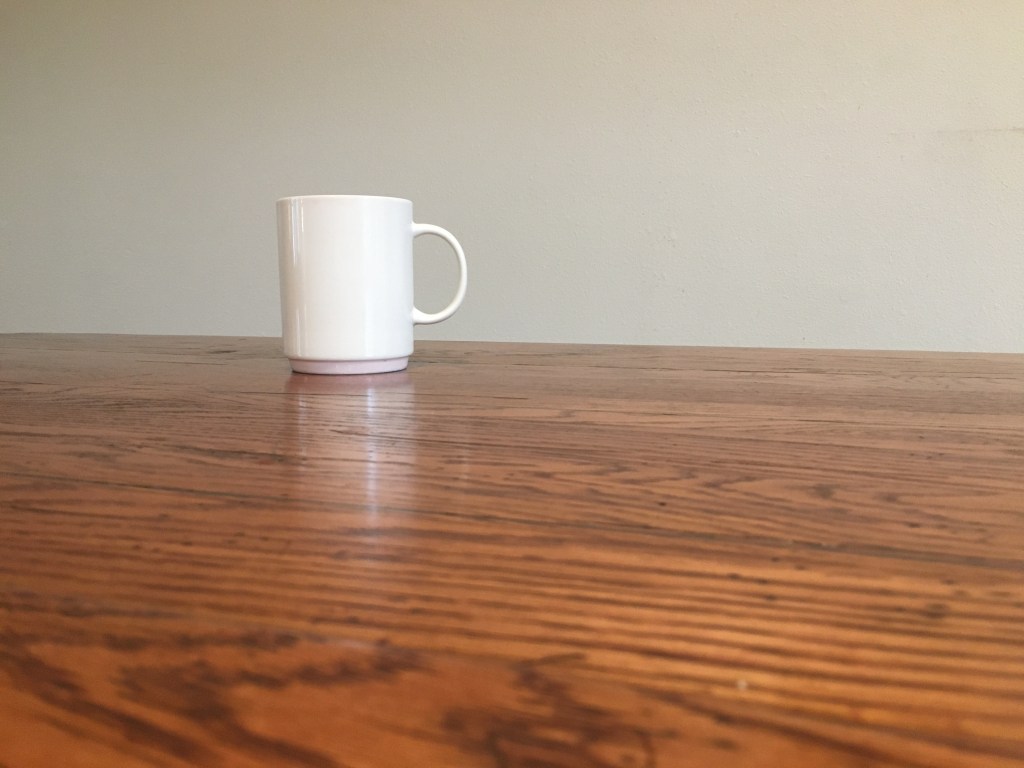
She said they still had the table that went with the benches, the table they had raised their family around. The table they had invited dozens of people to over the years. This table had a heart for ministry. It had a legacy. Its owners decided to gift it to us.
And what a gift it was. To know that this table had seen years of love and care and fellowship, years of laughter and soul secrets and tears. And to know that we were receiving such an incredible heritage from these generous people so that we could do the same thing they had done, the thing we had been dreaming about doing again, was such a sweet gift from the Father.
So we rearranged our kitchen to welcome this new table, which came with two benches and two extensions for larger groups. Daily life doesn’t require the extensions, but we can already envision our married children and grandchildren gathering around this table someday.
Our Cambodia table still has a place in this new arrangement. We cut off both leaves, along with the rolling feet, and set this reduced mass in an open area near our kitchen. Now we have a place to put food and utensils when we host people, since our kitchen has next-to-no counter space. And this is getting into the geometry of it (which I find fascinating, though you might not), but a round table maximizes circumference (which is why it took up too much floor space in our kitchen) while minimizing surface area (which is why there was no room on the table for food). This new table solved all of our problems at once.
A few weeks later we got a taste of this new way of living. We tried out the arrangement with guests, and it worked splendidly. Everyone could relax comfortably, the kitchen didn’t get overcrowded, and we could all eat whenever we wanted. Our home feels like it’s meant to feel – open and warm and clear, and most definitely ready for guests.
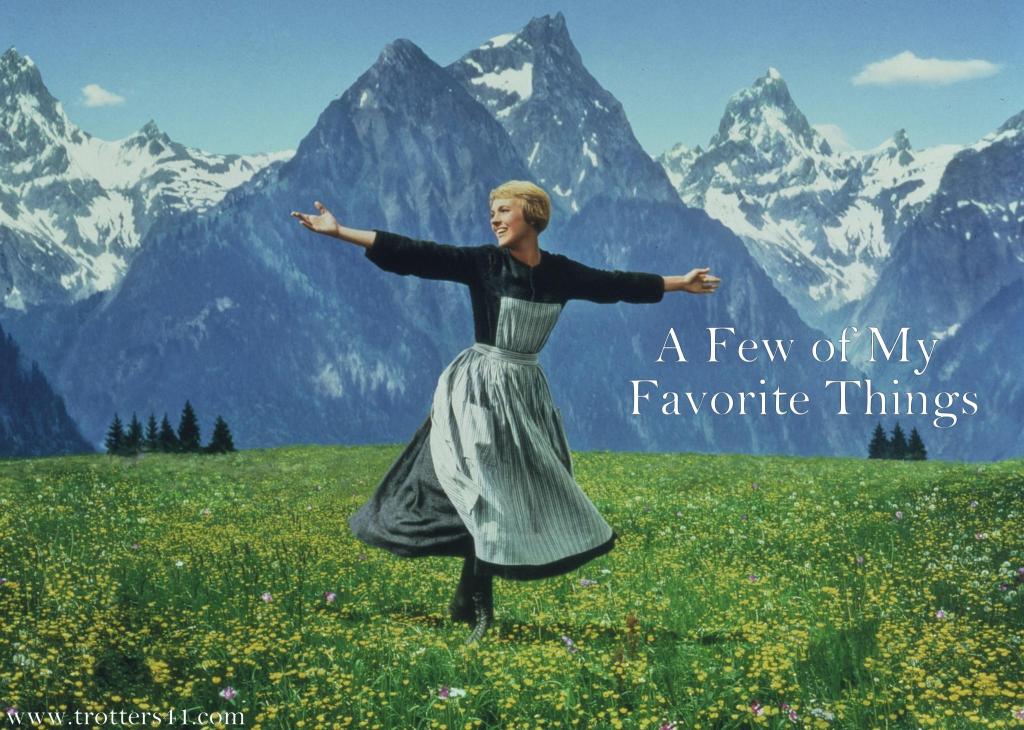
I haven’t published a Favorite Things post for over two years – not since the pandemic began – and I wasn’t sure exactly how to begin them again. But there were all these little things I wanted to talk about. Things that might seem superficial or insignificant but that help me enjoy life more, and those things are important.
There’s so much heaviness in the world right now; there has been for quite some time. I’ve always tended to talk about big, heavy things, but I don’t know how to talk about some of these things. I want to acknowledge the distressing things going on in the world right now (the war in Ukraine, the gun violence in the States, the difficult economy, the unpredictability of the pandemic, the continuing political divisions in my country). They are big, and they are important, and they weigh on me – as I’m sure they weigh on you.
But while we can’t ignore the heaviness, I also don’t want to ignore the little joys in life. So today I’m going to inject a little lightness into this blog with some of the things that I’ve been enjoying in my life over the past year or so. Who knows? Maybe this post will be the thing that will inspire me write again more frequently.
SKIN CARE AND HAIR CARE
Differen (adapalene) gel. For years I’ve been using 2% salicylic acid to care for my oily, acne-prone skin. Then I read about differin gel, which is the only over-the-counter FDA-approved prescription strength retinoid. Retinoids are a form of topical Vitamin A that are good for both acne and signs of aging. Differin is designed more for anti-acne purposes than anti-aging purposes, but it still does double duty. Of course, I have responsibly paired the adapalene with a good sunscreen to protect from further sun damage and a good nighttime moisturizer to counteract the drying effects of the retinoid. (These are both from Cerave and are both designed for the oily skin that I have.)
Highlights. I walked into a salon in February searching for myself. That’s a pretty big statement, so let me unpack it. The whole time I was in Cambodia, I didn’t do much with my hair. I kept it long and put it in braids, buns, or ponytails. The heat made it necessary to keep hair off your neck (except maybe once a year in December), and the constantly blowing fans that were supposed to reduce the effects of that heat made it necessary to keep hair off your face, too. Result: boring hairstyles. Additionally, over the decade that I lived in Cambodia, my hair turned from a lighter blonde to what my stylist would call a “dark blonde.” (In my mind, it was sooo dark, but she assured me it really wasn’t.)
So I walked into the salon looking for something different, something new – or was I really looking for something old? I didn’t know what the lighter color and shorter length was going to look like or feel like, but when my stylist turned me around to look at the back of my hair in the mirror, I nearly cried. I looked like the me I had always known. (30+ years is a long time to stay naturally blonde.) I did the highlights for me, but it turned out that my husband loved them too. Score one for Team Trotter.
Purple shampoo. Purple shampoo counteracts the brassiness/yellowness of blonde highlights and keeps them looking fresh. I use this about once a week, and it makes me happy.
Lather/Rinse/Repeat. The bleach used for blonde highlights can damage your hair, and I did notice more dryness and brittleness after getting the highlights. Then I started double conditioning, and everything is soft again. I don’t know why this works or why one application of conditioner isn’t enough. I only know that this does work.
Heatless curls. This solves two problems: damage from heating tools and a lack of time (or lack of commitment to the time it would take) to style my hair. I just sleep in a curling ribbon (robe-curl-style), and in the morning I take it out. Voila! I have curls. They loosen up throughout the day and become waves, but I’m happy with both. I do this once or twice a week and definitely on Sundays!
Silk pillowcase. I bought one of these to protect my skin and hair from excess tugging and pulling. At first I didn’t notice that much of a difference until one night when I had to sleep without the silk one. Ouch! Everything hurt. These are inexpensive and are a nice way to pamper yourself.
HEALTH AND FITNESS
Tempeh. I hadn’t tried tempeh because I just couldn’t get over the mental hurdle of fermented soybeans. (And also I had seen some photos of it, ew.) But since it’s such a healthy, high-protein alternative to meat, and since my family had gotten tired of tofu scramble, I needed some new recipes. And you know what? Tempeh is delicious, filling, and easy. We do Tempeh Bolognese, Tempeh Tacos, and Sweet and Sour Tempeh (which tastes almost like my Cambodian helper’s Sweet and Sour dish).
Roastaroma tea. I go through phases of really liking this tea and then not craving it at all. I’m currently in a craving stage. It’s bitter, like dark chocolate (I go for 90% these days, by the way), and it’s what made me realize that I actually like bitter. I think it’s one of the flavors God made us to enjoy, but our modern packaged food culture, with all its salt, sugar, and unhealthy fats, has dulled our appreciation for its unique flavor.
I also go in for Chai Green Tea from time to time, which gives the health benefits of green tea without the flavor of plain green tea, which for some reason I don’t care for. My favorite flavors are still probably peppermint and spearmint (I prefer spearmint, but it’s harder to find).
Daily walk. I’ve realized that life in Joplin, MO, as a homeschool educator and freelance editor is not as naturally active as my life in Phnom Penh, where I climbed endless sets of staircases and walked the streets frequently. So about a year ago I added a short one-mile walk to my day (Leslie Sansone anyone??). I go through phases where I get busy and forget, but I always feel better on the weeks when I consistently take a one-mile walk in the afternoon, before doing a harder workout after supper.
Step workouts/heavier weights. About the time I realized I needed more activity in my life, I also realized I needed to level up my exercise regime. I already had a step with risers, and I bought an extra set of risers to increase the step height. I already had 3 kg weights (6.6 lbs) from Cambodia, but I bought a set of 8 lb dumbbells from the local sports store. Each of these things has helped me increase my fitness and reduce my stress – because, let’s face it, exercise is more about happiness than about appearance.
In fact I have quite the ritual for evening stress relief. I exercise, I take my magnesium supplements, I take a relaxing shower, and I read in bed. I don’t know why, but reading in bed puts me to sleep pretty fast. I need to read a few pages of fiction (I’m currently in a P.G. Wodehouse novel) to put my mind to sleep, even if I’m already physically exhausted. This of course means it can take me a long time to get through a novel.
FAMILY MOVIE NIGHTS
One of my favorite things to do is introduce my kids to the movies I enjoyed as a child. They’ve enjoyed this tradition so much that from time to time they ask if I remember any other movies from my childhood that they haven’t seen. Here I’m highlighting the funny ones in alphabetical order (because it’s hard to choose a favorite, though Bejeweled and North Avenue Irregulars come close).
Bejeweled. A 1990s Disney Channel mystery movie. So hilarious (but also hard to find).
Candleshoe. A 1970s Disney mystery with Jodie Foster. May have initiated my lifelong love affair with “Greensleeves.”
Follow That Bird. A 1980s Sesame Street movie. Cleverly written to be enjoyable by adults and children alike, and impressive in its inclusion.
Freaky Friday. The 1970s Disney version, of course.
No Deposit, No Return. A 1970s classic caper movie, also by Disney. Utterly unrealistic but tons of fun.
Savannah Smiles. A 1980s B movie that is absolutely hilarious. Shares some similarities with No Deposit, No Return.
The North Avenue Irregulars. Another 1970s flick. A bunch of church ladies on a crazy adventure. My children know that to make me laugh, all they have to do is quote a random line from this movie.
VOCATION Stories Set Free. A year ago I didn’t have a business. Now I’m booked a month or two in advance. I didn’t believe in myself, but Jonathan encouraged me to put myself out there anyway. I’m glad I took the risk! I love my clients. I believe in the work they are doing, and I love reading their words and working with them to shape and smooth their stories. It is an absolute privilege to work with writers, and I’m thankful.
A Life Overseas. I continue to lead the missions website that I’ve been leading for 7 years. I love my writers, both new and known. I love receiving their submissions and sharing their true and beautiful messages with a larger community. I love helping them craft their words until they are just right. Readers still talk about how much they appreciate the articles, and the journey continues to be an exciting one (for example I’ve added several new writers this past year, and I’m adding a few more soon). For me this has been a very fulfilling ministry, one that I enjoy and one where I feel that my gifts are being used for Kingdom purposes.
Biologos and the Integrate curriculum launch (this is the one where I got to meet Francis Collins!!!). We talked about our unforgettable trip to D.C. on Facebook, but I never wrote about it here. A few years ago, frustrated with the quality of homeschool science materials, I started googling. I found the Biologos site and their pilot program for Integrate, a program that seeks to integrate quality science with a Biblical worldview. The truth is, you don’t have to give up good science to be a Christian, and you don’t have to give up Christianity to be a scientist. I have always believed this. Faith and science don’t have to be at odds. In fact, some of my greatest moments of awe and worship happen when I study science.
I applied for the Integrate pilot program and began piloting sample modules with my older children. Later when the curriculum was published and Biologos decided to throw a launch party for it, they invited me to come be a part of it. I felt out of my depth – nearly everyone there was a PhD scientist, and I was just this little homeschool mom with a stale bachelor’s degree in engineering. I can’t tell you what it did for my soul to be invited to spend time with this special group of people. For so long I have felt so alone. I couldn’t bond over a shared love of science with my Christian community, and I couldn’t relate to non-believing scientists on the deepest levels of reality. I was always hiding a part of me. But when I was with the Biologos people, I didn’t feel I had to hide anything. All parts of me were welcomed and accepted. And when we sang the Doxology together, I cried. I felt at home with them, even if for just a little while.
(Bonus: I’m heading to a homeschool convention in July to support the Biologos booth. I’m so excited!)
(Bonus to the Bonus: I might even get to meet Susan Wise Bauer at this convention.)
SPIRITUALITY
College Heights Christian Church – especially the New Creation Sunday School class. The believers in this class showed me that you can be faithful to the Scriptures without being corrupted by MAGA nationalism. They have restored my faith in the people of God, and I will be forever grateful for that.
My spiritual life really suffered over the last two years. When we returned to the U.S., I looked on in horror as American Christianity became infected with MAGA idolatry. I questioned everything I had ever known. It’s not like I hadn’t questioned things before. I had. I’d had plenty of faith crises in my life (and I’d written about them publicly), but this felt entirely different. Had I devoted my life to a religious movement that was only ever masquerading as biblical Christianity but was actually founded on an insidious quest for political power? I wasn’t sure I wanted my name associated with this political movement. It was some of the most profound pain I have ever experienced.
Today, I still believe Christianity is true – when it is unfettered by the base desire for power. In many ways it was the people at this local church who helped me believe it was possible to uncouple Christianity from power-hungry political movements.
But in addition to restoring my faith in faith, these people have welcomed us into their family. I felt very bruised and battered after losing Cambodia so suddenly and unexpectedly. Cambodia was my whole life. I’d never wanted that life, but after a few years, I fell in love. I didn’t know how to live without it. These people have gently taken care of our needs and showed me how to belong again.
After 20 years of sitting separately from my husband in church, it has been a relief to sit in the back row with my whole family and just be. No need to volunteer or minister to anyone. Just rest and recover. At the same time, it’s comforting to know that, when I’m ready, our church family has plenty of ministry opportunities for me to take part in. It’s a good place to be. (Oh, and the youth group has been great for our kids!)
LIFE
My house. A year and a half after signing the papers, I still can’t believe I got this amazing house. The yard, which is always wonderful, is especially beautiful right now. I have my own office. I have my own workout room. I have my own bathroom (this wasn’t always true in Cambodia). And due to multiple small miracles, we can actually afford this house, even in this tight economy.
My husband. He is still my best friend, and after 22 years I am more in love with him than I have ever been. We have two standing date nights a week. (Note: Date night doesn’t mean you have to spend money, although we sometimes do. Date night can be a walk in the neighborhood and coffee on the porch).
Years 18 to 21 were a strain on us. I had multiple health problems which interfered with our marriage; we repatriated unexpectedly to the States in the middle of a pandemic; and we self-isolated for longer than most to protect Jonathan’s health, which led to painful social isolation. Add in a faith crisis, and well, those were hard years. But we have found ourselves and found each other again since settling in this house, and marriage is good.
My self. When I look back over this list, I realize that some of the things I’ve done or am doing are about finding myself again. You change when you live overseas for a long period of time. You can’t help it. And when you come back, you’re different. You don’t know exactly where you fit, and you don’t know exactly who you are. For instance, I found that being an overseas missionary had become wedded to my identity in a way I hadn’t expected (especially since I never wanted to go in the first place!). Losing the expat life was a big loss and a big shift in my identity that I had to grapple with.
I think some of the items in this Favorite Things post have been about trying to find my place in my new life, about trying to figure out who Elizabeth Trotter is in this context. I was so unhappy for so long. It took me 12 months to truly accept that this was my new life, and 18 months to truly love it. So I feel like celebrating the seemingly little things that have helped me on my journey to love my new life in Joplin, MO. In the end, I think that’s really what this article was about.
One of my favorite parts about Christmas in Cambodia was the lack of commercialism. I particularly remember our first Christmas there. We took our children to the Russian Market (Tuol Tom Poung) and gave them each $5 to pick out presents for their siblings. Then we went home and took turns wrapping each other’s presents.
On Christmas morning the children opened their presents. They were thrilled with the simple gifts they’d been given. And watching their collective joy was a gift to me. With no cultural cues that they needed a multitude of expensive presents, they were satisfied with small things.
My other favorite part about Christmas in Cambodia was celebrating it with our team. With no extended family nearby, expats must forge their own on-field family. Early on, I had realized that my children would never experience the type of large extended family I had grown up with — dozens of cousins, aunts, and uncles who gather at Grandma and Grandpa’s house on holidays. And I grieved over that.
But every Christmas we celebrated with teammates. I watched as our children interacted with teammates like they were cousins, aunts, and uncles — and my heart healed a little. My children were going to experience something similar to my childhood; they just weren’t related to these people.
Truly, teammates are like family. They take care of you when you are in need, you spend holidays with them, and sometimes you even fight with them. Our first Thanksgiving in Cambodia involved both sickness and caretaking: our children had contracted hand, foot, and mouth disease, and we were all quarantining at home. Teammates brought us holiday-themed food to cheer us up; at least we could celebrate in isolation.
The experience of Team Christmas was a cornerstone of life on the field, and it was something I particularly missed during Christmas 2020.
Christmas 2021 was different. Some of our old teammates have also repatriated, and they were traveling through our hometown the week before Christmas. They stopped and spent the weekend with us. We used to have regular game nights with them. I went out with the wife every few months in Cambodia, and she and I have done nearly all the Velvet Ashes retreats together (although we’ve had to switch to retreating virtually since moving back to the States).
It had been over two years since we’d seen them in person, since we had farewelled them at the Phnom Penh International Airport. And it was good. We played games. We talked about all the things. And we began a new tradition: gingerbread house competition. We enjoyed it so much we’ve decided to do it again next year.
We hit a cold snap that weekend, and I froze. This was a major departure from Christmas in Cambodia, where it was always hot and sweaty. Thankfully Joplin weather warmed up nicely for Christmas Day.
Today is the twelfth day of Christmas, and I guess I didn’t want to say goodbye to Christmastide without honoring my relationships with teammates, both on and off the field. The years were good, and the years were hard, but the holidays were made sweeter by the presence of good friends. I’m grateful I could experience that sweetness once again in 2021.
I used to be an expert jet-lagger. For eight years we traveled the globe, making multiple 24-hour trips. We would arrive to a world exactly one-half day behind or ahead of the world we’d just left. It usually took my body about two weeks to fully adjust.
Sometimes I would hear travelers to Europe complaining about the long flights and the trans-Atlantic jet lag, and I would laugh. Because I knew they could arrive at their destination in less time than it took to fly my longest leg, start to finish. Their time difference was several hours shorter than mine, so I flattered myself either that I was “better” at jet lag — or that I merely suffered more.
Other times in those eight years overseas, I would hear people complaining about the shift between Daylight Savings Time and Standard Time. And I would think to myself, what can one measly hour do? How can it wreck an entire week? I had been told that it generally takes about one day per time zone difference to recover from jet lag. So I figured people should be able to recover from Fall Back and Spring Forward in just one day.
I mean, I remembered time changes from before Cambodia. Spring Forward was annoying, as I lost an hour of sleep. But I loved Fall Back. I loved the idea that I could get the same amount of sleep and still stay awake an hour extra. A night owl’s dream, right?
But now that I live here again, I don’t find Fall Back to be such a dream come true. We turned our clocks back a week ago, and all last week I woke up an hour early, effectively losing more hours of sleep than I supposedly gained last Saturday. What had happened to me? What happened to the globe-trotting girl who could hack time changes and days-long airplane trips? I don’t know if she grew old, or if she merely lost her traveling skills.
But from now on I understand why Americans complain about the biannual time change. Because it’s no joke.
We drove through the city recently. We didn’t even drive into the city; we just drove through it on the interstate. I was shocked by how quickly the traffic changed. It became so much faster, so much more crowded, and so much more stressful – and I wasn’t even the one driving.
When I lived in Kansas City, I thought this kind of traffic was normal. It didn’t stress me out. I knew the city like the back of my hand, and I could drive most places on autopilot. But now that I’ve lived away from it for over a year, the city feels very overwhelming. I’ve definitely become accustomed to the slower pace of driving in Joplin. And I have no desire to return to city driving.
I have, in fact, successfully contracted my life. The grocery store is five minutes away, as is the doctor. Our church is ten minutes away, and the airport is close by. I don’t mind at all. On the days when I have to drive across town – say, for instance, to the dentist — it feels like I’m making a long journey. And it’s only 20 minutes. This stands in contrast to Kansas City driving, where no one bats an eye over a 20-minute drive, and many trips are 40 minutes or more.
Traffic is light here, most of the time. And when traffic is heavy, it’s nothing like the painfully slow, packed streets of Phnom Penh. I didn’t even drive in Phnom Penh. Traffic was so stressful that the very first week we lived there, I decided never to drive in it. And the traffic only worsened over the years. That means I experienced Phnom Penh traffic only as a passenger, either in a vehicle with Jonathan driving (and probably getting stressed out) or in a tuk tuk.
So whether I compare Joplin traffic to Kansas City traffic or to Phnom Penh traffic, I will choose Joplin every time. It is relaxed and unrushed, and I love it. Initially it was stressful learning the art of the traffic circle, but now I love its simplicity. And at first it was disorienting to try to find my way around a new town, but these days I’m more familiar with the layout. Now that I’ve lived here awhile, I’m not sure I could ever go back to city driving, and I’m perfectly content with that.


 Jonathan & Elizabeth Trotter