Traffic | Postcards from Re-entry

by Elizabeth

We drove through the city recently. We didn’t even drive into the city; we just drove through it on the interstate. I was shocked by how quickly the traffic changed. It became so much faster, so much more crowded, and so much more stressful – and I wasn’t even the one driving.

When I lived in Kansas City, I thought this kind of traffic was normal. It didn’t stress me out. I knew the city like the back of my hand, and I could drive most places on autopilot. But now that I’ve lived away from it for over a year, the city feels very overwhelming. I’ve definitely become accustomed to the slower pace of driving in Joplin. And I have no desire to return to city driving.

I have, in fact, successfully contracted my life. The grocery store is five minutes away, as is the doctor. Our church is ten minutes away, and the airport is close by. I don’t mind at all. On the days when I have to drive across town – say, for instance, to the dentist — it feels like I’m making a long journey. And it’s only 20 minutes. This stands in contrast to Kansas City driving, where no one bats an eye over a 20-minute drive, and many trips are 40 minutes or more.

Traffic is light here, most of the time. And when traffic is heavy, it’s nothing like the painfully slow, packed streets of Phnom Penh. I didn’t even drive in Phnom Penh. Traffic was so stressful that the very first week we lived there, I decided never to drive in it. And the traffic only worsened over the years. That means I experienced Phnom Penh traffic only as a passenger, either in a vehicle with Jonathan driving (and probably getting stressed out) or in a tuk tuk.

So whether I compare Joplin traffic to Kansas City traffic or to Phnom Penh traffic, I will choose Joplin every time. It is relaxed and unrushed, and I love it. Initially it was stressful learning the art of the traffic circle, but now I love its simplicity. And at first it was disorienting to try to find my way around a new town, but these days I’m more familiar with the layout. Now that I’ve lived here awhile, I’m not sure I could ever go back to city driving, and I’m perfectly content with that.

Rose of Sharon | Postcards from Re-entry

by Elizabeth

We moved into our new home in December. The days were frigid, the nights were long, and the trees wore the mid-winter appearance of death. The maples, we recognized. But there were several other tree-like shrubs planted throughout the yard whose identity we had no knowledge of. They grew warped, woody stems, and their trunks often jutted out from the ground at an angle. To my eyes at the time, they were ugly.

Later in the spring we met the sellers, who told us the name for these tree-bushes: Rose of Sharon. I had heard the name, but I wasn’t familiar with its personality. The former owner said she loved them and planted them in pairs throughout the yard, which is supposed to encourage their growth. They were planted in lines along the outside edge of the fence and in pairs by my office and by the firepit. At that point in time, I had no emotional investment in them.

Throughout the spring the petunias and daylilies bloomed, along with the maples and the other potted plants we’d purchased. The daylilies in particular were the highlight of our day. Situated straight across the yard from my desk window, the bulbs produced new orange blooms every day till the last day of spring. We were sad that the life of the daylily was coming to an end for this year.

The very next day was the first day of summer. That was the day the Rose of Sharon bushes started blooming. I hadn’t bothered to look up any information about the plant and didn’t know what to expect, so their beauty surprised me. In some ways, they reminded me of our favorite tropical flower, the frangipani. (Americans call these flowering trees “plumeria.”)

Now I was intrigued, so I searched for information about the Rose of Sharon. Turns out, it is not a rose but a hibiscus, and it’s Asian in origin (mainly from India and China). That would be why it reminded me so much of home. In fact, Rose of Sharon is often recommended to people who want a tropical feel in a temperate climate, as it’s fairly hardy.

Our Rose of Sharon trees bloomed in four different colors: pink, purple, light pink, and white. The pink and purple grew by my office; the purple stood by the firepit, still visible from my office window; and light pink and white ones were scattered between the road and the fence. Purple is generally a favorite color of mine, but for some reason I fell in love with the white Rose of Sharon. I think it was because, from a distance, they reminded me of an actual white rosebush.

For me it is a precious thought that the previous owners planted something all over the yard that would remind me, a future owner, of my old home in Asia. I already knew this house was a perfect fit for us, but this summer I was reminded that God takes care of even the little things in life, like flowers.

After blooming daily for two months, they precipitously dropped off in August. The branches were weighed down with buds full to bursting, unable to flower during the dry season. And of course, winter is coming. The lovely Rose of Sharon will shrivel back into crooked little stems, and for a while they will look barren.

But next summer they will come back to life again, brimming with the colors of Cambodia.

Our Rose of Sharon at summer’s end.

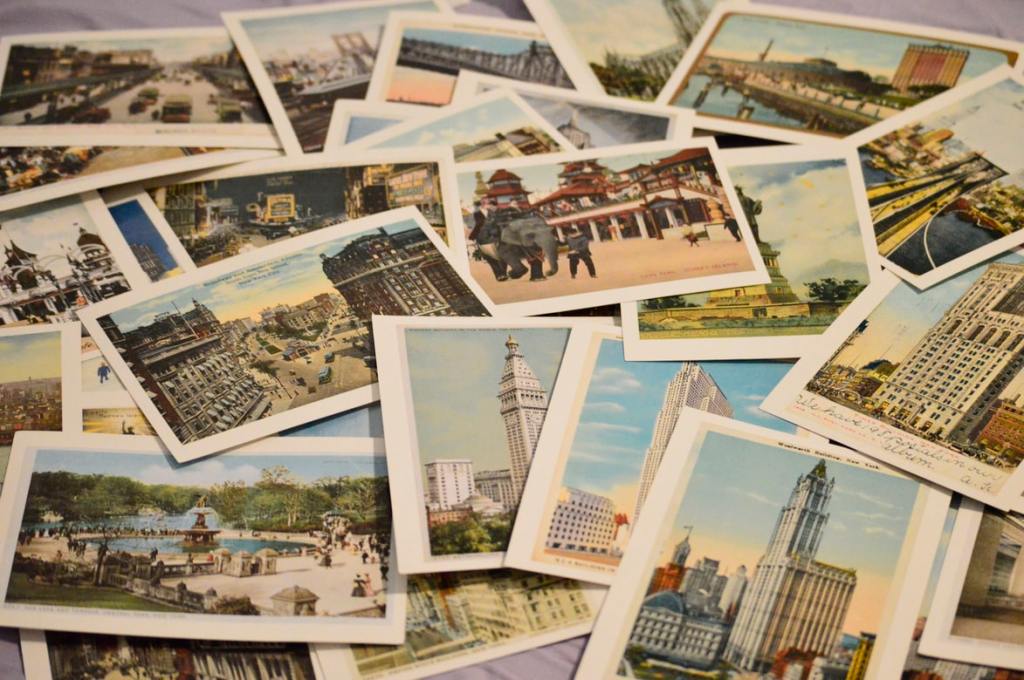
Postcards from Re-entry {a new series}

by Elizabeth

For a while now, I’ve been trying to figure out how to tell the stories of re-entry. There are the big stories, of course. The ones that can take pages and pages and still feel unfinished. But there are ever so many little stories. Short little vignettes that capture fleeting feelings and everyday experiences. They are what I want to focus on in this series.

I’m calling it “Postcards from Re-entry” to designate the briefer and less meditative nature of these stories. They’ll capture my life, but not in a way that feels overwhelming for me to write or that takes too much of a time investment from my readers. I like to think of my blog posts as letters to my friends. So I’ll still be sending you letters, but they’ll (hopefully!) be shorter than my usual ones.

So look for the first installment soon!