How Preparing a Gift for My Parents’ 50th Wedding Anniversary Reminded Me of My Calling

For my parents’ 50th wedding anniversary (which is today, by the way!), my sisters and I decided not to throw a party. I’m not sure my parents would have wanted a party anyway. But we wanted to celebrate them in some way, and we chose two avenues. First, we signed them up to write their memoirs bit by bit through a company called Storyworth. It’s been fun for all of us to read the stories of their life as they arrive in our inboxes week after week.

And second, we decided to put together a book of memories for them from their closest friends and family. These people are scattered across the country, as our family’s story includes fifteen years in the U.S. Army, including four years stationed in West Germany in the early 80s. I knew this had the potential to be a once-in-a-lifetime gift, but I had no idea what its true impact would be on me or my parents.

As the letters started to trickle in, I noticed a pattern. Over and over again, the main thing people remember about Jeff and Mary Hunzinger was the way they served others. Consistent across all their locations—El Paso, Germany, South Dakota, Fort Riley, Red Bridge Church of Christ, Legacy Christian Church—they were just always there for people.

I remember hearing the same themes when my mom’s dad died. People kept talking about how he helped other people, how he was there for them. At the wake someone told a story I’d never heard before of Grandpa helping a man in the community who’d been at risk of suicide and how he’d even gone to his house in the middle of the night. My grandparents were farmers. They didn’t have a lot of money. They didn’t even have high school diplomas (though Grandpa was really proud of Grandma for earning her GED later in life), but people didn’t care about that. All they remembered was how much Grandpa had contributed to the community.

It reminds me of the way people talk about my husband’s parents. Mark and Kerry have been gone for decades now, but the main thing people remember about them was the way they were there for other people. They had this special ability to see where people were spiritually and to speak into their lives. With a dentist’s salary, they also had the means to bless people financially—and often did. But it’s not just Jonathan’s parents who gave us this example; his dad’s parents lived in much the same way. 

So I read all these letters about my parents and thought about the legacy I’ve been given on both sides of the family, and I was moved to tears. It made me grateful. More than that, though, it made me want to live into this precious legacy I’ve been given. 

My parents didn’t know any of those things when I visited them earlier this summer. I was still acutely ill, but after dinner we sat around the table talking like usual, and Mom was commenting on life. I can’t remember the context, but she said something about how life isn’t all about you, it’s about other people and serving them. Her priorities were clear. She knew the important things in life. But she hadn’t seen any of the letters yet. She didn’t know what people were saying about her and Dad. She just knew how she wanted to live her one beautiful life, following in the footsteps of her parents and in the footsteps of Jesus.

I started to think back over the last several years and see how my health struggles and mental health challenges have just been so all-consuming. I wasn’t always able to see outside myself. I remember pregnancy being the same way. A momma just turns so inward, needing to take care of the little life inside. After a few pregnancies, I remember consciously thinking that it would be good for me to take a break from being pregnant because it’s so inward-focused, trying to take care of the baby and all. 

And then I thought back over this past year and how (with the exception of this summer) I’ve had the best mental, physical, and relational health in a long time, probably due to finally being on HRT. Suddenly I could see outside myself again—because service has long been a theme in my life as well. 

Why do my hormones need to be in balance in order to serve the God I’ve loved since I was a little girl? Why do my neurotransmitters need to be in balance to be the person God made me to be? Because I know who God made me to be—I’ve known that for so long—and loving Him and loving ministry and caring for my family and for people in the community has defined so much of my life.

And then perimenopause and re-entry (not so affectionately called re-entrypauseTM in our household) just sideswiped me. I look at who I am when my hormones are out of balance, and I have a hard time believing that’s God’s intention for me. Self-centered and irritable is not who He made me to be. He made me to be joyful, patient, curious, nurturing. This years-long process has shown me that sometimes these mortal vessels need medication for us to be the person God created us to be. 

Re-entrypause shifted my ability to listen to God, to see other people outside myself, to see things in reasonable and rational ways. My thinking got all twisted up on so many levels. I’m thankful for modern medicine that can restore the circuits in my brain to be able to look outside myself and to serve other people again—and to want to do that for the rest of my life. I just had a birthday this past week, 45 trips around the sun. I’m already halfway to the end, if not more than that. For the second half, I want to return to the way I tried to live most of the first half, in service to God and others.

So these days you’ll find me singing the words of that old camp song, “Make Me a Servant.” I pray the song, and I think about my parents’ legacy, so that when I get to the end of my life, what people remember is how much I poured out, not how much I took. I want to live a life that flows outward, not inward. A life that points to God’s love, not one that points to myself. And the only way to do that is through the blood of Christ and the power of the Holy Spirit.
Losing God and Country {Velvet Ashes}

I’m over at Velvet Ashes this week, talking about the pain of re-entry and how it affected my relationship with God.

My re-entry story began with an unplanned return in the midst of COVID-19. I wasn’t the only one—it turned out to be such a common experience. But at the time it seemed like just about the worst thing that could happen to me.

I loved my life overseas. I felt called to it. I found God there, amongst the power cuts, heat waves, dirty streets, and endless needs. Amongst the palm trees, rain clouds, frangipani, and deep sense of purpose.

We had scheduled a regular furlough that year but ended up leaving early, convinced we would be able to fly back to our Cambodian home in a few short months. Paperwork and the pandemic had other plans. And when our overseas life fell apart, I did too.

Pain permeated everything. It was in my heart as I bid farewell to a country and a beloved community without actually saying goodbye, without hugging people and crying in person. But it was in the hearts of others, too, as their lives were similarly uprooted, whether by relocations, pandemic restrictions, or tragic deaths. Why was an all-powerful God allowing such pain?

This God seemed responsible for the anguish and upheaval in my life. I was angry with Him, and in my anger, I refused to speak to Him. At different points during the next couple years, I even considered the idea of not believing in God anymore. If I no longer believed in the Person who caused my pain, the pain would go away, right?

Read the rest at Velvet Ashes.

The Table {Postcards from Re-entry}

by Elizabeth

In 2006 when our lead minister and his wife became empty nesters and moved out of the church parsonage so that we could move in, they left their kitchen table. We were a young family who didn’t have a kitchen table and were grateful for all the other furniture they left too.

Over the next six years, our family grew around that table. We added babies, and we added memories. We created a family and ministry culture around that table, and when we left the States for Cambodia, my best friend took the table into her home. 

It was full of memories for her too. Memories of late-night conversations when she would visit me because I was stuck at home with young children and a traveling husband. (I now try to return the favor to young moms when I can, going to them during naptime.) It was full of summer days with our kids eating snacks around the table and then playing in the yard or doing science projects together. She had to let me go, but she didn’t have to let that table go.

A new kitchen table was one of the first things we needed to find when we arrived in Phnom Penh in 2012. Some friends took us to a local furniture shop and helped us pick out both dining and living room furniture. The pieces were cheap, but they looked good enough.

Our first table soon fell apart. Huge flying termites bored holes into the table and migrated into our door frames as well. We could hear them chewing away at the wood. Jonathan tried to tear out the rotten pieces and kill the termites, but eventually he gave up the struggle. The table had to go. Its cheap, untreated wood had probably brought the termites with it from the shop in the first place. Next time we would be more careful.

In the meantime, we needed something to eat from, so we pulled out a spare metal round table, the kind that Khmer people set up at weddings. It took up a lot of space in our kitchen, but we discovered we liked the equanimity of a round table. Everyone could participate in family life the same. We were all the same distance from each other, and family life thrived. We decided our next table needed to be round.

Eventually we found a super heavy, high quality Khmer round table, and it took several delivery men to pull it up the two flights of stairs to our kitchen. We couldn’t host people around that table very well, but we couldn’t host people very well around our rectangular table either. Our kitchen was just too small.

We loved that round table. You can see it in lots of family photographs from our time in Southeast Asia. It became emblematic of Trotter family life, and after a few years we all signed our names under our places at the table.

Then covid happened. We returned to America early for a planned furlough, leaving our table and other belongings behind like usual. When we realized we weren’t going back, Jonathan did everything he could to rescue our Cambodian kitchen table, that centerpiece of family life. After multiple failed attempts with one company, we found a legitimate company that could transport our most precious belongings back to the States. It consisted mostly of books, pictures, and personal items, but we also shipped the table. 

The shipment took several months, getting stuck in U.S. customs and requiring unexpected fees, but it eventually found its way to Joplin, where we were resettling. We pulled our heavy Cambodian table into our new home in December 2020 and breathed a sigh of relief that we had preserved part of our children’s childhood for them.

But it took up a lot of space here as well as there, and after a couple years Jonathan started dreaming about a table that could host more people. We weren’t engaging in much hospitality during the pandemic, but he knew he wanted to host people again. He wanted to live like we did at the parsonage, regularly inviting people into our home and our backyard. He wanted to live like he did growing up on an acreage in a small Kansas City suburb, where his parents frequently hosted people for evening bonfires, sunrise services, and hot cocoa. To do that, we would need a different table.

The family wasn’t sure how to take this news. We loved our round table. It reminded us of Cambodia. But I caught the vision. I knew he was right – we needed a different table if we wanted to invite people into our home and into our lives. But tables are expensive, and we needed everyone to get used to this new plan, so the idea sat for a year or two.

All along, he kept an eye out for wooden tables and benches (which seat even more people than chairs). Then one Saturday morning he saw a friend selling wooden benches online. He texted right away, explaining that he was looking for benches to go along with the long kitchen table he was still dreaming of.

She said they still had the table that went with the benches, the table they had raised their family around. The table they had invited dozens of people to over the years. This table had a heart for ministry. It had a legacy. Its owners decided to gift it to us.

And what a gift it was. To know that this table had seen years of love and care and fellowship, years of laughter and soul secrets and tears. And to know that we were receiving such an incredible heritage from these generous people so that we could do the same thing they had done, the thing we had been dreaming about doing again, was such a sweet gift from the Father. 

So we rearranged our kitchen to welcome this new table, which came with two benches and two extensions for larger groups. Daily life doesn’t require the extensions, but we can already envision our married children and grandchildren gathering around this table someday.  

Our Cambodia table still has a place in this new arrangement. We cut off both leaves, along with the rolling feet, and set this reduced mass in an open area near our kitchen. Now we have a place to put food and utensils when we host people, since our kitchen has next-to-no counter space. And this is getting into the geometry of it (which I find fascinating, though you might not), but a round table maximizes circumference (which is why it took up too much floor space in our kitchen) while minimizing surface area (which is why there was no room on the table for food). This new table solved all of our problems at once.

A few weeks later we got a taste of this new way of living. We tried out the arrangement with guests, and it worked splendidly. Everyone could relax comfortably, the kitchen didn’t get overcrowded, and we could all eat whenever we wanted. Our home feels like it’s meant to feel – open and warm and clear, and most definitely ready for guests.

2023 Year in Review (in photos)

by Elizabeth

The cry of my heart for ever so long. I encounter God so deeply in science. My girls gave me this mug for Christmas. I love it, and I love them for giving it to me.

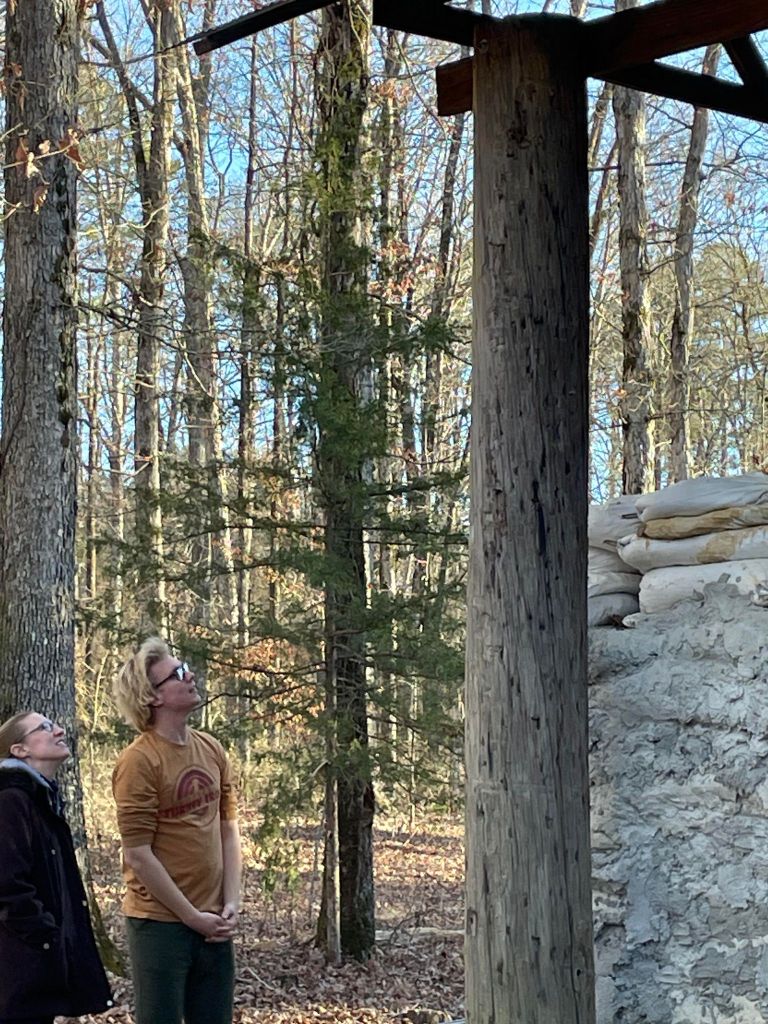
My firstborn explaining trusses to me. I took Statics 20 years ago when I was pregnant with him, and here he is 20 years later taking the course himself. I actually remember very little about it, but it was fun to geek out with him over the E (engineering) in STEM.

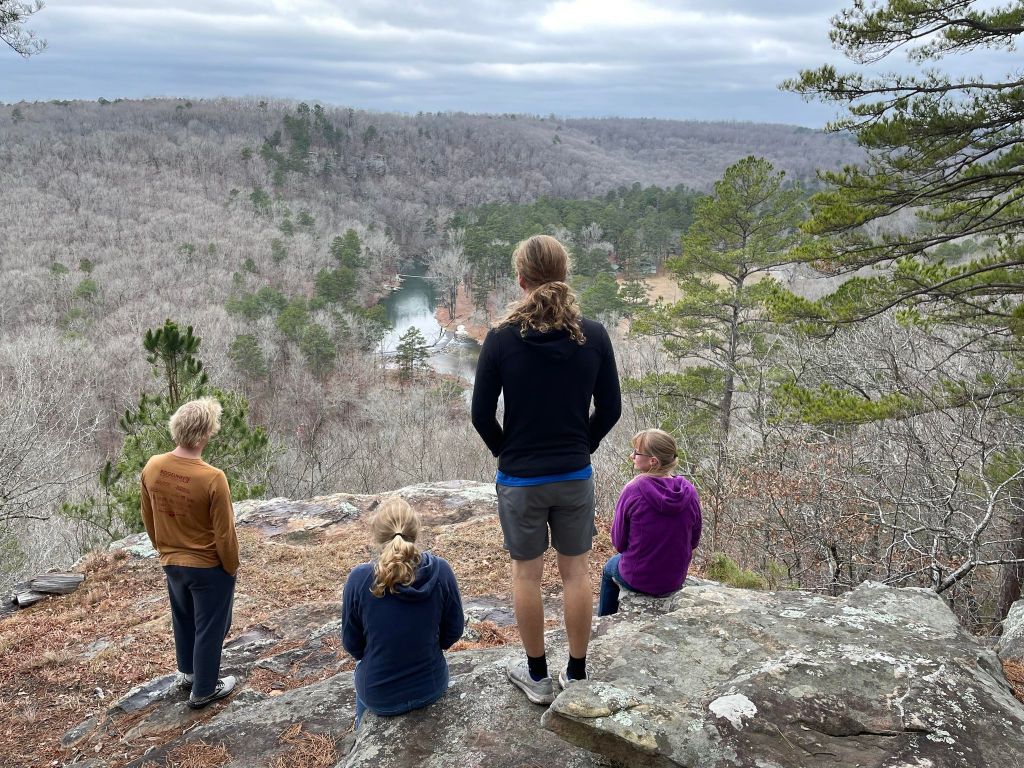
My four children overlooking Horse Bluff at Camp Tahkodah. Their great-great-grandfather Dr. George Benson cashed out a life insurance policy to purchase the campground — that’s how much he believed in it. 

The older I get, the more I’m thankful for such a heritage for my children. (They have a beautiful heritage of faith and family traditions on my side too.) Benson later sold the camp to Harding University, who still owns and operates it.

Horse Bluff has always been my favorite bluff. 

In many ways the song “Sing My Way Back” from Steffany Gretzinger represents the year 2023 for me. Re-entry challenged my faith and seemed impossibly hard at times. In a very real way I lost access to the one thing that could have strengthened and sustained me in that time.

My relationship with God thrived on the field, but upon returning unexpectedly in 2020, I found that not only had I changed while I’d been overseas, my passport country had also changed.

For a long time everything felt dark, and I felt dead inside. But somehow in 2023 I found my way back to His heart.

Much of this change was accomplished through working with a spiritual director. I’m so grateful to Danielle Wheeler for answering my questions about spiritual direction and for connecting me with a potential director.

We are more completely our true selves when we are in communion with Christ. That’s part of why I felt so much unlike myself during re-entry. I’m thankful to be making my way back to both God and myself.

Brooke Ligertwood’s “Honey in the Rock” represents another aspect of my year. I first heard it a couple years ago and disliked it. I wasn’t experiencing life like this and thought it was out of reach.

But 2023 has changed all that. It started at the beginning of the year with some financial challenges — we had to make major foundation/crawl space repairs, and the bill for these necessary repairs frightened the living daylights out of me.

I’d had anxiety around money for decades — ever since adolescence when my family faced adverse financial circumstances. I’d carried that anxiety through life, memorizing and reciting Matthew 6:25-34 over the years and praying for my daily bread with the Lord’s Prayer. But the anxiety remained.

I had to do some deep inner work on my money fears this year, and it wasn’t pretty. About halfway through the year I began to find some healing.

But that wasn’t the only way I found “honey in the rock, water from the stone, manna on the ground, no matter where I go.”

This year was a series of progressive healings, only one of which was with money. There was healing in relationships, healing in my ability to reach out to others. The manna God offers isn’t just physical nourishment, but I hadn’t experienced His manna in a long time.

Of course, now I can look back over all the years of re-entry and see honey in the rock everywhere. But for so long I couldn’t see the stars, I couldn’t taste the honey.

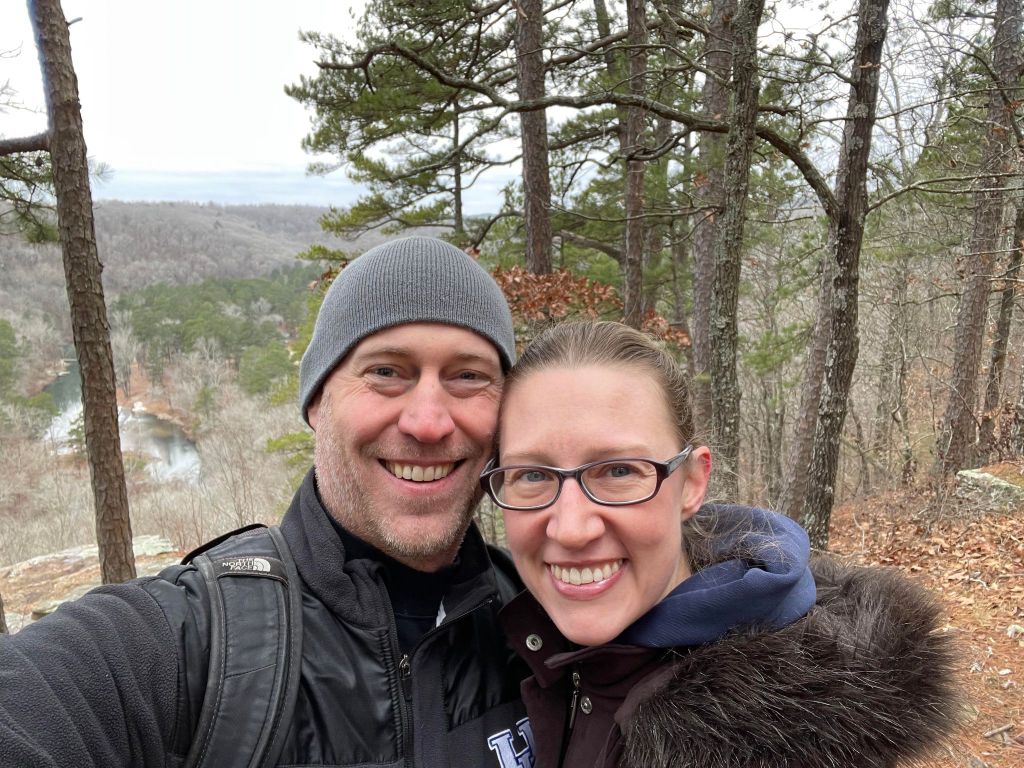
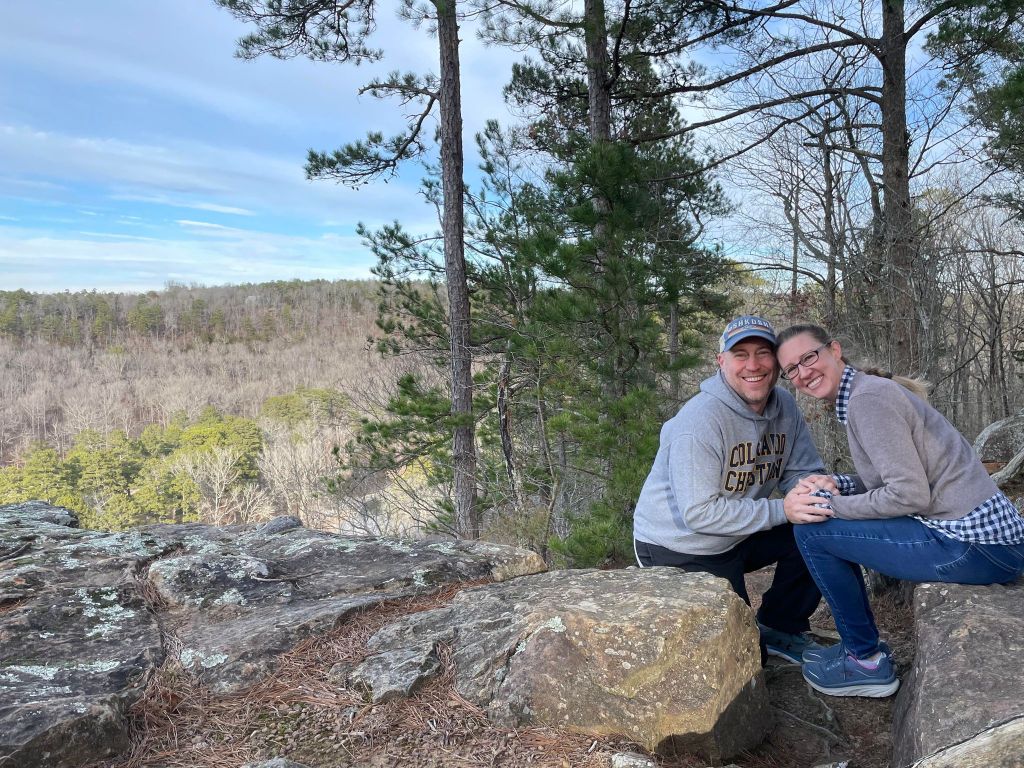
24 years ago this handsome guy asked me to marry him at this camp (albeit a different bluff). We’ve returned to this place as often as we can over the years — it’s as close to Home as he gets.

And it’s been the place where we’ve often made big decisions. The decision to start a family (remember that big tall guy explaining the trusses?), the decision to go to nursing school in KC, the decision to go to the mission field.

There were no big decisions to make this year, but I came away with a very grateful heart for 2023 and the God (and people! you know who you are, College Heights Church!) who brought me through it.

“Home is wherever I’m with you.”

Re-enacting our engagement for our children.

There’s no one else I would rather do life with. Here’s to 24 more years — and 24 more years after that.

Chatting About Repatriation

Christine Paterson of FieldPartner International and I recently had a conversation about repatriation (among various other cross-cultural topics). It’s the first time I’ve talked about re-entry in an interview, and I think it might be the first recorded interview I’ve done since our book launched in 2019.

It was an honor to be invited to Christine’s channel and a pleasure to chat with her. You can access the video interview on the FieldPartner website or on YouTube, or you can listen to the audio version on Apple Podcasts or Spotify.

~Elizabeth