I used to be an expert jet-lagger. For eight years we traveled the globe, making multiple 24-hour trips. We would arrive to a world exactly one-half day behind or ahead of the world we’d just left. It usually took my body about two weeks to fully adjust.
Sometimes I would hear travelers to Europe complaining about the long flights and the trans-Atlantic jet lag, and I would laugh. Because I knew they could arrive at their destination in less time than it took to fly my longest leg, start to finish. Their time difference was several hours shorter than mine, so I flattered myself either that I was “better” at jet lag — or that I merely suffered more.
Other times in those eight years overseas, I would hear people complaining about the shift between Daylight Savings Time and Standard Time. And I would think to myself, what can one measly hour do? How can it wreck an entire week? I had been told that it generally takes about one day per time zone difference to recover from jet lag. So I figured people should be able to recover from Fall Back and Spring Forward in just one day.
I mean, I remembered time changes from before Cambodia. Spring Forward was annoying, as I lost an hour of sleep. But I loved Fall Back. I loved the idea that I could get the same amount of sleep and still stay awake an hour extra. A night owl’s dream, right?
But now that I live here again, I don’t find Fall Back to be such a dream come true. We turned our clocks back a week ago, and all last week I woke up an hour early, effectively losing more hours of sleep than I supposedly gained last Saturday. What had happened to me? What happened to the globe-trotting girl who could hack time changes and days-long airplane trips? I don’t know if she grew old, or if she merely lost her traveling skills.
But from now on I understand why Americans complain about the biannual time change. Because it’s no joke.
We drove through the city recently. We didn’t even drive into the city; we just drove through it on the interstate. I was shocked by how quickly the traffic changed. It became so much faster, so much more crowded, and so much more stressful – and I wasn’t even the one driving.
When I lived in Kansas City, I thought this kind of traffic was normal. It didn’t stress me out. I knew the city like the back of my hand, and I could drive most places on autopilot. But now that I’ve lived away from it for over a year, the city feels very overwhelming. I’ve definitely become accustomed to the slower pace of driving in Joplin. And I have no desire to return to city driving.
I have, in fact, successfully contracted my life. The grocery store is five minutes away, as is the doctor. Our church is ten minutes away, and the airport is close by. I don’t mind at all. On the days when I have to drive across town – say, for instance, to the dentist — it feels like I’m making a long journey. And it’s only 20 minutes. This stands in contrast to Kansas City driving, where no one bats an eye over a 20-minute drive, and many trips are 40 minutes or more.
Traffic is light here, most of the time. And when traffic is heavy, it’s nothing like the painfully slow, packed streets of Phnom Penh. I didn’t even drive in Phnom Penh. Traffic was so stressful that the very first week we lived there, I decided never to drive in it. And the traffic only worsened over the years. That means I experienced Phnom Penh traffic only as a passenger, either in a vehicle with Jonathan driving (and probably getting stressed out) or in a tuk tuk.
So whether I compare Joplin traffic to Kansas City traffic or to Phnom Penh traffic, I will choose Joplin every time. It is relaxed and unrushed, and I love it. Initially it was stressful learning the art of the traffic circle, but now I love its simplicity. And at first it was disorienting to try to find my way around a new town, but these days I’m more familiar with the layout. Now that I’ve lived here awhile, I’m not sure I could ever go back to city driving, and I’m perfectly content with that.
Re-entry is messy. So messy, in fact, that much of what transpired in my life in the last year did not end up here on the blog. I was in emotional and situational chaos, and I had absolutely zero mental margin to publish – or even process – what was happening to me.
I think that’s as it should be. Not every difficult thing that happened in Cambodia was meant for public consumption either. And I’m not sure the value of platforming topics when they’re as raw as they were this last year and a half.
But I can tell you that in the middle of this mess of mine, I was meeting with a counselor. I’ve been raving about the benefits of counseling ever since 2006 when I first met with a Christian counselor. Over the years I’ve met with counselors off and on, whenever issues in my life popped up and kept me from functioning (the most recent being in early 2019 when my life was so rudely interrupted by anxiety and OCD). So, over the past year during our tumultuous repatriation, I thought I was doing the right thing by talking to a counselor.
Except I wasn’t getting anywhere.
On some level, I knew I wasn’t getting anywhere. Processing the past wasn’t helping me to accept my present circumstances the way it had helped me before, and it wasn’t helping me to move forward in life either. It seemed like nothing was helping. But the only construct I had for getting better (or “bettering,” as my friend Amy Young likes to call it) was Christian counseling, so I kept at it.
In February, fueled by a historic midwestern snow and ice storm, my spirits hit an all-time low. I knew I needed more help than I was currently getting, so I reached out to someone for debriefing. She’d been highly recommended to me by others. Meeting with her was helpful, and after a few sessions, I thought I was stable enough to make it to our formal week-long debrief in August.
I was much more forward-facing by that time, and even my debriefer noticed it. I still had questions about how in the world I was going to thrive in America, but she assured me that the week-long debriefing would help me move forward – and that if I still needed help figuring out the future after the big debrief, I should come and see her again. (I’ve been told that one of the purposes of “debriefing” is to move the past into the past so that you can walk forward into the future.)
Soon after I debriefed with her, my agency suggested Christian coaching as a way to get “unstuck” and move forward in life. It sounded intriguing. I’d never done coaching before, and in fact, I’d never been drawn to the idea. I’d always figured that when my emotions were a mess, I needed a treatment that addressed the emotions. But since counseling wasn’t currently working, I thought I could at least try the coaching.
I’m glad I did. Coaching is the reason I started writing again (I have several more blog posts in the works). It’s the reason I finally created a webpage for my freelance editing. It’s the reason I started working on a few other background projects. It’s the reason I started dreaming about the future again and the reason I’m living in the present instead of the past. I just didn’t have enough motivation for any of these things before coaching.
During the sessions my coach asks a lot of targeted questions, and I really have to think through my problems and the possible solutions to those problems. It’s hard work, and it’s practical (though come to think of it, the last time I sought counseling in Cambodia, my sessions were highly practical, immediately applicable, and pulled me out of my head, where I’d been stuck for the previous six months).
It’s also comforting not to have to figure out the past, at least for now. Perhaps I was trying too hard to process my past. Perhaps I needed to stop looking in the rearview mirror. Perhaps I needed to, along with Paul, forget what is behind and strain towards what is ahead. Don’t get me wrong. I’m still a huge proponent of counseling. It’s helped me so much in the past. It’s just that in my particular circumstances this year, I’m beginning to think I needed something else.
I’m not done with the coaching process, so I’m sure I have a lot more learning and growing to do. For instance, I’m still figuring out how to live in the tension of unsolved problems. I can, however, attest to its efficacy in moving me out of a very stuck place. I’m curious if any of you have ever been helped by either coaching or counseling — or some other avenue — and which life circumstances were particularly suited for the varying helping professions.
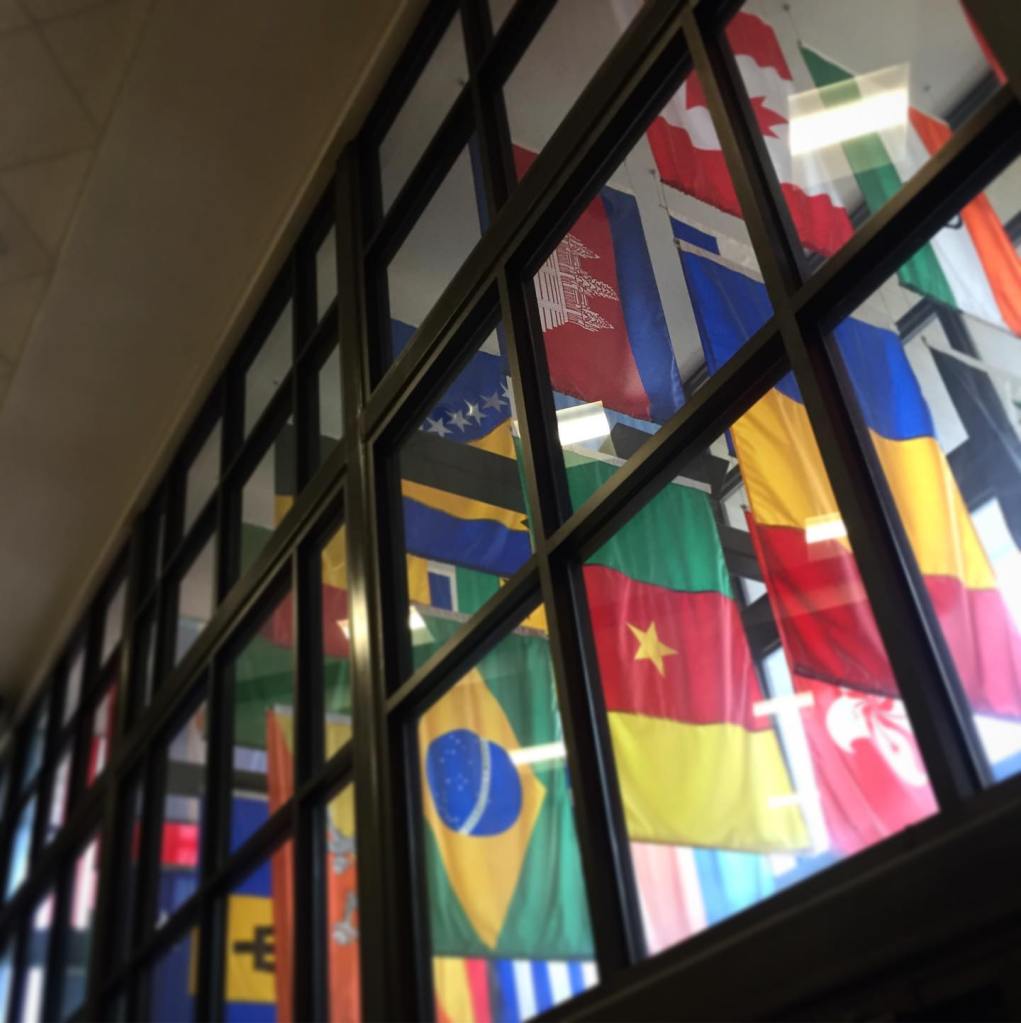
Jonathan knew the first time he walked through those doors. When he saw flags from all around the world hanging up in the foyer – including the Cambodian flag — he knew he’d come home.
I wasn’t so sure. In theory, I knew this church could be a good fit for us. But I didn’t really want to be here. I didn’t want to be at an American church. My heart was still back home in Cambodia, worshipping with people from 40 nations.
At that point we’d been out of church for over a year, waiting out this interminably long covid season. We’d had our vaccines, but our children hadn’t yet had theirs. We brought them to church once and then decided to leave them at home until they could achieve full vaccination status right along with us.
But it feels strange not to attend church as a family, so over the next few months we were in and out of services. It was just as well, though, because I had a lot of unfinished emotional and spiritual business to take care of.
Just last night I was telling the kids about Jeremiah 29. Not the overused verses 11 through 13 promising only good things to the Lord’s people, but the less familiar ones from just a bit earlier, in verses 5 through 7. The ones about building houses and settling down, the ones about planting gardens and eating what they produce, the ones about seeking the peace and prosperity of the city into which we have been carried.
I told my family I was ready to follow the instructions in Jeremiah 29, that I felt like I finally was following them. We’d settled into a house and made it a home. We’d planted gardens and even eaten a bit of what they’d produced. It was time to seek the peace and prosperity of the city.
This morning we walked all over the church campus, dropping children off at their various Sunday school classes. We found one for ourselves, too — one recommended by a friend. And as I sat there listening to the teacher talk about his heart for God and his heart for the world and about some of his church background and about some of the authors he’s read, I closed my eyes to blink back the tears.
I knew I had come Home.
It was the same feeling I’d had the first Sunday I walked into our international church in Cambodia and cried through the whole service. I knew I’d come home that day, and today I experienced the feeling again.
Mysteriously, both today’s Bible class and today’s sermon touched on Jeremiah 29, the earlier verses. They were written to a people in exile, a people separated from the land they’d been given. Missionaries often feel like exiles. We leave our passport countries to sail into the unknown. We don’t quite fit in our host countries, but we no longer fit in our first homes either. In time we settle into our secondary homes, but we must one day leave those too. In some way or another, we always feel like exiles.
You don’t have to be a missionary to feel like an exile, of course. We are all exiles in Babylon. None of us really belongs here, no matter which city each of us lives in. We belong to a different country, a better country. But sometimes when we’re with other citizens of that country, we can get a taste of home. This morning reminded me that I don’t have to be with citizens of a couple dozen earthly countries to feel like I’ve come home – although it was wonderful to live that reality for eight years.
All I have to do is find citizens of the Other country to which we all belong.
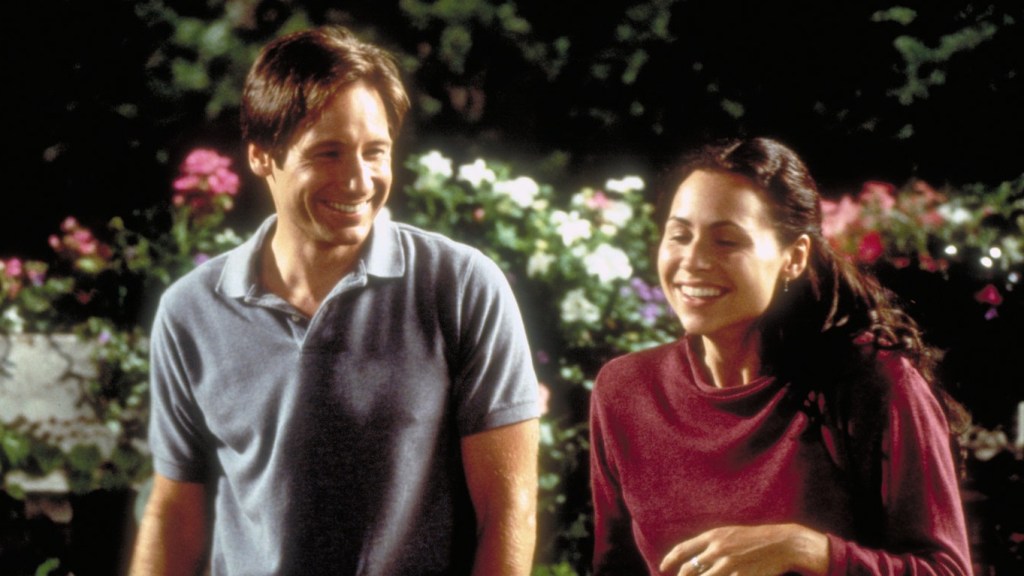
The 2000 film Return to Me is a family favorite. The movie features Bob and Elizabeth, who have been together since high school and who are still very much in love. One tragic night Elizabeth, who was an organ donor, is killed in a car accident. We watch as doctors transfer her heart to Grace, a woman who’s needed a new heart for a long time.
Grace goes nervously into surgery, hopeful for a new life. Bob, blood still on his clothes, goes home to an empty house. It’s an agonizing scene.
Months later, Grace has recovered from surgery. Bob, meanwhile, is having trouble living without Elizabeth and has buried himself in his work. Friends continually try to set him up with other girls, but Bob wants nothing to do with anyone new. He can’t get over the loss of Elizabeth. Then one night during one of these blind dates, Bob meets Grace at the family restaurant where she works. Sparks immediately start flying.
In the following weeks and months, Bob’s heart opens up to new love. But Grace is guarding a secret. Although she doesn’t know that Bob’s wife’s heart beats inside her chest, for some reason she can’t bring herself to tell Bob she’s had a heart transplant. Eventually the two of them figure this fact out, and the revelation is traumatic for both of them. Bob disappears; Grace flies to Italy to paint.
While Grace is gone, Bob realizes he loves her and can’t live without her. He looks for her at the restaurant only to find that she’s gone. He acknowledges, “I miss Elizabeth. I’ll always miss her.” Still, he’s ready to embrace a new life with Grace. He goes in search of her, and their reunion is sweet. The audience can see them building a future together.
One year after having traumatically evacuated Cambodia, I think I understand a little of what Bob meant in his restaurant confession. We left Cambodia in March, just as the pandemic began closing borders. We were relieved to have made it to U.S. soil, and for several weeks we assumed we’d be able to easily re-enter Cambodia in the fall as planned. But by May our visa and passport plans began unraveling, and by June, life as we knew it in Cambodia was over.
I didn’t even get to say goodbye.
2020 became one long grieving session. This might sound strange if you knew me in the early 2000’s when Jonathan felt called to missions and I didn’t. You might remember how I fought the call for so long. But now I felt like Mr. Holland from the movie Mr. Holland’s Opus, in which aspiring composer Mr. Holland longed for fame and renown, but instead ended up teaching music to high school students. At the end of his career, when budget cuts forced him to retire early, he observed, “It’s almost funny. I got dragged into this gig kicking and screaming, and now it’s the only thing I want to do.”
Like Mr. Holland, I didn’t initially want to move to Cambodia, but once I got there, I found a life I loved. I wasn’t ready to say goodbye — but covid said differently. For weeks, I woke up crying. Opening my eyes each morning was a painful reminder of where in the world I wasn’t. In Cambodia I had a strong support system. I lived every day with a sense of meaning and purpose. I had a place in the community and rituals and routines that brought structure to our chaotic cross-cultural life. We had raised our children there, and Cambodia was all they knew.
It was a difficult life, sure, but it was also an exceedingly good one. And I wasn’t sure I would ever stop crying over this loss. I lived in the “if onlys.” If only we didn’t have passport problems. If only we didn’t have visa problems. If only covid hadn’t happened. If only, if only, if only. I thought if I could just get back to Cambodia, I could recapture all my former happiness. In reality, even if I could have returned, I couldn’t have recaptured my old life. Covid made that impossible for seven billion of us.
Then one day my near-constant crying stopped. I thought I had accepted my new circumstances. And I do believe I had accepted that I couldn’t get my old life back. But reflecting now, I realize that I struggled deeply throughout the fall and winter. I had said goodbye to my old life — though not in person and not on purpose. But I still didn’t know exactly what my new life would look like, so it was hard to root myself here. Everything seemed bleak. I didn’t think I could ever be happy again.
We were looking for a home at the time. We knew we had to be out of our temporary housing by the end of December. After several housing disappointments (a story I’ll tell another time), I began to fear becoming homeless (emotions may exaggerate facts, but the intensity of the feelings are real). We didn’t have a church home yet because of covid, so I didn’t have local community to help me through this transition. I knew I couldn’t get my old life back, but I still desperately missed it.
Finally, finally, we found a home that fit our family that was also in our price range. We signed the papers mid-December, which was a bit closer to the deadline than we would have preferred. Still, we were thrilled to have a place of our own. I had no idea it would be such an important milestone in our repatriation process.
We’ve been in our new home for three months now. It fits us so perfectly (I promise I’ll explain in an upcoming post). I live in the daily disbelief that we could have found such a fantastic place for our family to live. We are making it our own, slowly writing our name in the land. Jonathan is working on the yard. We have pictures on the walls. We have rituals and routines, and I’m slowly re-building a support system. Living in our home has helped get me “unstuck” from the grief and helped me to move forward. It has given me a glimpse of what the next season of life might look like.
Cambodia is still a natural part of our conversations, and we frequently talk about our old life. The six of us have so many shared memories, both pleasant and unpleasant. Occasionally I even long for life in Southeast Asia. But I no longer think I can’t live without Cambodia, that life simply cannot go on without Cambodia. I’m beginning to understand what life can look like here on the other side of the ocean. I feel like Bob, who knew that he would always miss his old life, but who now knew that he could also live a new life with Grace.



 Jonathan & Elizabeth Trotter