A year or two ago when I started hearing more about AI, my immediate reaction was fear. I’m anxious by nature, especially regarding technology, but this affected my livelihood. I feared I would lose my job to AI. No one was going to pay me to edit their work if a computer program could do it for them.
I thought to myself, These are the only skills I have! What am I going to do when I can’t get a job?! Fear about money and provision has plagued me much of my life.
As usual, I knew I was probably freaking out prematurely. I tried to quiet my amygdala and just keep going. I tried pretending like vocational Armageddon wasn’t just around the corner.
I leaned on my go-to statements of faith for dealing with money fears. I’ve got the Lord’s prayer—”Give us this day our daily bread.” I’ve got manna in the desert—God brings us what we need now, not for the future, and we don’t stock up because it will spoil. I’ve got decades of testimonies of the Lord providing jobs or clients or supporters just when we need them.
But I didn’t seem to be able to trust God when new technology was involved. It seemed too human-controlled, as though artificial intelligence were somehow out of God’s control.
Fast forward to today, and AI is still forging ahead. I’m not sure anyone really knows where it’s heading, but honestly, I no longer care. I decided that I was going to use the talents God had given me for as long as they were useful. If He sent me clients, I would serve them. If He gave me projects, I would tackle them. And if He gave me ideas, I would write them.
Now I think that not only will my profession (writing, editing, book coaching) survive, but that the main future for creativity is in faith-based writing and art. Faith-based writers aren’t looking for a shortcut. They’re looking for the Holy Spirit, and so are their readers.
They want to tell a true story about what God has done in their lives. They want to pass the peace of Christ to their readers. They want to tell stories of meaning and hope and purpose, and they want it to be their own personal words, based on their own experiences and their own inner life with God.
AI can never do that for them.
AI might be able to write news and business and economics and current events (albeit poorly at this point). But it can never tell of the transformation God has wrought in your heart. It can never touch the heart of God because it wasn’t made in the image of God. Only humans were made to reflect God’s heart back to Him. A computer program — even a large, sophisticated one — can never do that.
Part of the thrill of writing and even editing is participation with the Spirit. And part of the satisfaction in the creative process is the work God does in us when we wrestle with the words, with the stories, with the truths He wants us to tell. We honor God not only with our words, but by submitting to this process.
We draw near to God when we write and also when we hold space for other people’s writing. Somehow our words touch the Father’s heart. He is the Word, and we are His children after all. When we write, when we read other writers’ work, we walk on holy ground. And faithful Christian writers — and readers — still want to tread there.
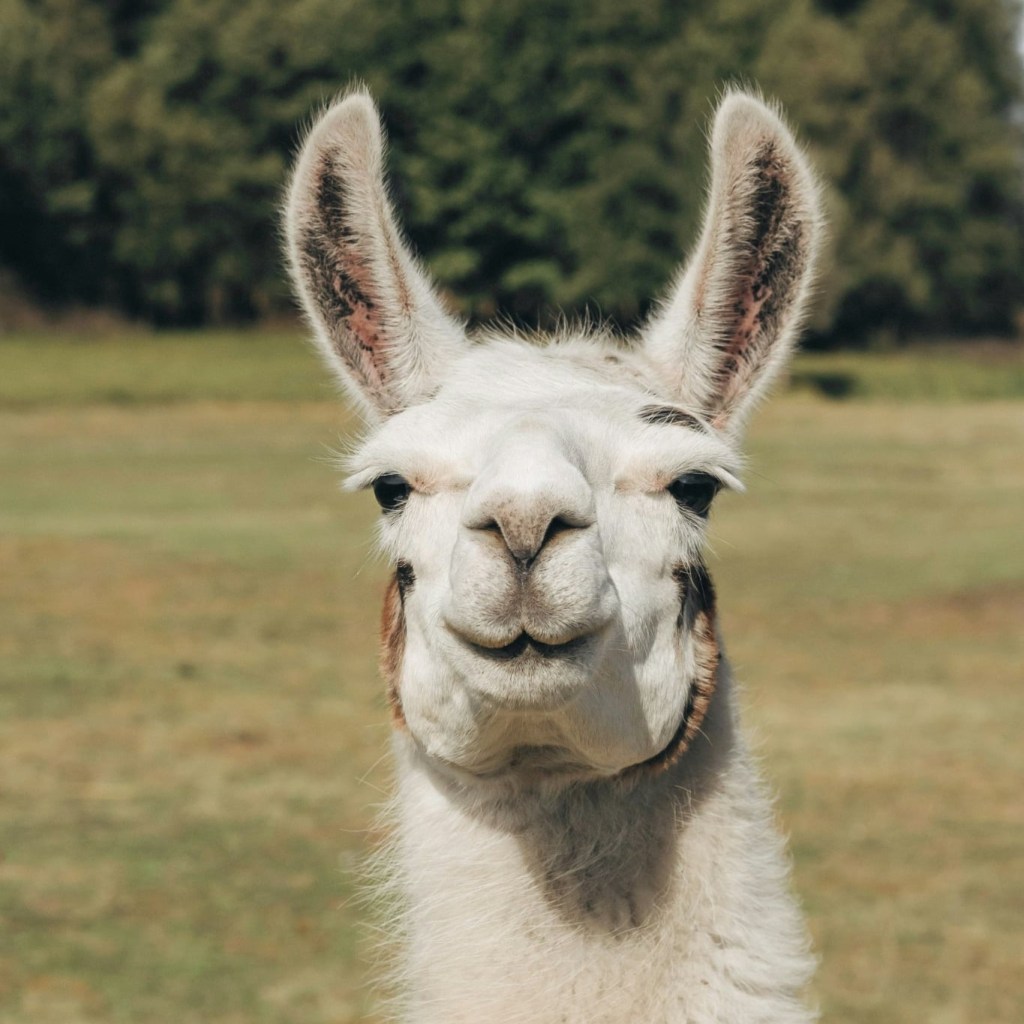
Weird animals adorn my house. I love them. In the beginning my family thought it was odd, humorous. But the bison made sense; as a child my family would stop at a buffalo reserve “on post” on our way to and from church. Even the llama made sense. It’s a character in a classic Disney movie — and the theme of a favorite coffee shop.
But then I just kept falling in love with other weird animals, and I realized it’s actually me: I like weird animals.
The musk ox. The platypus. The llama. The bison. Even the turtle is weird and strangely addictive for me, much like the moon. When I see a turtle, I just can’t tear my eyes away from it. A turtle doesn’t belong to the modern world any more than the moon or a human soul does.
Then one day I realized that if God took the time to make weird animals, He must like them. Which means He must like me. Because I’m weird. I don’t fit in a lot of places. I never have.
Weird animals are ugly and cute all at the same time. They’re common and yet uncommon. And they don’t even know they’re weird. They are gloriously unselfconscious. They just do what God made them to do. They don’t know any other way.
Jesus never intended for us to be normal, to conform to culture. He wants us to be unique, just the way He created us to be. He even likes it that way.
So now I look at my beloved weird animals and smile, knowing that I am also a beloved weirdo to the God of the universe. The designer of all that weirdness looks at me and smiles. How great is that?
You might also be interested in my new book, The Hats We Wear: Reflections on Life as a Woman of Faith, which addresses six different aspects of being a woman of faith, with sections on spirituality, emotions, and embodied living, as well as marriage, motherhood, and homeschooling. ~Elizabeth
“What’s your favorite math curriculum?” This was one of the questions I received when I announced I was tutoring math again. After replying to the question, I realized some of my readers might be interested in my perspective, so I revised and expanded my response and am sharing it here.
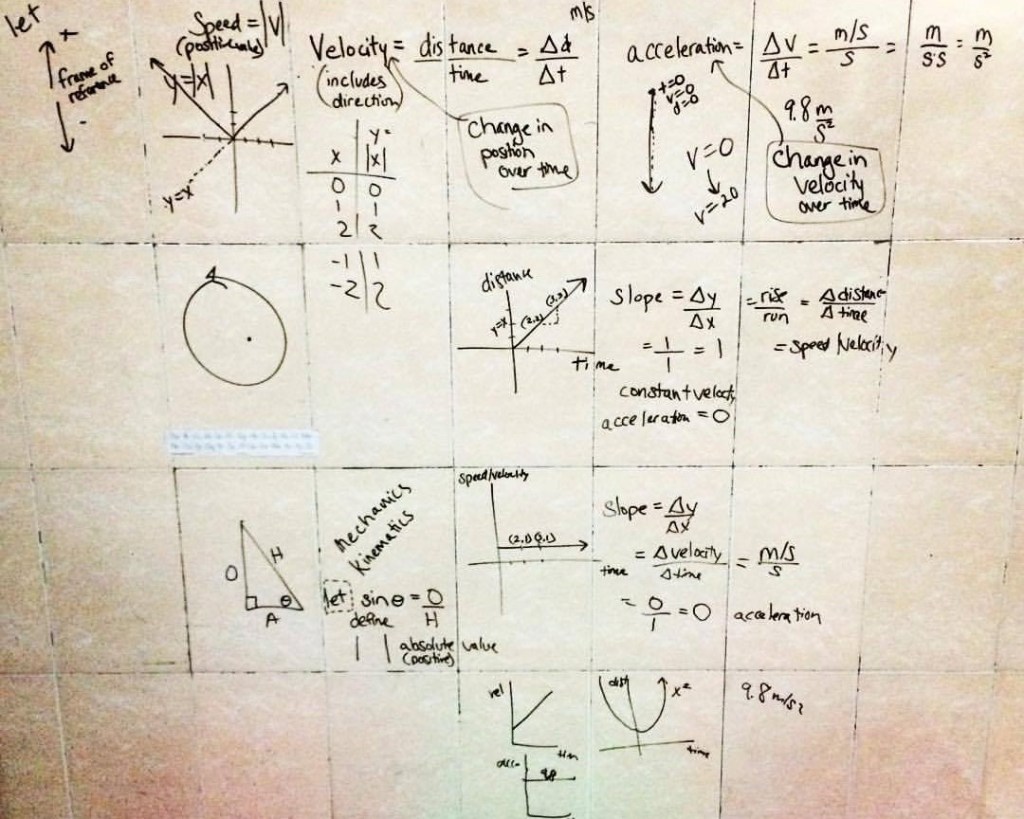
I LOVE math. I got so excited when my oldest started studying the coordinate plane in algebra that I began drawing on the walls and talking about trigonometry and calculus (see photo below). That was way too much, way too soon, and my husband had to pull me back from my adventure in Mathland before my student’s brain melted down. Now I know not to get too ahead of myself.
But anyway, back to the math curriculum. Here are my thoughts on Saxon, Shormann, Teaching Textbooks, Math-U-See, and Singapore, along with a brief mention of Right Start Math, Life of Fred, Math with Confidence, and Understand Math. If you have thoughts on these or other curricula, I’d love to hear from you in the comments! And if you stick around to the end, there’s not just one, but two BONUS sections for you.
But before we get to the reviews, here’s my math background if you’re interested: I have a bachelor’s degree in chemical engineering with a minor in chemistry from the Missouri University of Science and Technology. I’ve been tutoring math (including SAT/ACT prep) and teaching hands-on math classes at homeschool coops for the past 18 years. I’ve also homeschooled my four children in math since the beginning.
SAXON
Saxon is my favorite math curriculum. I love its spiral approach that keeps old material fresh for students. I love how rigorous and straightforward it is. But I wasn’t always such a big fan of Saxon. In my early years of homeschooling, I thought “everybody used Saxon,” and I didn’t want to be like everybody else. I wanted to be different. So I chose Singapore.
Later, when I was looking for something to replace Teaching Textbooks (more on that below), Jonathan encouraged me to try Saxon. He said it worked for him as a teenager. And of course by that time I knew that not everybody was using Saxon and that some people even hated it. This solved my hang-up of not wanting to be like everyone else. I decided to try Saxon, and I haven’t looked back. It’s worked for all four of my children, even though they all learn in different ways.
Something I really like about Saxon is that each problem is linked to the lesson number where that particular skill was taught. This makes it easy to locate the teaching on a particular topic if your student is having trouble with a problem.
I see two main weaknesses in Saxon. As an engineering mom, I feel I’m able to cover those weakness, but that might not work for everyone. The first weakness is that there’s not a video explanation for each problem if the student gets it wrong — but I know I can provide that (plus there’s a solutions manual). Second, Saxon doesn’t provide much of a conceptual framework for students who want to know WHY the math is the way it is. (Saxon uses a “procedural approach” rather than a “conceptual approach.”) But again, I feel I can provide the conceptual framework.
And for busy moms, there’s a third weakness: you have to do all the grading yourself.
The strength of Saxon lies in it skills building, constant review, and preparation for ACT/SAT and college math, and for me, those strengths overcome its weaknesses. My oldest did really well on ACT math with his Saxon work. He’s now taking calc in college and doing well. And as a junior, my second just tested into any college math class he wants to take, including calc if he wanted (though he doesn’t want!).
As I mentioned previously, I use Singapore (more on that below) in elementary school and switch each child over to Saxon at a certain point — usually after Singapore 5 or 6. With my youngest, I noticed the frustration level increasing during Singapore 4, so I switched her over earlier. Once I did that, she really made strides in math. Now our math lessons proceed more smoothly and with much less stress.
SHORMANN MATH
If you like Saxon but need more student support, you might want to look into Shormann Math. Dr. Shormann produced the DIVE CDs that correlate to Saxon lessons (we use these CDs). Later he went on to create his own curriculum that’s similar to Saxon but more updated/modern and does extend all the way through Calculus. I have not used Shormann Math, but I do know he provides video explanation of each problem if the student gets it wrong, and he may even provide grading and student support online.
TEACHING TEXTBOOKS
As with any curriculum, Teaching Textbooks has strengths and weaknesses, but you can get around the weaknesses if you know what to watch out for. The strength of Teaching Textbooks is that it provides a video explanation for each problem if the student gets it wrong. Also, you don’t have to do the grading.
The weakness is that the student gets a second chance to solve each problem (which from one point of view could be considered a strength). However, if the student gets the problem right on the second chance, it still registers as correct in the gradebook. If a parent is not aware of this feature, they may be lulled into a false sense of security regarding their child’s progress. So as a parent you just have to be watching the gradebook.
I began using Teaching Textbooks when my oldest was heading into junior high. I wanted to lighten my workload and transition him from direct instruction from me to more independent learning. At that time Sonlight was still recommending Teaching Textbooks, so I tried it out. After our first year with Teaching Textbooks, I realized it wasn’t as rigorous as I wanted it to be, and that’s when I switched to Saxon. But not everyone wants or needs that sort of rigor, and that’s ok.
Something I love about Teaching Textbooks is that you can see at a glance what your child is struggling with. You can see what they got wrong, when they needed a hint, and when they used their second try. It’s all recorded in the gradebook. And you can usually find patterns in their wrong answers, but you have to be paying attention to the gradebook and lessons. It’s usually sufficient to check on progress once a week to look for patterns. Then you can work to clarify any misunderstandings and strengthen any missing/weak skills. These features are why I love tutoring students who are using Teaching Textbooks: it’s fairly straightforward to figure out whether a student has mastered a certain skill.
Like Saxon, Teaching Textbooks links each problem to the lesson where that skill was taught so that you can go back and review material if you need.
SINGAPORE MATH
I loved using Singapore in elementary school. It was fun in the early years, and I love the way they use paper folding and cutting activities to “prove” geometric principles. I also love the way they model percent problems, which I adopted into my repertoire and still use to solve percent problems — even with Saxon books. I once heard Dr. Jay Wile, whose expertise I respect and whose chemistry program I love, recommend Singapore for the early years.
But there’s not much review in Singapore, so you have to get creative to provide enough review to solidify skills. And the word problems can get really difficult really quickly, which can stress out a young child. I switched each child over to Saxon at some point, some earlier than others (as mentioned above). However, I still recommend Singapore in the early years (K-3)!
MATH-U-SEE
I have only a little experience with Math-U-See, but I like what I’ve seen so far. The video instruction is good. Math-U-See takes a mastery approach (where students stay with one topic until they’ve mastered it) rather than a spiral approach like Saxon or Teaching Textbooks, but from what I’ve seen and heard, Math-U-See is a quality program that can take the frustration out of math for many children.
KATE’S HOMESCHOOL MATH HELP
Kate Snow is brilliant. She’s a Harvard-educated math teacher who specializes in helping homeschool parents. She has a lot of free resources on her website, including several video tutorials, plus she’s published her own elementary math curriculum called Math with Confidence. I use Kate’s arithmetic strategies when tutoring younger children. And although I haven’t purchased her curriculum, I always recommend Kate’s website to parents whose younger children are struggling with math.
LIFE OF FRED
A lot of people ask about Life of Fred and/or claim it’s helped their child either understand math or stop hating math. I don’t have any actual experience with Life of Fred, so I can’t comment on it except to say that my gut reaction is that it doesn’t provide enough practice.
RIGHT START MATH
I haven’t used Right Start Math either, but I’ve heard really good things about it from people I trust. It’s a conceptual program that relies heavily on manipulatives and intensive teacher interaction. Some kids really want those conceptual explanations, and some aren’t that interested. But if you want to lay a good foundation for mathematical thinking, Right Start should be a good option.
UNDERSTAND MATH: REASONS FOR THE RULES
Dr. Andrew Kelley’s new book, Understand Math: Reasons for the Rules, can help homeschool moms explain why math algorithms are the way they are. My children often asked me to explain underlying mathematical principles, and I tried my best to help them. But math had come so easy for me that I hadn’t always thought about some of these deeper questions.
Understand Math is written as a supplement to your regular math curriculum (which you still need for sufficient practice), and it’s written directly to the student, which means you as a parent don’t need to be a math expert in order to help your child(ren) understand math. Once they understand why they’re supposed to follow certain rules, they’ll be set up for more success.
I found a lot of help from Kate Snow for teaching the four basic operations (addition, subtraction, multiplication, and division), but this new resource (published in 2025) will take homeschool moms all the way from fractions in elementary school to algebra, trig, and calculus in high school.
Kelley has also created a series of YouTube videos explaining some of these concepts, including division by zero, exponents of zero and negative one, and logarithms, a topic which is nearly universally challenging for students.
If you know you’re going to want some extra help explaining math but don’t have the finances for an outside tutor or teacher, this hardcover book is a great investment. On his website, Kelley also offers a free 60-page sample of the book, which includes sections from every chapter.
BONUS: MANIPULATIVES TO INVEST IN
In the early ages, manipulatives are so important. Here are my three favorite manipulatives that I still use on a regular basis:
Cuisenaire Rods. This set of color-coded 1-cm through 10-cm rods helps with addition, subtraction, multiplication, division, and the concepts of perimeter and area. Plus they’re super fun to play with.
Base 10 Blocks. Understanding base 10 is an integral part of mathematics, whether we’re talking about borrowing and carrying (renaming/regrouping) in the younger grades or scientific notation and logarithms/exponents in the older grades. Base 10 blocks are a really helpful visual and kinesthetic way to help children understand base 10.
Fraction Circles. If you’re teaching fractions and running up against some frustration, fraction circles can really save the day! Fractions are important not only in upper elementary school when you first learn about common denominators and reciprocals but also in higher level math, where fluency with fractions is essential for Algebra 2 and above. So give your kid a good foundation with fraction circles.
BONUS: OTHER IMPORTANT MATH TOOLS
Flash Cards. Taking the time early on to memorize math facts is so important. It pays dividends later when you get into fractions, long division, and multi-digit multiplication. You want those math facts to be automatic so that your child can focus on the new algorithms they’re learning and practicing.
Skip Counting Songs. Skip counting songs can help your child memorize their math facts, and the songs help with factoring later on.
Hundred Chart. I love a good hundred chart! It’s so useful in teaching prime numbers and the divisibility rules. In the early years I used it almost every day.
Desmos Graphing Calculator. I spent so much money on graphing calculators in high school and college, but you don’t need to do that anymore. The Desmos app is free!
Understanding the connections between algebra and geometry (analytic geometry) is incredibly important starting at the algebra or pre-algebra level (depending on the curriculum). You don’t need a graphing function until Algebra 2, but the foundations are being laid early on, so be sure to make those connections between the algebraic functions and the coordinate plane by doing lots of graphing problems. (A graphing notebook can be helpful here.)
What about you? Any tools, curricula, or supplements you’ve found essential in math instruction?
“The atomic bombs are piling up in the factories, the police are prowling through the cities, the lies are streaming from the loudspeakers, but the earth is still going round the sun, and neither the dictators nor the bureaucrats, deeply as they disapprove of the process, are able to prevent it.”
I burst into tears over this George Orwell quote in the bookstore the other day. Let me explain why.
If you know me at all, you know I was crushed over the lack of eclipse viewing on this side of the planet. Crushed. I first started reading about the eclipse in science magazines about a year and a half ago, when I realized with sadness that I would not be able to see it, even though totality was passing very close by my hometown.
As we edged ever closer to the eclipse date, and people became more and more excited, I became sadder and sadder. I would wake up every morning thinking about what I was missing and imagining in my mind’s eye what it would be like to experience that kind of natural reversal. I hear you receive spiritual and philosophical insights during a total eclipse that you rarely get in life apart from extreme grief and loss. I hear that you feel at one with humanity and at one with the solar system. Whether you believe in God or not.
But here’s the thing: I already feel at one with the solar system on a regular basis. Every time I look up at the moon, no matter where it is in its waxing or waning, I imagine where I am in relation to it and to the sun and to the rest of the planets, and I get this enormous sense of awe and wonder. I experience more awe and wonder when I catch a glimpse of a planet with the naked eye. I even get a thrill from ordinary everyday sunsets and ordinary everyday cloud-dotted skies. Understanding the science behind each of these sights does not in the least diminish their wonder for me.
So to miss out on an event that causes people who don’t normally care all that much about the sky to shudder with shock and awe, felt like a devastating loss. I collect those moments of wonder and awe in my life and, like Mary, ponder them in my heart. I store them in the long-term memory of my soul. I am a glory-chaser, and this month I felt I was missing out on something glorious that all my countrymen were going to witness (though I know the descriptor “all” is not entirely accurate here). I have really had to grieve this loss as one of many losses on both sides of the Pacific over the last 6 years.
Then today I found myself at the local bookstore with my kids, perusing the magazine rack. It’s a sort of Saturday morning tradition for us. Magazines are too expensive to buy here, so we just stand around reading articles about space and geography. I was reading an article about that infamous eclipse when I came across these words by George Orwell. They brought to mind parallel (and prescient) thoughts from C.S. Lewis, in his 1948 essay entitled “On Living in an Atomic Age”:
In one way we think a great deal too much of the atomic bomb. ‘How are we to live in an atomic age?’ I am tempted to reply: ‘Why, as you would have lived in the sixteenth century when the plague visited London almost every year, or as you would have lived in a Viking age when raiders from Scandinavia might land and cut your throat any night; or indeed, as you are already living in an age of cancer, an age of syphilis, an age of paralysis, an age of air raids, an age of railway accidents, an age of motor accidents.’
In other words, do not let us begin by exaggerating the novelty of our situation. Believe me, dear sir or madam, you and all whom you love were already sentenced to death before the atomic bomb was invented: and quite a high percentage of us were going to die in unpleasant ways. We had, indeed, one very great advantage over our ancestors – anaesthetics; but we have that still. It is perfectly ridiculous to go about whimpering and drawing long faces because the scientists have added one more chance of painful and premature death to a world which already bristled with such chances and in which death itself was not a chance at all, but a certainty.
This is the first point to be made: and the first action to be taken is to pull ourselves together. If we are all going to be destroyed by an atomic bomb, let that bomb when it comes find us doing sensible and human things – praying, working, teaching, reading, listening to music, bathing the children, playing tennis, chatting to our friends over a pint and a game of darts – not huddled together like frightened sheep and thinking about bombs. They may break our bodies (a microbe can do that) but they need not dominate our minds.
I had read Lewis’s words earlier this month and been sobered, my mind plumbed back into alignment. Orwell’s words were likewise so true that they brought tears to my eyes. Our world is in chaos. We all know this. Globally and locally, everyone you and I meet can see the chaos in both their own country and the countries of others. There’s so much fear, fear from all sides and of far too many things.
But. There is awe and wonder that can outweigh the fear. There is truth that can outweigh the lies. And there are things we can be sure of, the chief of which is that we do not control the heavens. We do not direct their footsteps. We can predict them, and we can describe them — though they lose none of their awe-inspiring power when we do — but we cannot direct them. That is a task only God can manage. We can merely watch — or not.
So let us rest in God, in His creative power and in His unfathomable goodness. Let us take comfort in His nearness and in His grandeur, in His wisdom and in His foolishness. Let us walk with Him, through our tears and through our joys, through our fears and through our distracted and distractible daily lives. And let us remember that, regardless of how we live and regardless of how we die, God is God and we are not, and neither is any world leader who appears to be wresting power from Him — for no one can rob Him of His glory.
~~~~~~~~~~~~~~~~~~
I originally published this on Facebook. On one of the FB shares a friend of a friend (someone I don’t know) commented: “When asked what he would like to be found doing by Jesus on Jesus’s return, Luther said, ‘Planting a tree.’ I think the reason is the same as your quote.” That story was just too good not to pass on to you here.
We’re in Advent now – the darkest time of year. It is truly the four darkest weeks of the year. We are edging ever closer to the winter solstice: the shortest day of the year and the longest night, and the day in the northern hemisphere in which the sun travels as far south as it ever will.
The ancients – so they say – feared the sun would continue dipping farther and farther south until eternal night came and the sun returned no more — which is in a way true in the northernmost latitudes.
But on December 21st or 22nd (depending on the year), the curse reverses. Stops, and turns back. The winter solstice is a promise that night will not last forever. The days will lengthen. Light and warmth will return.
But now, as the darkness of December dives ever deeper, we remember the darkness of a world without a savior. We remember the 400-year long wait to hear the voice of God again. We remember the oppression and the lack and the longing.
And we wait. We wait for freedom and redemption and unblemished communion with God. For everything in Herod’s Temple was but a shadow of the communion we are created to live. And the communion we now enjoy through Christ crucified and risen is still but a shadow of the feasting and oneness and rejoicing in the eternal Kingdom Come.
So we wait.
I remember in the States how the darkness would get the best of me. Not before Christmas mind you – there was too much joy and excitement and twinkle lights – but after. In January (which was far colder) the short days would depress me. It wasn’t enough to immobilize me, but it was enough to feel its weight bearing down on me — and February wasn’t much better.
But I was never afraid of that darkness. In that developed place, there are enough city lights and home lights that the darkness didn’t ever feel total. Here, though, it’s different. Our low tropical latitude means sunset comes on fast and strong, all year round. The darkness doesn’t just deepen. It makes a swift descent.
And the darkness is much more complete. I never noticed it as much, before we boarded a boat too poor to own a light for a sunset “cruise” in Kampot. That darkness I tell ya, it’s quick. And thick. It’s a despairing darkness, and feels as if morning might never come.
Sunset comes at nearly the same time year round: 6 pm. We don’t have shorter days (not by much anyway), but we don’t have longer days either. I do miss the seasonal lengthening.
And though we live in the city, the darkness is still complete. Out my front door is a partially completed yet still tall and as-yet uninhabited row house. It blocks whatever city lights might get to my 3rd story living room window. So when night begins, the darkness is total.
And ever since that dark river trip in which I truly encountered the darkness of the Cambodian jungle, I cannot bear even to look out my window at night. Not after riding along a churning, muddy river without a light. This darkness is too much for me. And too soon. Each evening it comes too soon.
But isn’t this the soul of Advent? The darkness is too much for us. We were not created to live in this darkness, nor to take part in creating the darkness.
So we wait. And we cry out. We cry for mercy. We cry for hope. We cry for return. Return of the Light. Return of the Son. Return of the King.
Until He comes, we will cry. Until He comes, we will wait. Until He comes, we will not lose hope.
And we will remember. We will remember that at just the right time, eternal, all-powerful God became flesh and dwelt among us. Pitched His bodily tent among us.
His is the unwavering Light in this present darkness.


 Jonathan & Elizabeth Trotter