Well, another month has come and gone. Here are the very best things from this month, both online and in real life. ~Elizabeth
Stretching. I know this sounds kind of dumb, but I finally figured out some ways to stretch that actually help my perpetually tight back, neck, and shoulder muscles. And since looser muscles mean less pain, this is a big win.
Sky-watching. This might sound kind of dumb too, but I started sky watching again this month. Since beauty can be scarce on the streets of Phnom Penh, I have to purposefully look up to find it. But once I started looking for it, I saw peace and beauty everywhere. I even shared my renewed sense of wonder with my kids as we watched sunsets and studied space together. Encouragement for this kind of attentiveness came from the chapter on “Ordinary Time” in Kimberlee Conway Ireton’s book The Circle of Seasons: Meeting God in the Church Year. (But more on that in another blog post.)
Skyping another home school mom. I had reached out to this mom, a home school graduate herself, for, not exactly coaching, but yeah, kind of coaching. I had already spent a lot of time thinking, praying, and journaling about my approach to homeschooling, but I still wanted to process out loud with someone. The conversation felt just like talking to Sarah Mackenzie of the Read Aloud Revival Podcast, complete with jovial tone of voice. My friend knew exactly where we were going, and away we went!
A new recipe for enjoying chick peas. As I’ve previously noted, my (4th!) blender doesn’t do a good job of blending hummus, and sometimes the large amount of olive oil in hummus bothers my stomach anyway. This new recipe, however, has much less oil, is nice and salty and crunchy, and satisfies my desire for chick peas. I even (successfully!) modified it for the crock pot, as I don’t have a working oven. (A word to the wise: if you want crispy chick peas, you really do need to dry them off with paper towels, as Ashley instructs.)
Two packages from America in the same day! From my parents and from our forwarding agent (who’s basically an extra set of grandparents to our children). Most of the time packages are filled with gifts for the kids (which I LOVE), but these packages had books and magazines for me too, which was super exciting.
BOOKS
Luke: The Gospel of Amazement by Michael Card. Yes, still working through this one, and nearly finished with it. It’s been a great Bible study option for me. The entire Biblical text is reprinted in sections, with Card then offering his observations. Last year I worked through the four gospels chronologically (with a Bible study at my mom’s church). I really enjoyed that, but honestly sometimes I had more questions than answers in my journal, so it’s been nice to work through the stories of Jesus with someone else as a guide. I plan to continue his entire series when I finish the Luke installment. Next up is Mark: The Gospel of Passion.
The Contemplative Writer: Loving God through Christian Spirituality, Meditation, Daily Prayer, and Writing by Ed Cyzewski. I’ve read other books by Ed, and they were all helpful (especially Pray, Write, Grow: Cultivating Prayer and Writing Together and Creating Space: The Case for Everyday Creativity, which are both very practical), but this one is probably my favorite so far. It was peaceful and full of breath and life, and I probably need to re-read it already!
Two-Part Invention by Madeleine L’Engle. Confession: I finally picked up this book and finished it. I had really been enjoying the book earlier this spring, but I stopped reading it as soon as I sensed a sad ending descending. But then I cried a therapeutic little cry and felt much better.
I also started Jesus Through Middle Eastern Eyes: Cultural Studies in the Gospels by Kenneth E. Bailey and The Story of Western Science: From the Writings of Aristotle to the Big Bang Theory by Susan Wise Bauer, both of which I received in those blessed packages and both of which I’ve been looking forward to reading for a long time. They’re both thought-provoking, and I’ve thoroughly enjoyed their beginnings. I’ll let you know how they progress. . .
BLOG POSTS
Grounded in Transit by Esther Harder on A Life Overseas. Esther sent me this essay as a guest submission, and I was immediately captivated. Cannot tell you just how much I love this article.
False Homecomings by Angelina Stanford at CiRCE Institute. On the longing for home. WOW.
Fire and Planting by Erin Duplechin on her own site. (Erin has also guest posted for A Life Overseas before.) Hope for anyone in the midst of a refining fire: “Tomorrow we will plant seeds.”
What Fruitfulness Feels Like by Lindsey Brigham at CiRCE Institute. Comfort for the soul stretched to snapping.
Marginal Faith: You Probably Should be Doing Less by S.D. Smith at Story Warren. Discussions on margin can be a dime a dozen or seem stale and old, but Smith offers a fresh “Trojan Horse” twist on it.
Fight for the Beautiful by Glenn McCarty on Story Warren. Apparently beauty was a theme for me this month.
10 things you’re going to get right this year by Jamie C. Martin, whose blog Steady Mom even includes my word for the year. Now here’s where I get all honest and ugly: we are half-way done with 2016, and my word for the year (“Steady”) has been a complete fail so far. I have been even less emotionally steady than last year, when my intention was to be more so. I’ve definitely experienced and been committed to the activities on this list, but my emotions have been more up and down than ever (and more frequently on the down), and that’s been discouraging.
How to be a Real Missionary by Anisha Hopkinson at A Life Overseas. This one’s for all people, not just the missionary types. There are wise words here — though I have to say that every month, Anisha wows me with her wise words. I’m so thankful she joined the writing team at A Life Overseas.
10 Reasons a Missionary Needs an Identity Rooted in Christ by Amy Young, also at A Life Overseas. Amy’s post isn’t just for missionaries either; it‘s for all people. And a side note here — last month I had the immense privilege of watching our various writers share critically important, yet related, ideas in Christian spirituality and missions. As editor of the site, I do not determine any particular themes people should write on, yet multiple people were writing on similar themes. For me as an editor, that was evidence of God at work, weaving our writing together into something beautiful — and useful.
MUSIC
Out of Hiding by Steffany Gretzinger and Amanda Cook. A girl sang this at church one Sunday, and it gripped me for days. Days.
Be Thou My Vision, as performed by Audrey Assad. A beloved hymn, yes, but that voice. THAT VOICE.
More hymns from Audrey Assad, if you like that kind of thing, or her kind of voice:
Abide with Me
Holy Holy Holy
It is Well
Even Unto Death, Audrey Assad’s response to the beheading of Christians by ISIS. For a bit of background, Audrey’s father was a Syrian refugee, and here is the back story to this song, which I first heard at the onething 2015 conference, along with I Shall Not Want.
New chorus to Just as I Am from Travis Cottrell:
I come broken to be mended
I come wounded to be healed
I come desperate to be rescued
I come empty to be filled
I come guilty to be pardoned
By the blood of Christ the Lamb
And I’m welcomed with open arms
Praise God, just as I am
Arise My Soul Arise, a Charles Wesley hymn rewritten and performed by Twila Paris. Can anyone improve on Charles Wesley? I say yes, yes Twila can. This is an old song I’ve loved since adolescence that just happened to play on my iPod shuffle this month. This particular video is dated (I couldn’t find a better one); even Twila’s instrumentation is a little dated. But it’s a walk down memory lane for me and a definite improvement upon Wesley’s melody (it’s also better than all the more modern renditions of the hymns — believe me, I searched, and Twila’s is best). But if nothing else, read Wesley’s lyrics; they can’t be beat.
Arise, my soul, arise; shake off thy guilty fears;
The bleeding sacrifice in my behalf appears:
Before the throne my surety stands,
Before the throne my surety stands,
My name is written on His hands.
Five bleeding wounds He bears; received on Calvary;
They pour effectual prayers; they strongly plead for me:
“Forgive him, O forgive,” they cry,
“Forgive him, O forgive,” they cry,
“Don’t let that ransomed sinner die!”
My God is reconciled; His pardoning voice I hear;
He owns me for His child; I can no longer fear:
With confidence I now draw nigh,
With confidence I now draw nigh,
And “Father, Abba, Father,” cry.
PODCASTS AND VIDEOS
Finding Dory. We took our kids to the theater to watch this in 3D (my first 3D movie by the way). And what can I say? Disney/Pixar delivers again; I was crying in the first five minutes, and laughing throughout (several lines are especially funny for international travelers with children). This movie has all the home and belonging feels and even has a Prodigal Mother and Father — all we have to do is “follow the shells.”
Magic and Fear in Children’s Books, a conversation with N.D. Wilson at Sarah Mackenzie’s Read Aloud Revival. An in-depth theological and philosophical discussion about good and evil in imaginary worlds. For those in the home school conversation, I’m aware that Wilson’s father is rather controversial; but wherever you land on him (and I’m not commenting on my position!), Sarah’s conversation with his son is excellent.
Finding God in the Ruins: How God Redeems Pain, a conversation with Matt Bays at Jacque Watkins’s Mud Stories podcast. Just a note, this particular podcast is for a mature audience and discusses childhood sexual abuse; I wouldn’t listen to this one with children around.
CiRCE Institute‘s Free Audio Library. I loved these two lectures from the first page: “A Contemplation of Creation” by Andrew Kern and “Imago Dei and Redemptive Power of Fantasy” by Angelina Stanford.
Girl in the World: Pragmatism, Utility, and Beauty from Sara Groves. Can’t remember how I found this video, but it touches on all the themes I’ve been reading lately, so I wanted to share. I love the way Sara describes the spiritual landscapes of our lives, and have shared some of her songs and reflections before.
QUOTES
From Big Daddy Weave’s song “I Belong to God,” which I heard at a graduation service:
“I’ll say to the darkness ‘You don’t own me anymore.’”
Frederick Buechner:
“There is no event so commonplace but that God is present within it, always hiddenly, always leaving you room to recognize him or not to recognize him.”
Wendell Berry:
There are no unsacred places; there are only sacred places and desecrated places.
This isn’t a direct quote, but this is from Leroy Cloud’s discussion of the resurrection of Lazarus. Leroy mentioned Jesus’ instructions to the disciples to “Roll the stone away” and later, to “Take off the grave clothes.” In other words, Jesus performs the miracle of restoring life where it has been taken or lost or stolen. We are never the ones to make the miracle happen; we merely roll the stone away and remove the grave clothes in order to show what Jesus has already done. What a beautiful word picture.
Another indirect quote, this one from Sue Hanna. In Matthew 17, Jesus called the people “unbelieving and perverse.” Sue broke those concepts down: “unbelieving” means disconnected from God, and “perverse” means too connected to the world. Sue proposed that the solution to this problem lies in Mark’s chapter 9 recounting of the same story, in which the disciples ask Jesus why they couldn’t cast out a particular demon from a particular boy. Jesus answers with, “This kind only comes out by prayer and fasting. Prayer reconnects us to God, and fasting (from all types of things, not just food) disconnects us from the world. So profound.
Now back to direct quotes. This one’s from Martin Cothran in “G.K. Chesterton and the Metaphysics of Amazement,” an article in the 2016 edition of CiRCE magazine (which yes, arrived in those packages):
“The modernists among us have tried to escape from this nihilism through the invocation of a new religion: that of scientism. Here, as in any other religion, they can find a creed (materialism, the belief that only the physical is real), a code or methodology (the scientific method), and a cultic motivation (a scientific utopia in which all questions about the world have been answered). One day, we are told, if we continue on the road of scientific progress, even life itself will give up its secrets and we will conquer death.
But modern scientism is just a way station on the road to nihilism, as Nietzche and the existentialists who followed him pointed out, since even an eternal life, lived with no transcendent purpose, can be a sort of damnation – a hell on earth. This is perhaps why Albert Camus, at the beginning of his Myth of Sisyphus, said that the chief philosophical question of our time was why should not commit suicide.
Wouldn’t it be ironic if one day people discovered a way to allow people to live forever, but, faced with the prospect of living a life of perpetual purposelessness, they all committed suicide?”
A personal note – This section of the article reminded me of several things. The first was the movie In Time, which describes a world in which wealthy people truly could live forever, but for one man life became so purposeless (and consequently so burdensome) that he did commit suicide. The second was Jen Fulwiler, author of Something Other Than God, who talks about how her materialist atheist beliefs eventually became so hopeless that she contemplated suicide, not because she was unhappy, but because if all our thoughts and emotions are simply electrical signals in the brain, she wanted to hurry up and get the inevitable (death) over with. Interestingly enough, the June 2016 edition of Astronomy magazine contained a column which explained how light and color really only exist as perceptions inside our brains, sadly lending support to the materialist beliefs that beauty doesn’t actually exist except inside our heads. (I disagree; see the next quote.) Also, interestingly enough, the March/April 2016 edition of Popular Science had an extensive section on longevity and defeating death through things like gene therapy and drugs, indicating that these queries and contemplations about meaninglessness and the fountain of youth are not so very far off.
Sarah Mackenzie in “The Flower We Have Not Found: Beauty as a Gateway to God,” another 2016 CiRCE Magazine article:
“Of the three transcendentals, truth, goodness, and beauty, only one requires that we use our senses to apprehend it. Truth is perceived and goodness is known, but beauty? We see it. We smell it. We hear it, taste it, and touch it. It invades our physical being and transforms us in an immediate and tangible way.
Beauty is how we physical beings in the real world rise to the ideal. It is how we are lifted from our dailiness and brought into the presence of God. It jars us. It requires us to contend with the magnificence of God when we just want to go through the motions of our lives.
If we are attempting to cultivate wisdom and virtues in our students, and if beauty is a gateway to God, then we can’t afford to shuttle it off our radar. Our students live their days through their senses, and we can either draw them closer to, or further from, Chris, depending on the sensory input we provide.”
Another personal note – I had already begun my exploration of Ordinary Time when I read Sarah’s words, so naturally they caught my attention, as I had been experiencing them myself. Additionally, these thoughts remind me of Misty Edwards’s thoughts on how corporate worship is a physical experience, not merely a spiritual one (scroll to the end of that link to read her quotes).
That brings me to one last quote, one I also intend to flesh out more fully in a future blog post, but whose quote is just too applicable to Sarah’s discussion of beauty in the physical world not to share here. It’s from Heidi Whitaker, a friend of mine here in Cambodia and the wife of an Anglican priest. I asked her about the word “sacramental,” and this is how she answered:
“The Anglican Book of Common Prayer uses this definition of sacrament: a sacrament is an outward and visible sign of an inward and spiritual grace given to us. There’s also the pithy phrase ‘Matter matters.’ It relates to the way God comes to us through matter (water, the bread and wine, etc) and to His value of matter (our physical bodies themselves and all of creation are precious to him – not evil or something to be escaped as in Gnosticism).”



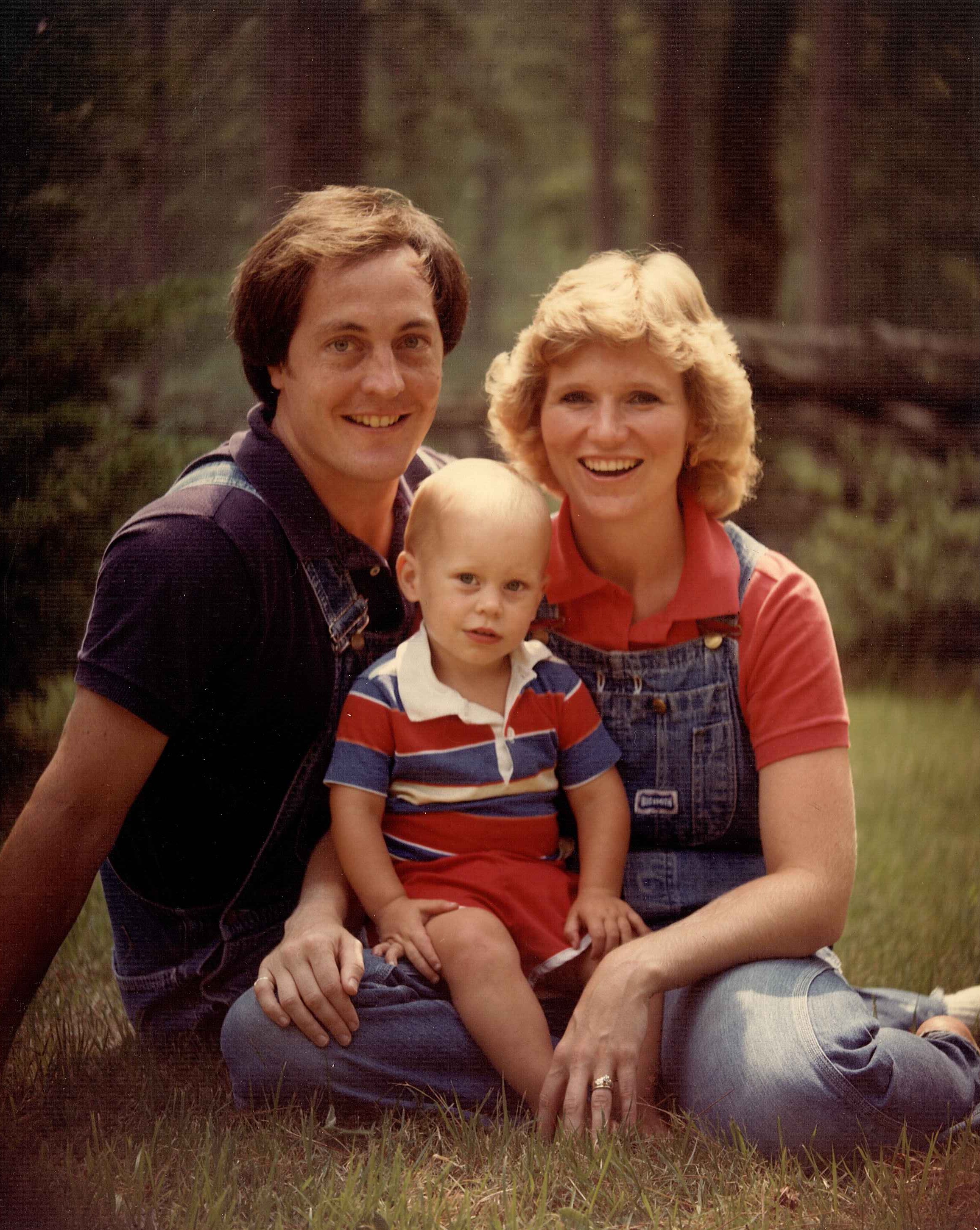
 Jonathan & Elizabeth Trotter