The Hats We Wear (introducing Elizabeth’s new book!)

Now available in print, Kindle, and on Audible! Check it out on Amazon here.

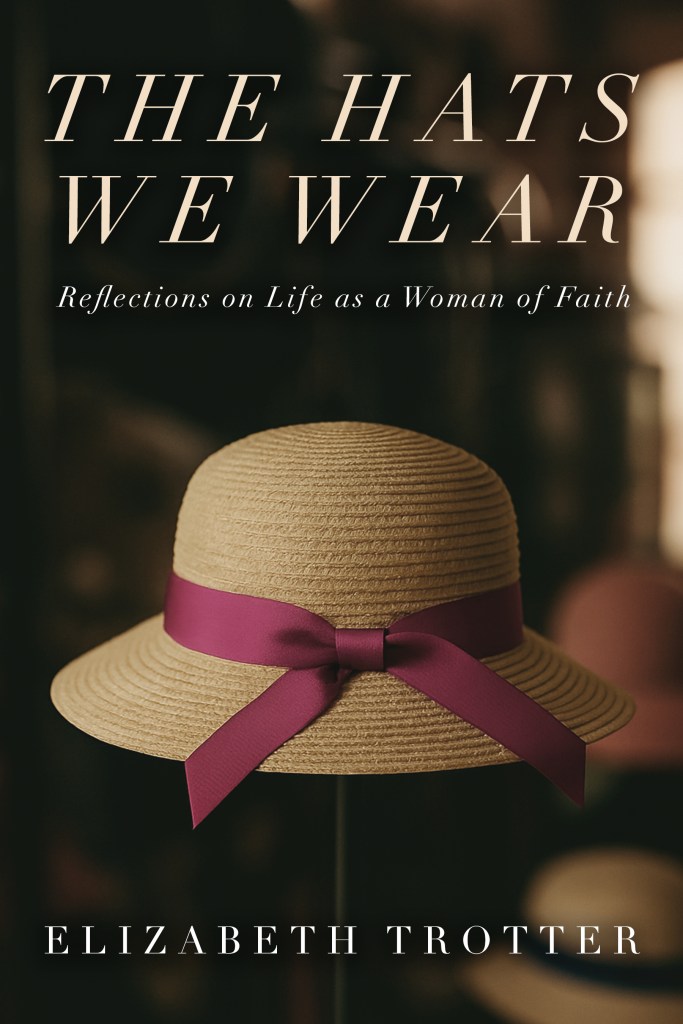
I’m so excited about this book. For the last few years, I’ve been dreaming of publishing an updated version of my original Hats: Reflections on Life as a Wife, Homeschool Teacher, Missionary, and More, and it’s finally happening!

There’s tons of new material in this book. It’s nearly twice as long as Hats, but I also took out about half the original material, as it was reprinted in Serving Well. I reorganized the sections and fully edited each chapter, so this is very much a brand-new book.

Matthew Stock designed this beautiful cover, coordinating it to Jonathan’s Digging in the Dirt while also reflecting the original Hats cover that Jonathan created for me.

So that you can get a better idea for what this book is all about, I’m going to share the back cover material for The Hats We Wear, along with the new preface and the original preface from 2018. Enjoy!

Back Cover

Little girls don’t know they’re going to grow up to be women who wear so many hats. Daughter, sister, friend. Professional, mother, wife. Our hats can weigh us down, and our vocations can exhaust us. The roles we inhabit stretch us in so many directions that we sometimes fear we will break.

Sometimes we even forget who we are.

In The Hats We Wear, Elizabeth Trotter takes us back to the beginning, to the foundation of our faith and who we are as children of God and daughters of the King. She explores our intense emotional worlds and the work of embodied living, then leans into the three specific hats of marriage, motherhood, and homeschooling.

Join Elizabeth on this journey of reflection. Walk with her as she seeks God amidst the hats of female life. Sit with her in the mundane and the sacred. Wrestle with the practical and philosophical implications of living life as a woman of faith.

As you read, you’ll meet someone who frequently does things the hard way first, flailing around worrying and wasting time on unnecessary details. But in seeking the Lord and listening to the wise people in her life, she eventually finds a path forward. 

She invites you to do the same.

Preface to The Hats We Wear (2025)

In the spring of 2018, my husband Jonathan decided to surprise me with a sweet Mother’s Day gift: a book of my writings about womanhood. He gathered articles I’d written on theology, marriage, motherhood, and homeschooling and published the collection on Amazon. He called it Hats: Reflections on Life as a Wife, Mother, Homeschool Teacher, Missionary, and More. I loved the cover he designed and was grateful to have a lot of my writing in one place.

The next year, however, Jonathan and I published Serving Well: Help for the Wannabe, Newbie, or Weary Cross-cultural Christian Worker, and much of the material in Hats was republished there. Over the years, I kept writing, and eventually I realized I wanted to update Hats, adding some newer content and removing duplicate material, much of which related more to my life as a missionary in Southeast Asia than to the broader conversation of Christian womanhood.

So for this version of the book, I removed a dozen chapters and added over twenty-five more, keeping only sixteen from the original twenty-nine. I wanted to distinguish this book from Serving Well, which focuses on ministry life, though I did keep a few chapters which are too foundational to my life and faith to remove. I’ve thoroughly edited and rewritten each chapter, so this is basically a new book.

The first three sections are hats that all women wear, regardless of whether they are married or have children: the practical theologian, emotional human, and embodied woman hats. Then in the second section I dig into the more specific hats of wife, mom, and homeschool teacher. I hope that the words contained in these pages will resonate with your lived experience and that we will forge a bond across space and time.

In preparing this book for publication, I was struck by how similar my struggles have been throughout my life. How wise my past self seemed, fresh from the fires of learning a lesson I find myself re-learning in the present. We are forgetful creatures, and so the Lord must teach us again and again. Is it any wonder He tells us so often to remember?

And so I offer these stories to you, trusting that they will speak to your heart and mind through the goodness of the God who calls us to Himself. May we seek Him first, above all others.

Preface to Hats (2018)

No matter your background or experiences, being a woman is hard. That’s partly because being a human is hard. It’s also due to the many roles we women tend to carry in life. Daughter, sister, friend. Professional, mother, wife. Marriage and motherhood are indeed holy vocations, and they require much of a woman. Whether we work outside the home or from within it, our vocations sometimes stretch us so much that we fear we will break.

The truth is, there’s not a lot of preparation for marriage or motherhood. Certainly, we can read books. We can read books on how to have a great sex life or how to build a godly marriage or how to live out biblical submission, but when it really comes down to it, we marry a human person, not a book, and our husbands also marry a human person—us. A lot of marriage is simply trying new ways of doing things and seeing if they work (including, at times, seeking professional or pastoral help).

It’s the same with motherhood. We can read books on natural childbirth, healthy homemade baby food, and the most godly parenting—or the most logical. But nothing can really prepare us for meeting our child, some mysterious arrangement of our own DNA, or someone else’s. No one can prepare us for their likes or their dislikes, their strengths or their weaknesses. We have to discover these things for ourselves, over time.

What follows in this book is precisely that: the things I’ve discovered over time. There are articles and essays on marriage, motherhood, homeschooling, and the Christian life. In case you don’t know me, here’s a bit of background: As of this writing I’ve been married for nearly eighteen years, having gotten married at the age of eighteen. I’ve been a ministry wife almost that entire time and have been living overseas as a missionary wife for the past six years. I’ve been a mom for fourteen years and have been homeschooling for nine. This book is my lived experience wearing all those hats.

Find The Hats We Wear on Amazon in ebook, paperback, and audio book versions.

The Beloved of God

by Elizabeth

The old conversation about women and work has been circulating again. People are quick to take sides. They’re for women working. They’re for women staying home. (Never mind the fact that this is a false binary, and that women who stay at home work, regardless of whether they work for pay.)

To me this conversation seemed like a lot of wasted cortisol and adrenaline. Why would I torture my body with extra stress hormones just to justify my life choices to strangers? 

But it did make me think about the past 20 years of my mothering. For the first several years I stayed at home full-time and cared for our four children. I loved it. I always wanted to have a lot of kids. I didn’t always want to homeschool them, but I fell in love with that path too.

At the time I knew in my head how hard my husband was working to allow me to stay home and also pay the bills, but I don’t think I fully grasped his sacrifices. Only now, having learned what it’s like to earn income while trying to remain an engaged parent, can I more fully appreciate all that he did during those years. And I am impossibly grateful.

Because amid the exhaustion, I loved those years. I loved playing with my kids and reading aloud to them and being free to just traipse all over whichever city on whichever continent we lived for playdates and errands and homeschool activities. 

I felt a unique sense of purpose in those years, contributing to society by contributing to my family in (obviously) non-monetary ways. Along the way, we created our own family culture. Sometimes I didn’t realize what an incredible gift that really was.

Fast forward to today, when I still stay at home and homeschool my younger children, but I also work from home part-time. Now I understand more fully the financial pressures facing my husband these last 20 years.

Working from home also makes me appreciate the years I had with my kids as my main focus. As fulfilling as my freelance work is, it can be hard to live with a divided psyche, to have my heart in more than one place.

And yet I am impossibly grateful. Grateful that I’ve been given work that is meaningful to both me and the people I serve. Grateful that I’m able to bring in extra income and help pay the bills while still mostly staying home. The economy is different now than when we left America in 2012. It’s even harder to live on one income now than it was then.

And so families sacrifice. ALL families sacrifice. Whether we’re sacrificing one spouse’s income so they can stay at home with the kids, or whether we’re sacrificing one spouse’s time to either leave the house for work or to work from home – whether part-time or full time – everything is a sacrifice. Families are working hard to take care of their kids and their bills, and the last thing any of us needs is to feel judged or to judge others for our choices.

So when I first read about the recent gender roles controversy, I wrote it off. I thought some of the claims people made were silly, but as I said at the beginning, I didn’t have the time or the cortisol to waste on a conversation that is so nuanced and complex and personal and which so many people reduce to maxims and memes.

The longer I heard and saw people talking about it, however, the sadder I got. There are a lot of women walking around without knowing their worth. Without knowing their belovedness. Without understanding their deep value to God apart from what they do.

When we know our belovedness, no one’s opinion of what women should or shouldn’t be doing with their lives can push us off kilter. We know who we are, we know who God made us to be, we know who loves us, and we know the ones we love. We don’t have anything to prove to anyone, because we are secure in Christ’s love. 

I can say, “I am a child of God, and I know my Father loves me.” And I can say to you, “You are a child of God, and your Father loves you – whether you stay home with your children or whether you work from home or whether you work out of the home or do any of it for pay.”

This is what I wish we all knew, truly knew, deep in the viscera of our bodies and the basement of our souls:

The woman who stays at home? Loved.
The woman who works from home? Loved.
The woman who works nights so she can be with her kids during the day? Loved.
The woman who works days because it’s the only way to make ends meet? Loved. 
The woman who stays home when her kids are little and then goes back to work? Loved.
The woman who works because she genuinely enjoys her job? Loved.

You are the beloved of God, and no one can take that away from you. You are hidden in Christ with God, and your real self is found in Him, not in the approval or disapproval of other men and women. You are a child of God, and that is the most important thing about you. 

The God who adopted you as Daughter will lead you in ways that are personal and particular to you. Your life may look different from mine, but we are all the beloved of God. He is ours, and we are His. 

May we cherish each other in the same way the God of the universe cherishes us. May we honor each other’s choices, just as we honor the same God who leads us in different directions. And may we remember that our value comes from Him, not the particular ways we serve our families and communities. For we are the beloved of God, and no power on earth can convince us otherwise.

The Table {Postcards from Re-entry}

by Elizabeth

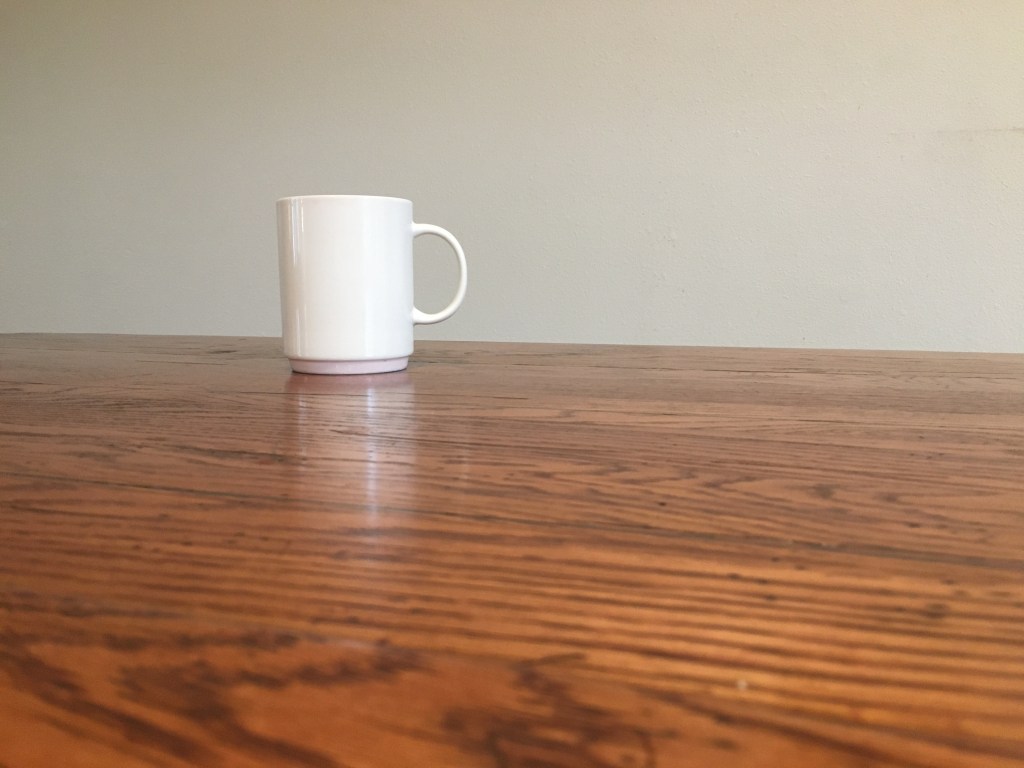
In 2006 when our lead minister and his wife became empty nesters and moved out of the church parsonage so that we could move in, they left their kitchen table. We were a young family who didn’t have a kitchen table and were grateful for all the other furniture they left too.

Over the next six years, our family grew around that table. We added babies, and we added memories. We created a family and ministry culture around that table, and when we left the States for Cambodia, my best friend took the table into her home. 

It was full of memories for her too. Memories of late-night conversations when she would visit me because I was stuck at home with young children and a traveling husband. (I now try to return the favor to young moms when I can, going to them during naptime.) It was full of summer days with our kids eating snacks around the table and then playing in the yard or doing science projects together. She had to let me go, but she didn’t have to let that table go.

A new kitchen table was one of the first things we needed to find when we arrived in Phnom Penh in 2012. Some friends took us to a local furniture shop and helped us pick out both dining and living room furniture. The pieces were cheap, but they looked good enough.

Our first table soon fell apart. Huge flying termites bored holes into the table and migrated into our door frames as well. We could hear them chewing away at the wood. Jonathan tried to tear out the rotten pieces and kill the termites, but eventually he gave up the struggle. The table had to go. Its cheap, untreated wood had probably brought the termites with it from the shop in the first place. Next time we would be more careful.

In the meantime, we needed something to eat from, so we pulled out a spare metal round table, the kind that Khmer people set up at weddings. It took up a lot of space in our kitchen, but we discovered we liked the equanimity of a round table. Everyone could participate in family life the same. We were all the same distance from each other, and family life thrived. We decided our next table needed to be round.

Eventually we found a super heavy, high quality Khmer round table, and it took several delivery men to pull it up the two flights of stairs to our kitchen. We couldn’t host people around that table very well, but we couldn’t host people very well around our rectangular table either. Our kitchen was just too small.

We loved that round table. You can see it in lots of family photographs from our time in Southeast Asia. It became emblematic of Trotter family life, and after a few years we all signed our names under our places at the table.

Then covid happened. We returned to America early for a planned furlough, leaving our table and other belongings behind like usual. When we realized we weren’t going back, Jonathan did everything he could to rescue our Cambodian kitchen table, that centerpiece of family life. After multiple failed attempts with one company, we found a legitimate company that could transport our most precious belongings back to the States. It consisted mostly of books, pictures, and personal items, but we also shipped the table. 

The shipment took several months, getting stuck in U.S. customs and requiring unexpected fees, but it eventually found its way to Joplin, where we were resettling. We pulled our heavy Cambodian table into our new home in December 2020 and breathed a sigh of relief that we had preserved part of our children’s childhood for them.

But it took up a lot of space here as well as there, and after a couple years Jonathan started dreaming about a table that could host more people. We weren’t engaging in much hospitality during the pandemic, but he knew he wanted to host people again. He wanted to live like we did at the parsonage, regularly inviting people into our home and our backyard. He wanted to live like he did growing up on an acreage in a small Kansas City suburb, where his parents frequently hosted people for evening bonfires, sunrise services, and hot cocoa. To do that, we would need a different table.

The family wasn’t sure how to take this news. We loved our round table. It reminded us of Cambodia. But I caught the vision. I knew he was right – we needed a different table if we wanted to invite people into our home and into our lives. But tables are expensive, and we needed everyone to get used to this new plan, so the idea sat for a year or two.

All along, he kept an eye out for wooden tables and benches (which seat even more people than chairs). Then one Saturday morning he saw a friend selling wooden benches online. He texted right away, explaining that he was looking for benches to go along with the long kitchen table he was still dreaming of.

She said they still had the table that went with the benches, the table they had raised their family around. The table they had invited dozens of people to over the years. This table had a heart for ministry. It had a legacy. Its owners decided to gift it to us.

And what a gift it was. To know that this table had seen years of love and care and fellowship, years of laughter and soul secrets and tears. And to know that we were receiving such an incredible heritage from these generous people so that we could do the same thing they had done, the thing we had been dreaming about doing again, was such a sweet gift from the Father. 

So we rearranged our kitchen to welcome this new table, which came with two benches and two extensions for larger groups. Daily life doesn’t require the extensions, but we can already envision our married children and grandchildren gathering around this table someday.  

Our Cambodia table still has a place in this new arrangement. We cut off both leaves, along with the rolling feet, and set this reduced mass in an open area near our kitchen. Now we have a place to put food and utensils when we host people, since our kitchen has next-to-no counter space. And this is getting into the geometry of it (which I find fascinating, though you might not), but a round table maximizes circumference (which is why it took up too much floor space in our kitchen) while minimizing surface area (which is why there was no room on the table for food). This new table solved all of our problems at once.

A few weeks later we got a taste of this new way of living. We tried out the arrangement with guests, and it worked splendidly. Everyone could relax comfortably, the kitchen didn’t get overcrowded, and we could all eat whenever we wanted. Our home feels like it’s meant to feel – open and warm and clear, and most definitely ready for guests.

Inheritance

by Elizabeth

vetch_crown

I don’t often remember my paternal grandmother, and when I do, I don’t remember her as a particularly warm person. But recently I chanced to remember her. She was mostly house bound, often even chair bound, accompanied as she was by her oxygen tank and her life sentence of emphysema. A registered nurse later told me that pulmonary patients were the crankiest; it’s hard to be polite when you can’t perform the most basic of bodily functions without pain. I didn’t understand that at the time.

I remember her retirement apartment and the sidewalks surrounding it. I remember how she rarely moved from her seat at the kitchen table, and I remember how the grassy terrace right outside her kitchen window sloped steeply upward. I remember the taste of her beef-noodle casserole and the sound of her television shows (most prominently Wheel of Fortune) playing always in the background. I remember the hospital bed in her bedroom and the shower stool in her bathroom and the closet in the back bedroom that was good for playing in.

I was named after her, you know, though at the time it was coincidental. My parents gave me her middle name. Mom tells me Grandma always seemed so pleased with it, though she didn’t know why until much later. The original reason I was named “consecrated to God” – a meaning I’ve always cherished – was that Mom herself was supposed to have had it for a middle name. But when she was born on a holy day for the Virgin Mary, she was given the name Mary Joan (instead of Joan Elizabeth). When Mom was grown, she passed the name on to me, and I in turn passed it on to my daughter: a legacy from both sides of the family.

When my grandmother died, the priest droned on and on about how much she loved the crown vetch outside her sitting window, and how we each needed to take some crown vetch with us when we left that day. He even had little baggies of crown vetch ready for us to take away. It was during this funeral memory that all of a sudden the light went on for me and I realized why Grandma Hunzinger was so obsessed with the crown vetch: she was catching hold of the only beauty she could find, imprisoned as she was in her kitchen chair and imprisoned as she was in her failing body. She was reaching out for the little magnificence available to her isolated existence. I remember that window, and I remember that hill. It was green and shady and reinforced with rough-hewn logs. As a child I didn’t know about the crown vetch. I only remember the green.

In that moment, in that memory, I felt a kinship with my paternal grandmother that I’ve rarely felt. There is something of her in me, though I’ve never thought much about it before. I am always hunting for beauty. Hemmed in by the filth of this Asian city, I seek it out, sometimes almost desperately. I can look at the same plant, the same leaf, over and over again and still be amazed. I can marvel at its ability to create nourishment from electromagnetic radiation. I can wonder at the arrangement of its leaves that enables it to catch the most light possible. And I can look in awe at the pure beauty of its shape. Every leaf, lovely. Every plant, perfect. Every look, every time.

At the funeral, the name “crown vetch” sounded so ugly that I couldn’t imagine the plant itself being anything but ugly. And I didn’t take any home with me. I just thought the man talked too long. I dismissed the words and I dismissed the thoughts. But now I know that crown vetch is beautiful. Now I know that crown vetch is tenacious – and sometimes hated for its tenacity, for its complex root system that crowds out any other plant, including weeds. Now I know that crown vetch is resilient and grows in a variety of soil and climate conditions. Now I know that the hardy crown vetch plant can help with erosion control, which is probably why it was planted on that hill in the first place. And now I know that after it takes hold – a process that can take several years – it needs little tending.

I want to be like that crown vetch. Persistent and resilient and adaptable. Able to grow and thrive in unpredictable conditions. Both rooted and blooming, if also at times a tangled mess of a creation. And I want to be like my grandmother, stubbornly seeking beauty, no matter my impairments. Clinging to my amazement, no matter my location. Refusing to be dulled to the presence of beauty in this world and fighting to keep it in my life. This is my inheritance: an unexpected gift from a cranky, ill grandmother.


I wrote about an inheritance from my mother’s side of the family here.

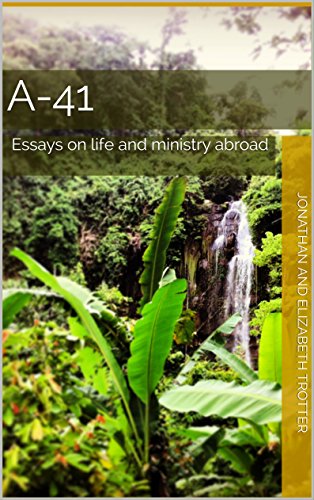
Our first book!

51Bby3f8ZJL
We’ve compiled over 50 of our short essays into a new book. The book covers topics like transition, TCKs, grief and loss, conflict, marriage on the field, and more. The Kindle version is $1.99 and is available here.

Here’s what Elizabeth has to say about the print edition:

What I like about the paper copy is that it’s in 8 1/2 X 11 inch format, so it has lots of white space and (ahem) margin to make your own notes, to sort of journal through it, as it were. A lot of our posts really are like journal entries of what God is taking us through, so having a hard copy allows you to journal through those issues on your own, too. Hopefully that’s a blessing to someone!

We are ordering a bunch to have with us here in Phnom Penh, so if you’re local and you’d like a hard copy, check back with us in a couple of weeks. Thanks so much for all your support along the way.

all for ONE,
Jonathan T.