AI Doesn’t Scare Me Anymore

A year or two ago when I started hearing more about AI, my immediate reaction was fear. I’m anxious by nature, especially regarding technology, but this affected my livelihood. I feared I would lose my job to AI. No one was going to pay me to edit their work if a computer program could do it for them.

I thought to myself, These are the only skills I have! What am I going to do when I can’t get a job?! Fear about money and provision has plagued me much of my life.

As usual, I knew I was probably freaking out prematurely. I tried to quiet my amygdala and just keep going. I tried pretending like vocational Armageddon wasn’t just around the corner.

I leaned on my go-to statements of faith for dealing with money fears. I’ve got the Lord’s prayer—”Give us this day our daily bread.” I’ve got manna in the desert—God brings us what we need now, not for the future, and we don’t stock up because it will spoil. I’ve got decades of testimonies of the Lord providing jobs or clients or supporters just when we need them.

But I didn’t seem to be able to trust God when new technology was involved. It seemed too human-controlled, as though artificial intelligence were somehow out of God’s control.

Fast forward to today, and AI is still forging ahead. I’m not sure anyone really knows where it’s heading, but honestly, I no longer care. I decided that I was going to use the talents God had given me for as long as they were useful. If He sent me clients, I would serve them. If He gave me projects, I would tackle them. And if He gave me ideas, I would write them.

Now I think that not only will my profession (writing, editing, book coaching) survive, but that the main future for creativity is in faith-based writing and art. Faith-based writers aren’t looking for a shortcut. They’re looking for the Holy Spirit, and so are their readers. 

They want to tell a true story about what God has done in their lives. They want to pass the peace of Christ to their readers. They want to tell stories of meaning and hope and purpose, and they want it to be their own personal words, based on their own experiences and their own inner life with God. 

AI can never do that for them.

AI might be able to write news and business and economics and current events (albeit poorly at this point). But it can never tell of the transformation God has wrought in your heart. It can never touch the heart of God because it wasn’t made in the image of God. Only humans were made to reflect God’s heart back to Him. A computer program — even a large, sophisticated one — can never do that. 

Part of the thrill of writing and even editing is participation with the Spirit. And part of the satisfaction in the creative process is the work God does in us when we wrestle with the words, with the stories, with the truths He wants us to tell. We honor God not only with our words, but by submitting to this process.

We draw near to God when we write and also when we hold space for other people’s writing. Somehow our words touch the Father’s heart. He is the Word, and we are His children after all. When we write, when we read other writers’ work, we walk on holy ground. And faithful Christian writers — and readers — still want to tread there.

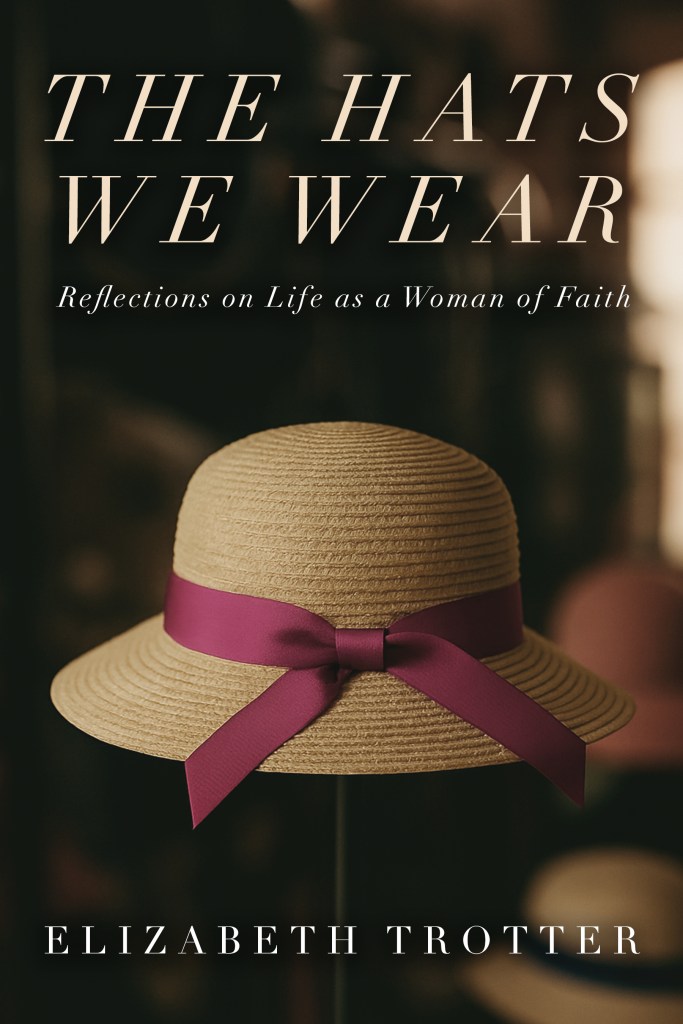
The Hats We Wear (introducing Elizabeth’s new book!)

Now available in print, Kindle, and on Audible! Check it out on Amazon here.

I’m so excited about this book. For the last few years, I’ve been dreaming of publishing an updated version of my original Hats: Reflections on Life as a Wife, Homeschool Teacher, Missionary, and More, and it’s finally happening!

There’s tons of new material in this book. It’s nearly twice as long as Hats, but I also took out about half the original material, as it was reprinted in Serving Well. I reorganized the sections and fully edited each chapter, so this is very much a brand-new book.

Matthew Stock designed this beautiful cover, coordinating it to Jonathan’s Digging in the Dirt while also reflecting the original Hats cover that Jonathan created for me.

So that you can get a better idea for what this book is all about, I’m going to share the back cover material for The Hats We Wear, along with the new preface and the original preface from 2018. Enjoy!

Back Cover

Little girls don’t know they’re going to grow up to be women who wear so many hats. Daughter, sister, friend. Professional, mother, wife. Our hats can weigh us down, and our vocations can exhaust us. The roles we inhabit stretch us in so many directions that we sometimes fear we will break.

Sometimes we even forget who we are.

In The Hats We Wear, Elizabeth Trotter takes us back to the beginning, to the foundation of our faith and who we are as children of God and daughters of the King. She explores our intense emotional worlds and the work of embodied living, then leans into the three specific hats of marriage, motherhood, and homeschooling.

Join Elizabeth on this journey of reflection. Walk with her as she seeks God amidst the hats of female life. Sit with her in the mundane and the sacred. Wrestle with the practical and philosophical implications of living life as a woman of faith.

As you read, you’ll meet someone who frequently does things the hard way first, flailing around worrying and wasting time on unnecessary details. But in seeking the Lord and listening to the wise people in her life, she eventually finds a path forward. 

She invites you to do the same.

Preface to The Hats We Wear (2025)

In the spring of 2018, my husband Jonathan decided to surprise me with a sweet Mother’s Day gift: a book of my writings about womanhood. He gathered articles I’d written on theology, marriage, motherhood, and homeschooling and published the collection on Amazon. He called it Hats: Reflections on Life as a Wife, Mother, Homeschool Teacher, Missionary, and More. I loved the cover he designed and was grateful to have a lot of my writing in one place.

The next year, however, Jonathan and I published Serving Well: Help for the Wannabe, Newbie, or Weary Cross-cultural Christian Worker, and much of the material in Hats was republished there. Over the years, I kept writing, and eventually I realized I wanted to update Hats, adding some newer content and removing duplicate material, much of which related more to my life as a missionary in Southeast Asia than to the broader conversation of Christian womanhood.

So for this version of the book, I removed a dozen chapters and added over twenty-five more, keeping only sixteen from the original twenty-nine. I wanted to distinguish this book from Serving Well, which focuses on ministry life, though I did keep a few chapters which are too foundational to my life and faith to remove. I’ve thoroughly edited and rewritten each chapter, so this is basically a new book.

The first three sections are hats that all women wear, regardless of whether they are married or have children: the practical theologian, emotional human, and embodied woman hats. Then in the second section I dig into the more specific hats of wife, mom, and homeschool teacher. I hope that the words contained in these pages will resonate with your lived experience and that we will forge a bond across space and time.

In preparing this book for publication, I was struck by how similar my struggles have been throughout my life. How wise my past self seemed, fresh from the fires of learning a lesson I find myself re-learning in the present. We are forgetful creatures, and so the Lord must teach us again and again. Is it any wonder He tells us so often to remember?

And so I offer these stories to you, trusting that they will speak to your heart and mind through the goodness of the God who calls us to Himself. May we seek Him first, above all others.

Preface to Hats (2018)

No matter your background or experiences, being a woman is hard. That’s partly because being a human is hard. It’s also due to the many roles we women tend to carry in life. Daughter, sister, friend. Professional, mother, wife. Marriage and motherhood are indeed holy vocations, and they require much of a woman. Whether we work outside the home or from within it, our vocations sometimes stretch us so much that we fear we will break.

The truth is, there’s not a lot of preparation for marriage or motherhood. Certainly, we can read books. We can read books on how to have a great sex life or how to build a godly marriage or how to live out biblical submission, but when it really comes down to it, we marry a human person, not a book, and our husbands also marry a human person—us. A lot of marriage is simply trying new ways of doing things and seeing if they work (including, at times, seeking professional or pastoral help).

It’s the same with motherhood. We can read books on natural childbirth, healthy homemade baby food, and the most godly parenting—or the most logical. But nothing can really prepare us for meeting our child, some mysterious arrangement of our own DNA, or someone else’s. No one can prepare us for their likes or their dislikes, their strengths or their weaknesses. We have to discover these things for ourselves, over time.

What follows in this book is precisely that: the things I’ve discovered over time. There are articles and essays on marriage, motherhood, homeschooling, and the Christian life. In case you don’t know me, here’s a bit of background: As of this writing I’ve been married for nearly eighteen years, having gotten married at the age of eighteen. I’ve been a ministry wife almost that entire time and have been living overseas as a missionary wife for the past six years. I’ve been a mom for fourteen years and have been homeschooling for nine. This book is my lived experience wearing all those hats.

Find The Hats We Wear on Amazon in ebook, paperback, and audio book versions.

What toilet paper art is teaching me about life and creativity

by Jonathan

Every evening, my little girls create.

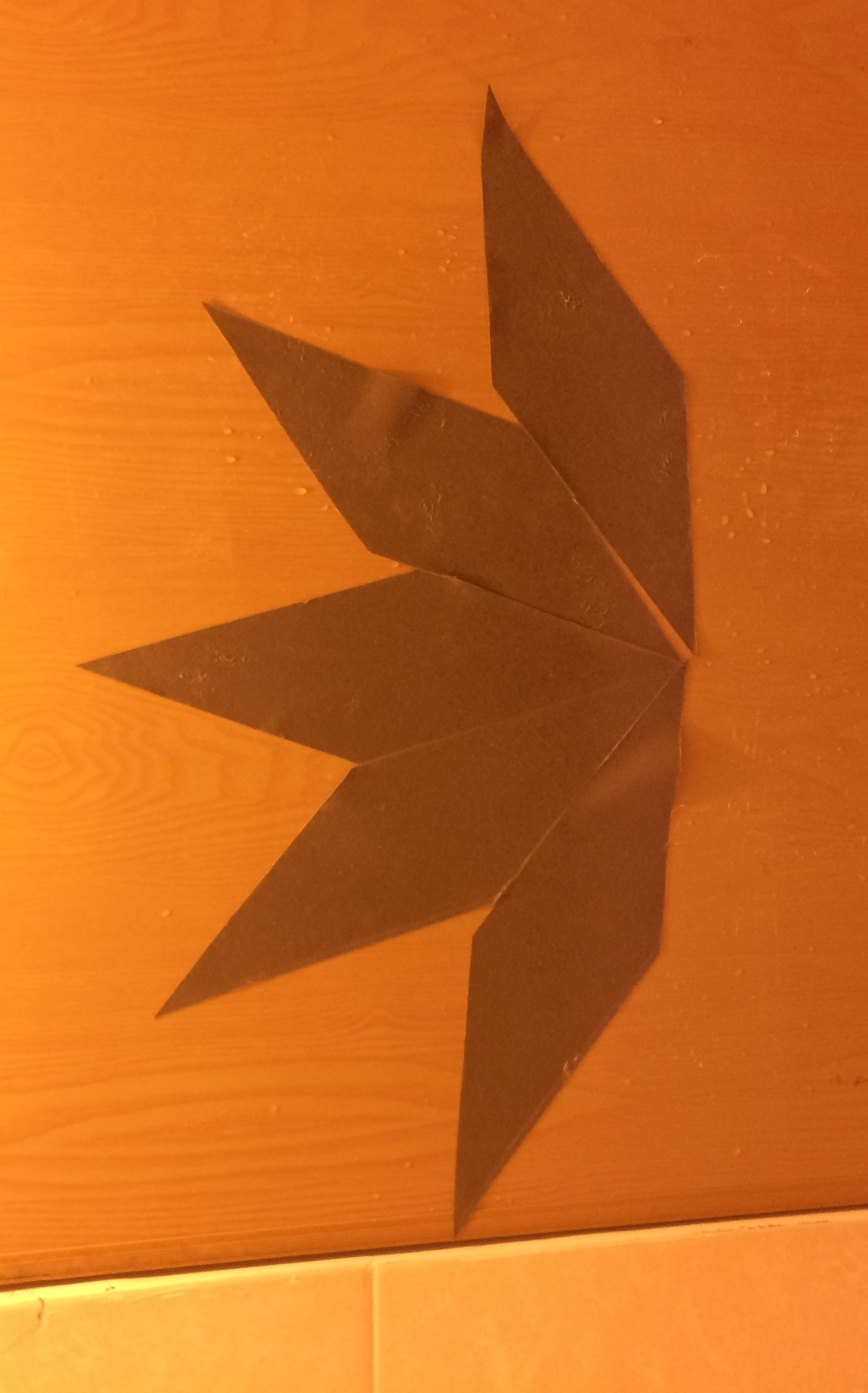
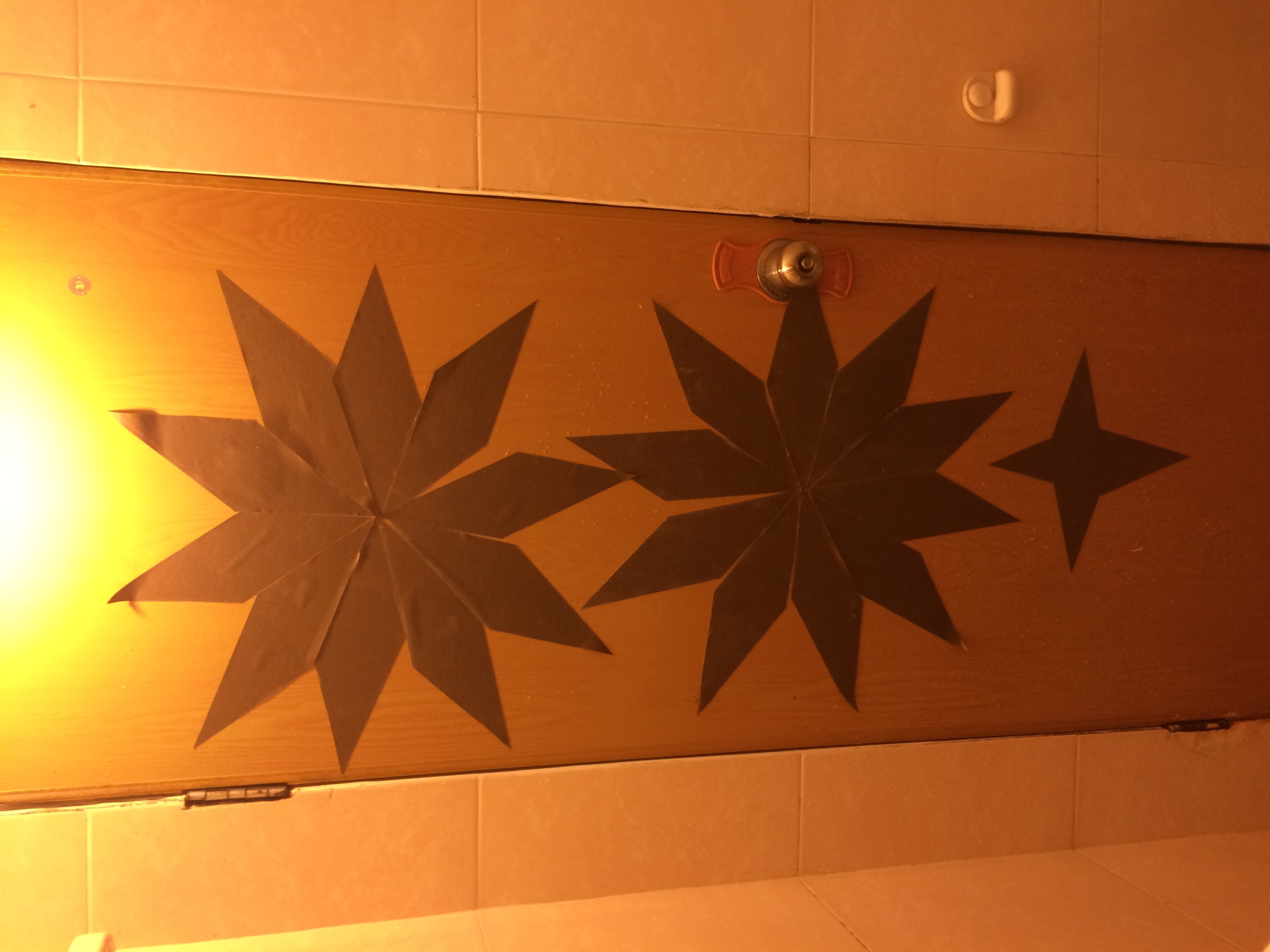
Every evening, my little girls take the cardboard innards of toilet paper rolls and they create beauty. In the bathroom.

pic-3

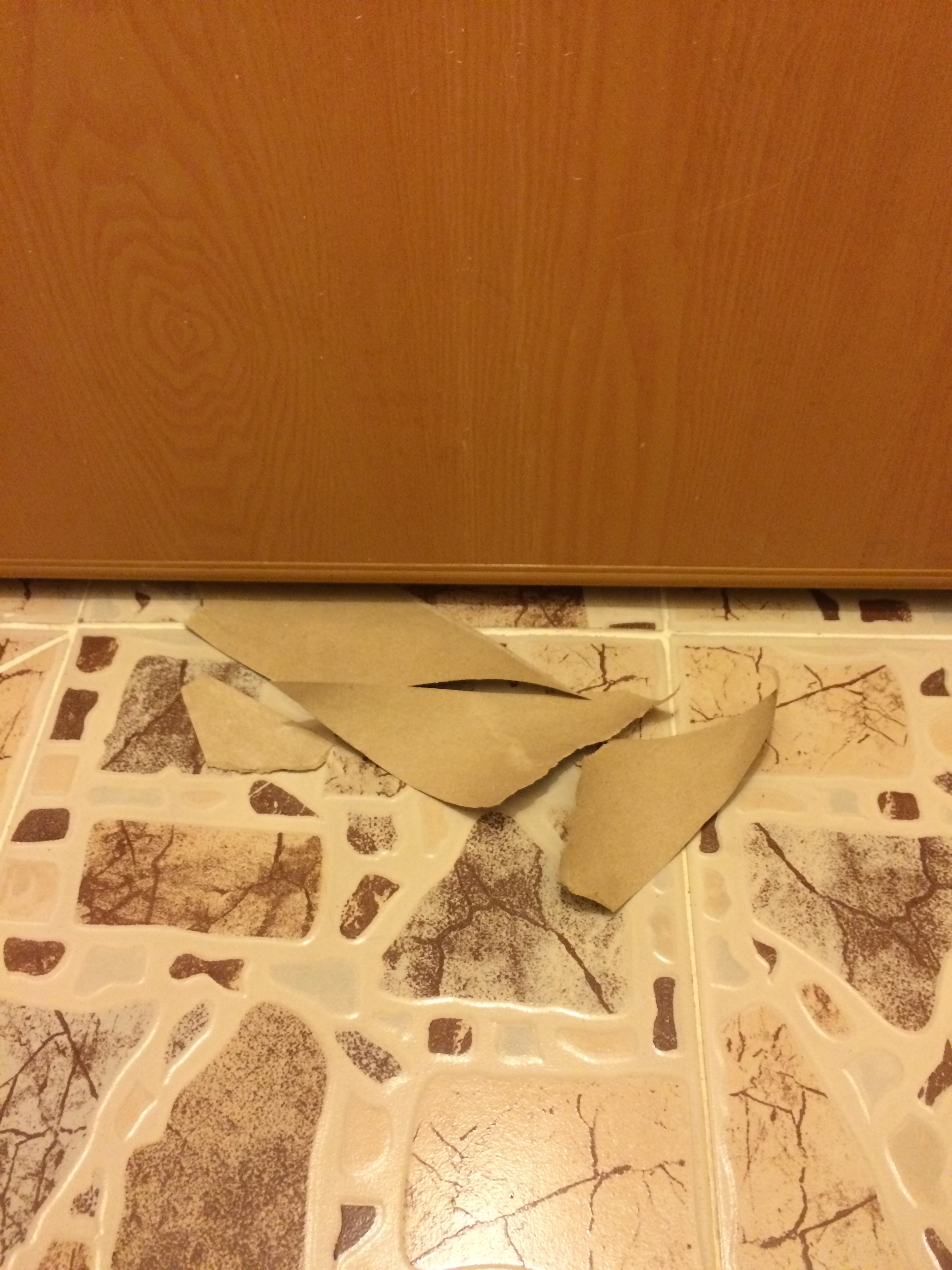
Every evening they create, and every morning I find the dried up pieces piled up on the floor.

pic-4

They don’t seem to notice the great impracticalities of their efforts. They don’t seem to care that no one will see their work or admire their skills. They just do it for the joy. They do it because they like it.

And they remind me that it’s possible to make even a bathroom in Cambodia a place of art. It’s possible to see beyond the leaky sink, the bare light bulb, the plastic door, the smelly drains, the cracked tile, the rusty doorknobs, and see beauty.

I want to be like that. I want to create for the joy of it. I want to write and speak from the fire and joy inside, not for the acclimation or accolades from the outside, and regardless of whether or not the space is perfectly designed for creating.

I want to speak laughter and joy into the mundane.

And when the internet gets a bit tense and people get a bit fired up, I want to remind people that “toilet paper art on plastic door” is a thing.

And whether anyone notices, and whether my work ends up in a pile on the bathroom floor tomorrow morning, I will still create.

Will you?

pic-1

~~~~~~~~~~~~~~~~~~~~~~~~~~~~~~~~~

*In our house in Cambodia, the bathrooms consist of one small room made entirely of tile. The toilet, sink, and shower occupy pretty much the same space, and the door’s made of plastic.

Creating with the Creator {how to start writing with God}

Recently someone asked me how I got started with writing and if I could give any advice on how to begin. Here is the bulk of what I wrote in reply, cleaned up a bit for the blog. ~Elizabeth
pencil-918449_960_720a

I will try to answer your questions to the best of my ability. But you should know I don’t make money from writing; it’s all ministry. I don’t know if that affects anything for you.

To answer how I got started in writing: it was an “accident,” almost like a cosmic joke. Seriously though, I never thought of myself as a writer. But when we started the missionary journey, I started writing some in our newsletters. Then when we actually made the move, I would just record funny or crazy culture shock stories, anything that was going on.

By the end of the first year in country I realized not only did writing do something for my soul, I was seeming to connect with people through it. I began to take it seriously and tried to set aside a bit of time each day to do it. Then in that second year I was asked to write an article for our organization’s annual magazine.

At the beginning of our third year in Cambodia Jonathan and I were invited to write for A Life Overseas. Then a year later I was invited to write for Velvet Ashes. So it all just kind of snowballed from the initial recording of daily life here. I do still find it life-giving, especially when I write for my own blog, as there is less internal pressure to “get it right” or to be inspiring. But I also see writing as a ministry of encouragement.

That’s the formal part of my adult writing story, but I can pick out the threads of this tapestry many years into the past. I remember as a young child wanting to be a fiction writer when I grew up. In high school I wanted to be a Christian singer/songwriter, and I tried my hand at writing lyrics. But I don’t think they were any good! At university I served in youth ministry, and for one teen girls’ class I wrote plays about the women we were studying in the Bible. I had so much fun with that, and so did the girls. It’s a pity I lost them!

I never would have considered myself a writer, though I remember emailing silly stories about young motherhood to my best friend when I was a young mom and still lived in the States, and she once told me I was so good at that and how she wished I could use that skill someday. I didn’t think much of it at the time, but it must have been more than a bit prophetic. So I think the writing has always been there inside me in some capacity.

Which brings me to something important: if you are a writer, because that’s who you are and who God made you to be, you will always be a writer. The size of your audience doesn’t affect your identity as a writer. I think that’s massively important, and I borrowed that bit of wisdom from International House of Prayer musician Misty Edwards. So much of what she says about prophetic singing and worship leading applies to writing too, and I’ll type my notes from her onething 2015 breakout session at the end of this note.

For me writing is vocational – “an expression of worship,” just as you said. And I personally try to write out of the healed places in my life, not my current, gaping woundedness. I have definitely gone through un-free seasons, seasons where I was bound by fear of others’ opinions of me, seasons where I really had to seek God about my social anxiety and my need to please others. For the most part now I do feel free of that crippling fear, and it is a wonderful feeling. But of course I long for all of us to be free of competition and comparison, of envy and jealousy and insecurity.

So advice on getting started? Write. Just write. Write what’s on your heart and do NOT think about the audience. The audience comes later. The art comes first. Don’t think about who’s going to read it, don’t think about whether it’s any good. As you practice, you’ll get a feel for which types of writing you enjoy and which types you might be better at than others. You’ll find your distinctive voice.

Later on, make sure you’ve got a good grammar handbook (The Elements of Style is a good one), and make sure your style is following the rules where necessary, only “breaking” the rules on purpose, and also easy for a reader to follow. I am very picky about grammar, spelling, and punctuation (which is how I got the role of editor at A Life Overseas, which I love, but also another accidental job). And the rules of writing are important. Those things kind of reside in my gut now, because I wrote a lot of essays and reports in both high school and college. They are not automatically gut-level, but they can be trained into us.

The other part of style, the overall content and flow, is probably also trainable, but I find it to be gut level too. I like pretty words, and I like pretty paragraphs. I do think there are guidelines for developing those things, but I tend to function by gut anymore, so I might not have great advice on that. I know you can take workshops for that kind of thing in some places. The best advice I have is to read quality writing and literature, and you’ll start to get a feel for good structure and flow.

Then how to go public with it? That I have even less advice on! My writing journey was all accidental. Jonathan bought our blog domain six years ago only as a way to disseminate our newsletters. We never meant for it to take on a life of its own like this. But that meant that from the very beginning I had a place to write, with a few prayer supporters to read it. It grew organically, I guess. And then writing on other bigger blogs helps expand your personal reach and it all becomes one big muddled mess that I can’t tease the particulars out of!

So should you get a blog domain? I don’t know! People nowadays also use Facebook as blogging. You know, the long statuses where people don’t have to leave the Facebook app. Anne Lamott is famous for those. (She’s got some salty language, but her book on writing, Bird by Bird, is an absolutely essential manual.) So you could dip your feet in the waters by sharing your writing, the writing you feel really confident about, in a Facebook status. You might even say you’re just starting out and wanting to share things.

Or you can submit various pieces to various collective blogs (those are usually non-paying) or print magazines or newspapers (which sometimes pay — my best friend is a writer who does that sometimes, but I don’t really know anything about that personally).

Don’t ever forget that some things are just between you and God, and that’s still writing. I’ve got lots and lots of words that never see the light of day. They are just for me and God in the secret place.

In the same vein, just because something is uber-personal and you think it’s just for you and God, don’t assume it’ll never see the light of day. A lot of writers say some of their most impactful work is stuff they thought was just for themselves. I remember a story like that about Twila Paris and “The Warrior is a Child.” I wrote a poem on grief that I thought would never be public either. Jonathan has published things like that too. So keep writing privately no matter what, and you never know what might be of the greatest use to someone later on!

~~~~~~~~~~~~~~~~~~~~~~~~~~~

The following Misty Edwards quotes were recorded as quickly as I could write them down, so they may not perfectly represent her teaching or her message. If so, the mistake is all mine — but even so, I received so much encouragement from her talk and am grateful to have heard her speak.

“God could speak Himself audibly. But He chooses to speak through us. He chooses to use our voices and He chooses to break in to our world with words.”

“The main way He speaks to us is language. Mental images, pictures, words, imagination, that’s how God speaks.”

“We must be familiar with the language of scripture.”

“If you are an artist, because that’s what God made you to be and that’s who you are, it doesn’t matter who is watching, you are still an artist.”

“When you’re doing what you’re called to do, you feel alive and connected to God.”

“Don’t worry about the source of your inspiration if it’s grounded in Scripture.”

“Sing like yourself. It’s easier on your voice. Don’t damage it by singing like others! And breathe from deep within your belly, not your head.”

“This is all something we practice.”

“Don’t be afraid to collaborate.”

“Create. Don’t copy-cat.”

“The quality of our art is important.”

“What to do when you mess up? Because you will mess up. Find safe people, to get some perspective, to get out of your head. Laugh at the little mistakes. When you don’t, you put yourself in a prison. Don’t quit. And remember that God is not displeased.”

“Major on the majors, minor on the minors, don’t argue about small details, don’t lose friendships over arguments.”

3 Things I Know About Creativity

by Elizabeth

I never thought I’d be a writer. I certainly never thought I’d be an editor. Yet here I am, as both a writer and an editor, loving both.

I love writing. I love typing out words and twirling them around on the screen. I love figuring out what my story means. I love speaking from the heart and being understood by others. I love the feeling of connectedness when others relate to my experiences. I love realizing that my words may have helped someone somewhere along the line.

And I love editing (or as I like to call it, collaboration). I love empowering people to tell their own stories. I love the privilege of peering into people’s souls and of being able to say, “I see you.” I love finding the gold and precious stones in their words and chipping away at the rough edges until the work shines just so, until we’re ready to present it to the world. And then, after we’ve finished working together, I love the thrill of watching a fellow writer be understood and accepted by their readers.

As I’ve practiced the art of writing over the last four years and, more recently, entered into the world of editing this year, I’ve come to realize three essential ingredients to creativity. There are perhaps more. I only know creativity has these three needs:

  • To live life. If I want to write, I have to go outside my door. I have to live life and collect some experiences. I can’t write about something I haven’t lived, and I can’t just stare at a screen all day. It’s not good for my neck and back muscles (or homeschooling, for that matter). I have to let my mind wander and my soul breathe. Usually it’s when I am having the most difficulty at a project that I most need to get up, shut the laptop, and do something else. A new arrangement of words and ideas generally comes while I clean the kitchen or take a shower.
  • To be alone. Art is created in solitude. I need time for both contemplation and the actual creating. If I want to write, I need quiet. Not silence – a life with four kids in Phnom Penh is never going to achieve that. But I need to get away by myself to write, even if it’s just another room (which is what it usually is). And I need to get away to talk to God. For me, writing only flows when I’m in communion with my own Creator and my soul is at peace. And I need time alone for that, too.
  • To be in community. Art may be created in solitude, but it’s refined in community. When we share our intimate thoughts and vulnerable moments with others, we need both encouragement and constructive feedback. We need feedback so we can tell our stories more clearly and more fully. More resonantly. And we need trusted people to take in our work and to affirm us. Community gives us the confidence that what we have to offer the world is good and valuable, and that in and of itself is good and valuable — and that is what I love about editing.

“Creativity does not truly come from the popularized image of the tormented artist, struggling with the muse. True creativity is born in community as men and women of God listen to each other and to Him: as we seek to understand each other’s woundedness and strengths.” –Michael Card

pottery-166797_640

What about all you other creators out there? Does your creativity need other ingredients?