You can’t pour from an empty cup. It’s so cliche, yet cliches arise for a reason.
Because it’s true: you can’t keep giving and giving and giving. To God. To others. Not without refilling. Even my children know this. We’ve talked about ministry burnout often enough.
I think most of us know this truth and even accept it. We have to be refilled by God. Jesus modeled this for us.
But what we don’t always recognize is that we all have different cup sizes. We pour out at different rates, and we refill at different rates. Nobody is the same, and we can’t compare our public ministry or private refilling needs to anyone else’s.
So how big is your cup? How long does it take to pour out, and how long does it take to refill? These are things only you can discern. God asks us to pour ourselves out for others, yes, but He also longs to pour Himself into us.
We aren’t useful to anyone if we’ve poured ourselves out so completely that there isn’t even a drop left. So let God fill your cup, in His own time and in His own way. He made your cup and gave it to you, and He knows how much time it takes to refill you.
Then walk out your front door and pour it out for Him. He promises to be there when you come back for more.
Because we weren’t meant to hoard all that goodness for ourselves. We were made to share it with others.
When we don’t, we become like the Dead Sea, with freshwater inflow and no outflow. We become too salty, too concentrated and astringent to sustain life. Always taking and never giving — like a metaphorical black hole.
I’ve used way too many analogies here, and now it’s time to stop.
But before I do, I want to help my fellow low-energy moms out there. Ten years ago Brandy Vencel wrote a blog series called The Low-Energy Mom’s Guide to Homeschooling. Even if you’re not homeschooling, several of the articles might still apply.
Because we all have different sizes of cups. We all have different rates of pouring out and refilling. But we also all have the same God, a good Father who longs to pour into His children and watch them pour into others. We were never meant to keep the goodness He gives us—we were made to share it.
I’m so excited that Remnant Counselor Collective launches today and includes an article of mine aimed at helping counselors care for missionaries. It’s about the six things a counselor should remember when counseling missionaries:
1. Don’t try to keep them on the field or get them off the field
2. Remember, they’re people too
3. Get comfortable with grief, because there’s probably a lot of it
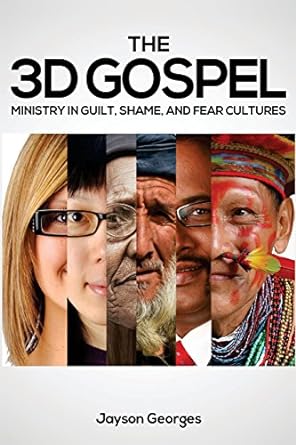
This spring I read three of the best books I’ve ever read. One in particular I couldn’t stop talking about for weeks – but it wasn’t the sex book! I had to start with that word, though, because I knew it would grab your attention.
When Christine Paterson of FieldPartner recommended the book and mentioned that it was only $3.99 on Kindle, I figured I’d give it a try. I intuitively knew that American culture held more than just a guilt/innocence worldview and that shame/honor and fear/power comes into our thinking as well, and I was eager to learn the specifics of each worldview.
What I didn’t expect was for the book to so thoroughly rewrite my understanding of culture. I underlined nearly the entire book. At only 80 pages in paperback, there’s no fluff here. Every word seems essential, and every sentence sheds light on world cultures and their differing assumptions and thinking processes. I began to understand shame/honor and fear/power cultures more fully, and I began to see how the Bible beautifully addresses all three cultural concerns (guilt, shame, and fear).
Once my eyes were opened to this, I even began to see these three concerns addressed in most of our worship songs. In Western cultures we tend to tell the gospel story only through a guilt-innocence lens, and while that’s not wrong, it is incomplete. We look to God for help with our problems regarding fear and shame, but we don’t tend to bring these perspectives into our telling of the Gospel story, and this hinders our spiritual growth.
Thankfully, we can offer people a more three-dimensional gospel, one that has the power to redeem their day-to-day struggles with fear and shame, whether in our passport culture or a host culture. God knows the human heart and has offered a solution for all our problems in Jesus Christ.
This book made me fall in love with God all over again.
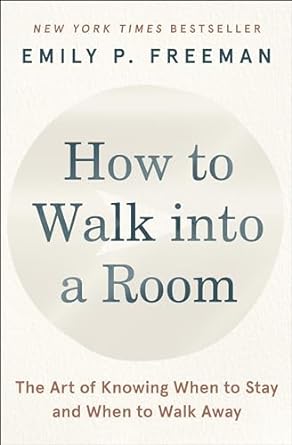
I remember resonating so deeply with Emily’s podcast episode, “How to Walk Out of a Room,” a couple years ago. The episode was mercifully devoid of details so that her principles could apply to all sorts of situations. When I heard she was writing a book based on that episode, I knew I would want to read it.
Emily is a spiritual director and has a master’s degree in spiritual formation, and she has a way of walking with people in discernment that is quiet and calm. She offers a “non-anxious presence,” as they say in spiritual direction circles. (Full disclosure: I’ve been meeting monthly with a spiritual director for about the past year, and it’s been a huge part of drawing my heart back into conversation with God after some dry, lonely years.)
I had a feeling this book would be important, and so I decided not to mark it up but to leave it empty and, in a way, sacred. Instead, I would rewrite meaningful sections in my journal. This helped slow me down and really savor Emily’s words. It helped me process the past, it helped me learn how to make better decisions, and it gave me peace in the decisions I was making. Then one day I looked around and realized I was making decisions much more easily than I had in the past, even small daily decisions, and I had to wonder if this book had something to do with it.
The thing I love about this book – and that sets it apart from other books purporting to help people recover from restrictive religious environments and explore a more expansive relationship with Christ – is that Emily gives tangible steps people can take to process the past and discern their present and their future. To walk with Emily is to learn together how to listen to God.
This is the book every woman needs to read before she gets married – or after, if things in the bedroom aren’t working, whether she got married a year ago or 30 years ago. Sheila co-wrote The Great Sex Rescue with two other authors, and it’s a great research-based book that helps people untangle their unhealthy and unbiblical beliefs about sex, but The Good Girl’s Guide really gets into practicalities.
I heard it recommended by a Bible college professor who teaches classes about sexuality, and I wanted to check it out myself. There was an earlier version of the book, but just this year it was revised and expanded, so I read the revised version. This is the book I will give to my daughters when they are engaged or newly married. I still recommend Aanna Greer’s Darling: A Woman’s Guide to Godly Sexuality for those who are quite innocent or naive about sex and their bodies, but Sheila’s book is a necessary follow-up.
Sheila, along with her pediatrician husband, also wrote The Good Guy’s Guide to Great Sex: Because Good Guys Make the Best Lovers. I haven’t read that one, but I’m assuming it’s good because that same Bible college professor recommended it and because it’s from an author I trust.
I hope these books will help you or someone you love.
I had the chance to talk about a bunch of ideas from Digging in the Dirt on a couple of different podcasts recently. Read about what we discussed, and check ‘em out!
The Clarity Podcast with Dr. Aaron Santmyire: We talked about married sexuality, the danger of centering America in the story of global Christianity, why not to call our kids “world changers,” the uniqueness of having a work spouse, Shiny Happy People, and more.
Missionary Life with Sarita Hartz: We talked about the fun stuff like depression, anxiety, the “missionary life cycle,” and the important distinction between anger and aggression. It’s a vital conversation for those in missions and pretty much everyone else too.
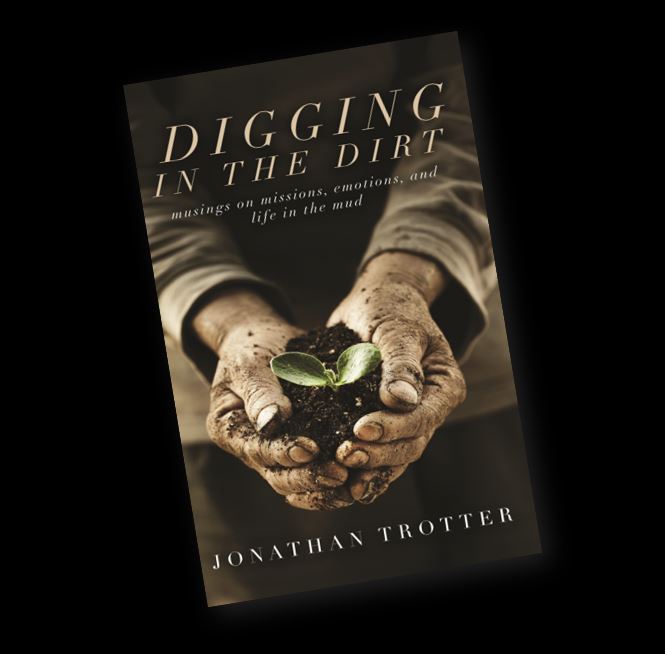
Welcome to ground level, to the dirt and the mess.
We like the mountain tops and the sunshine. We like green grass under a clear blue sky. We like victory and breakthrough and answered prayers. But sometimes it rains, the shadows deepen, and life turns muddy. Sometimes God seems quiet. What then? What happens when depression descends, or anxiety hangs like a sword overhead? What happens when loneliness suffocates, the thief steals more than stuff, and you get blood on your shoes?
In Digging in the Dirt, Jonathan Trotter delves into the disasters, the darkness, and the deluge, and he offers comfort, presence, and a gentle invitation to hope.
With humor and prose, with poetry and Top Ten lists, Jonathan welcomes us to the dirt, to the places where we actually live. He invites us to boldly see life as it is, with eyes wide open, and reminds us that even when the digging is scary, we are never alone.
To the ones who are dealing with devastation and distress, welcome. To the ones who need to uproot, to pull out, to clear ground, welcome. To the ones who seek desperately to plant seeds of grace and hope in once barren soil, welcome. To the missionary abroad and the believer at home, welcome. Receive the invitation, and join with Jonathan here at ground level, together.
Come, dig in the dirt.
From the preface:
Hello and Welcome!
I’m Jonathan, and it’s such a pleasure to meet you. I look forward to journeying with you through these pages. Together, we’ll delve into the dirt of life and relationships, of sorrows, pain, and loss. And maybe we’ll plant some things too.
Perhaps, along the way, we’ll see small, green stalks of life and hope begin to poke through, watered with the tears of the journey. Digging like this can be messy, but it can be good too.
These musings will meander from the hot dirt of Cambodia to the sticky mud of American politics. Some of these musings are inspired by international missionary life; some of them are firmly rooted in an American context. But whether you’re American or not, whether you’re a missionary or not, I hope that you find them all a blessing, an encouragement, and perhaps sometimes a challenge. I wrote them for you, and I share them with you with my whole heart.
Start reading Digging in the Dirt wherever you’d like, and feel free to skip ahead or go backwards. Are you a cross-cultural missionary? Start there if you want. Are you interested in developing emotional intelligence, or are you exploring whether or not Christians are allowed to have feelings? Consider starting in the Emotions section. Are you reeling from recent life events that have left you feeling like you’re choking on the mud and muck? First of all, I’m so sorry. Second, breathe a slow, deep breath, look over the Table of Contents, and start wherever you need to start.
Wherever you are, and whatever your story, welcome to ground level, to the dirt. It is here that the real work happens; the good, hard, sweet, healing work. It is my deepest hope that here, among these musings, you may find grace, peace, and a hope that just might be strong enough to crack through the crust.
All for ONE, Jonathan Trotter
What people are saying about Digging in the Dirt:
A genuine book where no topic is off limits, Digging in the Dirt hits you right where you are regardless of location or vocation. This book is a must-read for anyone who is or is thinking about serving in missions and ministry! – DeAnna Anderson, former Director of the Launch Team for Wycliffe Bible Translators and missionary
Digging in the Dirt is a breath of fresh air for Christians. – Kim H.
Jonathan has such an authentic insight into life on the field, and he addresses the hard things in such a real and tangible way that helps you to know you are not alone. I would totally recommend this book for anyone who is serving overseas, sending someone overseas, or remotely interested in mission life. – Sydney, PI Leader for Southeast Asia
Rarely does an author bring the perspective of a missionary, nurse, theologian, pilot, counselor, parent, and gardener to cross-cultural ministry, family dynamics, depression, grief, politics, and the church, all in one book. Even rarer is a book that combines all of those things in a way that rings authentic and meaningful. Digging in the Dirt manages to do both, bringing thought-provoking and heartfelt lessons out of an incredible range of real-life experiences. – Reuben James
Digging in the Dirt is a must-read for anyone in missions or ministry. It’s refreshingly humble and vulnerable, and no matter what stage of life and ministry you’re in, you’ll walk away with some wisdom and new insight. – B.W., Stateside missions support worker








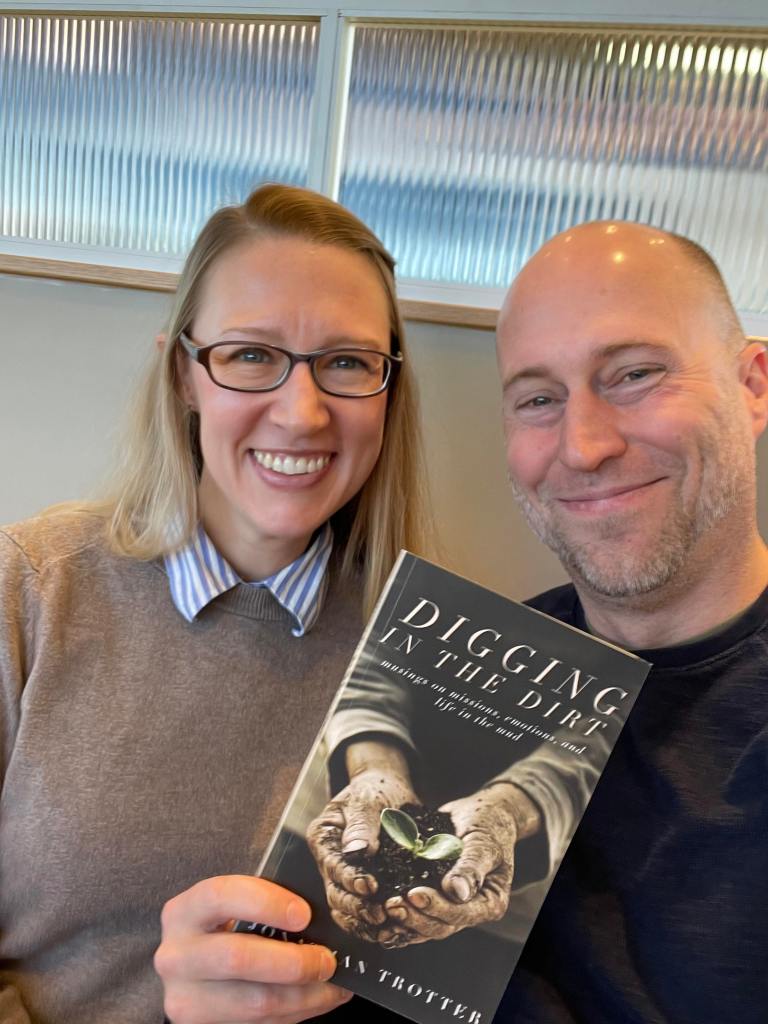
 Jonathan & Elizabeth Trotter