Return to Life

by Elizabeth

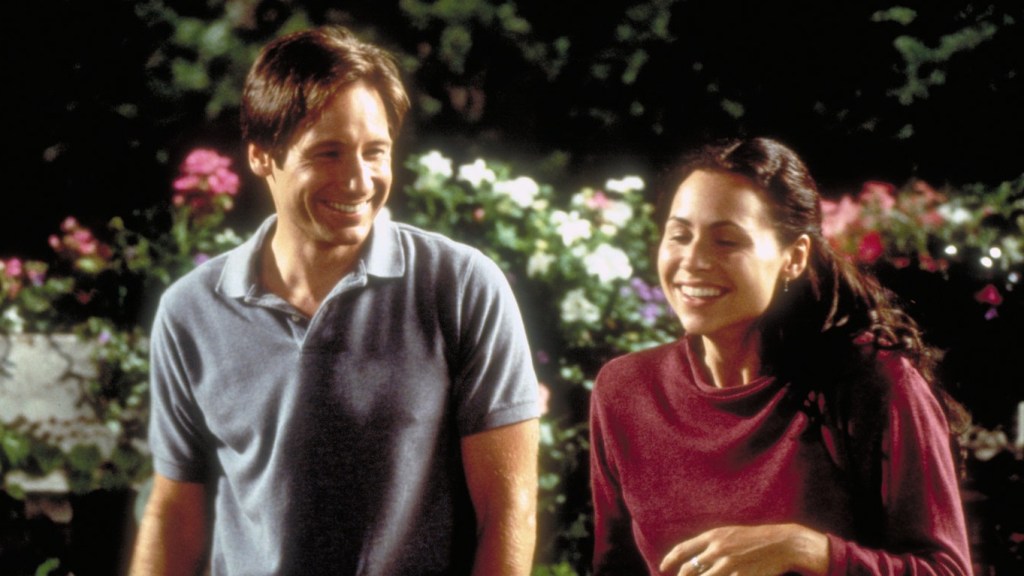
The 2000 film Return to Me is a family favorite. The movie features Bob and Elizabeth, who have been together since high school and who are still very much in love. One tragic night Elizabeth, who was an organ donor, is killed in a car accident. We watch as doctors transfer her heart to Grace, a woman who’s needed a new heart for a long time.

Grace goes nervously into surgery, hopeful for a new life. Bob, blood still on his clothes, goes home to an empty house. It’s an agonizing scene.

Months later, Grace has recovered from surgery. Bob, meanwhile, is having trouble living without Elizabeth and has buried himself in his work. Friends continually try to set him up with other girls, but Bob wants nothing to do with anyone new. He can’t get over the loss of Elizabeth. Then one night during one of these blind dates, Bob meets Grace at the family restaurant where she works. Sparks immediately start flying.

In the following weeks and months, Bob’s heart opens up to new love. But Grace is guarding a secret. Although she doesn’t know that Bob’s wife’s heart beats inside her chest, for some reason she can’t bring herself to tell Bob she’s had a heart transplant. Eventually the two of them figure this fact out, and the revelation is traumatic for both of them. Bob disappears; Grace flies to Italy to paint.

While Grace is gone, Bob realizes he loves her and can’t live without her. He looks for her at the restaurant only to find that she’s gone. He acknowledges, “I miss Elizabeth. I’ll always miss her.” Still, he’s ready to embrace a new life with Grace. He goes in search of her, and their reunion is sweet. The audience can see them building a future together.

One year after having traumatically evacuated Cambodia, I think I understand a little of what Bob meant in his restaurant confession. We left Cambodia in March, just as the pandemic began closing borders. We were relieved to have made it to U.S. soil, and for several weeks we assumed we’d be able to easily re-enter Cambodia in the fall as planned. But by May our visa and passport plans began unraveling, and by June, life as we knew it in Cambodia was over.

I didn’t even get to say goodbye.

2020 became one long grieving session. This might sound strange if you knew me in the early 2000’s when Jonathan felt called to missions and I didn’t. You might remember how I fought the call for so long. But now I felt like Mr. Holland from the movie Mr. Holland’s Opus, in which aspiring composer Mr. Holland longed for fame and renown, but instead ended up teaching music to high school students. At the end of his career, when budget cuts forced him to retire early, he observed, “It’s almost funny. I got dragged into this gig kicking and screaming, and now it’s the only thing I want to do.”

Like Mr. Holland, I didn’t initially want to move to Cambodia, but once I got there, I found a life I loved. I wasn’t ready to say goodbye — but covid said differently. For weeks, I woke up crying. Opening my eyes each morning was a painful reminder of where in the world I wasn’t. In Cambodia I had a strong support system. I lived every day with a sense of meaning and purpose. I had a place in the community and rituals and routines that brought structure to our chaotic cross-cultural life. We had raised our children there, and Cambodia was all they knew.

It was a difficult life, sure, but it was also an exceedingly good one. And I wasn’t sure I would ever stop crying over this loss. I lived in the “if onlys.” If only we didn’t have passport problems. If only we didn’t have visa problems. If only covid hadn’t happened. If only, if only, if only. I thought if I could just get back to Cambodia, I could recapture all my former happiness. In reality, even if I could have returned, I couldn’t have recaptured my old life. Covid made that impossible for seven billion of us.

Then one day my near-constant crying stopped. I thought I had accepted my new circumstances. And I do believe I had accepted that I couldn’t get my old life back. But reflecting now, I realize that I struggled deeply throughout the fall and winter. I had said goodbye to my old life — though not in person and not on purpose. But I still didn’t know exactly what my new life would look like, so it was hard to root myself here. Everything seemed bleak. I didn’t think I could ever be happy again.

We were looking for a home at the time. We knew we had to be out of our temporary housing by the end of December. After several housing disappointments (a story I’ll tell another time), I began to fear becoming homeless (emotions may exaggerate facts, but the intensity of the feelings are real). We didn’t have a church home yet because of covid, so I didn’t have local community to help me through this transition. I knew I couldn’t get my old life back, but I still desperately missed it.

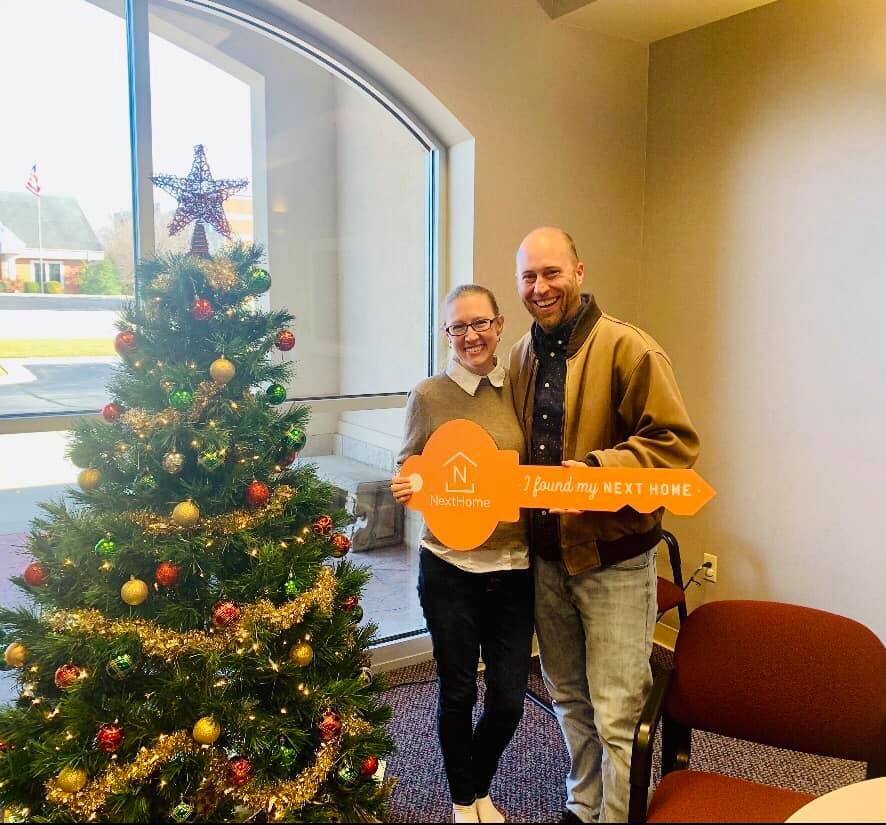
Finally, finally, we found a home that fit our family that was also in our price range. We signed the papers mid-December, which was a bit closer to the deadline than we would have preferred. Still, we were thrilled to have a place of our own. I had no idea it would be such an important milestone in our repatriation process.

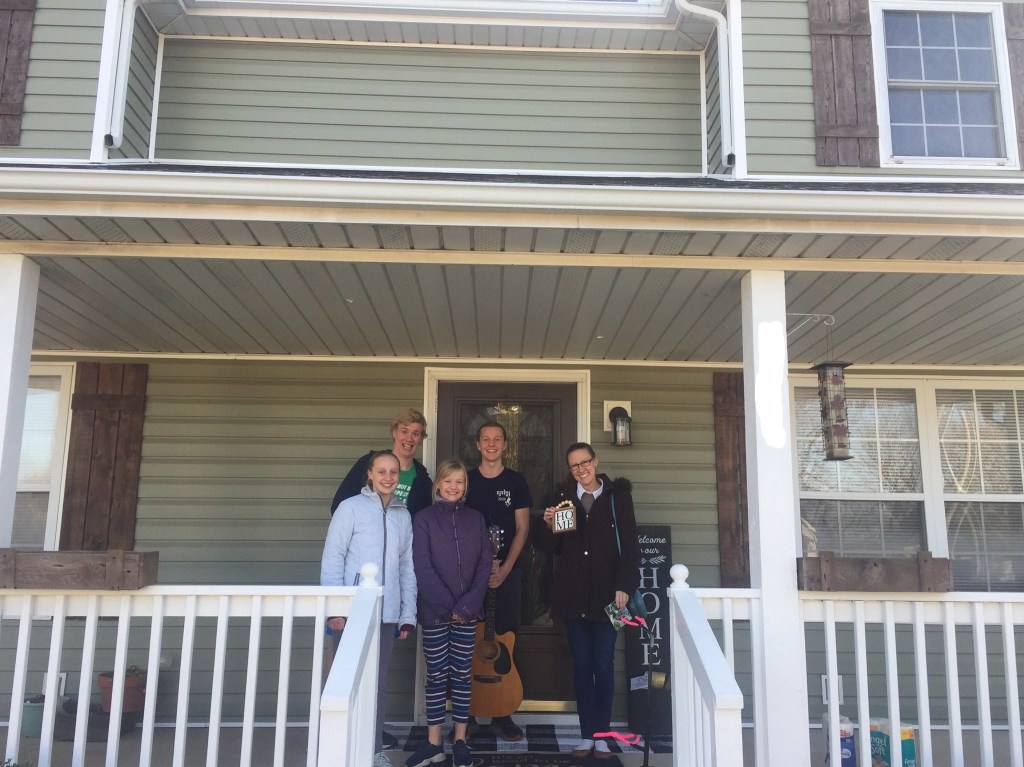
We’ve been in our new home for three months now. It fits us so perfectly (I promise I’ll explain in an upcoming post). I live in the daily disbelief that we could have found such a fantastic place for our family to live. We are making it our own, slowly writing our name in the land. Jonathan is working on the yard. We have pictures on the walls. We have rituals and routines, and I’m slowly re-building a support system. Living in our home has helped get me “unstuck” from the grief and helped me to move forward. It has given me a glimpse of what the next season of life might look like.

Cambodia is still a natural part of our conversations, and we frequently talk about our old life. The six of us have so many shared memories, both pleasant and unpleasant. Occasionally I even long for life in Southeast Asia. But I no longer think I can’t live without Cambodia, that life simply cannot go on without Cambodia. I’m beginning to understand what life can look like here on the other side of the ocean. I feel like Bob, who knew that he would always miss his old life, but who now knew that he could also live a new life with Grace.

My old life and my new life, side by side.

Remember the Old Days of Blogging?

by Elizabeth

Remember the old days of blogging? I do, and fondly. I loved how blogging was like carving out my own online space to be creative, to express myself, to have conversations and connect with the people I loved.

But eventually blogging started to stall. People started migrating to Facebook and Instagram; these were the new methods of communicating your message. And they came with new rules. Provide shorter, pithier (and sometimes meaner?) content. Always include a photo. Maybe even build your post around the photo, instead of the words. Extra points if you can edit and improve the photo.

And so for a time, it became easier and simpler for me to just to pour my personal content onto the Facebook platform. After a while the photo requirements started to feel heavy. I’m not a visual artist or a talented photographer. I know nothing about photo editing. I tell stories through words, usually long stories. Even with all these changes, I still kept at it.

But years of this social media habit took its toll. Facebook began to stress me out. It wasn’t the light-hearted online gathering place it used to be. It was filled with angst and stress. But I couldn’t figure out a way to get off of Facebook and still be a communicator, because Facebook was where the people were. And if you want to have meaningful conversations, you need other people to be involved. And importantly, I loved the ability to keep in touch with friends who were far away.

But about a month ago, after reading a book and doing some personal reflection, I signed out of Facebook. I didn’t tell anyone I was doing it, not even my husband, because I didn’t know how long my decision would last. A few days later he asked me a question about something that had happened on Facebook, and I replied, “I haven’t been on Facebook for 3 days. I don’t know what’s happening there.”

He (and the rest of the family) seemed thrilled that I wasn’t on Facebook.

As the days and weeks went by, I found I was less stressed out. I didn’t necessarily think I was acting any differently, but my family told me I seemed happier. And every time I considered signing back in, perhaps to try to connect with friends or find out what they’d been up to, I was filled with dread. I just couldn’t bring myself to do it. I was afraid of getting sucked back into the endless scroll again or being activated by triggering content.

This experiment proved to me what I had only previously wondered about: Facebook is a place of stress for me. At this point the stress is so intense that it’s not worth the gains of being on it. Once upon a time, it hadn’t been stressful. It is now. Even though I dearly miss catching up with far-away friends on social media, I’ve realized that taking care of my mental health in this way is the right thing for me to do in this season.

But what to do about the writers and experts I followed on Facebook? After some investigation, I learned that serious writers back up all their content on their own websites, and they have email lists for people like me who want their content but don’t want social media. I signed up for all the email lists I needed, and now I happily receive their content without the stress of social media.

This made me consider the idea that perhaps the future of blogging lies in its past. That maybe people are returning to website-oriented writing once again. Or that maybe in the future, they will. This blog is our own: Jonathan and I pay for the privilege of hosting our own online space. The content doesn’t belong to a “free” social media company that bombards you with pointless or offensive ads, or that is constantly monitoring your online behavior (read the aforementioned book if you want more insight into the monitoring).

Regardless of whether or not the future of blogging lies in its past (my prediction could very well be wrong), I’m choosing to return to my blogging roots. I don’t plan to get back on Facebook any time soon. If you want to follow my journey (especially as I repatriate to the States), following the blog will be the fastest way to see new content. (Simply click on “Follow trotters41” on the side bar if you don’t already subscribe.)

I’ll also plan to use third party aps to post to Facebook, but I won’t be around to answer comments on Facebook itself. And I’ll eventually make that announcement on Facebook, too, so my online friends know what’s going on with me.

I want to start writing again, and this is the place where I’m going to do it. It may be in fits and starts. It may be small updates at first. I might include longer essays at some point. I may share mundane things that are going on with me; I may share books that are helping me along my journey. I may suddenly share something really private and profound. I don’t know how it will unfold. I’m just going to begin again.

I’m going to let trotters41 be in 2021 what it was for me when we first transitioned to Cambodia in 2012: a place to share my journey and a way to walk into the future, whatever that future looks like. In a way I’m coming home. This is the place I first found my voice, and I intend to find it again. I hope you’ll join me here.

(Affiliate links included)

Same Same, But Different

by Jonathan

I am thrilled to announce that as of September 1st, I have officially joined the member care team at Team Expansion!

We’ve talked about this transition before, but since even I’m confused by my life lately, I thought I’d explain again. Also, since this position is a support-based position, we remain entirely grateful for your prayers and financial support. If you’ve ever thought of making a one-time gift, or partnering with us a monthly giver, those links are below. To get back up to fully funded, we’re needing to raise about $300/month, so any bit helps!

Team Expansion has about 350 workers in 50 countries. As part of the member care team, my role will be coming alongside of some of those folks to provide pastoral care and empathetic coaching. I’ve committed half of my client hours to Team Expansion workers, while the other half will be available to cross-cultural workers from the broader missionary community.

Doug Lucas, president of Team Expansion, explained my job like this:

“By helping to care for our field workers, Jonathan is the equivalent of a field ‘medic’ in the military. When our troops yell, ‘Medic!’ we hope he can already be in the theater of operation, wherever he is needed. In addition, we’ve asked him to help us make ready the field workers before they depart, as well as to properly care for them when they return.”

But what about Ozark? Yes, Elizabeth and I are teaching missions classes at Ozark this semester, and if you’ve been following along, you know that we’re loving it.

We hope to stay connected to the wonderful people and students of Ozark long past the end of this semester, and we plan to continue training future cross-cultural workers here. But at this point, it looks like our official capacity at Ozark ends, as planned, in December.

In the meantime, we’re looking for housing in the Joplin area, and waiting for our shipment (aka homeschool books) to finish its journey across the Pacific.

We are so grateful for you, our friends, our brothers and sisters. May the love of the Father, the presence of the Son, and the comfort of the Holy Spirit be very near to you this day.

As always, thank you for praying and thank you for sending!

— Jonathan T.

~~~~~~~~~~~~~~~~~~
This link describes the work I am tremendously privileged to do, both with Team Expansion and the broader missionary community: www.seeingtheheartsofthehurting.com

To make a one-time donation or set up a recurring gift, please visit https://seeingtheheartsofthehurting.com/donate/

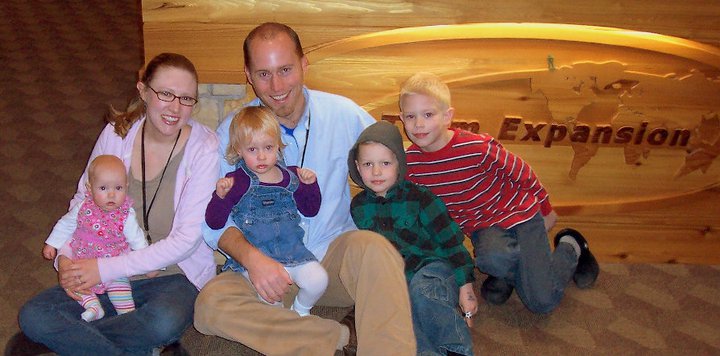
This photo was taken during our first year with Team Expansion.

The Day We Didn’t Go Home {A Life Overseas}

by Jonathan

We were supposed to go home on August 6th. We had tickets and plans, we had dreams and ideas. But when we left Cambodia back in March, we did not have an awareness of how COVID-19 would turn the world upside down.

So we’re not flying home on August 6th. As a result of passport issues, visa issues, entry requirements, finances, and a whole host of reasons (everyone has them), we’re staying.

For our family, August 6th is now Stay Day.

Does your story include a Stay Day? Perhaps for you it wasn’t a Stay Day as much as a Leave Day. Do you have a day that marks when life quaked and plans tumbled? Do you memorialize a Stay Day or a Leave Day? Should you?

We hope to remember our eight years in Cambodia on this August 6th, and every August 6th afterwards. It will be a sort of anniversary; a blend of stories and laughter and tears.

Like so many memorials, it will be a funky mix of mirth and merry.

On Stay Day, we’ll remember the day we didn’t go home.

Sure, America is home too. Or at least it was. And it will be again. I’m speaking for myself here, of course, because my children will have their own stories, and they’ll need to tell them. Their relationship with America (and Cambodia) always was and always will be unique. Different than mine.

But some things we shared.

Like the eight years around a thick, Khmer-style round table. Well, more like seven. The first year we had a cheaper wooden rectangular table that got eaten up by termites so big you could hear them feasting: lightning-bug-size table chompers.

We’re shipping the Khmer-style table to America, so every Stay Day we’ll gather around it and remember.

We’ll remember the scent of frangipanis, and we’ll probably try to buy some. We’ll feel the feel of traditional kramas, the checkered scarves Cambodians (and my daughters) use for everything.

We’ll probably order Indian food and remember Mount Everest, the local restaurant in Phnom Penh that taught us to absolutely adore Nepalese and Indian food.

We’ll look at old photos of a younger family riding tuk tuks, playing on the street, trying to figure out cross-cultural living.

We might search YouTube for Khmer dance music, and we will probably laugh about the incessant, LOUD, and DRUNK karaoke that permeated our house during wedding season.

We’ll watch old videos of moto rides through our neighborhood, and we’ll remember the kind old man who laughed at the four white foreigners driving a moto through flooded streets and belly laughing. I wonder if he knew how much it reminded me of riding a jet ski.

Maybe we’ll check Google street view and meander past friends’ houses.

On Stay Day, we will remember. And we will pray.

We’ll pray for Cambodia, for our friends there, and for the Church that’s blossoming into its identity.

And Lord willing, we’ll do this every August 6th: the day we didn’t pack up, weigh all suitcases to 49.9 pounds, quadruple check passports, and jet across the Pacific.

August 7th won’t find us staggering out into the scents and smells of Phnom Penh. We won’t un-mothball our house and turn it back into a home. We won’t schedule reunions with local friends. We won’t visit favorite haunts and coffee shops.

Instead, we’ll mourn what was, and we’ll be grateful for it too.

Mourning is a wetter way of expressing gratitude, after all. 

And we’ll move on, whatever that means.

God remains the God of the past. He will always be the God of the past, and he will always care enough to ask the same question he asked Hagar, “Where have you come from?”

He is the God of Stay Day, August 6th, but he is also the God of August 7th and 8th. And if he’s true, if he’s real, he’s got us, and he holds us in his strong right hand.

And he will hold us on every Stay Day, and every day after that too.


~~~~~~~~~~

Do you have a day like this? A Stay Day, or something like it?

Do you need one?

Here are some more thoughts about creating shared meaning and the importance of family rituals. As folks who regularly celebrate “shared meaning” through Sacraments, I hope these ideas will resonate and inspire.

May our families be places where we remember our stories, together.

Furlough is Coming

‘Twas the day before furlough and all through the house,
Everybody was crazy, even the mouse.

With kilograms counted and carry-ons packed,
The dad will get asked, “Can I fit this last sack?”

With Ma on her IG and Pa on his Twitter,
They’ll update their close friends through one last newsletter.

Frazzled and frayed, the start of a furlough,
The family boards early with one last cold Milo.

Onboard entertainment will probably help
Pass the time and the sadness, and the little one’s yelp.

The children will sleep, if they’re any the wiser;
Jet lag comes for all, the great equalizer.

Arrival with greetings and baggage galore!
“Now pick up the kid sleeping on the floor.”

A welcome is waiting at somebody’s house,
Along with green grass and a bed without louse.

Selah

Awakened and rested, two weeks have now passed.
It seems like a dream the term that was last.

No VPNs needed! No guards at the gate!
And Grandma and Grandpa let parents go date.

“Another world that.” They’ll say to each other,
Debriefing and telling it all to the Mother.

Then shopping will start, making up for lost time,
Enjoying the produce and actual lines.

“The stores are so huge!” They’ll gasp and they’ll stammer,
With carts made for tonnage like fridges and jammers.
“All the things in one place?” A small child’s amused;
A TCK so he’s often confused.

The church is so clean, inviting and nice!
It’s also, turns out, surprisingly white.

The parks are amazing and so well maintained;
The trash is discarded and canines restrained.

Folks think that they’re on an extended vacation,
Relaxing and soaking up big adulations.

“Please Father forgive them, they just do not see,
The pressures and burdens of this ministry.”

The family will travel in borrowed van and,
They’ll tell all their stories and hope that you can,
Listen and care some, then get on your knees,
And join them in this work, their Life Overseas.

— Jonathan Trotter

page01

From A Life Overseas