This document was developed for CPM (church planting movement) practitioners in Cambodia. It is my great hope that this article, when combined with Adding What’s Missing, will encourage and enable practitioners in Cambodia and beyond to care about the hearts of people in a new and whole way. It is a work in progress, of course, and I am acutely aware of my limited cultural knowledge and expertise, along with my general inexperience in the realm of church planting. However, these articles are not written from my head, lacking outside input. They form the synthesis of countless meetings, counseling sessions, observations, discussions, and prayers, both here in Cambodia and abroad. As a work in progress, any suggested edits/additions are more than welcome.
May the Bride of Christ in Cambodia grow explosively and mature deeply, in every single village.
——————————————————
You can’t be spiritually mature while remaining emotionally immature. — Peter Scazzero
Emotional damage from our past affects how we view ourselves, how we respond to others, how we treat others, how we respond to others who touch our pain, and how we view God. It is important that we resolve the emotional areas of pain so that our present relationships will not be negatively affected. Unresolved emotional damage causes us to build walls to protect our heart from further hurt. We do not allow others to get too close lest they hurt us like we have been damaged in the past. Neither can we give love if we have been too emotionally damaged. — John Regier
“Teacher, which is the most important commandment in the law of Moses?” Jesus replied, “‘You must love the Lord your God with all your heart, all your soul, and all your mind.’ This is the first and greatest commandment. A second is equally important: ‘Love your neighbor as yourself.’ The entire law and all the demands of the prophets are based on these two commandments.” — Matthew 22:36-40
Jesus spoke to the core of people, to their hearts. He connected with the hearts of his audience, and that was relieving for some and threatening for others. He cared about actions, of course, but primarily because actions spring from the heart.
The heart is where we store our pain. We’re also told to love God with our whole hearts, and people too. The trouble is, in order to love God (or people) from our hearts, we have to spend some time down in our own hearts, and that can be scary, especially if we’ve buried and stored a lot of pain down in there.
Our hearts are where we store our pain AND it’s where we experience joy and the deepest form of healing. Jesus doesn’t want us to paint a thin veneer over our hearts, saying “It’s all in the past and I’m pressing on now!” In reality, that’s often just fake, and it’s a way to NOT deal with our deep pain. Like a wound, if you just cover it up with a bandage and say it’s all better, you might feel better for a bit, and others might think you’re fine, but the wound is still there. And it will probably get worse. It needs to be gently exposed and treated.
The great news is that Jesus is the great Healer. He can take care of our pain, our past hurts. He can handle it all, and in fact he wants to. He doesn’t want us living with bitterness and fear and anger and pain.
Practically Speaking
Keep in mind, always, that the most important thing required to help someone connect with their own heart is that YOU are connected to YOURS.
Even if people don’t have the words to describe it, they know if you’re just talking from your head. They know if it’s just your mind conveying information. And they can tell when it shifts and you’re speaking from your heart.
Before teaching these ideas, it would probably be a good idea for you to pause and ask yourself, “Why am I doing this? Is it important? What if this impacted this disciple? And then their children? Their community and nation? How would Jesus feel about the disciple sitting in front of me? What would his vision be for their life? Would Jesus want to see them connecting to the heart of the Father, experiencing the comfort of the Spirit, and feeling the presence of the Son?”
These questions should help you connect with your own heart. This is not just about teaching content – this is about watching Jesus heal people through the love of the Father, the power of the Holy Spirit and the presence of Jesus.
These ideas are all somewhat esoteric. Here are some visual aids to help convey these truths. These are designed to set the stage for Adding What’s Missing, and I believe they could be taught to Cambodians who could then teach them to others, and so on.
BUBBLES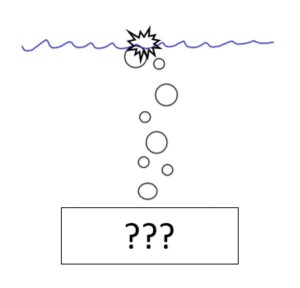
The bubbles represent our feelings/emotions. When they reach the surface and pop, we see them as actions. Sometimes, what we see is an angry outburst or a lustful act, or simple crying. We often try to stop the bubbles from surfacing, either because we don’t want others to know, or maybe because our actions when the bubbles pop are wrong. However, just trying to catch them before they get to the surface doesn’t work very well. We need to ask, Where are they coming from?
What causes me to get angry like this?
What causes me to want to sin like this?
What makes me sad and cry like this?
A big goal here is to be brave enough to trace the actions we see (bursting bubbles on the surface) to the feelings/emotions that cause them (the bubbles) to the box (historical event or pain) that produces them.
Of course, it might be as simple as the person’s sin nature. However, I believe that the general brokenness of our world, plus the specific pain (abuse, neglect, etc.) experienced, exacerbates the effects of our sin nature. For example, looking at porn is wrong and stems from a basic lust of the flesh. However, there are emotional and historical components that can’t be ignored. Jesus didn’t just tell people to “stop sinning.” He cared about their stories too. He cared about their hearts.
LANDMINES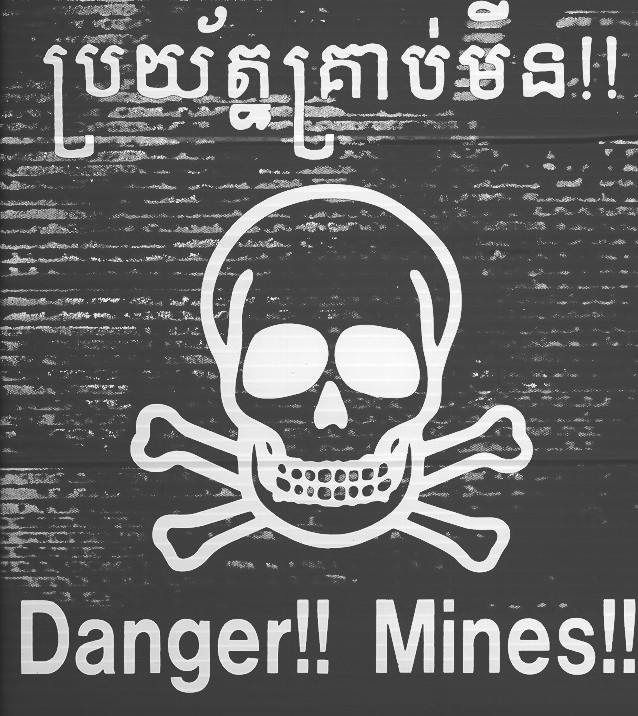
Even if you can’t see a mine, it can still hurt you. Even if it’s been buried and out of sight a long time, it can still injure you and others. God wants to “de-mine” our hearts, healing us, and making that land usable again.
What happens to land that has mines? It’s dangerous. You’re afraid to go there. Other people are afraid to go there. What can the land be used for? What happens when the mines have been removed? It’s good for farming or planting or building a house. It’s good for so much! What would a landowner feel like after being told that his land has been completely cleared of mines? Would his behavior change?
So, what can be done? First, you have to recognize that there is danger there. Are there things you don’t want to talk about because it hurts too much? Are there emotions or feelings that you often begin to feel and then force yourself to stop feeling? Why? Is it because of fear? If so, that’s very normal and understandable. Jesus wants to give you a safe place to go when you are afraid. And he wants to heal the hurting places.
Have you ever heard someone say, “We don’t talk about what’s in the past”? Why do you think they said that? Maybe they were afraid of the pain. Maybe they didn’t want you to talk about it because that would be like stepping on a mine. So, we don’t ever want to force anyone to talk about something they don’t want to talk about. If a person is not ready, if they do not feel safe even with Jesus, that is their decision. It is wrong to try to force a person to remember something that is painful. If they don’t want to talk about it, that is their decision.
Even so, we can teach that when we bury our pain, it’s like we’re burying landmines. We might not be able to see it anymore, but years from now, it could still hurt us or someone we love.
Jesus wants to bring safety. He wants to locate the mines and remove them so we can live free from fear, with hope and a future. If a person does not feel safe enough to “go there,” it might be good to step back and do some teaching on the heart and character and presence of Jesus. His presence is healing, and understanding how he cares about our fear and pain can be transformational.
More Resources:
Read part two: Adding What’s Missing: Merging CPM Principles with Emotional Healing.
For a pdf of this document: Foundational Ideas for Merging CPM Principles with Emotional Healing.
For general resources on emotional health.
For a wonderful description of the importance and necessity of the Psalms in the life of the Church.

 Jonathan & Elizabeth Trotter