I finally got started on Substack! I’m still in the process of figuring out how to share my writing both on this blog, which has been our online home for over fifteen years, and on Substack, but if you’re someone who prefers that platform, I’d love it if you would head over there and subscribe and follow!
As time goes on, I’ll be sharing my thoughts on motherhood and homeschooling, launching kids, creativity and AI, and the spiritual life. For now, I wanted to give you a feel for what kinds of thoughts I’ll be sharing over there, so I’m including my first Note down below.
//
I’m a late adopter of most new technologies (case in point: I only joined IG this year). But my daughters tell me Substack is the place where writers and readers gather, so until I can figure out what else I need to know to keep up with this platform, I thought I’d begin by sharing about books that have shaped me and are continuing to shape me. Books are friends, after all.
Today’s books are both from authors I was initially dubious of. Authors whose first books I encountered did not connect with me. But I gave them another chance anyway, and I’m so glad I did—because they are remaking me.
First up, Tish Harrison Warren’s What Grows in Weary Lands: On Christian Resilience. Years ago I tried Liturgy of the Ordinary and couldn’t finish it. It felt too surface level and just didn’t draw me in. But when a dear friend told me she was reading Harrison’s newest book and told me a bit about it, I was intrigued and thought it might be just what I needed.
It was. I was in tears in the first chapter and underlined most of it, so accurate was her description of life these last several years. Our 40s can be a desolate time. And Tish’s “cure” for what ails is now posted all over my house: “Stay in your cell.” You’ll have to read the book to find out what she means by that.
Next up, John Mark Comer’s Practicing the Way: Be with Jesus. Become like him. Do as he did. I didn’t like the first Comer book I read. The Ruthless Elimination of Hurry didn’t teach anything I disagreed with, but it was written in a style that pained my creative and editorial heart. I didn’t think I’d be reading any more Comer.
But then our church started going through his Practicing the Way course on Wednesday nights, and I thought I’d give it a try. I’m always looking for transformation, after all. That first video session was contemplative and careful, not pithy and punchy—enough of a shift to convince me to buy the book based on the course.
And oh how glad I am. The book digs much deeper into the course concepts, has shed the breathlessness of that 2017 book, and speaks my innate spiritual language—giving words to truths I somehow already knew in my heart yet just didn’t know how to apply.
Books, and their authors, are friends and guides. They form us and change us and can illuminate the path before us. And just as with real-life friends, first impressions are not always correct. Sometimes you have to give someone a second chance. And when you do, your life just might be changed for the better.
Just ask Elizabeth Bennett.
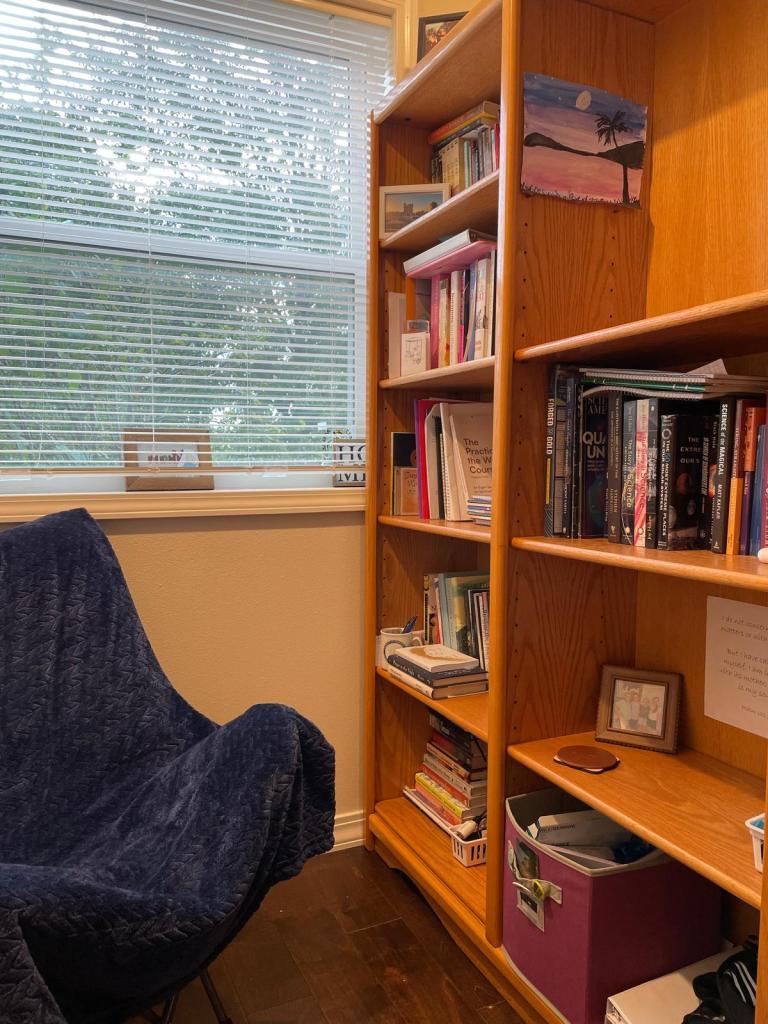
My morning time spot, one of the main spaces where transformation takes place in my life.
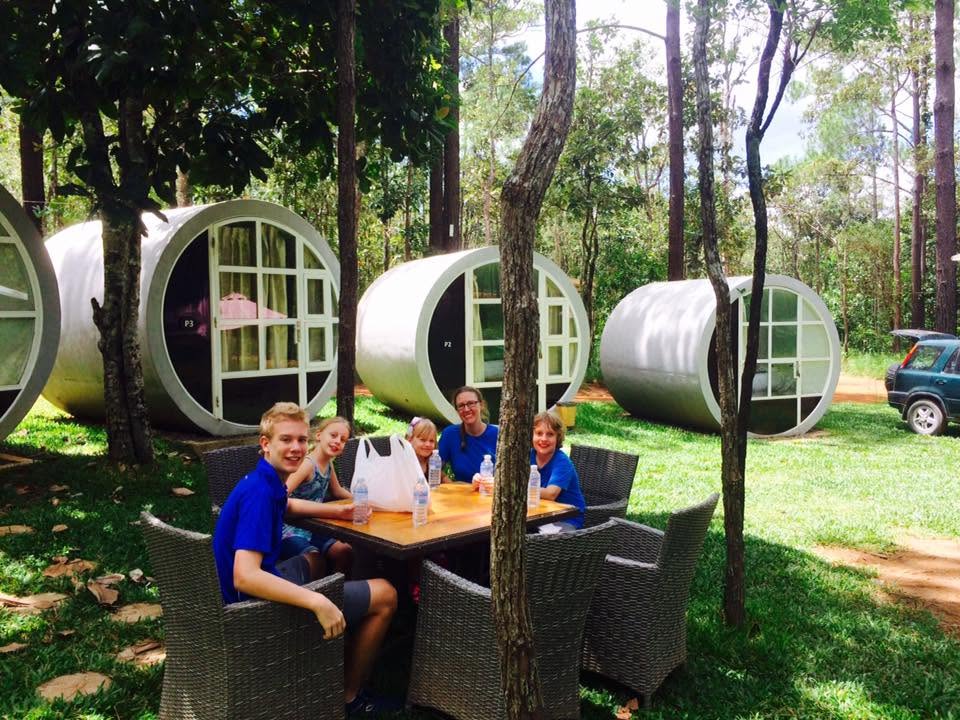
Nine years ago this August my family slept in tubes. Huge culvert pipes, to be precise. We drove two hours from our row house in Phnom Penh to the top of Kirirom Mountain for a mini vacation before school started. A resort there had created separate sections with tent camping, the tube “cabins” we stayed in, and actual hotel rooms.
We only stayed one night, but it was a delight. There was a playground and a zipline/low ropes course for little ones. That night I read Ballet Shoes to the girls in our pipe. The pipe rooms were just large enough to hold a single 1.8-meter (king) mattress, so the guys slept in another pipe (which probably had less culture than ours).
The next morning we ate a combination Asian/Western breakfast under a canopy with plenty of breeze flowing, and I had the distinct realization that this was the good stuff. We were in the sweet spot of parenting. Everyone was potty trained, and they still lived at home, still liked us, and still liked each other.
After breakfast I sat drinking tea under the canopy while Jonathan played American football with our kids on a Cambodian mountain and soaked in the moment. I knew the moment wouldn’t last forever. I knew I needed to treasure it. My oldest was about to start 8th grade, and he wouldn’t be around forever.
Sure enough, fast forward to four Augusts ago, and I was taking our firstborn to college. Jonathan couldn’t come with us because he’d just tested positive for COVID-19. Thankfully both boys and I tested negative, because I don’t know what I would have done on that drive home without my other son nearby to contain the edges of my grief.
But family life moves relentlessly forward. Two years later, we took our second to college, and this August we took our third, our first girl — four years to the day after we took our oldest. Many of my friends were taking their oldest to college. I remember the grief well. Four years ago the farewell felt like a death.
I sobbed outside the dorm before we parted. I sobbed in the car before driving away. And when we had to stop for gas, the act of walking into a restroom and seeing my reflection in the mirror was enough of a pause to get me started sobbing all over again. We had to wait in the car for another round of tears to pass before I could safely pull back onto the highway. Just keep talking to me, I remember saying to my younger son. I couldn’t risk any stray thoughts, or I’d burst into uncontrollable tears again.
After we got home, I cried for weeks. Where was he? He was supposed to be here in the school room, studying calculus and physics. He was supposed to be here in the living room, playing Billy Joel’s “Piano Man” and Aeon’s “River Flows in You” on our upright. He was supposed to be here in the kitchen, washing the dishes. He was supposed to be outside on the trampoline, practicing flips. He was supposed to be near, and he wasn’t.
I knew the transition was going to be hard, and I didn’t plan on doing any work or school the first week after he was gone. I walked around the house in a daze, organizing things here and there but not fully present.
I couldn’t bring myself to throw away his old math and science notebooks, so I tossed them onto the top shelf of the closet instead. He would never look at those notebooks again, but in that moment I just couldn’t part with the reminders of him. I couldn’t pitch the evidence that he really had gone through my homeschool.
The truth is, it feels like a death the first time you launch a kid. And it is the end of something — it’s the end of family life as you’ve always known it. It’s the end of all of you being together automatically. It’s a real loss, and you should honor it and grieve it.
But death isn’t the end. Because somehow, there’s a rebirth. Family gets reborn, it’s just different from before. And it can still be good. It can still be precious. Family togetherness doesn’t have to disappear, but it does have to change.
They come back for the weekend, and you have a campfire or a movie night. They come back for Thanksgiving, and you reminisce about all those Thanksgivings together growing up. They come back for Christmas, and you still do all your old traditions.
Then another kid goes to college, and the schedule gets more complicated. But they still come back together sometimes, and of course there are the summers. But then one day your oldest graduates and won’t be coming back as frequently. Or someone brings home a significant other, and you start sharing your house with more people — and sharing your people with other families.
But by this time you’ve learned to roll with the changing schedules. You’ve learned to adapt to fewer people in the house, most of the time anyway. You’re watching all of your kids grow up and make big decisions. And you miss them, and you’re so proud of them for navigating these waters, and you still try to support their process.
You know that family will never look like it did when you had a bunch of littles underfoot and were stepping on Legos all the time and picking up sippy cups. But it doesn’t have to, because those memories are safe inside your heart, ready to be visited whenever the need arises.
And here’s another truth: Those years were good. Those years were worth it. But young motherhood always came with an expiration date, even if we didn’t know it at the time. Babies are supposed to grow. Children are supposed to grow. And teenagers are supposed to fly away in the end.
So first-time college mom, take heart. Remember the wisdom of Cindy Rollins, mother of nine grown children, who taught us that home isn’t a place to stay; it’s a place to leave. Our job as parents is to build a home that is safe enough and strong enough for them to launch from. And then to believe in them as they fly away (and sometimes come back to visit).
That picture of us outside the tubes hangs on the wall next to my prayer chair. Every day I can look over and see a family frozen in time — a family old enough to enjoy each other and young enough to still live together, a family old enough to sit still for read alouds and young enough to still appreciate them.
While those particular details of family life might not be true any longer, the family is still going. We’re still holding onto each other, still spending time together when life allows. More photos will be added to walls and phones and albums as the six of us keep tackling new adventures, but that one at the top of a tropical mountain will stay in my heart forever.
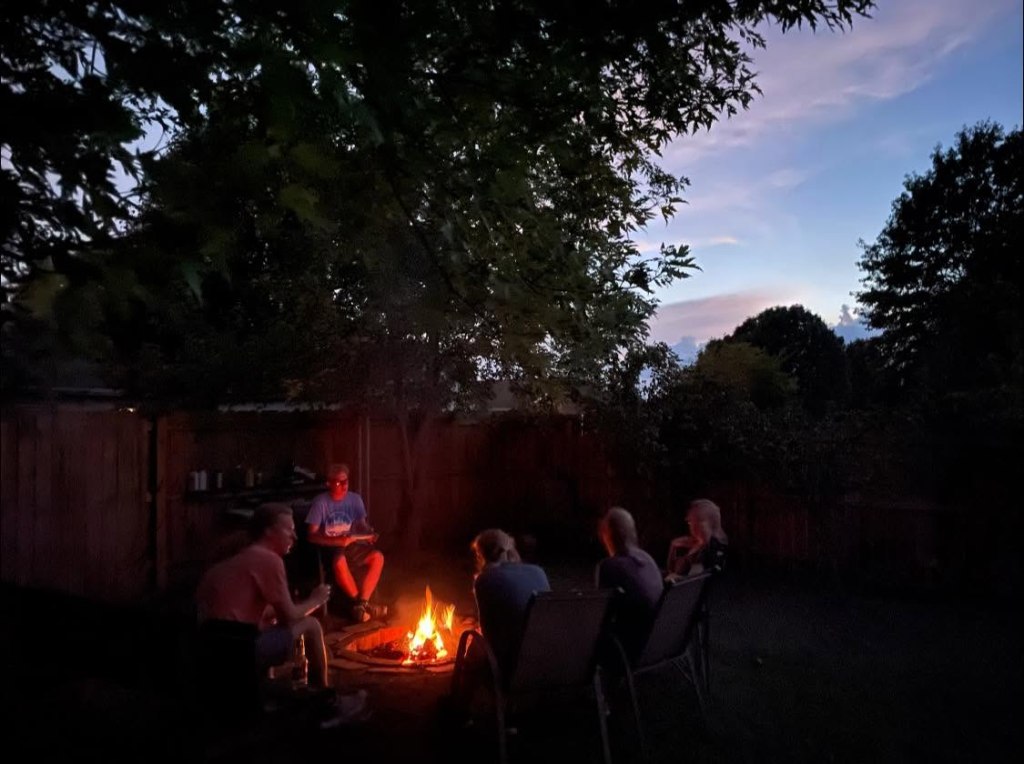
All of us around a campfire two years ago, after having launched half our kids.
For more of my reflections on marriage, motherhood, and all things Christian womanhood, read my book,The Hats We Wear.
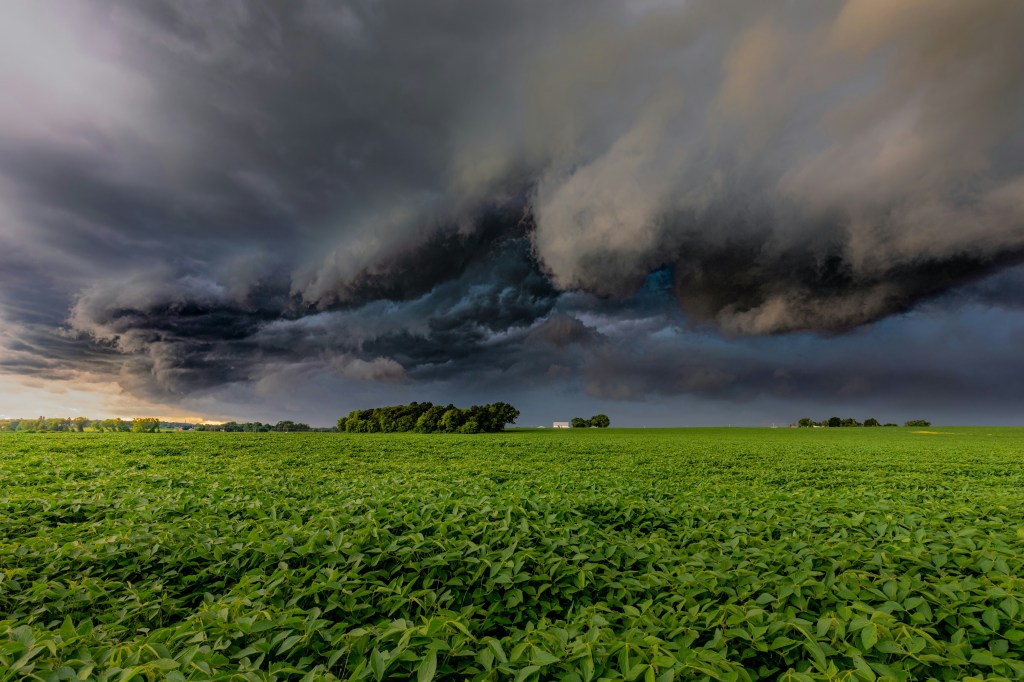
Summer started with a storm. A literal storm — trees, branches, limbs down. It was a huge clean-up mess for the entire city. Truck owners and chainsaw owners were making the rounds, assisting neighbors who didn’t have these tools. A couple families offered to help us on a Sunday afternoon.
I was exhausted, had been for days, but I took a nap and forced myself to partake anyway. I just needed to push through this stupid perimenopausal fatigue and help out. Days later I would learn I wasn’t just getting old, and I wasn’t just being lazy. I really was sick. I probably shouldn’t have worked that hard in the yard. I probably shouldn’t have picked up those heavy logs; it increased the strain on my heart. But I didn’t know.
It reminded me of the time in junior year when my parents needed my help with a work event. That morning I’d woken up not feeling great, but I pushed through because I was needed. I worked in the hot sun all day, then woke up burning with fever the next morning. Turns out I had strep, strep that wouldn’t even respond to the first round of antibiotics. I needed stronger medication to kick that bacterial infection. I guess I’m not always the best at listening to my body. But I digress.
After the thunderstorm came the thyroid storm. Not literally, thank the Lord. I managed to avoid the medical definition of a thyroid storm, but I had to watch for the signs, because a few times I thought I was coming close. Rapid heartbeat, shaky limbs, breathlessness, profuse perspiration, intense throat pain, and difficulty swallowing because of the swollen thyroid gland. A couple times I almost went to the ER while my husband was on a mission trip in Poland. But my temperature never spiked high enough, so I didn’t.
Then came the spiritual storm. This summer I was so desperate for God — fell flat on my face in need of Him. I felt so useless. The physical weakness made me more spiritually attuned, and I learned things about myself that I didn’t know before. It opened me up to Him and His voice. It softened my heart. I didn’t have much energy or even usefulness, but I had communion with God.
As I continued to heal, I had setbacks. I would improve and then regress. I had to see more doctors, get more bloodwork, take more medication. My limitations were ever before me, and progress sometimes seemed to stall. Healing — whether emotional, physical, or spiritual — can be slow, like the cleanup after a storm. There’s no avoiding the wait, no avoiding the need for patience and perseverance or the ability to tolerate a little (or big) mess.
Post-storm, there are huge limbs to take care of. They have to be cut down and dragged across the yard and hoisted onto a vehicle large enough to hold them, then hauled away. Large limbs must be chopped into smaller logs, perhaps small enough to use as firewood. Leafy branches must be separated from woody stems, then collected. Tiny sticks, especially in the case of Bradford pear trees, must be picked up by hand. So many tiny sticks.
Our city planned an extra trash pickup for the storm debris. A neighbor had helped us haul away some of the larger limbs, but we still had more limbs, so we set a lot of brush on the side of the road, just like all our neighbors. And after we moved everything to the curb, we still waited weeks for the pickup on our street.
Healing is a little like that. There are lots of layers involved. It’s slow. You think you’ve cleaned everything up in one area, and yet you find another mess needing attention. You make a pile over here and think it’s complete, only to find out it’s not. And then you turn around and see another pile, overflowing and losing its structure. You have to thin out the pile and separate leaves from branches again.
Sometimes you have to take a break before diving back in. But eventually the chaos starts to clear and you start to see a semblance of your original yard. There might be parts missing. Some sections might regrow, some sections might not; you don’t know yet. You just have to wait — and keep picking up the little sticks as you find them.
As a young person growing up in the churches of Christ in the ’90s, I loved the song “Go Tell John” — mainly because it spoke of the power of Christ. My faith was freshly minted and idealistic, and I was convinced I would be willing to die for my Lord and savior.
“Go tell John That the lame have learned to walk That the poor can hear the word of God and the deaf can hear me talk Go tell John That the blind can finally see, oh and Blessed is the man who doesn’t fall away because of me.”
A few weeks ago I was in a nostalgic mood and created a Spotify list with all my favorite Free Indeed songs (IYKYK). Today “Go Tell John” played for the first time on my (3-hour) playlist. And I couldn’t stop the tears from flowing, seemingly out of nowhere.
“As he sat there in that prison cell, he knew just how it came about And he knew his life was over and he was never comin’ out But there was just one thing he had to know, he had to make a final plea So he sent his friends to ask the Lord if he was who He claimed to be.”
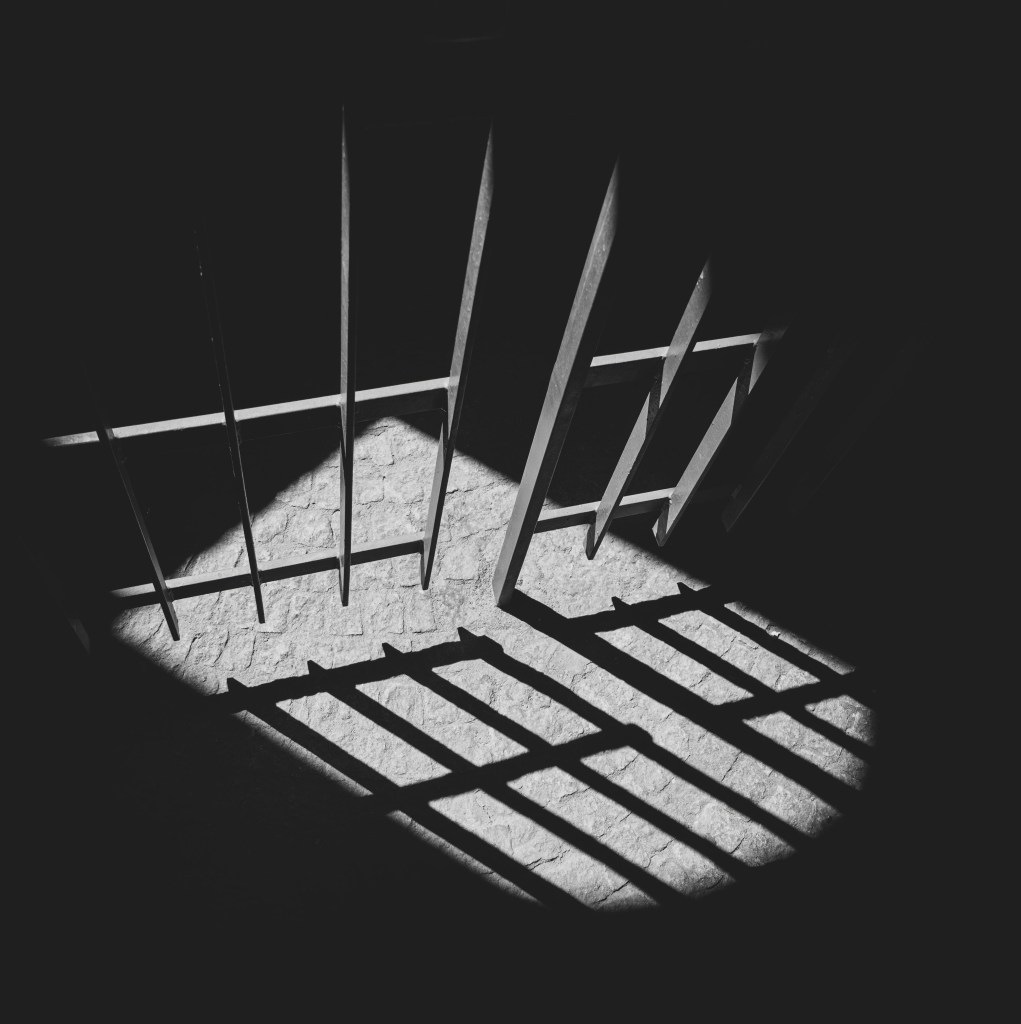
I’m now a 40-something-year-old who has seen darkness and deep despair. I’ve never been in an actual prison cell, but I’ve been imprisoned by the suffering of both mind and body. And I know that sometimes, we just need the assurance that Jesus is worth it, that He’s worth all the trouble we will face in this world.
“Go tell John That the dead are raised again Go tell John That the lepers now are cleansed Go tell John That the path he chose was right Go tell John That I truly am the light.”
It’s precisely because John’s situation punches the gut so hard that Jesus’s answer is all the more important — and powerful. Doubts, questions, despair, Jesus doesn’t judge. He is gentle with us, promising not to break a bruised reed or snuff out a smoldering wick.
“And blessed is the man who doesn’t fall away because of me.”
Jesus tells us that He is the Messiah, that He IS worth it — if we can only hold onto Him. So hold on, friends. No matter the darkness of your prison cell.
[“Go Tell John” written by Keith Lancaster and John Sublett. Original account found in Matthew 11.]
For my parents’ 50th wedding anniversary (which is today, by the way!), my sisters and I decided not to throw a party. I’m not sure my parents would have wanted a party anyway. But we wanted to celebrate them in some way, and we chose two avenues. First, we signed them up to write their memoirs bit by bit through a company called Storyworth. It’s been fun for all of us to read the stories of their life as they arrive in our inboxes week after week.
And second, we decided to put together a book of memories for them from their closest friends and family. These people are scattered across the country, as our family’s story includes fifteen years in the U.S. Army, including four years stationed in West Germany in the early 80s. I knew this had the potential to be a once-in-a-lifetime gift, but I had no idea what its true impact would be on me or my parents.
As the letters started to trickle in, I noticed a pattern. Over and over again, the main thing people remember about Jeff and Mary Hunzinger was the way they served others. Consistent across all their locations—El Paso, Germany, South Dakota, Fort Riley, Red Bridge Church of Christ, Legacy Christian Church—they were just always there for people.
I remember hearing the same themes when my mom’s dad died. People kept talking about how he helped other people, how he was there for them. At the wake someone told a story I’d never heard before of Grandpa helping a man in the community who’d been at risk of suicide and how he’d even gone to his house in the middle of the night. My grandparents were farmers. They didn’t have a lot of money. They didn’t even have high school diplomas (though Grandpa was really proud of Grandma for earning her GED later in life), but people didn’t care about that. All they remembered was how much Grandpa had contributed to the community.
It reminds me of the way people talk about my husband’s parents. Mark and Kerry have been gone for decades now, but the main thing people remember about them was the way they were there for other people. They had this special ability to see where people were spiritually and to speak into their lives. With a dentist’s salary, they also had the means to bless people financially—and often did. But it’s not just Jonathan’s parents who gave us this example; his dad’s parents lived in much the same way.
So I read all these letters about my parents and thought about the legacy I’ve been given on both sides of the family, and I was moved to tears. It made me grateful. More than that, though, it made me want to live into this precious legacy I’ve been given.
My parents didn’t know any of those things when I visited them earlier this summer. I was still acutely ill, but after dinner we sat around the table talking like usual, and Mom was commenting on life. I can’t remember the context, but she said something about how life isn’t all about you, it’s about other people and serving them. Her priorities were clear. She knew the important things in life. But she hadn’t seen any of the letters yet. She didn’t know what people were saying about her and Dad. She just knew how she wanted to live her one beautiful life, following in the footsteps of her parents and in the footsteps of Jesus.
I started to think back over the last several years and see how my health struggles and mental health challenges have just been so all-consuming. I wasn’t always able to see outside myself. I remember pregnancy being the same way. A momma just turns so inward, needing to take care of the little life inside. After a few pregnancies, I remember consciously thinking that it would be good for me to take a break from being pregnant because it’s so inward-focused, trying to take care of the baby and all.
And then I thought back over this past year and how (with the exception of this summer) I’ve had the best mental, physical, and relational health in a long time, probably due to finally being on HRT. Suddenly I could see outside myself again—because service has long been a theme in my life as well.
Why do my hormones need to be in balance in order to serve the God I’ve loved since I was a little girl? Why do my neurotransmitters need to be in balance to be the person God made me to be? Because I know who God made me to be—I’ve known that for so long—and loving Him and loving ministry and caring for my family and for people in the community has defined so much of my life.
And then perimenopause and re-entry (not so affectionately called re-entrypauseTM in our household) just sideswiped me. I look at who I am when my hormones are out of balance, and I have a hard time believing that’s God’s intention for me. Self-centered and irritable is not who He made me to be. He made me to be joyful, patient, curious, nurturing. This years-long process has shown me that sometimes these mortal vessels need medication for us to be the person God created us to be.
Re-entrypause shifted my ability to listen to God, to see other people outside myself, to see things in reasonable and rational ways. My thinking got all twisted up on so many levels. I’m thankful for modern medicine that can restore the circuits in my brain to be able to look outside myself and to serve other people again—and to want to do that for the rest of my life. I just had a birthday this past week, 45 trips around the sun. I’m already halfway to the end, if not more than that. For the second half, I want to return to the way I tried to live most of the first half, in service to God and others.
So these days you’ll find me singing the words of that old camp song, “Make Me a Servant.” I pray the song, and I think about my parents’ legacy, so that when I get to the end of my life, what people remember is how much I poured out, not how much I took. I want to live a life that flows outward, not inward. A life that points to God’s love, not one that points to myself. And the only way to do that is through the blood of Christ and the power of the Holy Spirit.