How Preparing a Gift for My Parents’ 50th Wedding Anniversary Reminded Me of My Calling

For my parents’ 50th wedding anniversary (which is today, by the way!), my sisters and I decided not to throw a party. I’m not sure my parents would have wanted a party anyway. But we wanted to celebrate them in some way, and we chose two avenues. First, we signed them up to write their memoirs bit by bit through a company called Storyworth. It’s been fun for all of us to read the stories of their life as they arrive in our inboxes week after week.

And second, we decided to put together a book of memories for them from their closest friends and family. These people are scattered across the country, as our family’s story includes fifteen years in the U.S. Army, including four years stationed in West Germany in the early 80s. I knew this had the potential to be a once-in-a-lifetime gift, but I had no idea what its true impact would be on me or my parents.

As the letters started to trickle in, I noticed a pattern. Over and over again, the main thing people remember about Jeff and Mary Hunzinger was the way they served others. Consistent across all their locations—El Paso, Germany, South Dakota, Fort Riley, Red Bridge Church of Christ, Legacy Christian Church—they were just always there for people.

I remember hearing the same themes when my mom’s dad died. People kept talking about how he helped other people, how he was there for them. At the wake someone told a story I’d never heard before of Grandpa helping a man in the community who’d been at risk of suicide and how he’d even gone to his house in the middle of the night. My grandparents were farmers. They didn’t have a lot of money. They didn’t even have high school diplomas (though Grandpa was really proud of Grandma for earning her GED later in life), but people didn’t care about that. All they remembered was how much Grandpa had contributed to the community.

It reminds me of the way people talk about my husband’s parents. Mark and Kerry have been gone for decades now, but the main thing people remember about them was the way they were there for other people. They had this special ability to see where people were spiritually and to speak into their lives. With a dentist’s salary, they also had the means to bless people financially—and often did. But it’s not just Jonathan’s parents who gave us this example; his dad’s parents lived in much the same way. 

So I read all these letters about my parents and thought about the legacy I’ve been given on both sides of the family, and I was moved to tears. It made me grateful. More than that, though, it made me want to live into this precious legacy I’ve been given. 

My parents didn’t know any of those things when I visited them earlier this summer. I was still acutely ill, but after dinner we sat around the table talking like usual, and Mom was commenting on life. I can’t remember the context, but she said something about how life isn’t all about you, it’s about other people and serving them. Her priorities were clear. She knew the important things in life. But she hadn’t seen any of the letters yet. She didn’t know what people were saying about her and Dad. She just knew how she wanted to live her one beautiful life, following in the footsteps of her parents and in the footsteps of Jesus.

I started to think back over the last several years and see how my health struggles and mental health challenges have just been so all-consuming. I wasn’t always able to see outside myself. I remember pregnancy being the same way. A momma just turns so inward, needing to take care of the little life inside. After a few pregnancies, I remember consciously thinking that it would be good for me to take a break from being pregnant because it’s so inward-focused, trying to take care of the baby and all. 

And then I thought back over this past year and how (with the exception of this summer) I’ve had the best mental, physical, and relational health in a long time, probably due to finally being on HRT. Suddenly I could see outside myself again—because service has long been a theme in my life as well. 

Why do my hormones need to be in balance in order to serve the God I’ve loved since I was a little girl? Why do my neurotransmitters need to be in balance to be the person God made me to be? Because I know who God made me to be—I’ve known that for so long—and loving Him and loving ministry and caring for my family and for people in the community has defined so much of my life.

And then perimenopause and re-entry (not so affectionately called re-entrypauseTM in our household) just sideswiped me. I look at who I am when my hormones are out of balance, and I have a hard time believing that’s God’s intention for me. Self-centered and irritable is not who He made me to be. He made me to be joyful, patient, curious, nurturing. This years-long process has shown me that sometimes these mortal vessels need medication for us to be the person God created us to be. 

Re-entrypause shifted my ability to listen to God, to see other people outside myself, to see things in reasonable and rational ways. My thinking got all twisted up on so many levels. I’m thankful for modern medicine that can restore the circuits in my brain to be able to look outside myself and to serve other people again—and to want to do that for the rest of my life. I just had a birthday this past week, 45 trips around the sun. I’m already halfway to the end, if not more than that. For the second half, I want to return to the way I tried to live most of the first half, in service to God and others.

So these days you’ll find me singing the words of that old camp song, “Make Me a Servant.” I pray the song, and I think about my parents’ legacy, so that when I get to the end of my life, what people remember is how much I poured out, not how much I took. I want to live a life that flows outward, not inward. A life that points to God’s love, not one that points to myself. And the only way to do that is through the blood of Christ and the power of the Holy Spirit.
We Got a Cat

by Elizabeth

I’m in love with a cat. This revelation is as shocking to me as it is to you, if you’ve known me any length of time. I’ve never been an animal person. Dogs scare me, cats are scratchy, and fish stink. Rodents stink even more. So when asked what my favorite animal is, my reply has always been, “human beings.” And yet here I am, taking pains to care for a small furry creature.

Let me explain how I got here.

The kids have wanted a pet for quite some time. For reasons beyond my dislike of non-human animals, having a pet in our Cambodian row house was out of the question. As soon as we moved back, however, the requests started. It was clear the kids still wanted a pet.

We had to push the question of pet ownership further into the future while we continued living in temporary housing. (We did this for a total of 9 months, which makes me wonder if there’s some sort of birth metaphor hiding inside that number.) During that time, we were stretched thin trying do our jobs while also finding a permanent place to live. The housing search proved to be surprisingly difficult and illustrated to me in real time Maslow’s hierarchy of needs — but more on that in an upcoming post.

Once we moved into our new home, the rumblings began again. Nothing had changed — the children wanted a pet. And the father wanted to get the children a pet. It had been a hard year of loss for the family, he reasoned. Now we had a yard to host the pet in. We weren’t ready for the rigors of a dog (the bathroom duties of dog ownership, the higher costs incurred, and the potential for loud barking being the main reasons).

But he was sure we could handle a cat.

When he pitched the idea to me, I wasn’t sure I had a choice. I knew he was right; after all these years and especially after Last Year, the kids did deserve a pet. All I asked was that the cat not be an inside cat. I didn’t want to do cleanup duty, live in a house that smelled of cat, or manage the incessant furniture scratching. No, he assured me, the cat would stay outside. After all, he said, some of us have cat allergies.

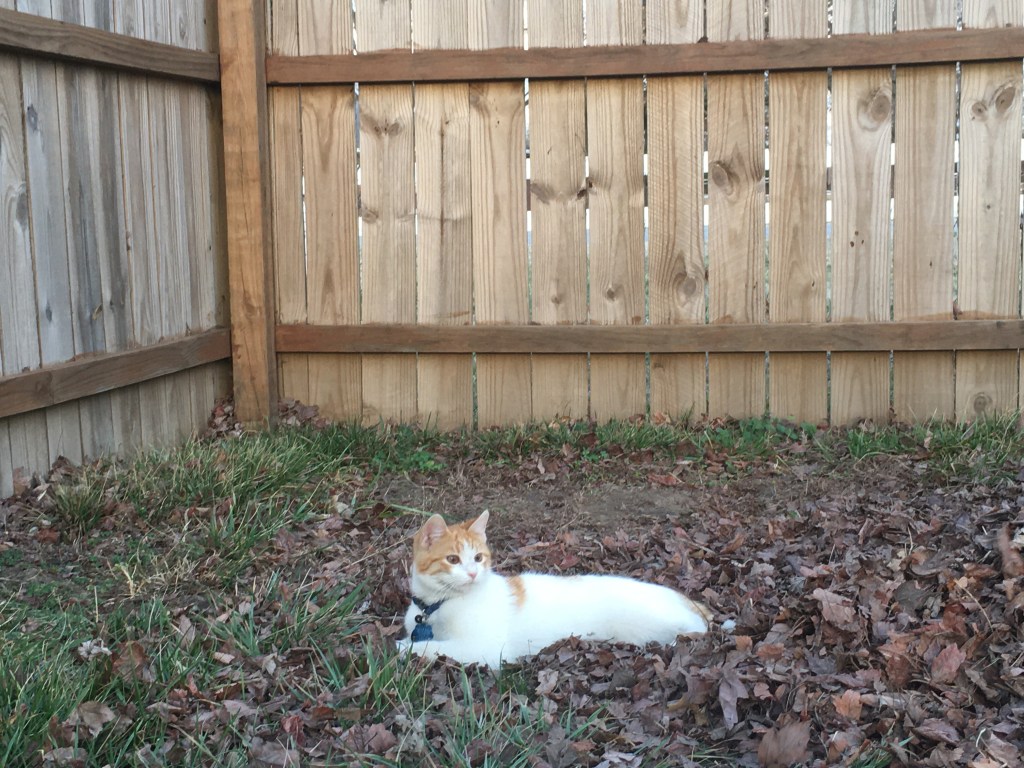
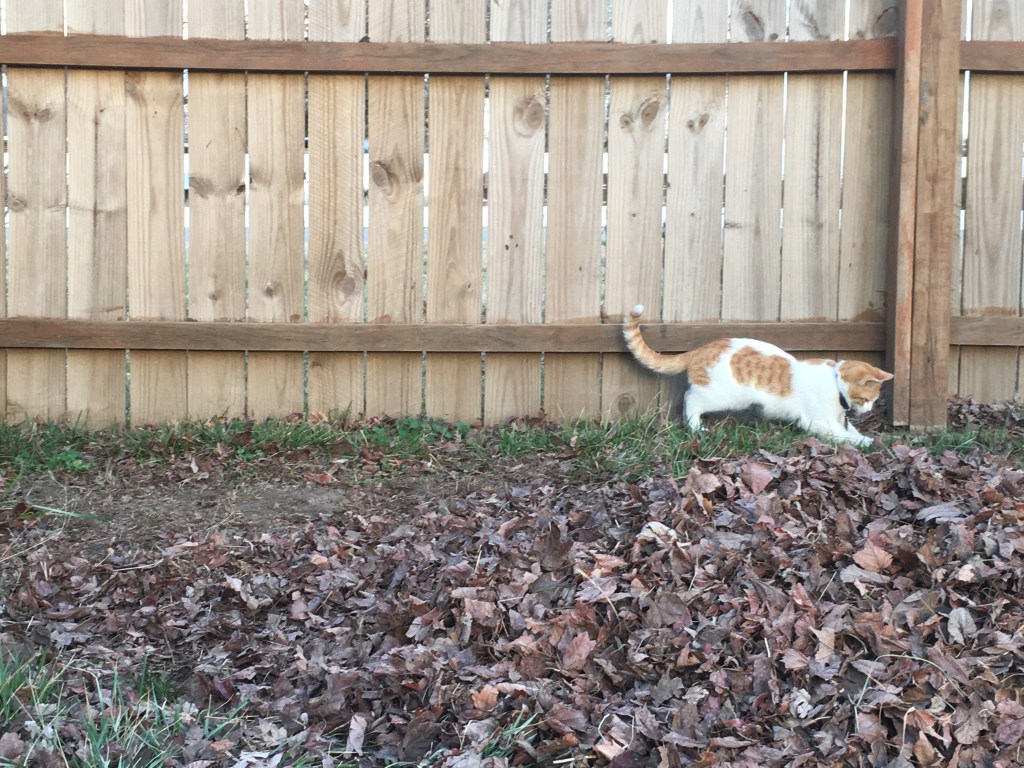
So the non-animal-haters made a plan to visit the Humane Society. I instructed my children to listen to their hearts and choose the pet who was just right for our family. They came back with a half-grown orange-and-white tabby who needed mounds of fattening up. He’d been a stray before the Humane Society found him and cleaned him up. We called him Gryff, after the House of Gryffindor.

I didn’t love him right away, but I thought he was pretty cute, and I was glad the kids were so happy with him. Then the Snowpocalypse came to Joplin, and I worried about him freezing to death in the garage. I could not let this little kitty die in the cold! My children loved him too much. And I loved seeing them so happy. I drove to the store in the rain, just before it turned to ice, and bought him a carrier. That way he could sleep in the house without getting his dander all over it.

We lived this way for two weeks, because that’s how long it took before the snow melted and the temps inched above freezing at night. Now he’s back to the garage and the yard. I love watching him prowl around, play with crickets or catnip, or just lounge in the sun. I love watching my children cuddle him. Playing with the cat is a great stress reducer around here.

I guess we are cat people. I never thought I’d say that.

Gryff is still young, and sometimes he’s strange. Sometimes we call him our dog-cat. In the beginning he would follow Jonathan around like a dog. He even ran like a dog. He also had a tendency to run away and get lost. It’s normal for cats to disappear and come back later, and Gryff often left through an opening in the fence and came back. But once he didn’t come back before dark.

We went looking for him and found him in a neighbor’s yard. He’d jumped the fence into their yard but couldn’t figure out how to get back in to ours. Another time he disappeared for two days. After the first day, we got worried. I walked the neighborhood, talking to strangers and asking about our cat. No one had seen any sign of our cat. I walked the streets so long I got a sunburn.

I agonized over this situation. After everything our kids had been through this year, after all the loss they’d endured, getting this cat was supposed to be a way of healing their hearts. To think they might lose him too?? It was too much to bear. Some of us cried. Some of us prayed. For a cat.

I missed how alive the yard felt with Gryff in it. I couldn’t believe how empty it felt without him, after just a few short weeks in the family. Eventually another cat owner noticed him hanging around their house and found our information on his collar. Late one night, after we figured we would never see him again (after all he was still a kitten, perhaps not quite grown enough to figure out how to come home), a neighbor rang the doorbell and returned him. We were so happy. But we learned that no one really ever owns a cat. Not really.

Then one day just after breakfast he disappeared again. I didn’t worry quite as much this time, but I still wanted him to return. The next morning I was up early in my office when I heard the mewing. I ran to the back door, and there he was, crying for his breakfast. In that moment, I knew I could relax. Gryff could and would come back. He’d figured out where home was — or at least he’d figured out how to find the place where people feed him canned cat food every morning.

Yes, I know. I can’t believe it either. Somehow this cat sank his claws deep into my heart, and I buy him the tasty wet food. I know I don’t have to. The vet said we don’t have to, that people sometimes give their cats wet food on Sundays or special occasions. But after I watched this cat go bananas for a can of salmon, I decided he needed wet food more than once a week. Maybe every other day. Or maybe, every day? After all, he still needs some fattening up.

My husband laughed at me, the way this cat beguiled me. He never in a million years expected that. But you know what I think about my silly love affair with this cat? I think, at least it taught him how to come Home.

Created for Connection — a roadmap for your marriage

It’s the best marriage book I’ve ever read.

I’d love to show you why; I’d also love to show you how I use it with couples.

photo-1508839370228-5ae14793c2f5 (2)

Created for Connection, by Johnson and Sanderfer, is my go-to book for marriage coaching. I use Gottman’s tools and research extensively too, but Created for Connection feels deeper, more hearty. While Gottman focuses on the what and the how-to, Created for Connection focuses on the why.

I love this book so much that I turned the chapter headings into a roadmap of sorts, adding in other tools and resources.

If you were meeting with me for marriage coaching, I would give you this: Created for Connection Handout.2022. Hopefully, this would help you see where we’re at as we walk through the various parts of marriage work. [For more about what I do, check out Seeing the Hearts of the Hurting: pastoral care and empathetic coaching for marriages, missions, and life in the mud.]

Now, here is the Handout again, but with links to a variety of resources, articles, and videos.

Recognizing the Demon Dialogues

  1. The Vortex of Terror (video)
  2. The Four Horsemen
  3. Complaining vs. Criticizing (video). And here.

Finding the Raw Spots

  1. The Shapes Diagram (videos)
  2. Feelings Wheel
  3. Flooding (and here)

Revisiting a Rocky Moment

  1. Reflecting Back (video). I teach three parts to this: 1. Reflect back. 2. Validate. 3. Care.]
  2. Turning Towards, and here and here
  3. Soft Start-ups
  4. Honesty –> Conflict –> Intimacy

Hold Me Tight – Engaging and Connecting

  1. What Am I Most Afraid Of?
  2. What Do I Need Most from You?
  3. Emotionally Accessible, Responsive, and Engaged.
  4. Caring for the Heart

Forgiving Injuries

  1. Repair checklist, and here
  2. Forgiveness Conversation Guide

Bonding Through Sex and Touch

  1. On Making Love (a resource post about sex)
  2. Six-second Kiss
  3. Hugging until Relaxed

Keeping Your Love Alive

  1. Six magic hours: here and here
  2. Gottman Card Deck

If you’re looking for some marriage help, here’s a map! I didn’t create most of this; I’m just putting some of what’s helped me and others into one place. I hope that’s helpful for you. Get the books, watch the videos, talk with your spouse, and have a great day!

— Jonathan M. Trotter

~~~~~~~~~~~~~~~~~~~~~~~~~~~

Created for Connection, by Johnson and Sanderfer

The Seven Principles for Making Marriage Work, by Gottman

17 years of marriage and this is all we’ve got, by Jonathan and Elizabeth (and now it’s 21!)

*Amazon affiliate links.

Pay the Same (a feminist’s diatribe)

by Jonathan

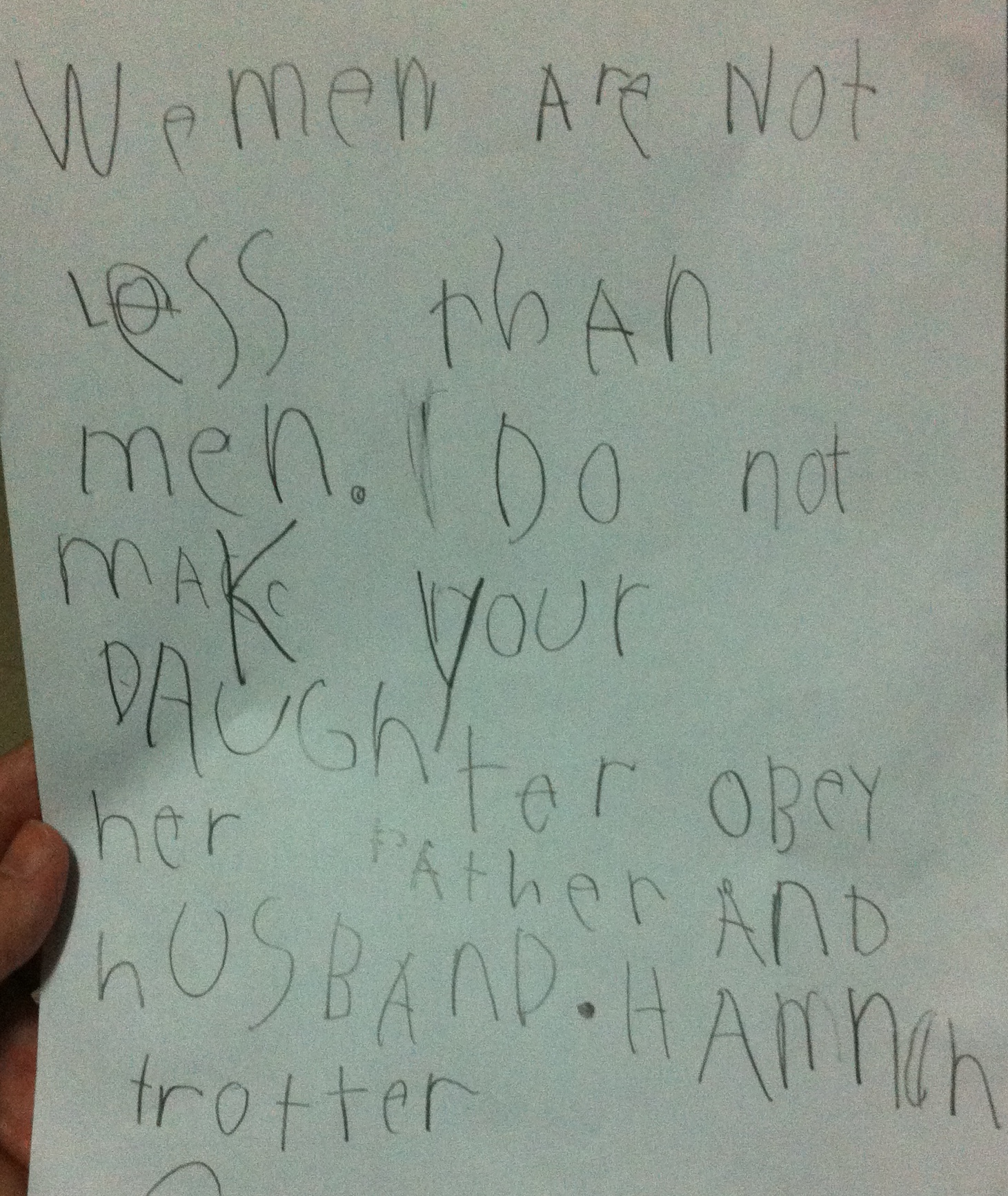
Hannah’s mouth gaped open. My six-year-old couldn’t believe it. After learning that women often make less than men, even when doing the same work, and then hearing that some people make their adult daughters obey them until they get married, at which point “authority” shifts and they have to obey their husbands, she said with shock, “But women are people too!”

The discussion went on for a while, with Hannah asking for more and more details. She seemed pretty disturbed, so I told her, “Hannah, if you really feel strongly about this, write a blog.” Ten minutes later she handed me this…


IMG_2413

IMG_2410

I’m so grateful my daughter has a mother who exemplifies what it means to be strong and kind, bold and gentle, smart and sweet. Elizabeth, thanks for raising my daughters (and sons) to see themselves and others as equally valuable. I love you.

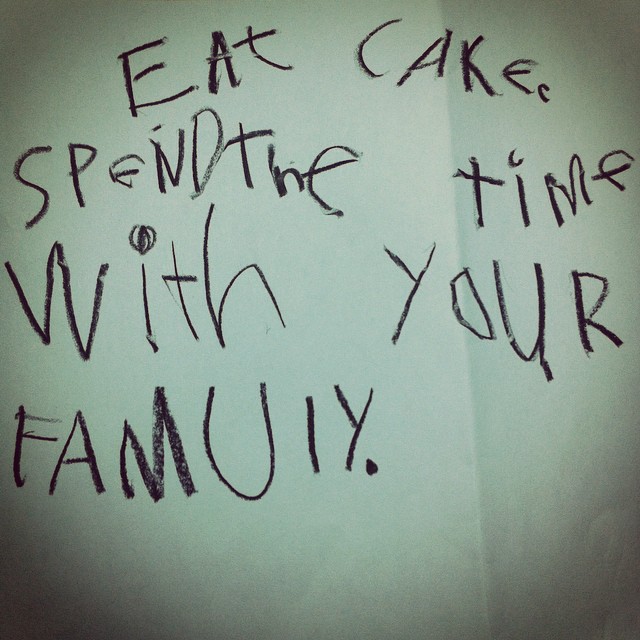
Eat Cake.

My daughter brought this to me and proudly proclaimed, “I just wrote my first blog!” She has granted me permission to share it with you. If she decides to continue writing, all future posts will be categorized under “Famuly.”  : )

— Jonathan T.

ar3